Understanding the Unique Challenges in Dermatology Patient Acquisition
Dermatology practices often grapple with a dual focus on both medical and cosmetic services, creating a complex patient acquisition landscape. Medical dermatology addresses essential health concerns, requiring a different approach to patient outreach than cosmetic dermatology, which caters to elective aesthetic enhancements. This inherent duality means strategies must be nuanced to attract patients seeking both urgent care and elective treatments, ensuring a consistent flow of qualified individuals for all service lines.
The competitive nature of the aesthetic market, coupled with the critical need for patient trust in medical services, necessitates a robust and targeted marketing strategy. Practices must effectively communicate their expertise, the benefits of their treatments, and the patient experience to stand out. This involves understanding patient motivations, addressing common concerns, and clearly differentiating their offerings from competitors in both the medical and cosmetic spheres.
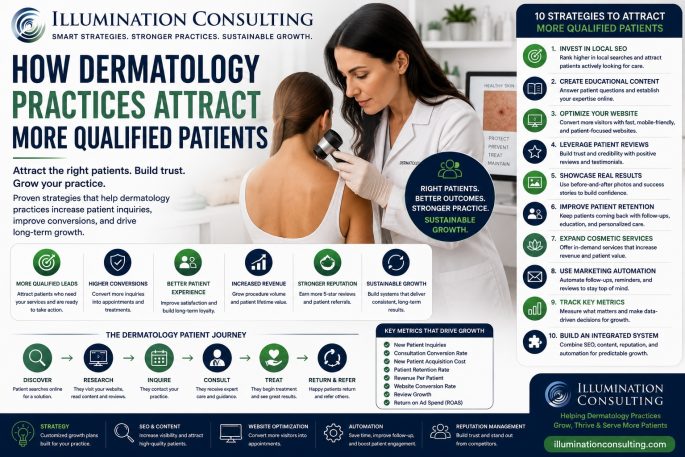
Strategies for Attracting Qualified Patients to Dermatology Practices
To effectively attract qualified patients, dermatology practices must implement a multi-faceted digital marketing strategy. This includes optimizing online visibility through Search Engine Optimization (SEO) to ensure patients searching for dermatological services can easily find the practice. Furthermore, engaging content marketing, such as informative blog posts and educational videos, can establish the practice as a trusted authority and educate potential patients about available treatments and their benefits.
Leveraging paid advertising campaigns, particularly on platforms where target demographics are active, can drive immediate traffic and leads. Social media marketing plays a crucial role in building community, showcasing results through before-and-after imagery (with patient consent), and engaging directly with potential patients. Conversion optimization on the practice's website is also paramount, ensuring that the journey from initial inquiry to booked appointment is seamless and user-friendly.
The Role of Digital Marketing in Enhancing Dermatology Practice Growth
Digital marketing is indispensable for the sustained growth of dermatology practices in today's competitive healthcare environment. It provides the tools and channels necessary to reach a wider audience, educate potential patients about complex medical and cosmetic procedures, and ultimately drive appointment bookings. By strategically employing various digital tactics, practices can effectively manage their online reputation, attract new patient segments, and nurture existing patient relationships.
Key digital marketing components for dermatology practices include targeted SEO to capture local search intent, compelling content creation that addresses patient questions and concerns, and effective social media engagement to build brand loyalty and trust. Paid advertising campaigns can be finely tuned to reach specific patient profiles interested in medical or cosmetic treatments, while website analytics provide crucial data for refining strategies and maximizing return on investment.
Leveraging Content Marketing to Educate and Convert Potential Dermatology Patients
Content marketing serves as a powerful tool for dermatology practices to not only attract but also educate and convert potential patients. By creating valuable, informative, and engaging content, practices can address common patient questions, demystify complex procedures, and build credibility as experts in their field. This educational approach helps patients make informed decisions, fostering trust and increasing the likelihood of them choosing the practice for their dermatological needs.
Effective content marketing strategies for dermatology include detailed blog posts on skin conditions and treatment options, explainer videos demonstrating procedures or highlighting practice benefits, and visually appealing infographics that simplify complex information. Case studies and patient testimonials, when ethically presented, further enhance trust and provide real-world examples of successful outcomes, directly influencing conversion rates.