
Flexible Digital Platforms
Content Management System (CMS) Development Services
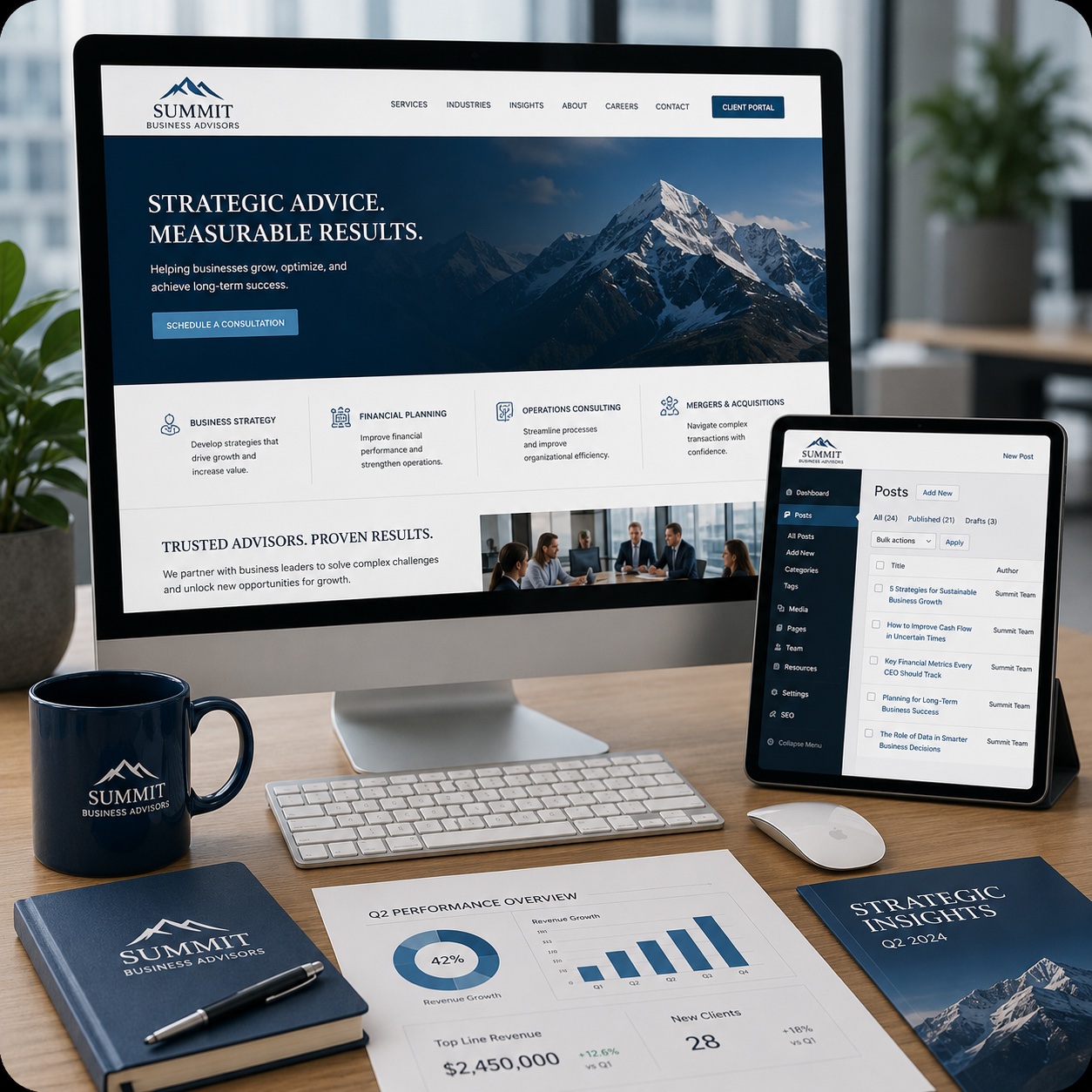
A content management system gives organizations the ability to manage website content efficiently while maintaining flexibility for future growth. Our CMS development services help businesses create scalable, secure, and easy-to-manage websites that simplify content updates, support marketing initiatives, and improve overall operational efficiency. Whether launching a new website or replacing an outdated platform, a properly developed CMS provides greater control and long-term value.
Modern content management systems allow organizations to publish content, update pages, manage media, support ecommerce functionality, and expand digital capabilities without relying on ongoing developer assistance. Our team develops customized CMS solutions designed around your business requirements, helping improve usability, search visibility, security, and website performance while creating a strong foundation for future growth.
- Custom CMS Development
- WordPress & Open Source Solutions
- Ecommerce & Content Integration
- Scalable & Easy-to-Manage Platforms

── FLEXIBLE WEBSITE MANAGEMENT
Content Management Systems Built for Growth
A content management system (CMS) provides the foundation for a website that is easy to manage, scalable, and capable of supporting long-term business growth. Modern organizations require the ability to publish content, update pages, manage media, launch marketing campaigns, and expand digital capabilities without relying on developers for routine updates. A properly designed CMS empowers businesses to maintain greater control over their online presence while improving efficiency across departments and marketing initiatives.
Our CMS development services help organizations create customized platforms that align with their operational requirements, customer expectations, and growth objectives. Whether launching a corporate website, healthcare platform, ecommerce solution, educational resource center, or content-driven digital property, we develop systems that prioritize usability, performance, security, search visibility, and future scalability. The result is a website that is easier to manage, more adaptable to changing business needs, and better positioned to support ongoing success.
Why Businesses Choose Content Management Systems
Content management systems have become the preferred foundation for modern business websites because they provide flexibility, efficiency, and long-term scalability. A properly implemented CMS allows organizations to manage content, support marketing initiatives, improve operational workflows, and expand digital capabilities without the complexity and expense of maintaining custom-coded solutions. As businesses grow, a CMS provides the adaptability needed to support evolving goals and customer expectations.




── CMS STRATEGY & SUPPORT
Why Choose Us for Content Management System Services
Full-Service CMS Development for Growing Businesses
A successful content management system requires more than basic software setup. It needs the right strategy, structure, usability, security, performance, and long-term flexibility to support your organization’s website, marketing, content, and growth objectives. At Illumination Consulting, we help businesses create CMS platforms that are easier to manage, better organized, and built to support future expansion.
Our team combines website design, CMS development, content strategy, SEO, ecommerce, marketing, and business consulting to create systems that work beyond launch. Whether you need a WordPress website, ecommerce content platform, custom CMS configuration, or improved website management process, we help you build a digital foundation that supports efficiency, visibility, and measurable business growth.
Flexible CMS Solutions Without Long-Term Commitments
Our CMS services are designed to provide professional support without unnecessary long-term agreements. Whether you need platform selection, content migration, website updates, custom functionality, performance improvements, or ongoing support, we provide flexible solutions based on your organization’s needs and growth goals.
CMS Platforms Built for Performance and Long-Term Value
A CMS should make your website easier to manage while supporting marketing, SEO, lead generation, content publishing, and future scalability. We develop content management systems that improve usability, strengthen website performance, simplify internal workflows, and provide a stronger foundation for long-term digital growth.
How We Help Businesses Succeed with Content Management Systems
A content management system is more than a tool for editing website pages. The right CMS becomes the foundation for content publishing, search engine visibility, lead generation, customer engagement, and long-term website growth. Our team helps organizations select, configure, customize, and optimize content management systems that support operational efficiency and business objectives.
Whether you are launching a new website, migrating from an outdated platform, improving website performance, or expanding functionality, our CMS specialists provide strategic guidance and technical expertise. We help businesses leverage modern content management systems to improve website administration, strengthen digital marketing efforts, and create scalable online platforms that evolve alongside the organization.

CMS Strategy & Platform Selection
Evaluate content management platforms based on business objectives, scalability requirements, marketing goals, ecommerce needs, and long-term website management. Our consultants help identify the right CMS solution for current requirements and future growth.

CMS Design & Custom Development
Create powerful, user-friendly websites built on leading content management systems. Our team designs and develops custom CMS websites that provide flexibility, performance, security, and an exceptional user experience across desktop and mobile devices.

Content, SEO & Marketing Integration
Maximize the value of your CMS through content publishing workflows, SEO optimization, landing page development, blog management, lead generation tools, analytics integration, and marketing automation capabilities designed to support business growth and profitability.

CMS Management & Ongoing Support
Keep your website secure, updated, optimized, and performing at its best. Our support services include software updates, security monitoring, performance improvements, content assistance, troubleshooting, feature enhancements, and long-term platform management.
Transform Your Website with Expert CMS Solutions
From WordPress and ecommerce platforms to custom content management systems, our experts help businesses create scalable websites that are easier to manage, optimize, and grow. Discover how the right CMS can improve efficiency, strengthen digital marketing, and support your long-term business objectives.
Our Content Management System Implementation Process
Selecting and implementing the right content management system is one of the most important decisions for a website. A properly configured CMS improves website management, content publishing, search engine optimization, security, scalability, and long-term digital growth. Our proven process helps businesses identify the right platform, customize it to their needs, and deploy a solution that supports both current requirements and future expansion.
Discovery & Requirements Analysis
Every successful CMS project begins with understanding business objectives, website requirements, content workflows, user roles, marketing goals, and future growth plans. This phase allows us to identify the most effective platform and roadmap.
Platform Selection & Strategic Planning
Not every content management system is the right fit. We evaluate available solutions, define technical requirements, establish content architecture, and develop a comprehensive implementation strategy designed around your business goals.
Design, Development & Customization
Our team designs and develops the website while customizing the CMS to support content management, user permissions, integrations, workflows, ecommerce requirements, existing optimization, and other specialized functionality needed by the organization.
Content Migration & Optimization
Existing content, images, media assets such as videos, and website resources are organized, optimized, and migrated into the new platform. This stage also includes SEO considerations, existing optimization, content structure improvements, and performance optimization.

Testing, Launch & Ongoing Support
Before launch, we perform extensive testing to ensure functionality, security, usability, mobile responsiveness, and performance standards are met. Following deployment, we provide ongoing support, updates, enhancements, and CMS management services to help maintain long-term success.
Content Management System Benefits
A modern content management system empowers businesses to manage website content, improve operational efficiency, support digital marketing, and scale their online presence without relying on complex technical processes. The right CMS creates a stronger foundation for website growth, search engine visibility, customer engagement, and long-term business success.


── FEATURED PROJECTS
CMS Websites That Drive Growth


Content Management System Questions and Answers
A content management system, often called a CMS, is software that allows businesses to create, edit, publish, and manage website content without needing advanced coding knowledge. A CMS can manage pages, blog posts, images, videos, products, forms, resources, and other website content through an administrative dashboard.
A CMS gives your business more control over its website. Instead of relying on a developer for every content update, your team can manage pages, publish new content, update service information, add images, and support marketing campaigns more efficiently.
Popular CMS platforms include WordPress, Shopify, WooCommerce, Magento, Drupal, Joomla, and custom-built content management systems. The best platform depends on your business goals, website type, ecommerce needs, content requirements, budget, and long-term growth plans.
The right CMS should match your business goals, internal resources, content needs, marketing strategy, ecommerce requirements, security concerns, and scalability expectations. A professional CMS consultant can help evaluate platforms and recommend the best fit.
Yes. WordPress is one of the most widely used CMS platforms because it is flexible, scalable, SEO-friendly, and supported by a large ecosystem of plugins, themes, and development resources. It works well for many business websites, blogs, service pages, resource centers, and ecommerce websites using WooCommerce.
Yes. Shopify is an ecommerce platform with CMS functionality. It allows businesses to manage products, collections, pages, blogs, images, orders, customers, and storefront content. Shopify is especially useful for businesses that want to sell products online with a managed ecommerce platform.
Yes. Existing websites can often be migrated to a new CMS. This process may include moving content, images, blog posts, products, metadata, URLs, design elements, and functionality into a new platform while preserving SEO value and improving website management.
Yes. A properly configured CMS can support SEO through optimized page structure, metadata, clean URLs, internal linking, blog publishing, mobile responsiveness, fast loading speeds, schema markup, and content management tools. The CMS itself does not guarantee rankings, but it provides the foundation for better SEO execution.
Absolutely. A CMS makes it easier to publish blog articles, service pages, landing pages, case studies, resources, guides, and educational content. This helps businesses build authority, attract organic traffic, and support long-term digital marketing strategies.
Yes. Many CMS platforms support ecommerce either natively or through integrations. Shopify, WooCommerce, Magento, and other platforms allow businesses to manage products, payments, shipping, promotions, customer accounts, and online orders.
A CMS provides a dashboard for managing content, while a custom-coded website may require developer support for most updates. CMS websites are often easier to manage, more scalable for content publishing, and more practical for businesses that need regular updates.
Yes. Most content management systems allow multiple users with different roles and permissions. Administrators, editors, authors, marketers, and content managers can access specific areas of the website based on their responsibilities.
A CMS can be secure when it is properly configured, updated, monitored, and maintained. Security best practices include software updates, strong passwords, SSL certificates, backups, firewall protection, user permission controls, and regular security monitoring.
CMS project timelines depend on the website size, platform selection, design requirements, content migration, custom functionality, integrations, and approval process. Smaller CMS websites may take several weeks, while larger or more complex platforms may require a longer development timeline.
CMS website costs vary based on project scope, design complexity, platform requirements, number of pages, content migration, ecommerce functionality, integrations, and ongoing support needs. A consultation helps determine the best solution and investment level for your organization.
Yes. CMS platforms can often integrate with CRM systems, email marketing platforms, analytics tools, payment processors, scheduling systems, membership platforms, inventory systems, customer portals, and marketing automation software.
Yes. A CMS can support lead generation through landing pages, contact forms, calls-to-action, downloadable resources, appointment scheduling, newsletter signups, live chat, and CRM integrations. Strategic setup helps turn website visitors into qualified leads.
Yes. CMS websites require ongoing maintenance to keep software, plugins, themes, security features, backups, and performance optimization current. Regular maintenance helps prevent technical issues, security risks, and performance problems.
Yes. A major benefit of a CMS is that business teams can manage many website updates internally. With proper training, your team can update text, images, blog posts, service pages, products, and other website content.
CMS customization involves configuring or developing features that match your business needs. This may include custom page layouts, user roles, workflows, forms, ecommerce features, search functions, integrations, dashboards, or content publishing tools.
Yes, when properly optimized. CMS performance can be improved through quality hosting, image optimization, caching, clean code, plugin management, database optimization, and performance-focused development practices.
Yes. A scalable CMS can support new pages, new services, blog growth, ecommerce expansion, multiple users, advanced integrations, and additional functionality as the business grows.
Look for a company with experience in website design, CMS development, SEO, security, content strategy, ecommerce, integrations, and long-term support. The right partner should understand both the technical side of CMS development and the business goals behind the website.
Yes. CMS migration services can help move an existing website from one platform to another while preserving important content, URLs, metadata, images, blog posts, products, and SEO value whenever possible.
Illumination Consulting combines CMS development, website design, SEO, ecommerce, content strategy, marketing, and business consulting. This integrated approach helps organizations build content management systems that are easier to manage, better optimized, and designed to support long-term business growth.

