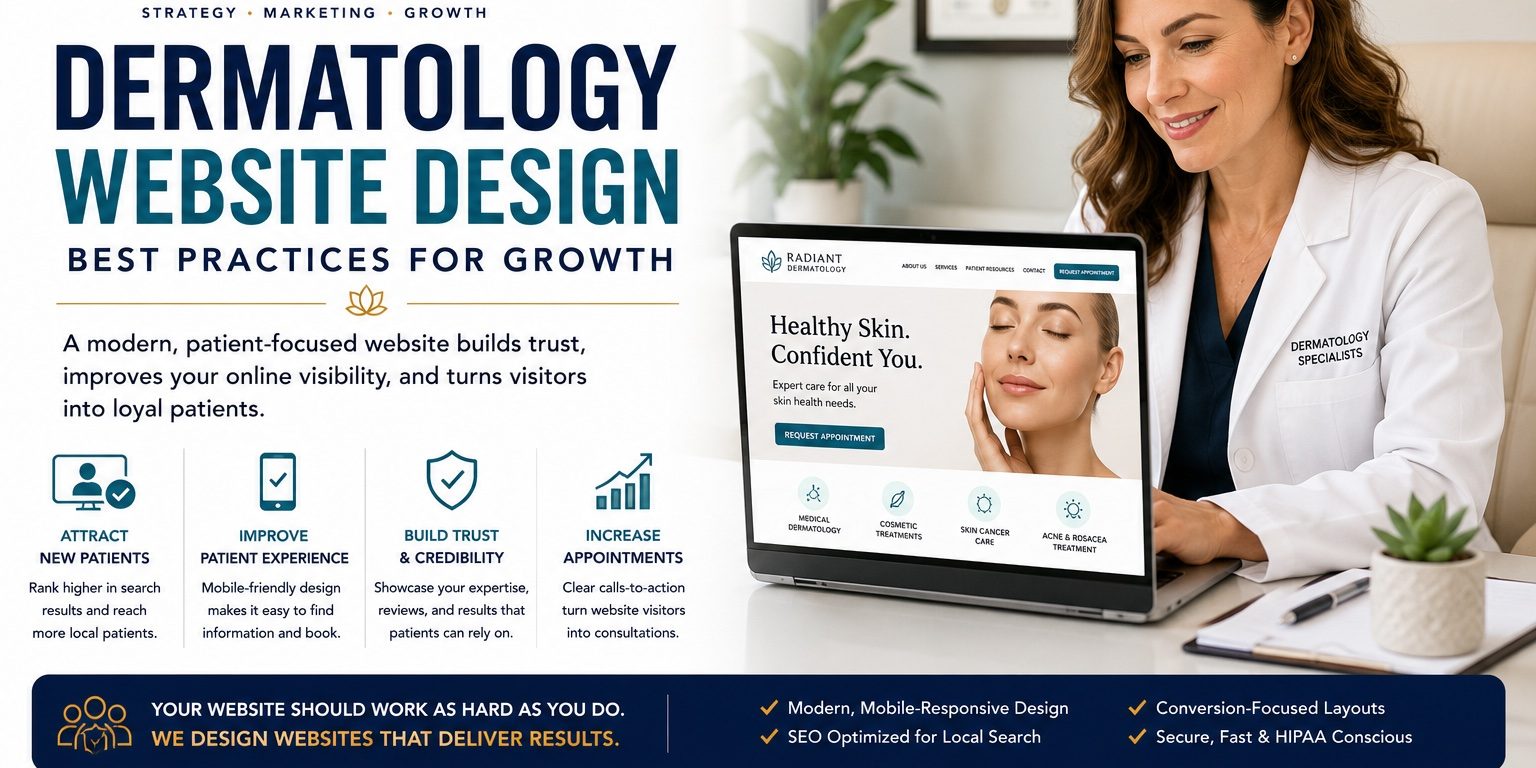
For many patients, a dermatologist’s website creates the very first impression of the practice. Before scheduling an appointment, prospective patients often compare multiple providers online, review available services, browse physician credentials, evaluate patient reviews, and assess whether a practice appears modern, trustworthy, and professional. Within just a few seconds, visitors begin deciding whether they feel confident enough to contact your office or continue searching elsewhere.
A high-performing dermatology website is much more than a digital brochure. It serves as a powerful marketing asset that educates patients, builds credibility, supports search engine optimization (SEO), and converts visitors into appointment requests. Every page should be designed with the patient experience in mind while reinforcing your practice’s expertise and commitment to exceptional care.
Today’s patients expect convenience throughout their healthcare journey. They want mobile-friendly websites, online appointment requests, clear treatment information, physician biographies, insurance details, educational resources, and answers to frequently asked questions—all available without having to make a phone call. Practices that deliver this level of accessibility often generate more inquiries while providing a better overall patient experience.
Website design also influences how search engines evaluate your practice. Fast loading speeds, organized navigation, structured content, optimized images, and technical SEO improvements help increase visibility in local search results, allowing more prospective patients to discover your practice organically.
Whether your dermatology practice focuses on medical dermatology, cosmetic dermatology, Mohs surgery, pediatric dermatology, or a combination of specialty services, your website should reflect the same professionalism and attention to detail that patients experience during their office visits.
This guide explores the essential elements of effective dermatology website design, providing practical strategies that improve patient engagement, strengthen your online presence, and generate more appointment requests.
Why Website Design Matters for Dermatology Practices
Patients often associate the quality of a website with the quality of the medical practice itself.
A modern, intuitive website communicates professionalism, credibility, and attention to detail before a patient ever visits your office.
An effective website helps practices:
- Build patient confidence
- Increase appointment requests
- Improve local search visibility
- Educate prospective patients
- Showcase physician expertise
- Highlight available treatments
- Reduce administrative phone calls
- Strengthen brand reputation
- Support digital marketing campaigns
- Increase patient satisfaction
Your website should function as both an educational resource and one of your most valuable patient acquisition tools.
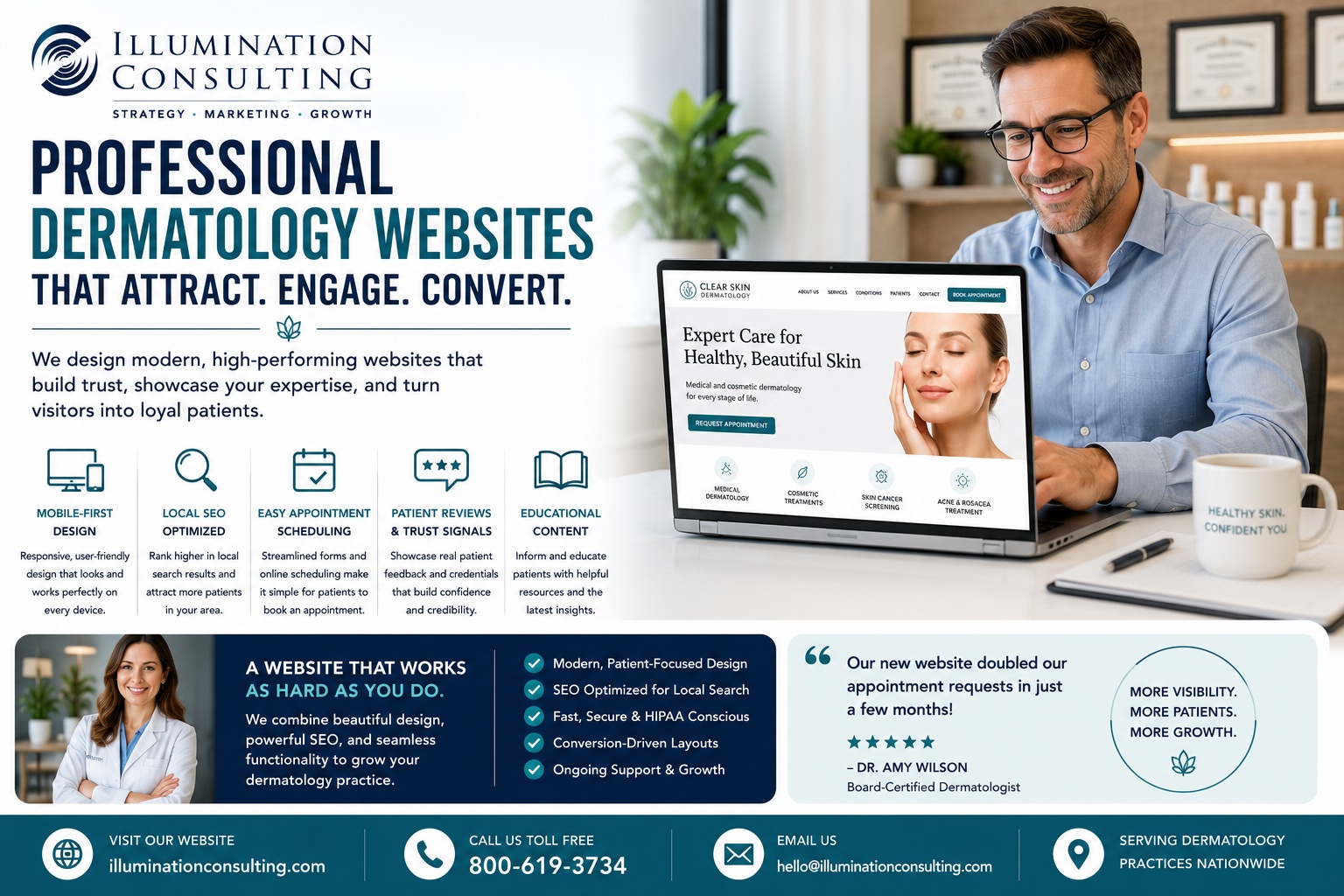
Prioritize Mobile-First Design
More than half of healthcare-related website visits now occur on smartphones and tablets.
Patients frequently search for dermatologists while commuting, during lunch breaks, or immediately after receiving referrals from friends or physicians.
A mobile-first design ensures every visitor enjoys an excellent browsing experience regardless of device.
Important mobile design considerations include:
- Responsive layouts
- Fast loading speeds
- Click-to-call functionality
- Easy navigation
- Large touch-friendly buttons
- Readable typography
- Optimized images
- Streamlined appointment forms
- Mobile-friendly maps
- Accessible contact information
A seamless mobile experience improves patient satisfaction while supporting stronger search engine rankings.
Simplify Website Navigation
Patients visit dermatology websites to find answers quickly.
Complicated menus and confusing page structures often lead visitors to abandon a website before scheduling an appointment.
Clear navigation should help patients locate information within seconds.
Essential navigation items include:
- About the Practice
- Meet the Providers
- Medical Dermatology
- Cosmetic Dermatology
- Conditions Treated
- Before-and-After Gallery
- Patient Resources
- Insurance Information
- Blog
- Contact
- Appointment Request
An organized navigation structure reduces frustration and encourages visitors to explore additional pages, increasing the likelihood that they will schedule an appointment.
Showcase Your Providers and Build Trust
Patients are not simply choosing a dermatology clinic—they are choosing the physicians and providers who will care for their skin. Your website should make it easy for visitors to learn about your team’s qualifications, experience, and treatment philosophy.
A well-crafted provider profile helps establish credibility while creating a personal connection before the patient’s first appointment.
Each provider page should include:
- Professional biography
- Board certifications
- Medical education
- Areas of specialization
- Professional memberships
- Awards and recognitions
- Personal philosophy of care
- Professional headshots
- Video introductions
- Links to published research where applicable
Authenticity is essential. Patients appreciate providers who appear approachable, knowledgeable, and genuinely committed to delivering exceptional care.
Create Dedicated Service Pages
One of the most common mistakes dermatology practices make is placing every treatment on a single services page.
Instead, each major service should have its own optimized landing page.
Examples include:
- Acne Treatment
- Eczema Treatment
- Psoriasis Treatment
- Skin Cancer Screenings
- Mohs Surgery
- Rosacea Treatment
- Cosmetic Dermatology
- Botox®
- Dermal Fillers
- Laser Treatments
- Chemical Peels
- Microneedling
Dedicated pages improve SEO by allowing each treatment to target specific search terms while providing patients with more comprehensive information.
Each page should explain:
- The condition or treatment
- Who is a candidate
- Benefits
- What to expect
- Recovery information
- Frequently asked questions
- Next steps
Comprehensive treatment pages help answer patient questions before they contact your office, creating a smoother decision-making process.
Use Professional Photography and Video
Visual content has a significant impact on patient perception.
Generic stock photography often makes a practice feel impersonal, while authentic imagery creates familiarity and trust.
Professional photography should include:
- Exterior building
- Reception area
- Treatment rooms
- Physicians
- Clinical staff
- Office environment
- Patient interactions (with permission)
- Modern equipment
Video content can further strengthen patient confidence.
Effective videos include:
- Physician introductions
- Office tours
- Procedure explanations
- Patient testimonials
- Educational skincare advice
- Frequently asked questions
Patients who see your physicians before arriving often feel more comfortable during their first visit.
Improve Local SEO Visibility
Most dermatology practices depend heavily on local patients.
Local SEO helps ensure your practice appears when prospective patients search for services within your geographic area.
Important local SEO strategies include:
- Google Business Profile optimization
- Location-specific landing pages
- Local keyword optimization
- Consistent business information
- Patient reviews
- Local citations
- Medical schema markup
- Internal linking
- Local backlinks
- Community involvement
Strong local SEO allows your website to attract patients actively searching for dermatologists nearby.
Publish Educational Content Regularly
Educational content benefits both patients and search engines.
Every article published creates another opportunity to answer patient questions while expanding your website’s keyword coverage.
High-performing dermatology topics include:
- Skin cancer prevention
- Acne treatment options
- Sunscreen recommendations
- Anti-aging skincare
- Rosacea management
- Eczema care
- Psoriasis treatment
- Mole evaluation
- Seasonal skincare tips
- Cosmetic procedure guides
Over time, a robust content library positions your practice as a trusted educational resource while generating consistent organic traffic.
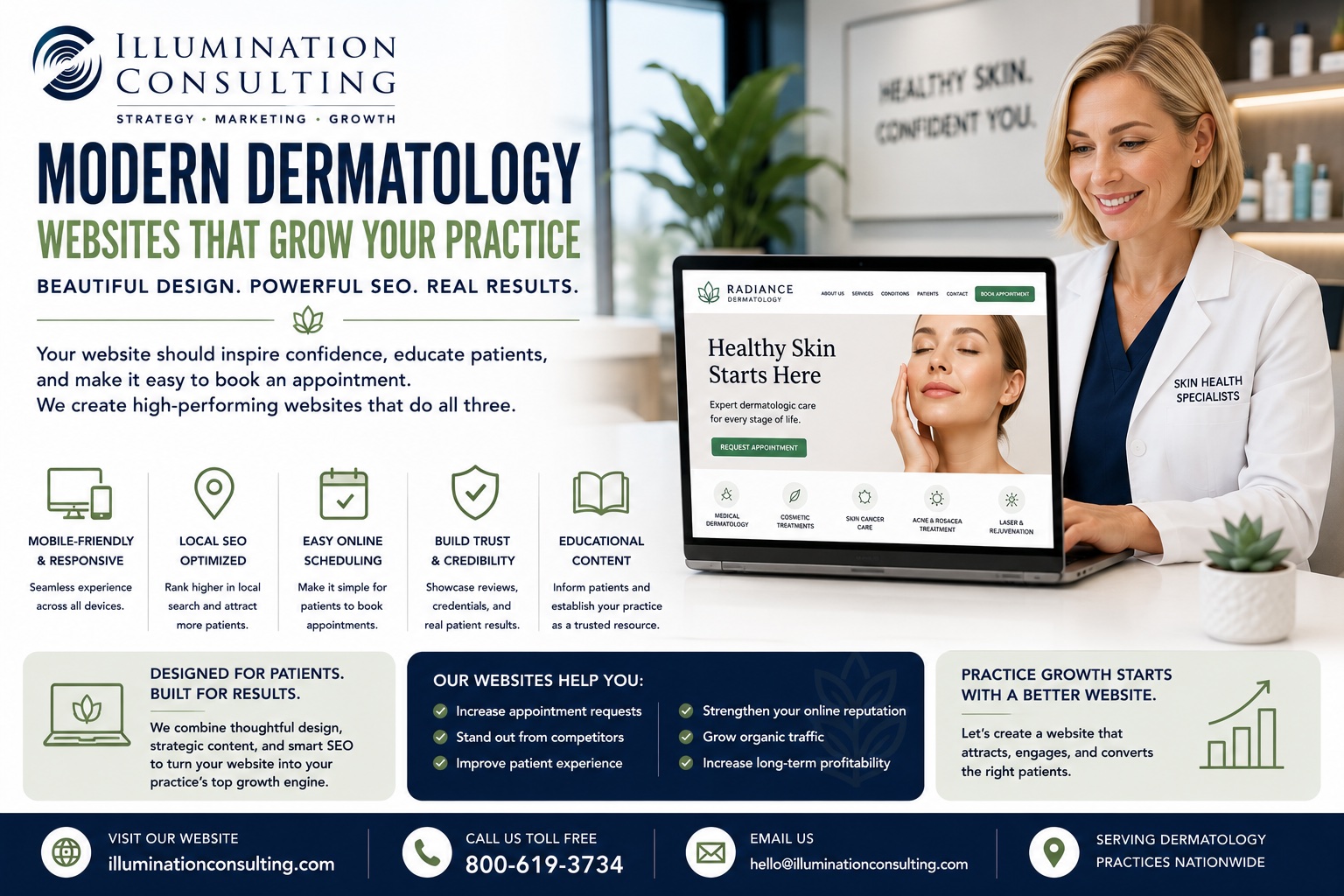
Build Social Proof Throughout Your Website
Patients want reassurance that others have had positive experiences with your practice.
Social proof reinforces credibility while reducing uncertainty during the decision-making process.
Effective trust signals include:
- Patient testimonials
- Google review ratings
- Before-and-after galleries
- Awards and recognitions
- Board certifications
- Professional affiliations
- Years of experience
- Media appearances
- Community involvement
- Published research
These elements should be distributed naturally throughout the website rather than concentrated on a single page.
Make Scheduling Simple
No matter how informative or visually appealing your website may be, its primary objective is to generate appointments.
Scheduling should be simple, intuitive, and accessible from every page.
Best practices include:
- Prominent “Request Appointment” buttons
- Online scheduling
- Click-to-call phone numbers
- Short contact forms
- Multiple contact options
- Office hours
- Interactive maps
- Insurance information
- Patient portal links
- Emergency contact information
Reducing friction during scheduling significantly improves conversion rates and enhances the overall patient experience.
Optimize Website Speed and Performance
Website speed directly affects both user experience and search engine rankings. Patients expect websites to load almost instantly, and delays of only a few seconds can increase bounce rates and reduce appointment requests.
A fast website also supports better SEO performance, making it easier for prospective patients to discover your practice through Google.
Performance improvements include:
- Image compression
- Next-generation image formats
- Browser caching
- Content Delivery Networks (CDNs)
- Optimized website code
- Fast hosting infrastructure
- Lazy loading images
- Reduced third-party scripts
- Minified CSS and JavaScript
- Routine performance testing
Regular speed optimization keeps your website competitive while providing a smoother browsing experience for every visitor.
Ensure Accessibility for Every Patient
Accessibility is an important consideration for both patient care and website usability.
An accessible website helps individuals with disabilities navigate your content more easily while also supporting broader usability improvements for all visitors.
Accessibility best practices include:
- Descriptive image alt text
- High color contrast
- Keyboard navigation
- Readable font sizes
- Logical heading structure
- Accessible forms
- Video captions
- Clear button labels
- Consistent navigation
- Screen reader compatibility
Designing with accessibility in mind demonstrates professionalism and ensures more patients can comfortably use your website.
Strengthen Security and Patient Confidence
Healthcare websites must inspire trust from the moment visitors arrive.
Patients often submit sensitive information through appointment request forms or patient portals, making website security essential.
Security features should include:
- SSL certificates (HTTPS)
- Secure hosting
- Spam protection
- Routine software updates
- Firewall protection
- Malware monitoring
- Secure contact forms
- Privacy policy
- HIPAA-compliant patient communication where applicable
- Routine website backups
Visible security measures reassure visitors that their information is being handled responsibly.
Measure Website Performance
A successful dermatology website should continuously evolve based on measurable performance data.
Rather than relying on assumptions, practices should regularly review analytics to identify opportunities for improvement.
Important metrics include:
- Website traffic
- Organic search rankings
- Appointment requests
- Contact form submissions
- Phone call conversions
- Bounce rate
- Average session duration
- Most visited pages
- Mobile performance
- Conversion rate
Monitoring these metrics helps practices understand patient behavior while improving website performance over time.
Common Dermatology Website Design Mistakes
Even well-established dermatology practices sometimes overlook website issues that reduce patient engagement and appointment requests.
Avoid these common mistakes:
- Outdated website design
- Slow page loading
- Generic stock photography
- Poor mobile experience
- Difficult navigation
- Weak calls to action
- Thin service pages
- Missing provider biographies
- Lack of educational content
- Inconsistent branding
- Broken links
- Missing local SEO optimization
Correcting these issues often produces noticeable improvements in both search visibility and patient conversions.
Frequently Asked Questions
Why is dermatology website design important?
A professional dermatology website helps build patient trust, improve online visibility, educate prospective patients, and generate more appointment requests. It often serves as the first impression patients have of your practice.
What features should every dermatology website include?
Essential features include responsive design, provider biographies, treatment pages, online appointment requests, patient reviews, educational content, contact information, insurance details, and secure patient communication options.
How does website design affect SEO?
Well-designed websites improve loading speed, mobile usability, navigation, and technical SEO, making it easier for search engines to index pages and rank them higher in search results.
Should dermatology practices publish blog articles?
Yes. Educational blog articles answer common patient questions, improve search engine rankings, establish physician authority, and attract qualified organic traffic from Google.
How often should a dermatology website be updated?
Content should be updated regularly, while website technology, security, images, and provider information should be reviewed throughout the year to ensure accuracy, performance, and compliance.
Can a better website increase patient appointments?
Absolutely. A modern, user-friendly website with strong SEO, clear calls to action, educational resources, and streamlined appointment scheduling can significantly increase qualified patient inquiries and appointment requests.
Your Website Should Be Your Practice’s Hardest-Working Team Member
An effective dermatology website works around the clock to educate prospective patients, answer common questions, build trust, and generate new appointment requests. Rather than serving as a static online brochure, it should function as an integral part of your practice’s patient acquisition strategy—supporting marketing efforts while delivering an outstanding user experience.
The most successful dermatology practices continuously improve their websites based on patient behavior, search engine trends, and evolving technology. By investing in modern design, valuable educational content, technical SEO, fast performance, and intuitive navigation, your website becomes a long-term business asset that consistently attracts and converts qualified patients.
Whether you specialize in medical dermatology, cosmetic procedures, skin cancer treatment, or comprehensive skin health, a professionally designed website helps position your practice as a trusted authority within your community.
At Illumination Consulting, we specialize in designing high-performance dermatology websites that combine exceptional design, SEO best practices, conversion optimization, content marketing, and patient-focused user experiences. Our websites are built to help dermatology practices increase visibility, strengthen patient confidence, and generate sustainable long-term growth.