Today’s cosmetic surgery patients are more informed, selective, and digitally connected than ever before. Before scheduling a consultation, they spend considerable time researching procedures, comparing surgeons, reading reviews, browsing before-and-after galleries, and evaluating the overall professionalism of a practice online. Their decision is rarely based on price alone. Instead, it is influenced by trust, reputation, expertise, and confidence in the surgeon’s ability to deliver exceptional results.
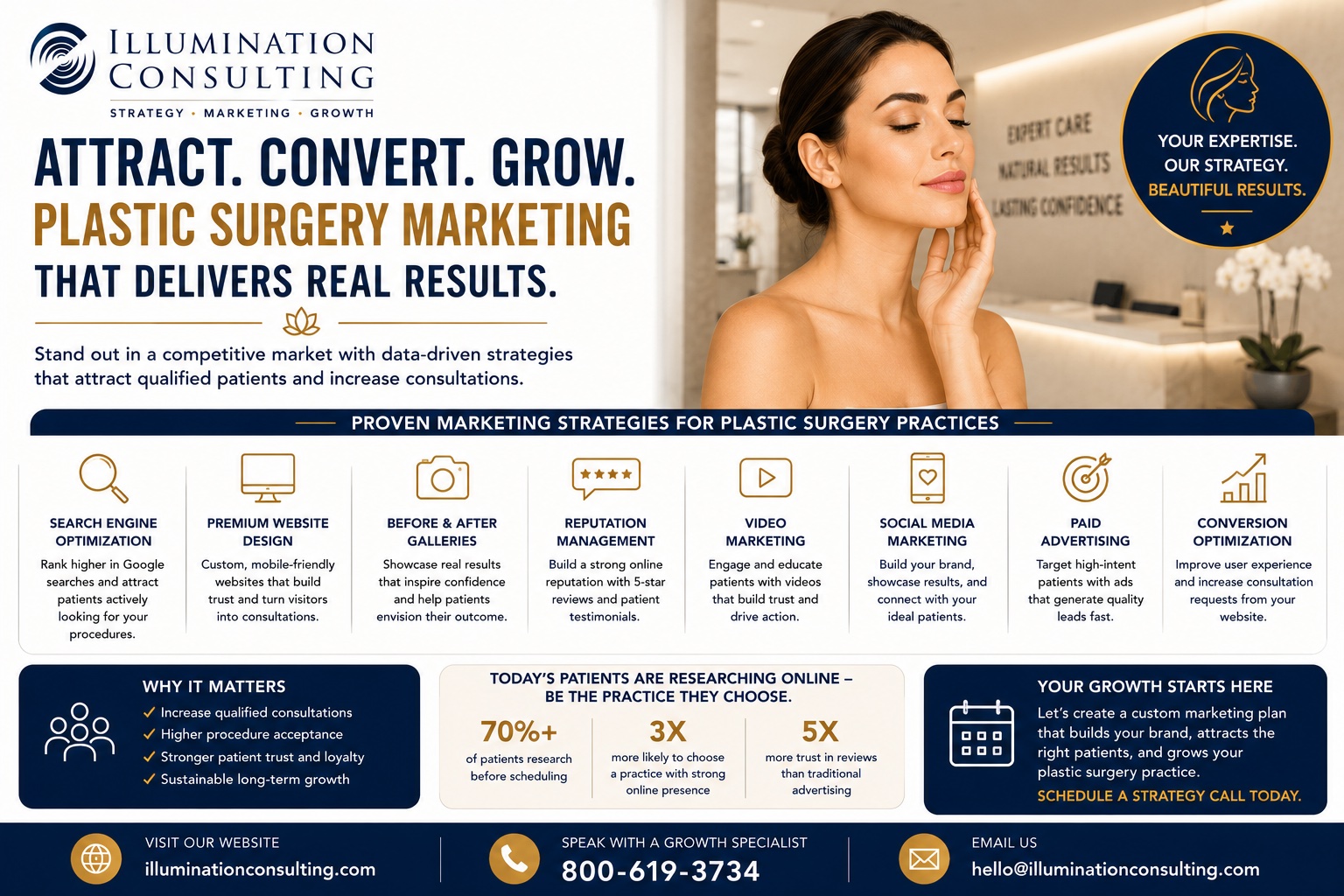
As competition continues to increase, effective plastic surgery marketing has evolved far beyond traditional advertising. Successful practices now rely on integrated digital strategies that combine professional branding, search engine optimization (SEO), educational content, social media, patient testimonials, video marketing, reputation management, and high-performing websites that convert visitors into consultations.
Unlike many other healthcare specialties, cosmetic surgery is often an emotional and highly personal decision. Patients are investing in their appearance, confidence, and quality of life. Every interaction with your practice should reinforce professionalism, empathy, transparency, and clinical excellence. From the first Google search to the post-operative follow-up, each touchpoint influences whether a prospective patient chooses your practice over another.
Marketing also plays an essential role in shaping perception. Practices with polished branding, informative content, authentic patient stories, and exceptional online experiences naturally position themselves as trusted leaders within their markets. Those that neglect their digital presence often struggle to compete, regardless of the quality of care they provide.
Whether your practice specializes in facial rejuvenation, body contouring, breast procedures, reconstructive surgery, or a combination of cosmetic services, a strategic marketing plan helps attract qualified patients while strengthening your reputation for years to come.
This guide explores proven plastic surgery marketing strategies that help premium practices increase visibility, generate qualified consultations, strengthen patient trust, and build sustainable long-term growth.
Build a Premium Brand Before Selling Your Services
Luxury cosmetic surgery patients are not simply purchasing a procedure—they are choosing a surgeon they trust with one of the most personal decisions they will ever make.
That trust begins with your brand.
Every aspect of your practice should communicate professionalism, expertise, sophistication, and attention to detail.
Strong branding includes:
- Professional logo and visual identity
- Consistent brand messaging
- Luxury website design
- High-quality photography
- Elegant office environment
- Professional staff presentation
- Consistent patient communications
- Premium printed materials
- Educational resources
- Strong reputation across every platform
A cohesive brand creates confidence before a prospective patient ever schedules a consultation.
Develop a Website That Inspires Confidence
Your website is often the first impression prospective patients have of your practice.
Within seconds, visitors begin evaluating your professionalism, experience, aesthetic style, and overall credibility.
An effective plastic surgery website should accomplish far more than simply listing procedures.
Essential features include:
- Mobile-responsive design
- Fast page loading speeds
- Individual procedure pages
- Before-and-after galleries
- Surgeon biographies
- Patient testimonials
- Educational videos
- Frequently asked questions
- Financing information
- Online consultation requests
- Secure contact forms
- Clear calls to action
An exceptional website reduces uncertainty, answers common questions, and encourages prospective patients to take the next step by scheduling a consultation.
Invest in Search Engine Optimization (SEO)
Many patients begin their cosmetic surgery journey by searching Google for procedures, surgeons, or treatment options in their area.
Appearing prominently in search results places your practice in front of highly qualified individuals who are already actively researching cosmetic procedures.
An effective SEO strategy should include:
- Local SEO optimization
- Google Business Profile optimization
- Procedure-specific landing pages
- Educational blog articles
- Internal linking
- Technical SEO
- Schema markup
- Reputation management
- High-quality backlinks
- Ongoing content development
Unlike paid advertising, SEO builds long-term visibility that continues generating qualified patient inquiries long after individual marketing campaigns have ended.
Create Educational Content That Builds Authority
Patients considering plastic surgery often spend weeks or even months researching procedures before contacting a surgeon. During this research phase, they are looking for reliable information that answers their questions, reduces uncertainty, and helps them make informed decisions.
Practices that consistently publish educational content position themselves as trusted experts while improving their visibility in search engines.
High-value content ideas include:
- Procedure guides
- Recovery timelines
- Frequently asked questions
- Before-and-after expectations
- Candidate qualification articles
- Surgical safety information
- Financing options
- Patient success stories
- Video explanations
- Surgeon interviews
Educational content should prioritize helping prospective patients rather than aggressively promoting services. Trust develops naturally when patients feel informed instead of pressured.
Showcase Authentic Before-and-After Results
Few marketing assets are more influential than high-quality before-and-after photography.
Prospective patients want to see real examples of your work so they can better understand your surgical style, aesthetic approach, and attention to detail.
When developing a gallery:
- Use consistent lighting
- Maintain identical patient positioning
- Include multiple viewing angles
- Showcase a variety of procedures
- Display realistic outcomes
- Organize galleries by procedure
- Include patient consent
- Keep image quality professional
- Optimize images for website performance
- Update galleries regularly
Authentic visual results often communicate surgical expertise more effectively than written descriptions alone.
Build Trust Through Patient Reviews and Testimonials
Reputation has become one of the strongest influences on patient decision-making.
Before scheduling consultations, many prospective patients read dozens of online reviews across multiple platforms.
Positive patient experiences provide valuable social proof while reducing uncertainty.
Encourage satisfied patients to leave reviews on:
- Google Business Profile
- RealSelf
- Healthgrades
- Yelp
- Practice website
- Video testimonials
- Case studies
Never fabricate reviews or offer incentives that violate platform guidelines. Authentic patient experiences are significantly more persuasive than overly polished marketing messages.
Use Video Marketing to Create Personal Connections
Video allows prospective patients to become familiar with your personality before ever visiting your practice.
Seeing how a surgeon communicates helps reduce anxiety while establishing credibility and approachability.
Effective video content includes:
- Surgeon introductions
- Procedure explanations
- Consultation expectations
- Recovery guidance
- Frequently asked questions
- Patient testimonials
- Behind-the-scenes practice tours
- Staff introductions
- Educational webinars
- Live Q&A sessions
Video also performs exceptionally well on search engines and social media, increasing both engagement and visibility.
Leverage Social Media Strategically
Social media should support your overall marketing strategy rather than serve as your only marketing channel.
Patients increasingly use platforms like Instagram, Facebook, YouTube, and TikTok to research cosmetic procedures and evaluate surgeons.
Successful practices share content that informs, inspires, and builds confidence.
Examples include:
- Before-and-after results
- Educational procedure videos
- Patient success stories
- Practice updates
- Surgeon insights
- Recovery tips
- Staff spotlights
- Community involvement
- Frequently asked questions
- Office culture
Consistency is far more valuable than posting frequently without purpose.
Every piece of content should reinforce your expertise and professionalism.
Optimize the Consultation Experience
Marketing does not stop when a prospective patient schedules a consultation.
The consultation itself is one of the most important conversion opportunities within the patient journey.
Patients should leave feeling informed, respected, and confident in their decision.
Best practices include:
- Warm, professional greeting
- Minimal wait times
- Personalized consultations
- Clear treatment recommendations
- Honest expectations
- Transparent pricing discussions
- Financing guidance
- Comprehensive educational materials
- Time for patient questions
- Follow-up communication
Exceptional consultations consistently produce higher treatment acceptance rates and stronger patient satisfaction.
Implement Email Marketing That Educates
Email marketing remains one of the highest-return marketing channels available to plastic surgery practices.
Rather than sending constant promotional offers, develop educational campaigns that nurture prospective patients throughout their decision-making process.
Useful email content includes:
- Procedure education
- Recovery planning
- Seasonal promotions
- Practice news
- Blog articles
- Video resources
- Financing information
- Consultation reminders
- Patient success stories
- Practice events
Consistent communication helps keep your practice top of mind while reinforcing trust over time.
Paid Advertising for Immediate Visibility
Although SEO creates sustainable long-term growth, paid advertising can generate qualified consultations much more quickly.
Campaigns should focus on attracting highly qualified patients rather than maximizing traffic.
Effective advertising channels include:
- Google Ads
- Local Service Ads where applicable
- Meta advertising
- YouTube advertising
- Display remarketing
- Procedure-specific landing pages
- Geographic targeting
- Demographic targeting
- Consultation campaigns
- Brand awareness campaigns
Paid advertising performs best when supported by an outstanding website, compelling content, and a strong reputation.
Measure Marketing Performance
Every successful marketing strategy should be guided by measurable results rather than assumptions. Tracking the right metrics allows plastic surgery practices to identify what is working, eliminate ineffective campaigns, and invest more confidently in long-term growth.
Rather than focusing solely on website traffic, measure performance throughout the entire patient acquisition process.
Key performance indicators include:
- Website traffic
- Organic search rankings
- Consultation requests
- Consultation-to-procedure conversion rate
- Cost per lead
- Cost per consultation
- Patient acquisition cost
- Procedure revenue by marketing channel
- Online review growth
- Return on marketing investment (ROMI)
Reviewing these metrics monthly provides valuable insights that help refine your marketing strategy and improve profitability.
Common Plastic Surgery Marketing Mistakes
Many practices invest significant resources into marketing without achieving the results they expect. In many cases, the issue is not the budget—it is the strategy.
Avoid these common mistakes:
- Relying solely on referrals
- Outdated website design
- Poor mobile experience
- Generic procedure pages
- Weak calls to action
- Inconsistent branding
- Neglecting SEO
- Ignoring online reviews
- Infrequent content creation
- Slow responses to inquiries
- Low-quality before-and-after photography
- Inconsistent social media activity
Eliminating these obstacles creates a stronger digital presence while improving the patient experience from the very first interaction.
Build a Five-Star Online Reputation
A premium reputation is one of the most valuable assets a plastic surgery practice can develop.
Today’s patients frequently compare multiple surgeons before scheduling a consultation. They evaluate online reviews, testimonials, credentials, case results, and patient experiences to determine which practice they trust most.
Protecting and strengthening your reputation requires ongoing attention.
Best practices include:
- Request reviews after successful outcomes
- Respond professionally to all reviews
- Monitor review platforms regularly
- Address concerns promptly
- Highlight patient success stories
- Showcase awards and recognitions
- Maintain accurate online listings
- Publish educational content consistently
- Engage professionally on social media
- Deliver exceptional patient experiences
A strong reputation not only influences prospective patients but also supports higher search engine visibility and stronger referral growth.
Create a Seamless Patient Journey
Marketing should not be viewed as isolated campaigns. Instead, every interaction should be part of a carefully designed patient journey that builds confidence from beginning to end.
Each stage should reinforce your expertise and professionalism.
A successful patient journey typically includes:
- Google search
- Website visit
- Educational content
- Before-and-after gallery
- Patient testimonials
- Consultation request
- Personalized consultation
- Procedure scheduling
- Surgery and recovery
- Follow-up care
- Review request
- Referral opportunity
When every stage is intentionally designed, patients experience a smoother decision-making process and are more likely to recommend your practice to others.
Frequently Asked Questions
What is plastic surgery marketing?
Plastic surgery marketing is the process of promoting cosmetic and reconstructive surgery practices through branding, SEO, content marketing, paid advertising, social media, reputation management, website design, and patient engagement strategies to attract qualified consultations.
What is the best marketing strategy for plastic surgeons?
The most effective strategy combines search engine optimization, educational content, premium website design, patient reviews, before-and-after galleries, social media, video marketing, and targeted paid advertising. These channels work together to build trust and generate qualified patient inquiries.
Why is SEO important for plastic surgery practices?
Most prospective patients begin researching cosmetic procedures online. SEO helps your practice appear in Google search results for high-intent keywords, increasing visibility and generating qualified organic traffic without relying exclusively on paid advertising.
How important are before-and-after photos?
They are one of the most influential marketing assets available to plastic surgeons. High-quality before-and-after galleries demonstrate surgical expertise, establish credibility, and help prospective patients visualize potential outcomes.
Does social media help plastic surgery practices grow?
Yes. Social media helps practices educate prospective patients, showcase results, humanize the practice, strengthen brand awareness, and maintain ongoing engagement throughout the patient decision-making process.
How long does it take to see marketing results?
Paid advertising may generate consultations within days or weeks, while SEO, content marketing, and reputation building typically require several months to produce significant long-term growth. The most successful practices invest in both short-term and long-term marketing strategies.
Position Your Practice as the First Choice
Exceptional plastic surgery marketing is built on trust, expertise, and consistency. Patients are making deeply personal decisions, and they want confidence that they are choosing a surgeon who delivers outstanding results while prioritizing safety, education, and patient care. Every interaction—whether through your website, educational content, consultation process, or follow-up communication—contributes to that confidence.
Rather than relying on a single marketing tactic, successful practices create an integrated strategy that strengthens every stage of the patient journey. A premium brand, search visibility, compelling before-and-after galleries, authentic patient testimonials, educational resources, and an outstanding consultation experience work together to differentiate your practice in an increasingly competitive market.
Practices that consistently invest in their digital presence, reputation, and patient experience are better positioned to attract qualified cosmetic surgery patients, increase consultation conversions, and build sustainable long-term growth.
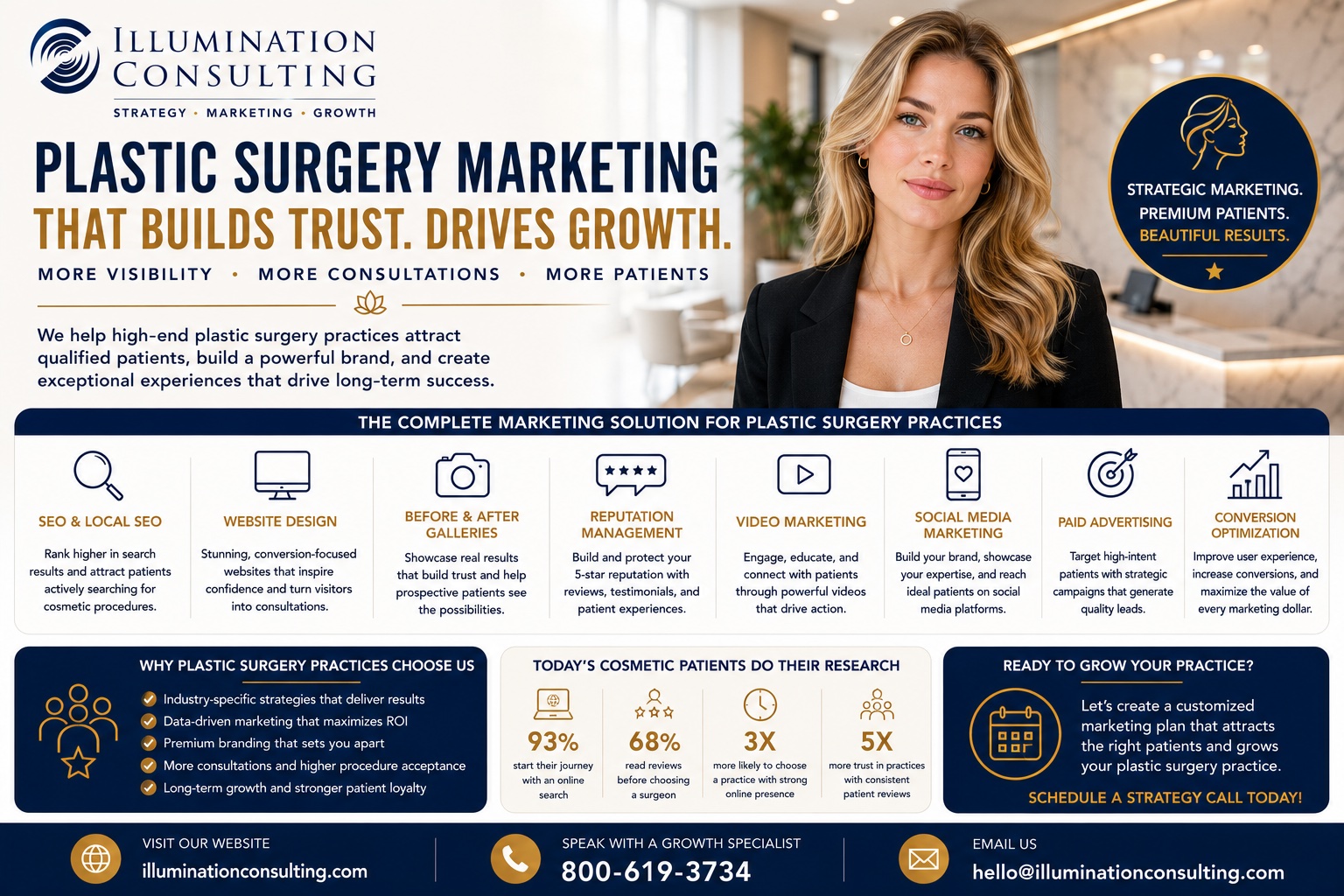
At Illumination Consulting, we specialize in helping plastic surgery practices grow through premium website design, SEO, content marketing, paid advertising, reputation management, conversion optimization, and comprehensive digital marketing strategies. We help practices build authority, attract ideal patients, and establish a market-leading presence that supports long-term success.