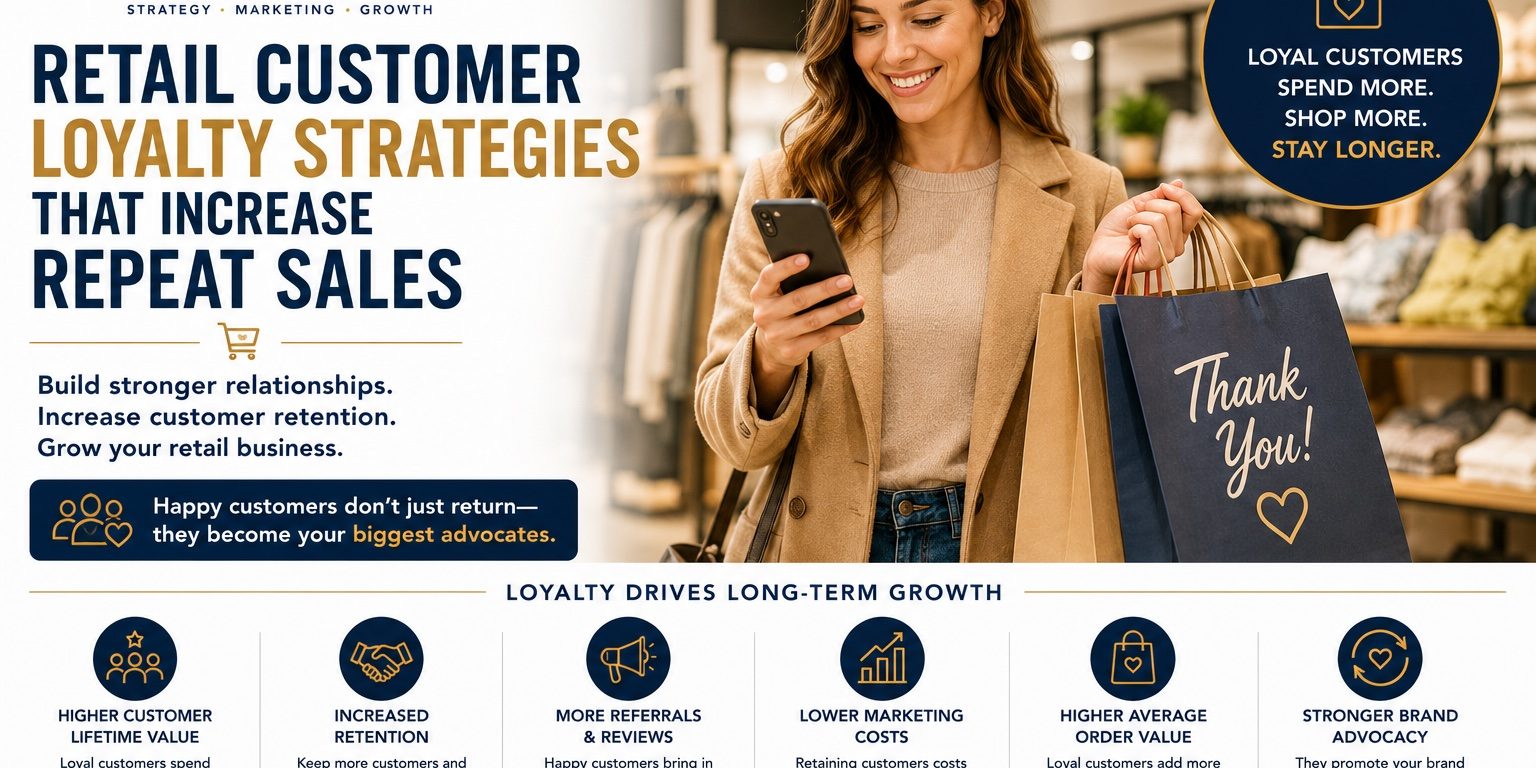
Winning a customer’s first purchase is an important milestone, but the most successful retailers understand that long-term profitability comes from earning the second, third, and tenth purchase. While many businesses invest heavily in attracting new customers, sustainable growth is built by retaining existing ones and encouraging them to return repeatedly.
Customer loyalty has become increasingly valuable as acquisition costs continue to rise across digital advertising, social media, and search marketing. Consumers now have countless shopping options available within seconds, making it easier than ever to switch brands when expectations are not met. Retailers that consistently deliver exceptional experiences, personalized communication, and meaningful value are far more likely to build lasting customer relationships. Retail marketing is a cornerstone of retail success.
Modern shoppers expect far more than competitive pricing. They look for convenience, authenticity, outstanding service, consistent product quality, and brands that understand their preferences. Businesses that meet these expectations create emotional connections that extend well beyond individual transactions.
Loyal customers also provide benefits that cannot be measured solely by sales. They generate referrals, leave positive online reviews, engage with your content, promote your business on social media, and often become ambassadors who influence purchasing decisions within their families and communities.
Whether you operate a boutique storefront, an e-commerce business, or a multi-location retail company, investing in customer loyalty delivers measurable returns over time. Higher retention rates reduce marketing costs, increase lifetime customer value, and create a more predictable revenue stream that supports long-term business growth.
In this guide, we’ll explore proven retail customer loyalty strategies that help businesses strengthen relationships, improve customer retention, and turn first-time buyers into lifelong customers.
Why Customer Loyalty Matters More Than Ever
Acquiring new customers will always be an essential part of growing a retail business, but retaining existing customers is often significantly more profitable.
Returning customers typically spend more, purchase more frequently, and require less marketing investment than new shoppers. They are already familiar with your products, understand your brand values, and have developed confidence in your business.
Strong customer loyalty provides several long-term advantages:
- Higher customer lifetime value
- Increased repeat purchases
- More predictable monthly revenue
- Lower customer acquisition costs
- Stronger word-of-mouth marketing
- Better online reviews
- Higher average order values
- Greater resilience during economic downturns
Instead of constantly chasing new customers, successful retailers build systems that encourage shoppers to return again and again.
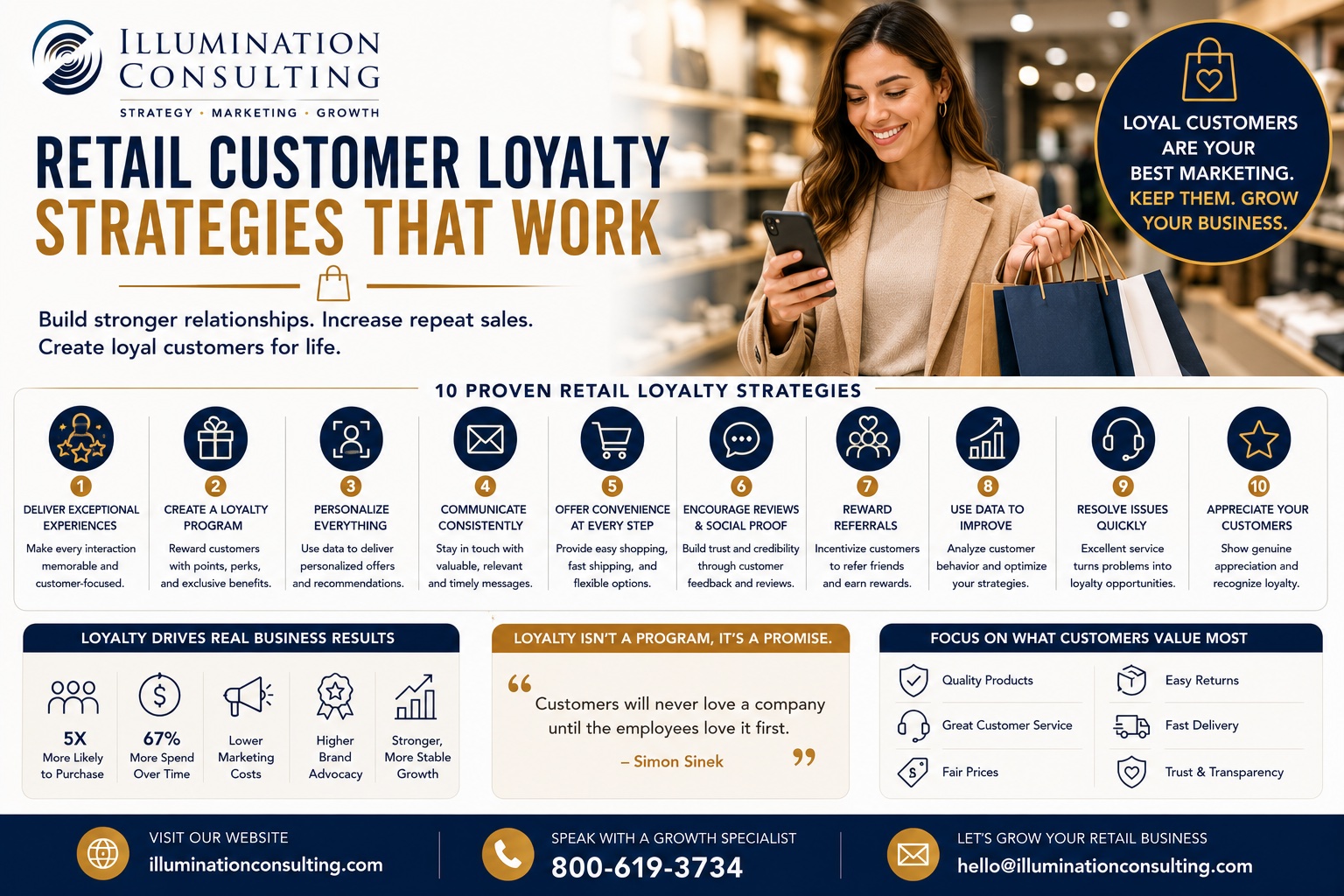
Deliver an Outstanding First Impression
Customer loyalty begins with the very first interaction.
Whether someone discovers your business through Google, social media, paid advertising, or by walking into your store, every initial touchpoint influences their perception of your brand.
Important first impressions include:
- Professional website design
- Fast-loading pages
- Organized product collections
- Friendly staff
- Clean retail environments
- Clear product information
- Simple navigation
- Easy checkout processes
- Responsive customer service
- Consistent branding
Customers often decide within minutes whether they trust a retailer. Creating a polished, professional experience establishes confidence from the beginning and encourages future purchases.
Create a Memorable Customer Experience
Products alone rarely create loyalty.
The overall shopping experience often determines whether customers choose your business over competitors.
Every interaction should reinforce your brand promise while making customers feel valued and appreciated.
An exceptional retail experience includes:
- Personalized service
- Helpful product recommendations
- Fast order fulfillment
- Attractive packaging
- Easy returns
- Transparent communication
- Friendly support
- Consistent quality
- Surprise and delight moments
- Appreciation for customer loyalty
Customers remember how businesses make them feel. Positive experiences create emotional connections that encourage repeat business even when competitors offer similar products.
Personalize Every Customer Interaction
Today’s consumers expect retailers to understand their preferences and shopping habits. Generic marketing messages are becoming less effective, while personalized experiences continue to improve engagement and repeat purchases.
Personalization doesn’t have to be complicated. Even small touches can make customers feel recognized and appreciated.
Examples include:
- Personalized product recommendations
- Birthday discounts
- Purchase history-based suggestions
- Exclusive member offers
- Customized email campaigns
- Early access to new products
- Personalized thank-you messages
- Product replenishment reminders
- Wish list notifications
- Local event invitations
The more relevant your communication becomes, the more likely customers are to engage with your brand.
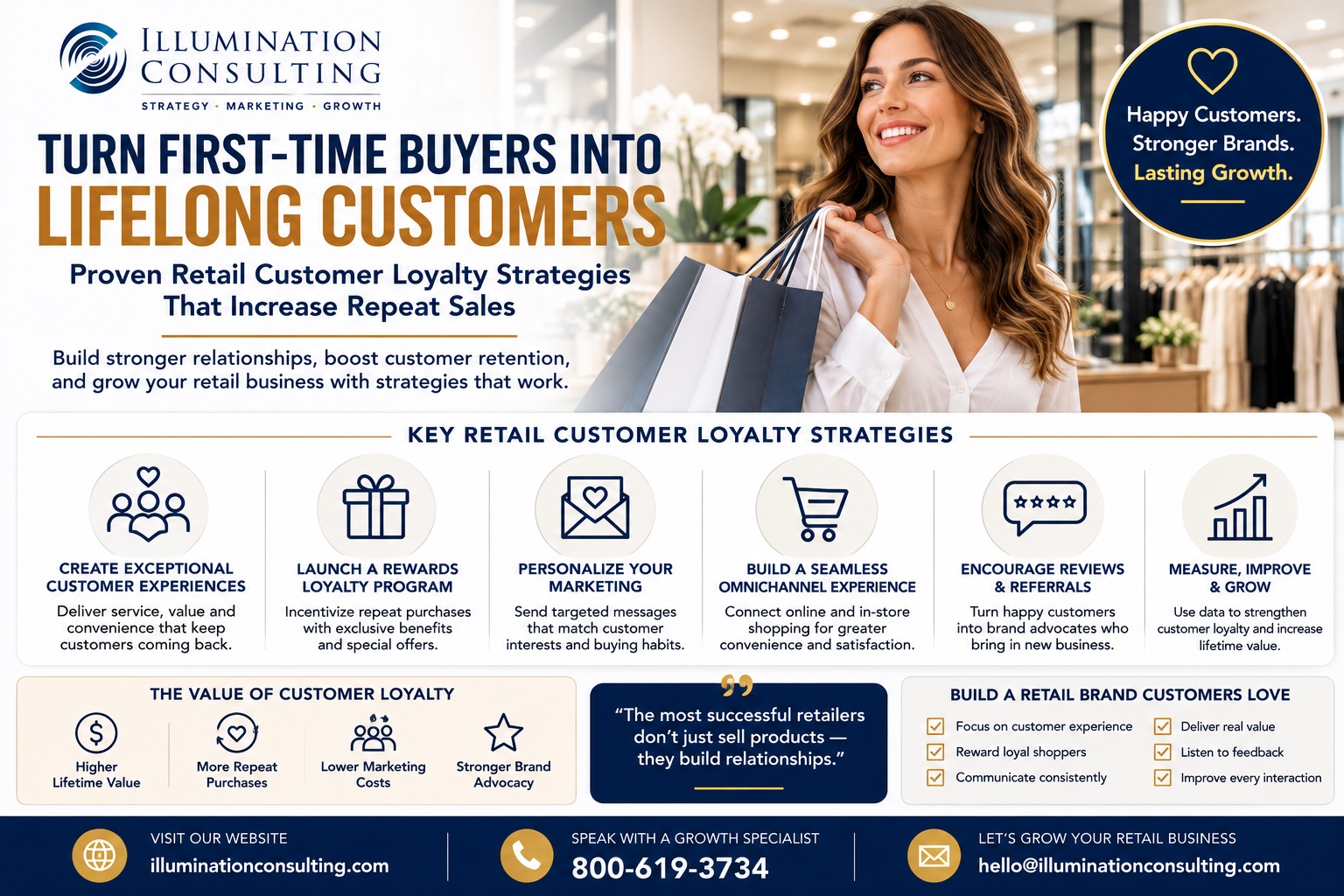
Develop a Customer Loyalty Program That Delivers Value
A well-designed loyalty program encourages customers to continue shopping while rewarding them for their ongoing support.
The best loyalty programs provide meaningful benefits that customers genuinely want rather than offering discounts that reduce profitability.
Popular loyalty incentives include:
- Points-based rewards
- VIP membership tiers
- Exclusive product launches
- Free shipping
- Birthday rewards
- Referral bonuses
- Members-only promotions
- Early access to sales
- Complimentary gifts
- Special event invitations
The goal is to strengthen the relationship while giving customers another compelling reason to return.
Build Trust Through Consistent Communication
Communication should continue long after a purchase has been completed.
Successful retailers maintain regular contact without overwhelming customers with constant promotional messages.
Instead, focus on delivering value through useful and engaging content.
Effective communication channels include:
- Email newsletters
- SMS updates
- Product launch announcements
- Educational blog articles
- Seasonal buying guides
- Personalized recommendations
- Customer surveys
- Social media engagement
- Loyalty program updates
- Order status notifications
Consistent communication keeps your brand top of mind while reinforcing customer confidence.
Create an Omnichannel Shopping Experience
Modern shoppers frequently move between multiple channels before making a purchase.
They may discover your products through social media, research them on your website, visit your physical location, and eventually complete their purchase online.
Providing a seamless experience across every channel strengthens customer satisfaction.
An omnichannel strategy should include:
- Mobile-friendly website
- Consistent branding
- Unified pricing
- Inventory visibility
- Click-and-collect services
- Flexible shipping options
- Integrated loyalty program
- Connected customer accounts
- Cross-channel customer support
- Consistent promotions
Customers should experience the same quality and convenience regardless of how they choose to interact with your business.
Encourage Customer Reviews and Social Proof
Positive reviews have become one of the most influential factors in purchasing decisions.
Many shoppers trust customer feedback almost as much as personal recommendations from friends and family.
Retailers should actively encourage satisfied customers to share their experiences.
Ways to generate more reviews include:
- Follow-up emails
- Review request SMS messages
- Loyalty incentives
- QR codes on packaging
- Excellent customer service
- Fast issue resolution
- Exceptional unboxing experiences
- Personalized thank-you notes
Authentic reviews strengthen credibility while improving both search visibility and conversion rates.
Reward Referrals
Happy customers are often your best marketing resource.
Referral programs encourage existing customers to introduce your business to friends, family members, and colleagues while rewarding both parties for participating.
Effective referral programs often include:
- Store credits
- Discount coupons
- Exclusive products
- Loyalty points
- Free gifts
- Membership upgrades
- Early access to new collections
- Limited edition merchandise
Referral marketing not only reduces acquisition costs but also attracts highly qualified customers who already trust your brand through personal recommendations.
Use Customer Data Responsibly
Retailers collect valuable customer insights every day.
Purchase history, browsing behavior, customer feedback, and engagement metrics provide opportunities to improve products, marketing campaigns, and customer experiences.
Useful data includes:
- Purchase frequency
- Favorite product categories
- Average order value
- Seasonal buying habits
- Email engagement
- Website behavior
- Customer satisfaction scores
- Product reviews
- Loyalty participation
- Return history
Always use customer data responsibly, transparently, and in compliance with privacy regulations. Responsible data practices strengthen trust while allowing you to deliver more personalized experiences.
Resolve Problems Quickly
Mistakes are inevitable in every retail business.
What separates exceptional retailers from average ones is how they respond when something goes wrong.
Customers often become even more loyal after experiencing outstanding service during a problem resolution.
Best practices include:
- Respond quickly
- Accept responsibility
- Listen carefully
- Offer practical solutions
- Keep customers informed
- Follow up after resolution
- Learn from recurring issues
- Empower customer service teams
- Document feedback
- Continuously improve processes
Every resolved issue represents an opportunity to strengthen trust rather than lose a customer.
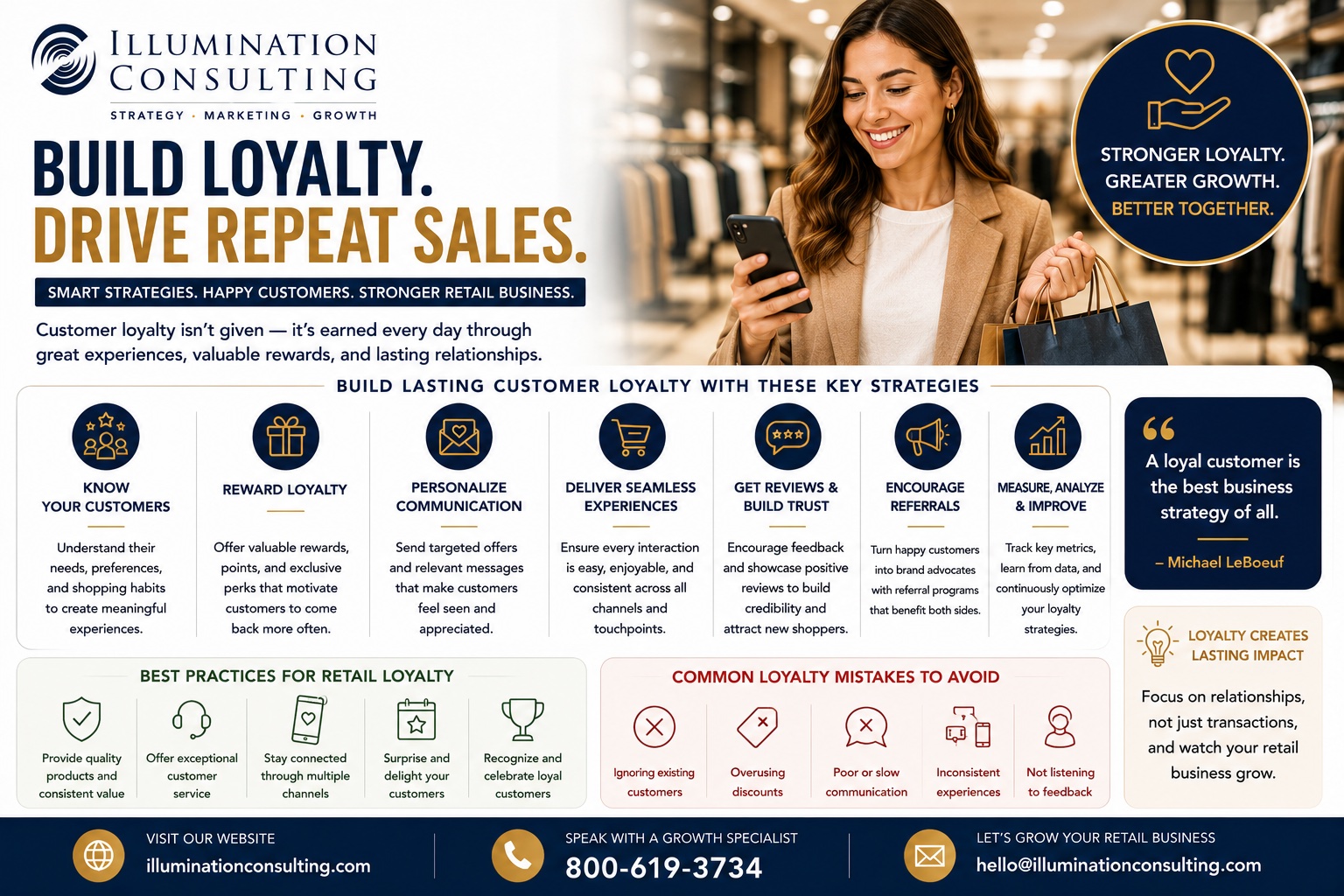
Measure Customer Loyalty Performance
Improving customer loyalty requires ongoing measurement and refinement. Retailers that regularly analyze customer behavior are better equipped to identify opportunities, address weaknesses, and make informed business decisions.
Rather than relying solely on total sales, evaluate metrics that reflect the strength of your customer relationships.
Key performance indicators include:
- Customer retention rate
- Repeat purchase rate
- Customer lifetime value
- Average order value
- Purchase frequency
- Customer acquisition cost
- Loyalty program participation
- Referral rate
- Net Promoter Score (NPS)
- Online review ratings
Reviewing these metrics consistently allows you to understand which initiatives are delivering measurable improvements and where additional attention is needed.
Common Customer Loyalty Mistakes
Even successful retailers can unintentionally weaken customer loyalty through inconsistent experiences or poor communication.
Recognizing these common mistakes can help you build stronger, longer-lasting customer relationships.
Avoid:
- Treating every customer the same
- Only communicating during sales promotions
- Offering loyalty rewards with little real value
- Slow responses to customer inquiries
- Complicated return policies
- Ignoring customer feedback
- Inconsistent branding
- Poor post-purchase communication
- Neglecting existing customers while focusing only on new ones
- Failing to recognize loyal customers
Loyalty is built through consistency. Every interaction either strengthens or weakens the customer’s confidence in your brand.
Technology That Supports Customer Loyalty
Modern retail technology allows businesses to deliver personalized experiences at scale while improving operational efficiency.
The right technology stack helps automate communication, simplify purchasing, and provide valuable customer insights.
Useful tools include:
- Customer Relationship Management (CRM) systems
- Loyalty program platforms
- Email marketing software
- SMS marketing platforms
- AI-powered product recommendations
- Customer support chatbots
- Marketing automation
- E-commerce analytics
- Inventory management systems
- Customer feedback platforms
Technology should enhance the customer experience rather than replace genuine human interaction. The most successful retailers combine automation with authentic customer service.
Building a Loyalty-Driven Company Culture
Customer loyalty extends beyond marketing campaigns and rewards programs. It begins with your company culture.
Every employee contributes to the customer experience, regardless of their role. Organizations that prioritize customer satisfaction throughout the business often achieve stronger long-term results.
A loyalty-focused culture encourages employees to:
- Put customers first
- Solve problems proactively
- Communicate honestly
- Deliver consistent service
- Exceed expectations
- Share product knowledge
- Listen carefully to feedback
- Take ownership of customer concerns
- Celebrate customer success
- Continuously improve
When employees genuinely care about helping customers, loyalty becomes a natural outcome rather than a marketing objective.
Frequently Asked Questions
What are retail customer loyalty strategies?
Retail customer loyalty strategies are programs and business practices designed to encourage repeat purchases, strengthen customer relationships, and increase long-term customer value. They include personalized marketing, loyalty programs, excellent customer service, and consistent customer experiences.
Why is customer loyalty important for retailers?
Loyal customers purchase more frequently, spend more over time, provide referrals, leave positive reviews, and cost less to retain than continually acquiring new customers. Strong customer loyalty creates more predictable revenue and sustainable business growth.
What makes a successful customer loyalty program?
Successful loyalty programs offer meaningful rewards, are easy to understand, provide ongoing value, and encourage continued engagement. Programs should strengthen customer relationships rather than focus solely on discounts.
How can retailers increase repeat purchases?
Retailers can increase repeat purchases through personalized recommendations, excellent customer service, follow-up communication, loyalty rewards, educational content, fast delivery, and consistently delivering high-quality products.
Does personalization improve customer loyalty?
Yes. Personalized recommendations, targeted promotions, customized email campaigns, and recognizing customer preferences create more relevant shopping experiences that increase engagement and encourage repeat business.
What role does customer service play in loyalty?
Customer service has a direct impact on loyalty. Friendly, knowledgeable, and responsive support builds trust, resolves concerns quickly, and creates positive experiences that encourage customers to return.
Customer Loyalty Is Built One Experience at a Time
The strongest retail brands understand that customer loyalty is not created through a single promotion or rewards program. It is earned through hundreds of positive interactions that consistently reinforce trust, quality, and value. Every visit to your website, every purchase, every customer service conversation, and every follow-up email contributes to how shoppers perceive your business. Retail marketing strategies support this journey.
Building loyalty requires a long-term mindset. Retailers that invest in exceptional customer experiences, personalized communication, and meaningful relationships create a competitive advantage that is difficult for competitors to replicate. As customer expectations continue to evolve, businesses that prioritize loyalty over short-term transactions will be better positioned for sustainable growth.
Whether you operate a local retail store, a growing e-commerce brand, or a multi-location business, focusing on customer retention can increase profitability while creating a community of customers who actively support and promote your brand. By continuously improving the shopping experience and listening to customer feedback, your business can transform occasional buyers into lifelong advocates.
At Illumination Consulting, we help retail businesses strengthen customer relationships through strategic marketing, e-commerce website design, SEO, content marketing, conversion optimization, and customer experience strategies. Our tailored solutions are designed to help retailers increase repeat sales, build stronger customer loyalty, and create sustainable long-term growth.