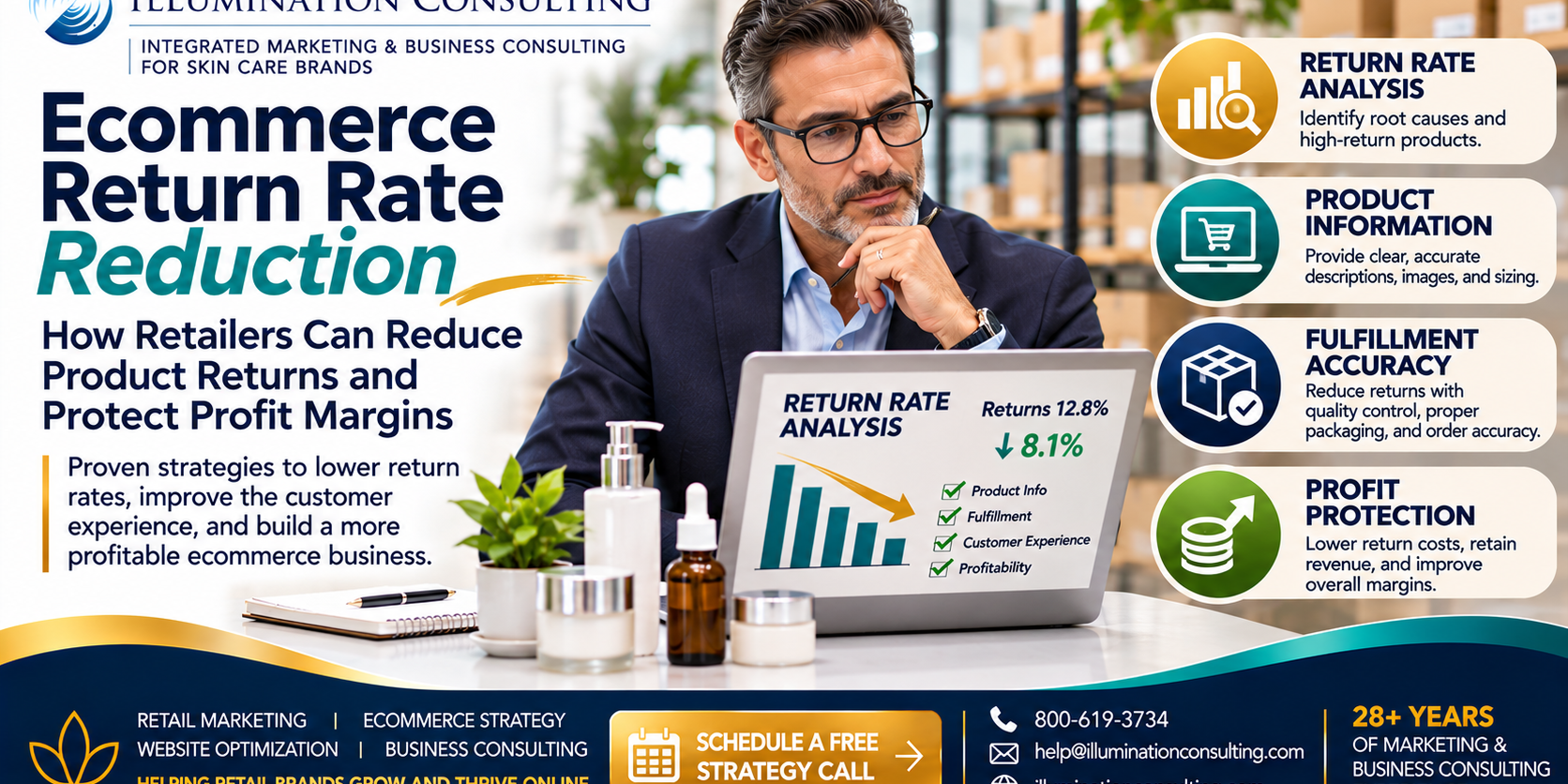
Product returns are an unavoidable part of ecommerce, but excessive returns can significantly reduce profitability, increase operating expenses, and create unnecessary pressure on inventory management. Every returned order can involve shipping expenses, inspection, processing, refunds, customer service, and potential product depreciation. For retailers operating with narrow margins, these expenses can turn an otherwise profitable sale into a financial loss.
Ecommerce return rate reduction is the process of identifying why customers return products and implementing improvements that reduce avoidable returns without compromising customer satisfaction. Effective strategies combine accurate product information, better merchandising, customer education, quality control, fulfillment accuracy, and return data analysis. Rather than simply making returns more difficult, successful retailers address the problems that cause customers to return merchandise in the first place.
For online retailers, skincare brands, cosmetics companies, and consumer product businesses, managing returns is an important part of sustainable growth. A company may generate substantial revenue through marketing campaigns while losing a significant portion of its profits through product returns and associated expenses. Working with experienced retail marketing consultants can help businesses improve product positioning, strengthen ecommerce performance, and develop more profitable customer acquisition strategies.
What Is an Ecommerce Return Rate?
An ecommerce return rate measures the proportion of products or orders returned by customers during a defined period. It helps businesses understand how frequently purchases fail to result in retained sales. Return rates can be measured by units, orders, or sales value, depending on the company’s reporting objectives and the nature of its products.
A retailer should establish a consistent measurement method before comparing return performance across products or reporting periods. A unit-based return rate may be useful for inventory analysis, while a revenue-based return rate can provide additional insight into financial exposure. Businesses should also account for the time between purchase and return because products sold near the end of a reporting period may be returned later.
How to Calculate Ecommerce Return Rate
A common unit-based calculation is:
Ecommerce Return Rate = Units Returned ÷ Units Sold × 100
For example, consider an online retailer with the following results:
-
Products sold: 2,000 units.
-
Products returned: 160 units.
-
Units retained by customers: 1,840.
-
Ecommerce return rate: 8%.
In this hypothetical example, 8% of the units sold were returned. The calculation is straightforward, but the result should be interpreted alongside product categories, customer expectations, return reasons, and the retailer’s return policy. When possible, retailers should track returns against the original sales cohort so that differences in return timing do not distort performance.
Return Rate Versus Refund Rate
Return rate and refund rate are related but distinct measurements. A return rate generally measures physical merchandise returned, while a refund rate measures purchases or transaction value refunded to customers. A business may issue refunds without requiring merchandise to be returned, particularly when products are damaged, inexpensive to recover, or unsuitable for resale.
Retailers should monitor both metrics because their financial implications differ. A physical return may involve reverse shipping and inspection costs, while a refund without a return may eliminate those processing expenses but result in a complete loss of the product’s value. Understanding these differences supports better customer service policies and financial decision-making.
Why Ecommerce Product Returns Affect Profitability
The financial impact of a return extends beyond reversing the original sale. Depending on the transaction, a retailer may incur payment processing expenses, outbound shipping, reverse logistics, customer service costs, product inspection, repackaging, and inventory handling. Some products can be returned to saleable inventory, while others must be discounted, discarded, or otherwise removed from normal distribution.
Returns can also distort marketing performance measurements. A campaign may appear profitable when evaluated using gross sales, even though a meaningful portion of those purchases is later refunded. Businesses that do not account for returns may overestimate advertising effectiveness and continue investing in customer acquisition activities that generate disappointing net financial results.
The Hidden Costs of Ecommerce Returns
Retailers should evaluate the following expenses:
-
Refunded revenue: Sales revenue reversed when customers receive refunds.
-
Outbound fulfillment: Original picking, packing, and shipping expenses.
-
Reverse logistics: Transportation and handling of returned merchandise.
-
Payment processing: Fees that may not be fully recoverable.
-
Inspection and processing: Labor required to evaluate and manage returns.
-
Inventory depreciation: Losses when products cannot be resold at their original value.
-
Customer service: Time spent managing requests, complaints, and resolutions.
-
Marketing costs: Customer acquisition spending associated with orders that are not retained.
Not every return incurs every expense. The actual financial impact depends on the product, return policy, fulfillment arrangements, and whether merchandise can be resold. Businesses should measure these costs rather than applying an unsupported universal estimate.
Identify Why Customers Return Ecommerce Products
The most effective way to reduce product returns is to understand why they occur. Different return reasons require different solutions, and a retailer that treats every return as a customer service issue may overlook problems in product descriptions, quality control, marketing, or fulfillment. Accurate return-reason data helps management identify recurring patterns and prioritize improvements.
For example, frequent returns involving incorrect sizing may indicate a need for better measurements or fit guidance. Returns caused by products appearing different from their online images may suggest inaccurate photography or descriptions. Damaged merchandise may point to packaging or transportation problems rather than product positioning.
Common Reasons for Ecommerce Product Returns
Customers may return merchandise because:
-
The product differs from its online description.
-
The size, fit, or dimensions are unsuitable.
-
The color or appearance differs from expectations.
-
The product arrives damaged or defective.
-
The wrong item was shipped.
-
The customer ordered multiple variations to compare.
-
Product performance does not match expectations.
-
The purchase was no longer needed.
-
Delivery timing affected the customer’s intended use.
Retailers should distinguish preventable causes from returns that are part of normal customer behavior. The objective is to identify opportunities where better information, operational improvements, or more appropriate marketing can meaningfully reduce unnecessary returns.
Improve Ecommerce Product Descriptions to Reduce Returns
Product descriptions influence purchasing decisions by communicating what customers can expect from an item. Incomplete or exaggerated descriptions can generate sales initially but increase dissatisfaction when the merchandise arrives. Retailers should prioritize accurate, specific, and useful information that helps customers determine whether a product meets their needs.
Strong descriptions explain relevant features, dimensions, materials, intended uses, and limitations. They should also answer questions customers are likely to consider before purchasing. This approach supports both conversion quality and return prevention because customers make decisions using more complete information.
Product Description Elements That Reduce Uncertainty
Depending on the product category, retailers should include:
-
Accurate dimensions, sizes, and measurements.
-
Materials, ingredients, or construction details.
-
Product functionality and intended use.
-
Compatibility requirements.
-
Care and maintenance instructions.
-
Package contents and quantities.
-
Important limitations or exclusions.
-
Clear explanations of product variations.
Descriptions should be reviewed whenever product specifications change. Retailers selling through multiple channels must also ensure that product information remains consistent across their websites, marketplaces, and retail partner listings. Conflicting information can create customer confusion and increase the likelihood of returns.
Use Better Product Photography and Video
Online customers cannot physically inspect merchandise before purchasing, making product imagery a critical part of expectation management. Photographs should communicate accurate appearance, proportions, details, and product characteristics. Images that prioritize visual appeal while obscuring important information may increase conversion rates temporarily but create dissatisfaction after delivery.
Retailers should use multiple views and appropriate contextual imagery to help customers understand what they are buying. Video demonstrations can be particularly useful for products where size, movement, texture, or functionality is difficult to communicate through static photographs. Visual content should represent the actual product rather than an idealized version that customers are unlikely to receive.
Ecommerce Product Visuals That Support Better Decisions
Useful visual assets may include:
-
Multiple product angles.
-
Close-up photographs of important details.
-
Scale references showing actual dimensions.
-
Lifestyle imagery demonstrating intended use.
-
Product demonstration videos.
-
Accurate color and material representations.
-
Packaging and included-component photographs.
For skincare and cosmetics products, imagery may also help communicate texture, packaging size, application methods, and product consistency. Brands should avoid misleading before-and-after imagery or unsupported performance representations. Accurate visuals improve the purchasing experience while helping customers develop realistic expectations.
Reduce Apparel and Fashion Returns With Better Sizing Information
Sizing and fit are major considerations for apparel and fashion ecommerce businesses because customers cannot try products on before purchasing. Inconsistent sizing information can lead shoppers to order multiple variations or return merchandise that does not fit as expected. Retailers should provide clear measurements and practical fit guidance rather than relying exclusively on generic size labels.
A useful sizing strategy considers garment measurements, fit characteristics, material behavior, and customer feedback. Retailers should also identify products with unusually high fit-related return rates and investigate whether their sizing information accurately reflects the merchandise. Improving these details can reduce uncertainty and support more confident purchasing decisions.
Practical Apparel Return Reduction Improvements
Fashion retailers can consider:
-
Product-specific sizing charts.
-
Garment measurements rather than generic labels alone.
-
Fit descriptions such as relaxed, tailored, or oversized.
-
Model measurements and the sizes being worn.
-
Fabric stretch and material characteristics.
-
Customer feedback about sizing consistency.
-
Product-specific fit recommendations where supported.
Retailers should avoid promising that a particular sizing tool will eliminate returns. Fit preferences vary between customers, and even accurate measurements cannot guarantee satisfaction. The objective is to improve purchasing information and reduce avoidable mismatches.
Reduce Skincare and Cosmetics Product Returns
Skincare and cosmetics businesses face distinct return challenges because products are often selected according to individual preferences, appearance, texture, fragrance, and intended use. Customers may purchase products based on advertising claims or ingredient information without fully understanding their characteristics. Dissatisfaction can occur when expectations do not align with the actual product experience.
Brands should provide clear descriptions of formulation characteristics, application methods, product size, and intended cosmetic benefits. Product education should avoid implying that every consumer will experience identical results. Claims involving medical conditions, treatment outcomes, or physiological effects require particular care because they may raise regulatory considerations beyond ordinary cosmetic marketing.
Skincare Product Information That Can Reduce Returns
Useful information includes:
-
Product type and intended cosmetic use.
-
Texture and consistency.
-
Fragrance characteristics, where relevant.
-
Container size and quantity.
-
Application instructions.
-
Relevant ingredient information.
-
Appropriate product expectations.
-
Storage and handling instructions.
Skincare brands should also establish clear procedures for managing adverse reactions, product complaints, and potential safety concerns. These situations should not be treated merely as ordinary return-rate optimization opportunities. Consumer safety, appropriate documentation, and applicable regulatory obligations must take priority.
Improve Product Quality Control and Fulfillment Accuracy
Not every return originates from marketing or product information. Damaged merchandise, manufacturing defects, incorrect items, and fulfillment errors can create avoidable returns even when customers made appropriate purchasing decisions. Retailers should monitor these operational issues separately from returns caused by preferences or expectation gaps.
Quality control should include appropriate product inspection, packaging evaluation, and procedures for identifying recurring defects. Fulfillment operations should verify order accuracy and use packaging suitable for transportation. When problems occur, management should investigate their causes rather than simply processing refunds and moving on.
Operational Improvements That Reduce Preventable Returns
Retailers may benefit from:
-
More consistent product inspection procedures.
-
Improved packaging protection.
-
Accurate product identification and labeling.
-
Barcode scanning or other order verification methods.
-
Better warehouse picking procedures.
-
Monitoring damage rates by shipping method.
-
Reviewing recurring supplier defects.
-
Tracking fulfillment errors by product and location.
These improvements can reduce unnecessary costs while strengthening customer satisfaction. They may also reveal operational weaknesses that affect profitability beyond the returns process.
Develop a Clear and Customer-Friendly Return Policy
A return policy influences customer confidence because shoppers want to understand their options if a purchase does not meet expectations. Policies that are difficult to locate or understand may create hesitation before purchase and frustration afterward. However, excessively restrictive policies can damage trust without addressing the underlying reasons products are returned.
A balanced return policy should clearly explain eligibility, time limits, product condition requirements, refund methods, and any applicable shipping responsibilities. Businesses should also consider product-specific requirements, particularly for personal care, hygiene-sensitive merchandise, and other categories where returned items may not be suitable for resale. Policies must comply with applicable consumer protection requirements.
Important Elements of an Ecommerce Return Policy
A clear policy should explain:
-
The return eligibility period.
-
Which products qualify for returns.
-
Product condition requirements.
-
Whether return shipping fees apply.
-
How customers initiate a return.
-
Expected refund processing procedures.
-
Exchange and store credit options.
-
Any category-specific restrictions.
Return policies should be communicated before purchase rather than introduced only after a customer requests assistance. Transparency supports better customer expectations and reduces avoidable disputes.
Use Exchanges and Store Credit Appropriately
Exchanges and store credit can help retailers preserve customer relationships when the original product does not meet expectations. A customer who ordered the wrong size may prefer an exchange, while someone who selected an unsuitable product variation may appreciate assistance finding an alternative. These options can support retained revenue when they genuinely resolve the customer’s problem.
However, exchanges should not be used to pressure customers or avoid legitimate refund obligations. Retailers should make available options clear and respect applicable legal requirements. The commercial objective is to help customers reach a satisfactory outcome while managing costs responsibly.
When Exchanges May Be Appropriate
Exchanges may be useful when:
-
The customer selected an incorrect size.
-
Another color or variation better meets the customer’s needs.
-
A product arrived damaged and a replacement is desired.
-
The wrong item was shipped.
-
A compatible alternative is available.
Retailers should monitor exchange outcomes to determine whether customers remain satisfied and whether the additional shipping and handling costs are justified. An exchange that generates repeated returns may be more expensive than resolving the original request directly.
Analyze Return Rates by Product, Customer Segment, and Sales Channel
An overall return rate provides a useful starting point, but it may conceal important differences between products and customer groups. A small number of products may account for a disproportionate share of returns, while certain sales channels may generate customers with different expectations. Segmenting return data helps retailers identify where improvements will have the greatest financial impact.
Management should review return reasons alongside sales volume, product margins, acquisition sources, and fulfillment costs. A product with a relatively high return rate may still contribute positively to the business, while another with fewer returns may generate disappointing margins because of high acquisition or logistics expenses. Return performance should therefore be evaluated within a broader profitability framework.
Return Data Segments Worth Monitoring
Retailers should consider analyzing:
-
Product and SKU.
-
Product category.
-
Return reason.
-
Customer acquisition channel.
-
First-time versus returning customers.
-
Promotional versus regular-price purchases.
-
Geographic region.
-
Fulfillment provider or shipping method.
-
Product margin and return processing cost.
These comparisons should be interpreted carefully because differences may reflect customer characteristics, product mix, or operating conditions. The objective is to identify credible patterns that support better decisions rather than assume that every correlation represents a direct cause.
Connect Return Rate Reduction With Ecommerce Marketing ROI
Marketing performance should be evaluated using financial outcomes that account for refunds and returns. A campaign generating high gross revenue may appear successful even when a meaningful portion of purchases is later reversed. Retailers that optimize advertising exclusively for initial transactions may overlook acquisition sources associated with lower-quality purchases or greater return exposure.
A more useful approach connects advertising performance with retained revenue and contribution margins. This requires integrating order data, refund information, fulfillment expenses, and other relevant costs where systems permit. Businesses should also account for the time required for returns to occur before drawing conclusions about recent campaigns.
Metrics for Return-Adjusted Marketing Performance
Relevant measurements include:
-
Gross sales revenue.
-
Refunded sales value.
-
Net retained revenue.
-
Customer acquisition cost.
-
Return rate by acquisition channel.
-
Return processing expenses.
-
Contribution margin after relevant variable costs.
-
Repeat purchase behavior.
These metrics help retailers distinguish revenue growth from profitable growth. The objective is not to discourage customer acquisition but to identify marketing strategies that attract customers who are more likely to purchase suitable products and remain satisfied.
Use Customer Reviews and Feedback to Prevent Returns
Customer reviews provide information about product experiences that may not be obvious from manufacturer specifications or marketing descriptions. Shoppers often look for feedback concerning sizing, appearance, functionality, quality, and whether products meet expectations. Reviews can therefore support better purchasing decisions while helping retailers identify recurring sources of dissatisfaction.
Brands should analyze reviews alongside formal return reasons. If customers repeatedly report that a product appears smaller than expected, the business may need better dimensions or scale photography. If reviews identify recurring quality concerns, the appropriate response may involve supplier evaluation or product improvements rather than marketing changes.
Turn Customer Feedback Into Product Improvements
A structured feedback process should:
-
Identify recurring complaints.
-
Compare complaints with return reasons.
-
Investigate potential product or fulfillment problems.
-
Update product information where necessary.
-
Escalate quality concerns to appropriate teams.
-
Monitor whether changes improve customer outcomes.
Customer feedback should be treated as operational intelligence rather than simply reputation management. Businesses that use it constructively can improve product selection, supplier relationships, and the accuracy of their ecommerce content.
Evaluate the Economics of Returnless Refunds
A returnless refund allows a customer to receive a refund without shipping the product back. This approach may be appropriate when the cost of recovering and processing an item exceeds its recoverable value. It can also reduce unnecessary transportation and handling in certain situations.
However, returnless refunds are not appropriate for every product or transaction. Retailers should consider product value, recovery costs, fraud exposure, customer circumstances, and applicable policies. For safety-related complaints or regulated products, additional documentation or handling requirements may apply.
When Returnless Refunds May Make Financial Sense
Management should evaluate:
-
Original product cost.
-
Return shipping expenses.
-
Inspection and handling costs.
-
Expected resale or recovery value.
-
Fraud and abuse risks.
-
Customer service considerations.
-
Product safety and documentation requirements.
The decision should be based on total expected cost rather than convenience alone. A consistent policy with appropriate controls can help businesses make these decisions efficiently.
Common Ecommerce Return Rate Reduction Mistakes
One of the most common mistakes is attempting to reduce returns primarily by making the process more difficult for customers. Restrictive policies may discourage some returns, but they can also increase dissatisfaction, disputes, and hesitation to purchase. They do not necessarily correct inaccurate product descriptions, quality problems, or fulfillment errors.
Another mistake is focusing exclusively on the overall return rate without identifying which products and processes generate the greatest losses. Businesses may invest in expensive technology while overlooking straightforward improvements to photography, sizing information, or warehouse accuracy. Return reduction should begin with evidence about the actual causes of customer dissatisfaction.
Seven Ecommerce Returns Mistakes to Avoid
-
Using inaccurate or exaggerated product descriptions.
-
Providing insufficient sizing or product specification information.
-
Ignoring recurring customer complaints.
-
Failing to investigate damaged or defective merchandise.
-
Measuring marketing performance without accounting for refunds.
-
Making return policies unnecessarily confusing.
-
Treating all return reasons as identical.
Addressing these problems requires coordination between marketing, merchandising, operations, customer service, and financial management. The most effective improvements often involve several departments rather than a single technology or policy change.
A 90-Day Ecommerce Return Rate Reduction Plan
Retailers can improve return performance through a structured process that begins with identifying the most significant sources of financial loss. The objective is to prioritize practical improvements and evaluate their effects using consistent measurements. Because returns may occur weeks after purchases, performance analysis should account for the time required to observe complete return outcomes.
Days 1–30: Audit Returns and Identify Root Causes
Review return rates by product, category, customer segment, and acquisition channel. Identify the products responsible for the greatest return-related expenses and examine the reasons customers provide. Evaluate product descriptions, photography, fulfillment accuracy, and customer feedback. Establish a baseline using consistent reporting periods and clearly defined metrics.
Days 31–60: Implement Targeted Improvements
Prioritize changes that address documented problems. These may include revising product descriptions, improving sizing guidance, adding photographs, strengthening packaging, or correcting fulfillment processes. Review return policy clarity and ensure customer service teams have accurate product information. Assign responsibility for each initiative and establish methods for measuring results.
Days 61–90: Evaluate Financial Results and Refine the Strategy
Review available return data for products and orders affected by the improvements, accounting for incomplete return windows where necessary. Compare return reasons, processing expenses, and customer feedback with the original baseline. Identify which initiatives appear effective and which require further investigation. Use the findings to establish an ongoing return management process that supports profitability and customer satisfaction.
Frequently Asked Questions About Ecommerce Return Rate Reduction
What is ecommerce return rate reduction?
Ecommerce return rate reduction involves identifying and addressing the reasons customers return online purchases. Strategies may include improving product descriptions, photography, sizing information, quality control, fulfillment accuracy, and customer education. The objective is to reduce avoidable returns while maintaining a positive customer experience.
How do you calculate an ecommerce return rate?
A common unit-based calculation divides units returned by units sold and multiplies the result by 100. For example, 160 returned units out of 2,000 sold units produce an 8% return rate. Retailers should use consistent reporting methods and account for the time between purchase and return when evaluating results.
What causes high ecommerce return rates?
High return rates may result from inaccurate product information, unsuitable sizing, misleading imagery, quality defects, shipping damage, fulfillment errors, or customer expectations that do not match the delivered product. The causes vary by product category and business model. Return-reason analysis helps retailers identify the most important problems to address.
How can skincare brands reduce product returns?
Skincare brands can improve product descriptions, communicate accurate cosmetic benefits, provide clear application instructions, and explain product characteristics such as texture, fragrance, and quantity. They should also maintain appropriate quality controls and avoid unsupported performance claims. Safety-related complaints require appropriate handling and should not be treated solely as routine return reduction opportunities.
Can reducing ecommerce returns improve profitability?
Reducing avoidable returns can improve profitability by preserving revenue and lowering certain shipping, processing, inventory, and customer service expenses. However, the financial benefit depends on the cost of each return and the investment required to prevent it. Businesses should evaluate return reduction using contribution margins and other relevant financial measurements rather than return rate alone.
Build a More Profitable Ecommerce Business by Reducing Avoidable Returns
Ecommerce growth should be measured by more than the number of orders placed or the amount of gross revenue generated. Product returns can significantly affect retained revenue, inventory performance, customer acquisition economics, and operating costs. Businesses that understand why customers return products can make better decisions about product information, merchandising, quality control, and fulfillment.
A successful ecommerce return rate reduction strategy focuses on improving purchasing decisions and customer satisfaction rather than simply restricting refunds. Accurate descriptions, useful product imagery, reliable fulfillment, and disciplined return data analysis can help retailers reduce unnecessary expenses while strengthening the customer experience. These improvements support more sustainable ecommerce growth and provide a stronger foundation for profitable marketing investment.
Illumination Consulting provides Retail Marketing Services, Retail Ecommerce Website Design, and Marketing Consulting Services for retailers, skincare brands, and consumer product companies. With more than 28 years of business consulting and marketing experience, we help businesses improve ecommerce performance, strengthen customer acquisition, and develop sustainable growth strategies.
Ready to improve ecommerce profitability and reduce avoidable product returns? Schedule a free strategy call with Illumination Consulting to discuss your ecommerce marketing, website performance, and business growth objectives.