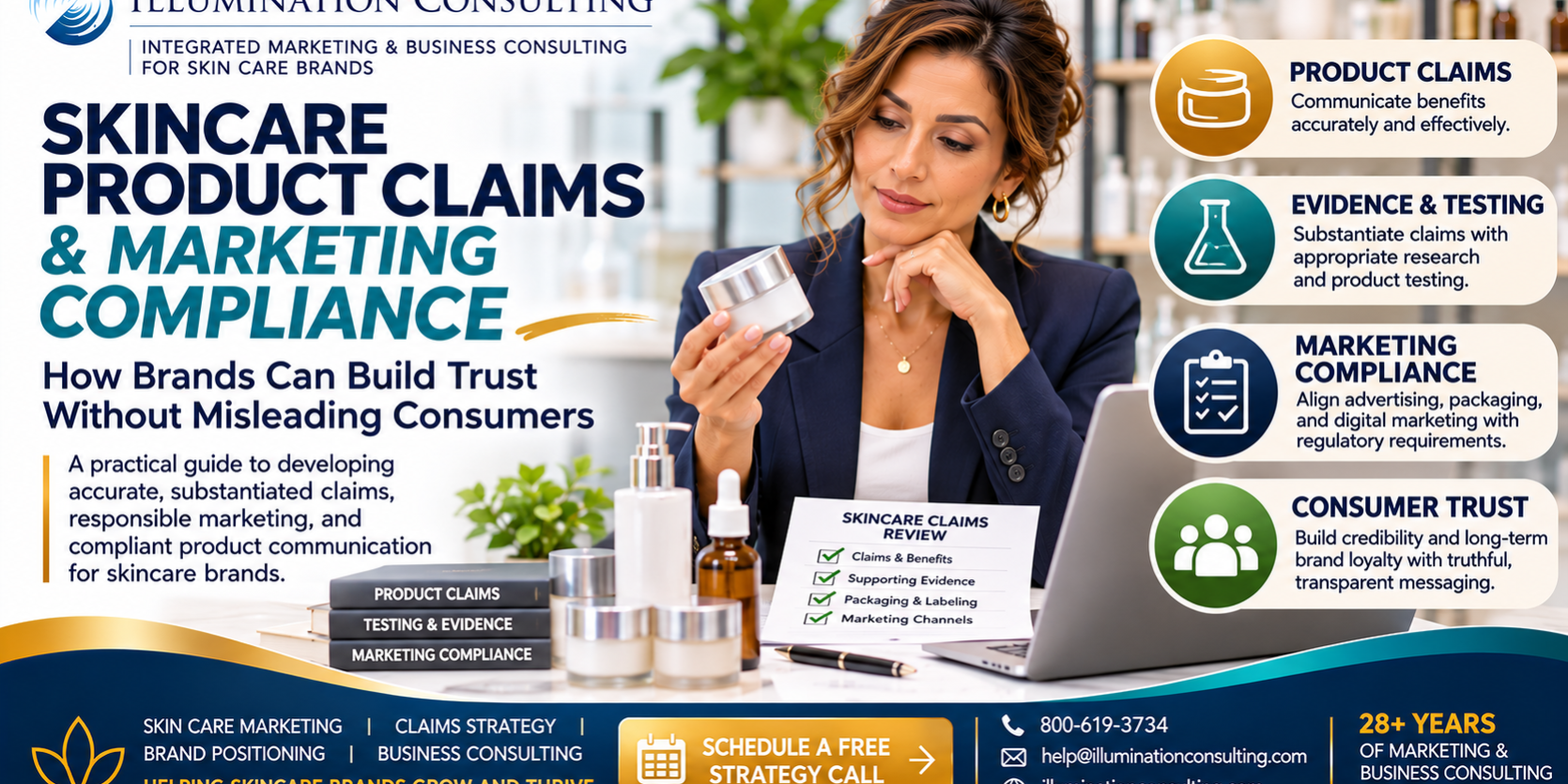
Skincare brands compete in a marketplace where product benefits, ingredient claims, and marketing messages strongly influence purchasing decisions. Consumers want to understand what products do, which ingredients they contain, and whether they are appropriate for their individual needs. To communicate these benefits effectively, brands use packaging, websites, advertising, social media, influencer partnerships, and educational content. However, every marketing claim creates an expectation that should be supported by appropriate evidence.
Skincare product claims are statements or representations about a product’s characteristics, ingredients, performance, or intended benefits. These claims can appear in written descriptions, images, videos, testimonials, packaging, and advertising campaigns. A brand may describe a moisturizer as hydrating, a cleanser as gentle, or a serum as improving the appearance of fine lines. The wording, context, and overall impression of these statements can influence how consumers interpret the product and how regulators evaluate its marketing.
For entrepreneurs developing new skincare products and established brands expanding their collections, understanding marketing compliance is essential to protecting consumer trust and supporting sustainable business growth. Unsupported or misleading claims can create regulatory, financial, and reputational risks, while overly cautious messaging may fail to communicate legitimate product benefits. Experienced skin care business consultants and skin care marketing professionals can help businesses align product positioning, marketing strategy, and responsible claims development.
What Are Skincare Product Claims?
A skincare product claim communicates information about what a product contains, how it works, or what consumers may expect from using it. Claims may be explicit, such as a statement that a moisturizer improves skin hydration, or implied through imagery, demonstrations, comparisons, and other marketing elements. They can also arise from the overall impression created by several statements presented together.
Claims are not limited to product packaging. A statement published on a brand website, social media advertisement, retailer listing, influencer video, or email campaign may also be considered advertising or promotional content. Businesses should therefore evaluate claims consistently across their marketing channels rather than assuming that only printed labels require attention.
Common Categories of Skincare Claims
Skincare brands frequently communicate several types of claims:
-
Ingredient claims: Statements about specific ingredients or their presence in a formula.
-
Performance claims: Statements describing the results a product is intended to provide.
-
Appearance claims: Statements about improving the appearance or feel of skin.
-
Comparative claims: Statements comparing a product with competing products or alternatives.
-
Testing claims: References to clinical studies, consumer testing, or other evaluations.
-
Environmental claims: Statements concerning sustainability, recyclability, or environmental characteristics.
-
Safety-related claims: Statements such as hypoallergenic, non-comedogenic, or suitable for sensitive skin.
Each category may require different supporting evidence. Brands should evaluate not only whether a statement is factually accurate but also whether consumers could reasonably interpret it as promising a broader result than the available evidence supports.
Understanding Cosmetic Claims Versus Drug Claims
One of the most important considerations in skincare marketing is the distinction between cosmetic products and products regulated as drugs. In the United States, the Food and Drug Administration evaluates product classification based on intended use, which can be demonstrated through labeling, advertising claims, and other relevant circumstances. A product marketed to cleanse, beautify, promote attractiveness, or alter appearance may fall within the cosmetic category, while claims concerning disease treatment or effects on the structure or function of the body can bring drug requirements into consideration.
This distinction is particularly relevant for skincare products promoted around acne, eczema, psoriasis, sun protection, and other medical or physiological concerns. A brand may unintentionally create regulatory exposure by using treatment-oriented language that does not align with the product’s classification. Businesses should not assume that a product is a cosmetic simply because it is sold in a beauty store or described as skincare.
Examples of Cosmetic-Oriented and Treatment-Oriented Claims
Cosmetic-oriented claims may describe appearance-related benefits, provided that the statements are truthful and appropriately supported. Examples include:
-
Helps moisturize dry skin.
-
Improves the appearance of fine lines.
-
Leaves skin feeling smoother.
-
Helps improve the appearance of uneven skin tone.
-
Cleanses away surface impurities.
Claims that describe treating medical conditions or producing certain physiological effects may raise different regulatory considerations. Examples include statements that a product treats eczema, cures acne, or changes the biological structure of the skin. The classification depends on the complete context and intended use, not simply whether one particular word appears in the advertisement.
Brands should have qualified regulatory professionals review claims that approach the boundary between cosmetic and drug positioning. The FDA’s cosmetics guidance provides an important starting point for understanding these distinctions, although product-specific decisions may require additional professional evaluation.
Why Skincare Marketing Claims Must Be Substantiated
Advertising claims should be supported by appropriate evidence before they are communicated to consumers. In the United States, the Federal Trade Commission applies truth-in-advertising principles requiring advertising to be truthful, not misleading, and supported by evidence appropriate to the claim. The type and quality of evidence needed depend on what the advertisement communicates and the circumstances surrounding the claim.
For skincare brands, this means that product descriptions should reflect what the available evidence actually establishes. A company may possess research about an individual ingredient but lack evidence that its finished formulation produces the same results. Likewise, a consumer survey may support a statement about user perceptions without necessarily substantiating an objective clinical performance claim.
Types of Evidence Used to Support Skincare Claims
Depending on the claim, relevant evidence may include:
-
Finished-product testing.
-
Appropriately designed clinical studies.
-
Instrumental measurements.
-
Consumer perception studies.
-
Ingredient research relevant to the specific formulation and use.
-
Product stability and compatibility evaluations.
-
Other reliable scientific or technical documentation.
The presence of a study does not automatically substantiate every marketing statement a brand wants to make. Businesses must consider the study’s methodology, population, sample size, endpoints, and relevance to the product being advertised. Claims should not exceed the conclusions reasonably supported by the evidence.
How to Develop Accurate Skincare Product Benefit Claims
Effective skincare marketing communicates meaningful benefits without overstating product performance. Brands should begin by identifying the product’s intended function, target customer, and differentiating characteristics. These factors provide the foundation for developing claims that are commercially relevant and consistent with available evidence.
A moisturizer, for example, may be positioned around hydration, texture, ease of application, or suitability for a particular skincare routine. The brand should then determine which statements can be supported by formulation information, testing, or other appropriate documentation. Marketing language should communicate those benefits clearly while avoiding promises that imply guaranteed results for every consumer.
A Practical Claims Development Process
Brands can use the following process:
-
Identify the product’s intended cosmetic benefits.
-
Draft the claims consumers are most likely to value.
-
Determine what each claim communicates explicitly and implicitly.
-
Review the evidence available to support those statements.
-
Revise or remove claims that exceed the supporting evidence.
-
Obtain appropriate regulatory and legal review.
-
Approve consistent language for packaging and marketing channels.
This process should take place before packaging is finalized or major advertising campaigns are launched. Correcting unsupported claims after products have entered distribution can create unnecessary expense and operational complications.
Ingredient Claims and Skincare Marketing
Ingredients are central to many skincare marketing strategies because consumers increasingly research formulations before purchasing products. Brands often highlight ingredients such as hyaluronic acid, niacinamide, ceramides, retinoids, botanical extracts, and antioxidants. These references can help communicate product positioning, but ingredient popularity should not replace careful evaluation of formulation performance and claim accuracy.
The presence of an ingredient does not necessarily establish that the finished product will deliver every benefit associated with that ingredient in published research. Concentration, formulation characteristics, product stability, and conditions of use can influence whether particular conclusions apply. Brands should avoid treating general ingredient research as automatic proof of finished-product performance.
Avoid Misleading Ingredient Marketing
Common ingredient-claim concerns include:
-
Suggesting that an ingredient is present at a meaningful concentration without adequate support.
-
Using ingredient research to imply untested finished-product outcomes.
-
Describing an ingredient as universally safe or suitable for everyone.
-
Making unsupported comparisons with competing formulations.
-
Presenting complex scientific information in ways that exaggerate product benefits.
Ingredient education can still be a valuable marketing tool when it is accurate, relevant, and appropriately qualified. Brands can explain why ingredients are included, how they contribute to formulation objectives, and what consumers should understand about the product. This approach supports credibility while reducing the temptation to rely on exaggerated promises.
Clinical Testing and Consumer Perception Claims
Clinical and consumer testing claims can strengthen skincare product positioning when they are based on appropriate evidence and communicated accurately. Statements such as clinically tested, dermatologist tested, or consumer approved may influence purchasing decisions, but each phrase can convey different meanings to consumers. Brands should define what their testing actually involved before using these terms in advertising.
A consumer perception study may evaluate how participants describe their experience using a product. An instrumental study may measure a particular skin characteristic under defined conditions. These approaches generate different kinds of evidence and should not be presented as interchangeable. The wording of a claim should accurately reflect the testing method, results, limitations, and population involved.
How to Communicate Testing Results Responsibly
Brands should consider:
-
Whether testing involved the finished product.
-
How many participants were included.
-
The duration of the evaluation.
-
Which outcomes were measured.
-
Whether the results were subjective or objectively measured.
-
Whether the advertising statement reflects the actual findings.
-
Whether qualifications are needed to prevent misleading impressions.
A claim that references testing should not imply stronger evidence than the study provides. Businesses should also maintain documentation supporting the results and ensure that marketing teams understand the limitations of the underlying research.
Before-and-After Images in Skincare Advertising
Before-and-after photographs are widely used in beauty and skincare marketing because they provide visual representations of product-related changes. However, these images can create strong implied performance claims even when accompanying text is limited. Lighting, camera angles, image editing, makeup, and other presentation factors can influence how consumers interpret results.
Brands should use authentic, appropriately documented imagery and avoid visual manipulation that exaggerates product performance. They should also consider whether the results shown are representative of what consumers can generally expect or whether additional qualifications are necessary. A truthful individual experience does not automatically establish that similar results are typical.
Best Practices for Skincare Before-and-After Content
-
Use authentic images with appropriate permissions.
-
Maintain consistent photography conditions where practical.
-
Avoid editing that materially exaggerates product results.
-
Document relevant product-use conditions.
-
Review whether the images imply claims supported by evidence.
-
Provide appropriate context when results are not representative.
Visual content should undergo the same substantive claims review as written advertising. A disclaimer cannot necessarily correct a misleading overall impression created by photographs or other promotional elements.
Influencer Marketing and Skincare Product Claims
Influencer partnerships can introduce skincare brands to new audiences and provide authentic product demonstrations. However, sponsored content also creates compliance responsibilities involving advertising disclosures and product claims. Brands should not assume that influencers are solely responsible for the accuracy of statements made in promotional campaigns.
The FTC’s endorsement guidance addresses material connections between advertisers and endorsers, including circumstances where compensation, free products, or other relationships may need to be disclosed. Disclosures should be clear and understandable to consumers. Brands should also establish expectations regarding approved claims and monitor sponsored content as appropriate.
Develop Influencer Marketing Guidelines
A skincare brand’s influencer program should include:
-
Clear disclosure requirements.
-
Approved product descriptions and benefit claims.
-
Prohibited medical or unsupported performance statements.
-
Guidelines for before-and-after content.
-
Instructions for handling consumer questions.
-
Procedures for reviewing and correcting problematic content.
Influencer marketing should support genuine communication rather than encourage creators to exaggerate results. Brands that establish clear expectations can reduce avoidable risks while maintaining a more consistent and credible market presence.
Environmental and Sustainability Claims in Skincare Marketing
Sustainability has become an important consideration for many skincare consumers, influencing packaging choices, ingredient sourcing, and brand positioning. Companies may promote recyclable packaging, reduced material usage, responsible sourcing, or other environmental characteristics. These claims can be commercially meaningful, but broad environmental statements may mislead consumers if they are not adequately qualified or supported.
The FTC’s Green Guides provide guidance on how environmental marketing claims may be interpreted. Brands should be careful with general statements such as environmentally friendly or sustainable when those claims could suggest broad environmental benefits that the company cannot substantiate. More specific statements about particular packaging components or practices may communicate useful information more accurately.
Questions to Ask Before Making Sustainability Claims
-
What specific environmental benefit is being claimed?
-
Does the claim apply to the product, packaging, or both?
-
What evidence supports the statement?
-
Are there important limitations consumers should understand?
-
Could the overall presentation imply broader benefits than the evidence establishes?
Environmental claims should be developed with the same discipline applied to product performance statements. Clear, specific information can help consumers make informed choices while reducing the risk of misleading impressions.
Skincare Packaging Claims and Labeling Consistency
Packaging is often the first place consumers encounter a skincare brand’s marketing claims. Product names, benefit statements, ingredient highlights, and visual elements all contribute to the impression created at the point of purchase. Because packaging may remain in circulation for extended periods, unsupported or inaccurate claims can create ongoing problems after production.
Brands should establish a formal approval process before printing labels, cartons, or other packaging materials. This process should involve the appropriate product development, marketing, quality, and regulatory professionals. Claims should be reviewed in context with the complete label rather than assessed as isolated phrases.
Packaging Claims Review Checklist
Before approving packaging artwork, confirm:
-
Product identity and intended use are accurately communicated.
-
Benefit claims are supported by appropriate evidence.
-
Ingredient statements are accurate.
-
Required labeling information has been reviewed.
-
Claims do not unintentionally suggest an inappropriate regulatory classification.
-
Marketing and product development teams are using consistent approved language.
-
Final artwork has received appropriate approval.
Packaging review is particularly important for brands working with contract manufacturers or multiple external service providers. Clear responsibilities and documented approvals can reduce errors caused by inconsistent information or last-minute revisions.
Create Consistent Claims Across Digital Marketing Channels
A skincare brand may communicate with consumers through its website, ecommerce product pages, social media accounts, search advertising, email marketing, and retailer listings. Each channel has different formatting requirements, but the underlying product claims should remain consistent. A statement that has been rejected during packaging review should not reappear in a digital advertisement simply because another team created the content.
Centralized claims management can improve efficiency and reduce inconsistencies. Brands should maintain an approved library of product descriptions, benefit statements, ingredient explanations, and supporting documentation. Marketing teams can then adapt the presentation for different channels without changing the substance of approved claims.
Build a Centralized Product Claims Library
An effective claims library should include:
-
Approved product benefit statements.
-
Relevant supporting evidence.
-
Ingredient descriptions.
-
Approved testing references.
-
Required qualifications or limitations.
-
Prohibited or unsupported claims.
-
Review dates and responsible personnel.
This system becomes increasingly valuable as a brand expands its product portfolio or works with agencies, retailers, distributors, and influencers. It helps ensure that product communication remains accurate even when many individuals contribute to marketing activities.
How Accurate Skincare Claims Support SEO and AI Search Visibility
Search engine optimization and AI-assisted search increasingly reward content that directly addresses user questions with clear, useful information. Skincare brands can support product discovery by publishing accurate explanations of product characteristics, ingredients, intended uses, and relevant consumer considerations. Educational content should be written for readers first while using natural language that reflects the questions potential customers ask.
Claims accuracy is particularly important for content involving health-related topics. Brands should distinguish cosmetic benefits from medical treatment claims and avoid presenting marketing language as established scientific fact. Product pages and educational articles should communicate relevant limitations when necessary and direct consumers to qualified healthcare professionals for medical concerns.
SEO Content Opportunities for Skincare Brands
Useful content topics may include:
-
Explanations of cosmetic ingredients and their roles.
-
How to select products for different skincare routines.
-
Product application instructions.
-
Differences between product formats.
-
Answers to common product questions.
-
Educational explanations of cosmetic terminology.
These subjects can support search visibility while helping consumers make more informed purchasing decisions. Brands should avoid creating large volumes of repetitive articles that offer little original value. Stronger content strategies emphasize accuracy, practical usefulness, clear authorship, and consistency between educational information and product marketing.
Common Skincare Marketing Compliance Mistakes
Many skincare marketing problems begin with claims that were developed before the business established what evidence was available to support them. A brand may adopt popular advertising language, imitate competitor messaging, or emphasize ingredient benefits without evaluating whether those statements apply to its own finished product. These practices can create misleading impressions and weaken consumer trust.
Other problems arise when claims are reviewed inconsistently across channels. Packaging may contain carefully approved language while influencers, social media advertisements, or retailer listings communicate stronger promises. Businesses should treat claims management as an ongoing operational responsibility rather than a one-time packaging exercise.
Seven Skincare Claims Mistakes to Avoid
-
Making medical treatment claims without understanding regulatory implications.
-
Using ingredient research as automatic proof of finished-product performance.
-
Exaggerating clinical or consumer testing results.
-
Publishing misleading before-and-after imagery.
-
Failing to disclose material influencer relationships.
-
Making broad environmental claims without appropriate substantiation.
-
Allowing inconsistent product statements across marketing channels.
Preventing these mistakes requires coordination between marketing, product development, regulatory review, and business management. A documented approval process can reduce avoidable errors while supporting more effective communication.
A 90-Day Skincare Claims and Marketing Compliance Improvement Plan
Skincare brands can strengthen their marketing practices through a structured review of existing claims and supporting evidence. The process should begin with identifying what the company currently communicates before developing new advertising messages. The objective is to improve accuracy, consistency, and commercial effectiveness while addressing material compliance concerns promptly.
Days 1–30: Audit Existing Product Claims
Review product packaging, website descriptions, advertising campaigns, social media content, influencer materials, and retailer listings. Identify claims that require additional evidence or qualified review, particularly statements involving medical conditions, clinical results, or broad performance promises. Organize existing supporting documentation and establish a list of claims requiring revision. Potentially misleading claims should be addressed promptly rather than left in circulation until the end of the planning period.
Days 31–60: Develop Approved Claims and Marketing Guidelines
Work with appropriate professionals to evaluate claims, supporting evidence, and product classification considerations. Develop approved product descriptions, ingredient explanations, testing references, and relevant qualifications. Establish guidelines for marketing employees, agencies, influencers, and retail partners. This phase should create a reliable foundation for consistent product communication.
Days 61–90: Implement and Monitor Claims Management
Update marketing materials and implement a centralized claims approval process. Train relevant personnel on approved language and review procedures. Establish periodic monitoring of advertising campaigns, influencer content, and retailer product listings. Use the findings to improve internal coordination and reduce the likelihood of unsupported claims appearing in future campaigns.
Frequently Asked Questions About Skincare Product Claims
What are skincare product claims?
Skincare product claims are statements or representations about a product’s ingredients, characteristics, intended uses, or performance. They may appear on packaging, websites, advertisements, social media, and other promotional materials. Claims can be explicit or implied through imagery and overall presentation, and they should be accurate and appropriately supported.
Can skincare brands make anti-aging claims?
Skincare brands may communicate certain appearance-related benefits, such as improving the appearance of fine lines, when the claims are truthful and supported by appropriate evidence. However, claims suggesting effects on the body’s structure or function may raise different regulatory considerations. The complete wording and context should be reviewed before publication.
Does ingredient research substantiate finished-product claims?
Ingredient research may provide relevant information, but it does not automatically establish that a finished skincare product produces the same results. Formulation characteristics, ingredient concentration, conditions of use, and other factors can affect whether research findings apply. Brands should evaluate the evidence in relation to the specific claim and finished product.
Are skincare influencers required to disclose sponsorships?
Material connections between influencers and brands may require disclosure under FTC endorsement guidance. These connections can include payments, free products, or other relationships that may affect how consumers evaluate an endorsement. Brands should establish clear disclosure expectations and monitor sponsored content appropriately.
How can skincare brands reduce marketing compliance risks?
Brands can reduce risks by establishing a documented claims approval process, maintaining supporting evidence, obtaining qualified regulatory review, and using consistent product descriptions across marketing channels. Employee and influencer education can also help prevent unsupported statements. Claims should be reviewed when products, formulations, evidence, or marketing messages change.
Build Consumer Trust Through Responsible Skincare Marketing
Effective skincare marketing requires more than persuasive advertising. Brands must communicate product benefits in ways that are accurate, meaningful, and supported by appropriate evidence. Responsible claims development helps consumers understand what products offer while reducing avoidable regulatory and reputational risks. It also creates a stronger foundation for long-term brand credibility.
Businesses that integrate claims review into product development, packaging, advertising, and digital marketing can operate more consistently as they grow. A centralized approach helps teams communicate approved benefits across websites, retailer listings, social media, and influencer campaigns. This coordination supports a more professional brand experience and reduces the risk of conflicting or exaggerated product messages.
Illumination Consulting provides Skin Care Business Consulting, Skin Care Marketing Services, and Content Marketing Services for entrepreneurs and established skincare companies. With more than 28 years of business consulting and marketing experience, we help brands develop effective positioning, marketing strategies, and sustainable growth initiatives. Specialized legal and regulatory compliance determinations should be handled by appropriately qualified professionals.
Ready to strengthen your skincare brand’s marketing strategy? Schedule a free strategy call with Illumination Consulting to discuss your product positioning, marketing objectives, and business growth opportunities.