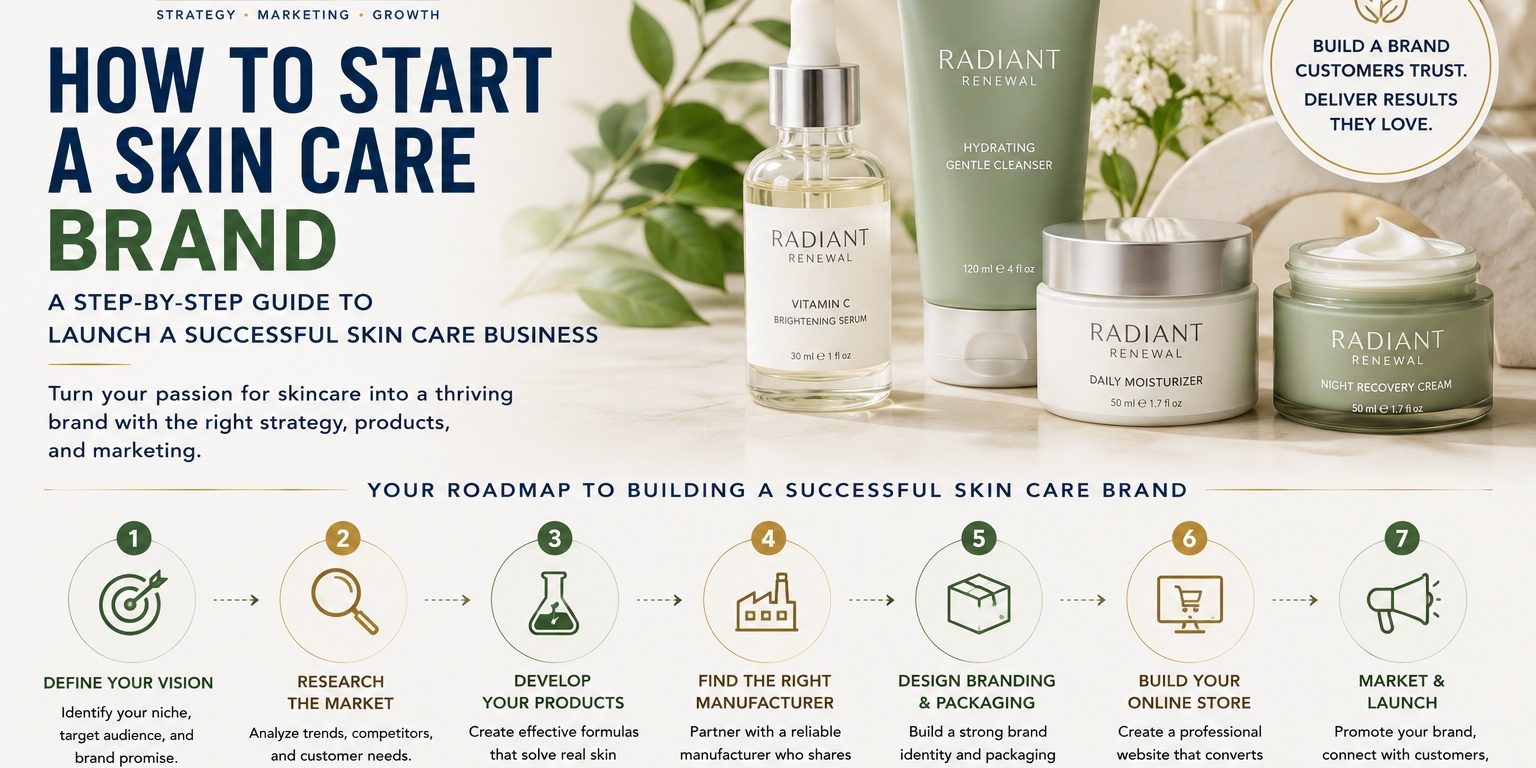
The global skin care industry continues to experience remarkable growth, creating exciting opportunities for entrepreneurs looking to build successful beauty businesses. Consumers are investing more than ever in facial care, anti-aging products, clean beauty, wellness-focused formulations, and science-backed skincare solutions. At the same time, advances in manufacturing, e-commerce, and digital marketing have made it more accessible than ever to launch a professional skin care brand.
While the opportunity is significant, building a successful brand requires far more than creating an attractive logo or choosing a few ingredients. The most successful companies combine market research, thoughtful product development, strategic branding, regulatory compliance, professional packaging, and a comprehensive marketing plan to create products customers trust and continue purchasing.
Today’s consumers are also more informed than previous generations. They carefully evaluate ingredient lists, research brands online, compare customer reviews, follow skincare influencers, and expect transparency from the companies they support. Building credibility from the very beginning is essential for earning consumer confidence in an increasingly competitive marketplace.
Launching a skin care business also involves making important decisions about manufacturing, product positioning, pricing, distribution channels, fulfillment, and long-term growth strategies. Entrepreneurs who invest time planning these areas before launch often avoid costly mistakes that can delay growth or strain their budgets.
Whether your goal is to develop a boutique luxury skincare collection, create a dermatologist-inspired treatment line, launch a clean beauty brand, or build a scalable e-commerce business, following a structured process significantly improves your chances of success.
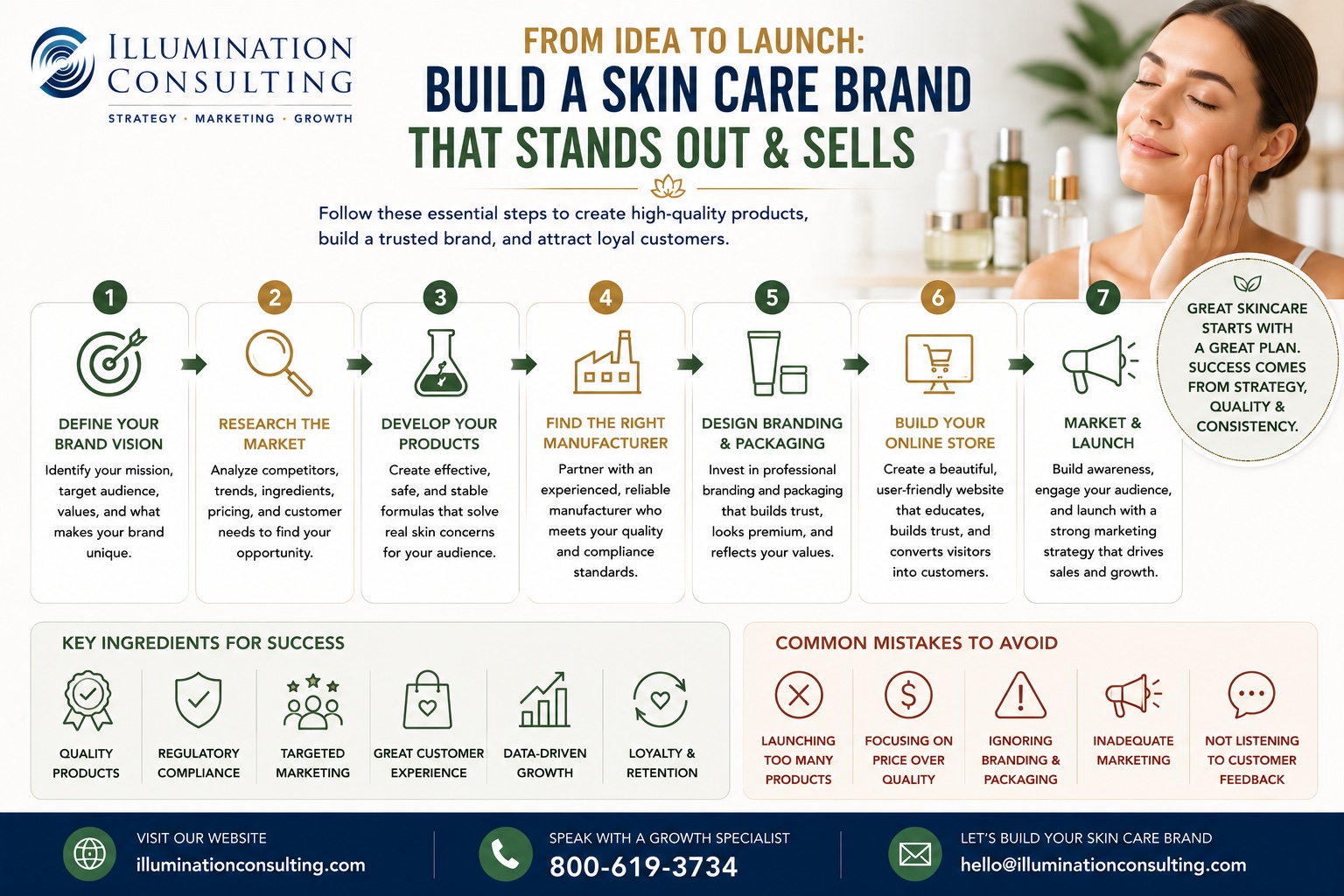
This guide walks through each stage of creating a successful skin care brand, from validating your idea and selecting manufacturers to developing your marketing strategy and preparing for a successful product launch.
Define Your Brand Vision Before Developing Products
Many entrepreneurs begin by thinking about products first. In reality, the strongest brands begin with a clear vision.
Your brand should answer several important questions before any formulas are created.
Consider:
- Who is your ideal customer?
- What skin concerns will you address?
- What makes your products different?
- What price point will you target?
- Will your brand focus on luxury, clinical skincare, clean beauty, natural ingredients, or dermatologist-developed formulations?
- What long-term reputation do you want your company to build?
A clearly defined brand vision becomes the foundation for every future business decision, including product development, packaging, marketing, and customer experience.
Companies with a strong identity create stronger emotional connections with consumers, making it easier to build loyalty in a crowded marketplace.
Research the Skin Care Market
Before investing in product development, take time to understand the market you plan to enter.
The skincare industry includes thousands of brands competing across different categories, price points, and customer demographics. Rather than trying to appeal to everyone, successful startups identify a specific niche where they can solve a meaningful problem or deliver a unique experience.
Research should include:
- Existing competitors
- Industry trends
- Consumer buying habits
- Popular ingredients
- Emerging technologies
- Pricing strategies
- Product reviews
- Retail opportunities
- E-commerce trends
- Market gaps
Pay close attention to what customers praise and criticize in competing products. Reviews on retailer websites, Amazon, Sephora, Ulta, and social media often reveal unmet needs that can inspire new product ideas.
A thorough understanding of your market helps you develop products with stronger commercial potential instead of relying on assumptions.
Identify Your Target Audience
One of the biggest mistakes new skincare entrepreneurs make is trying to create products for everyone.
Successful brands focus on serving a clearly defined audience.
Examples include:
- Acne-prone teenagers
- Women over 40
- Men seeking simple skincare routines
- Sensitive skin consumers
- Luxury skincare buyers
- Eco-conscious shoppers
- Professional spa clients
- Medical aesthetic patients
- Athletes
- People with hyperpigmentation
Once your audience is identified, every business decision becomes easier.
Your branding, messaging, packaging, pricing, ingredients, website design, advertising, and social media strategy should all speak directly to the needs of your ideal customer.
Consumers are far more likely to purchase products when they feel a brand understands their specific concerns.
Develop Products That Solve Real Problems
The products themselves remain the foundation of every successful skin care brand.
Rather than attempting to launch a large catalog immediately, many successful companies begin with a focused collection that addresses a specific skincare routine.
For example:
- Cleanser
- Vitamin C Serum
- Hyaluronic Acid Serum
- Moisturizer
- Eye Cream
A smaller product line allows entrepreneurs to concentrate on quality, branding, inventory management, and marketing while minimizing startup costs.
When developing formulations, consider factors such as:
- Active ingredients
- Product stability
- Texture
- Fragrance
- Absorption
- Skin compatibility
- Packaging compatibility
- Shelf life
- Regulatory compliance
Every product should solve a genuine consumer problem while delivering a pleasant user experience that encourages repeat purchases.
Choose the Right Manufacturing Partner
Selecting a manufacturing partner is one of the most important decisions you’ll make during the startup process.
The right manufacturer becomes a long-term business partner responsible for producing consistent, high-quality products that reflect your brand standards.
When evaluating manufacturers, consider:
- Industry experience
- Minimum order quantities
- Product capabilities
- Custom formulation services
- Regulatory knowledge
- Quality control procedures
- Lead times
- Pricing
- Scalability
- Customer support
Always request samples before making commitments.
Testing multiple manufacturers allows you to compare product quality, packaging compatibility, communication, and reliability before investing significant capital.
A dependable manufacturer provides confidence that your products will remain consistent as your business grows.
Invest in Professional Branding
Consumers often purchase skincare products based on emotion before they evaluate ingredients.
Strong branding communicates professionalism, trust, quality, and value within seconds.
Professional branding includes:
- Brand identity
- Logo design
- Typography
- Color palette
- Brand messaging
- Product naming
- Visual consistency
- Photography
- Packaging design
- Brand voice
Luxury brands often emphasize elegance and exclusivity, while clinical brands focus on science, results, and credibility.
Every visual element should reinforce the positioning you’ve chosen for your business.
Effective branding creates instant recognition and distinguishes your company from competitors in an increasingly crowded marketplace.
Design Packaging That Builds Trust
Packaging serves multiple purposes beyond protecting the product.
It influences purchasing decisions, communicates product benefits, supports your brand identity, and enhances the customer experience.
Consider the following when designing packaging:
- Functionality
- Product protection
- Premium appearance
- Ingredient transparency
- Regulatory labeling
- Ease of use
- Sustainability
- Shipping durability
- Shelf appeal
- Brand consistency
Consumers frequently share attractive packaging on social media, making thoughtful design an extension of your marketing strategy.
Beautiful packaging not only increases perceived value but also contributes to stronger customer loyalty and repeat purchases.
Understand Regulatory Requirements
Launching a skin care brand involves more than creating effective products. Every product sold to consumers must comply with applicable regulations governing cosmetic labeling, ingredient disclosure, manufacturing practices, and marketing claims.
Although regulations vary by country, every skincare entrepreneur should become familiar with:
- Cosmetic labeling requirements
- Ingredient declarations
- Product safety testing
- Good Manufacturing Practices (GMP)
- Product traceability
- Batch documentation
- Claims compliance
- Packaging regulations
- Import and export requirements
- Product liability considerations
Avoid making medical claims unless your products meet the regulatory requirements for drug classifications. Statements such as “treats eczema” or “cures acne” may require additional approvals depending on your market.
Working with experienced manufacturers, consultants, and legal professionals can help ensure your products enter the marketplace with confidence.
Build an E-Commerce Website That Converts
For many startups, an e-commerce website becomes the primary sales channel.
Your website should do far more than display products. It should educate visitors, answer questions, build credibility, and guide customers toward making informed purchasing decisions.
Essential features include:
- Professional homepage
- Fast loading speeds
- Mobile-responsive design
- Secure checkout
- High-quality product photography
- Detailed product pages
- Ingredient explanations
- Before-and-after imagery where appropriate
- Customer reviews
- Frequently asked questions
- Contact information
- Shipping and returns policies
The shopping experience should feel effortless from the moment a visitor lands on your website until they complete their purchase.
A well-designed website also supports SEO, improves conversion rates, and strengthens your brand’s professional image.
Create Content That Educates Consumers
Educational content is one of the most effective ways to establish authority within the skincare industry.
Today’s consumers want to understand what they are putting on their skin and why it works. Brands that consistently educate their audience build greater trust than those that focus exclusively on selling products.
Content ideas include:
- Skincare routines
- Ingredient guides
- Skin concern articles
- Seasonal skincare advice
- Product tutorials
- Frequently asked questions
- Dermatologist interviews
- Customer success stories
- Educational videos
- Downloadable skincare guides
Publishing valuable content also strengthens your SEO strategy by increasing keyword coverage and attracting qualified organic traffic from search engines.
Over time, a comprehensive content library becomes a powerful long-term marketing asset.
Develop a Strong Marketing Strategy
Even exceptional products require effective marketing to reach the right audience.
Rather than relying on a single channel, successful skincare brands build integrated marketing strategies that generate awareness while nurturing long-term customer relationships.
An effective marketing plan may include:
- Search engine optimization (SEO)
- Content marketing
- Social media marketing
- Influencer partnerships
- Email marketing
- Paid advertising
- Video marketing
- Affiliate programs
- Public relations
- Referral campaigns
Consistency is more important than volume.
Brands that communicate regularly through multiple channels remain visible throughout the customer’s buying journey and build stronger brand recognition over time.
Build an Email List from Day One
Many entrepreneurs focus exclusively on social media while overlooking one of the most valuable marketing assets they can own.
An email list allows you to communicate directly with customers without relying on constantly changing social media algorithms.
Ways to grow your list include:
- Website pop-ups
- Exclusive discounts
- Skincare guides
- Product launch notifications
- VIP membership programs
- Educational newsletters
- Giveaways
- Early access promotions
- Free consultations
- Sample requests
Email marketing consistently delivers one of the highest returns on investment because it nurtures existing relationships while encouraging repeat purchases.
Prepare for a Successful Product Launch
Launching your products is more than simply making them available for purchase.
The most successful launches build anticipation weeks before products become available.
A structured launch plan may include:
- Countdown campaigns
- Email announcements
- Social media teasers
- Influencer collaborations
- Product photography
- Educational videos
- Press outreach
- Website optimization
- Paid advertising
- Limited-time launch offers
Creating excitement before launch often results in stronger initial sales while helping your brand gain valuable momentum.
Common Mistakes New Skin Care Brands Should Avoid
Many startups encounter avoidable challenges during their first few years.
Understanding these common mistakes can save significant time, money, and frustration.
Avoid:
- Launching too many products too quickly
- Choosing manufacturers based solely on price
- Weak branding
- Inconsistent packaging
- Ignoring SEO
- Poor website design
- Unrealistic pricing
- Neglecting customer service
- Inconsistent marketing
- Failing to collect customer feedback
Building a successful skincare company requires patience, continuous learning, and a willingness to improve every aspect of the business over time.
The strongest brands rarely become overnight successes. They earn trust through consistency, quality, and exceptional customer experiences.
Building Long-Term Customer Loyalty
Acquiring a new customer is only the beginning of building a successful skin care business. Long-term growth depends on creating loyal customers who continue purchasing your products, recommend your brand to others, and become advocates within their communities.
Customer loyalty doesn’t happen by accident. It is earned through consistent product quality, exceptional service, meaningful communication, and delivering on your brand promise every time someone interacts with your business.
Effective loyalty strategies include:
- Personalized email campaigns
- Product replenishment reminders
- Loyalty rewards programs
- Referral incentives
- Educational newsletters
- Exclusive product launches
- VIP customer discounts
- Birthday offers
- Subscription programs
- Outstanding customer support
A customer who purchases from your brand multiple times is significantly more valuable than constantly acquiring new buyers. Focusing on customer retention creates more predictable revenue while lowering overall marketing costs.
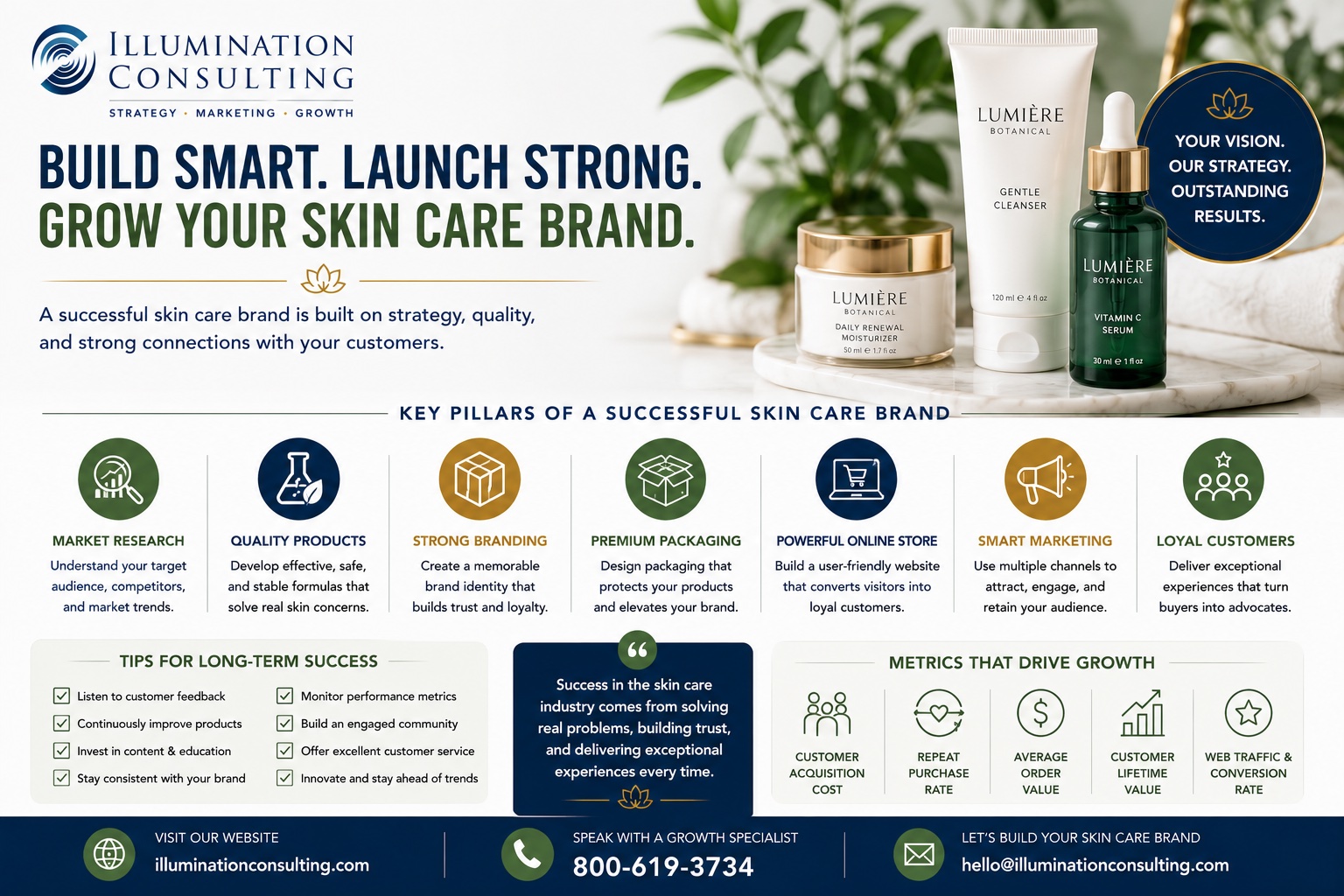
Measuring Your Brand’s Success
Launching your skin care brand is only the first milestone. Sustainable growth requires monitoring performance and making informed business decisions based on real data rather than assumptions.
Key performance indicators (KPIs) help you understand what is working and where improvements are needed.
Important metrics include:
- Website traffic
- Organic search rankings
- Conversion rate
- Average order value
- Customer acquisition cost
- Customer lifetime value
- Repeat purchase rate
- Email open and click-through rates
- Social media engagement
- Product return rate
Reviewing these metrics regularly allows you to identify trends, optimize marketing campaigns, improve customer experiences, and allocate your budget more effectively.
Scaling Your Skin Care Business
Once your initial product line gains traction, opportunities to expand become much more achievable.
Growth should be intentional rather than rushed. Expanding too quickly can create inventory challenges, strain cash flow, and reduce product quality.
Successful expansion strategies may include:
- Introducing complementary products
- Expanding into additional skincare categories
- Launching seasonal collections
- Developing professional treatment products
- Partnering with med spas and dermatology clinics
- Selling through specialty retailers
- Expanding internationally
- Introducing subscription programs
- Creating travel-sized collections
- Offering skincare bundles
Each expansion should strengthen your overall brand positioning while continuing to serve the needs of your target audience.
Frequently Asked Questions
How much does it cost to start a skin care brand?
Startup costs vary depending on your business model, product complexity, packaging, inventory quantities, and marketing budget. Many entrepreneurs begin with a focused product line before expanding as revenue grows.
Should I manufacture my own skincare products?
Most startups work with experienced private-label or custom formulation manufacturers. This approach provides access to professional expertise, quality control, and scalable production without investing in manufacturing facilities.
How many products should I launch with?
Many successful brands begin with three to five complementary products that form a complete skincare routine. A focused launch allows you to manage inventory more effectively while building brand recognition.
Is Shopify a good platform for a skin care brand?
Yes. Shopify is one of the most popular e-commerce platforms for skincare companies because it offers secure payments, mobile-friendly design, scalability, and extensive marketing integrations.
How long does it take to launch a skin care brand?
Depending on formulation development, packaging, manufacturing, branding, and website development, launching a professional skin care brand typically takes several months. Proper planning helps reduce delays and ensures a stronger market introduction.
What is the biggest mistake new skin care brands make?
Many new businesses try to compete on too many fronts at once. Launching too many products, targeting too broad of an audience, or neglecting branding and marketing can make it difficult to build recognition and customer loyalty.
Build a Brand Designed for Long-Term Success
Creating a successful skin care brand requires far more than developing quality products. The strongest companies combine strategic planning, thoughtful branding, exceptional customer experiences, and consistent marketing to establish lasting relationships with their customers. Every decision—from selecting ingredients and packaging to designing your website and creating educational content—contributes to how consumers perceive your brand.
Rather than focusing solely on your initial launch, approach your business with a long-term vision. Build systems that support sustainable growth, listen carefully to customer feedback, adapt to changing market trends, and continually refine your products and marketing strategy. Brands that consistently deliver value earn trust, strengthen customer loyalty, and create opportunities for expansion into new markets.
Whether your goal is to launch a boutique skincare collection or build a nationally recognized beauty brand, success begins with careful planning and a commitment to excellence at every stage of the journey.
If you’re preparing to launch or grow a skin care company, Illumination Consulting provides specialized consulting, branding, packaging guidance, website design, e-commerce development, SEO, content marketing, and digital marketing services tailored specifically for skincare brands. Our team helps entrepreneurs navigate the complexities of launching and scaling a successful business while building a brand positioned for long-term growth and profitability.