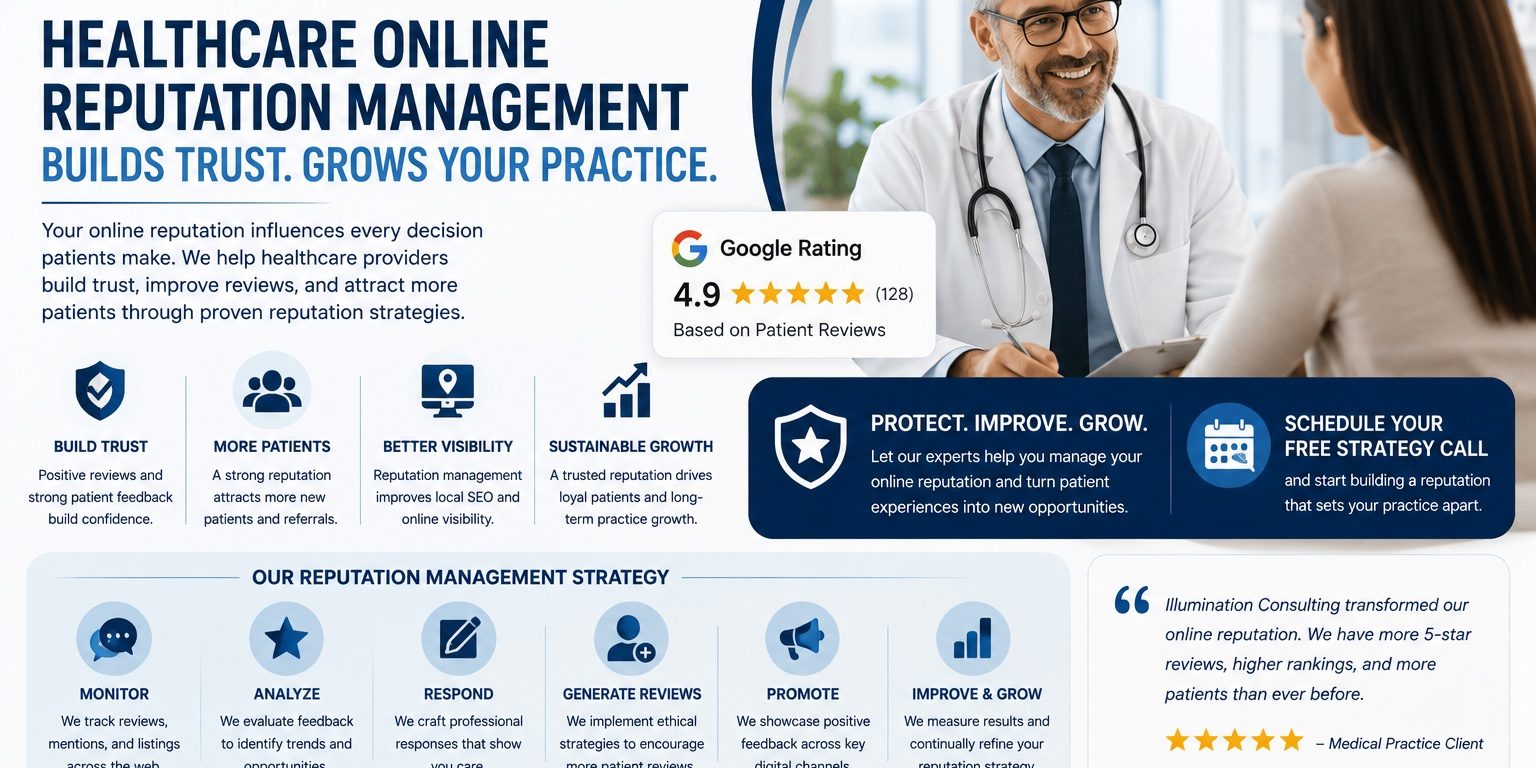
A strong healthcare online reputation management strategy helps medical practices build patient trust, improve local search visibility, and generate more appointment requests. In today’s digital-first healthcare environment, patients often read multiple online reviews before choosing a physician or medical practice. Your online reputation has become one of the most influential factors in attracting new patients and strengthening long-term practice growth.
Most prospective patients evaluate healthcare providers by reviewing Google ratings, patient testimonials, physician credentials, and overall online presence. Even an outstanding medical practice can lose prospective patients if its online reputation is poorly managed or outdated. A proactive reputation management strategy ensures that your practice consistently presents a professional, trustworthy image across every digital touchpoint.
Unlike traditional word-of-mouth referrals, online reputation management works around the clock. Positive reviews, professional responses, and accurate business information help reinforce patient confidence while supporting local search engine optimization. Search engines also recognize strong engagement and authentic patient feedback as signals of a reputable healthcare organization.
In this guide, we’ll explore proven healthcare online reputation management strategies that help medical practices strengthen patient confidence, improve local SEO, increase positive reviews, and support sustainable long-term growth.
Why Online Reputation Matters
Patient trust begins long before the first appointment.
Many prospective patients compare several providers before making a decision, and online reviews frequently become the deciding factor.
A strong reputation management strategy helps practices:
- Build patient trust
- Increase appointment requests
- Improve Google Business Profile performance
- Strengthen local SEO
- Increase positive patient reviews
- Improve online credibility
- Enhance physician authority
- Reduce patient acquisition costs
- Support long-term growth
- Improve marketing ROI
Managing your online reputation consistently helps create a positive first impression while encouraging prospective patients to choose your practice.
Encourage Authentic Patient Reviews
One of the most effective healthcare online reputation management strategies is developing a consistent process for requesting authentic patient reviews.
Satisfied patients are often willing to share their experiences when asked politely and at the appropriate time.
Best practices include:
- Request reviews after successful visits
- Simplify the review process
- Send follow-up email requests
- Use QR codes in the office
- Train staff to ask consistently
- Respect patient privacy
- Follow healthcare regulations
- Never purchase reviews
A steady flow of genuine patient feedback builds long-term credibility while improving local search performance.
Respond to Every Review Professionally
Every review represents an opportunity to demonstrate professionalism and commitment to patient care.
Healthcare providers should respond promptly while protecting patient confidentiality.
Effective review responses should:
- Thank patients for positive feedback
- Remain professional
- Avoid discussing medical details
- Acknowledge concerns respectfully
- Encourage offline conversations when appropriate
- Follow HIPAA privacy requirements
- Maintain a consistent tone
- Reinforce patient-centered care
Professional review management strengthens your reputation while demonstrating responsiveness to prospective patients.
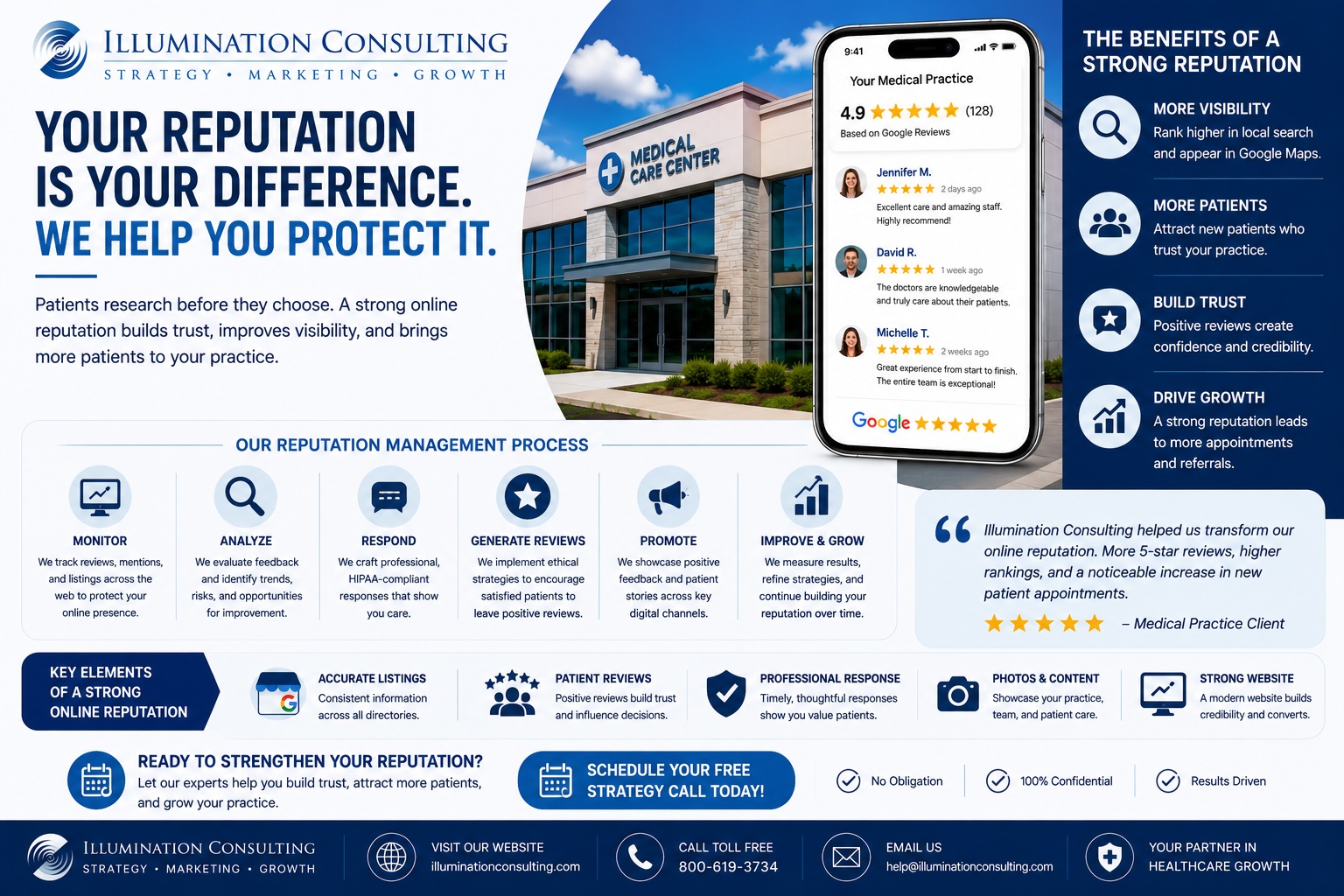
Monitor Your Online Presence
Effective healthcare online reputation management extends beyond responding to reviews. Medical practices should actively monitor every major platform where patients may encounter information about the practice.
Regular monitoring helps identify inaccurate information, emerging concerns, and opportunities to strengthen patient confidence.
Healthcare providers should routinely review:
- Google Business Profile
- Healthgrades
- Vitals
- WebMD
- Yelp
- Physician directories
- Local business listings
Maintaining accurate, consistent information across these platforms strengthens both patient trust and local search visibility.
Showcase Patient Testimonials
Verified patient testimonials provide powerful social proof while reinforcing your practice’s commitment to quality care.
With appropriate patient consent and in compliance with privacy regulations, testimonials can be incorporated throughout your digital marketing.
Effective placement includes:
- Website home page
- Service pages
- Physician profiles
- Landing pages
- Social media
- Marketing brochures
- Email campaigns
- Waiting room displays
Authentic testimonials help prospective patients feel more confident before scheduling their first appointment.
Build Physician Authority
Patients often evaluate individual physicians as carefully as they evaluate the medical practice itself.
Building physician authority strengthens both online reputation and patient confidence.
Practices can highlight physician expertise through:
- Professional biographies
- Board certifications
- Continuing education
- Medical publications
- Speaking engagements
- Community involvement
- Professional memberships
- Awards and recognitions
Showcasing physician expertise reinforces credibility while differentiating your practice from competitors.
Strengthen Your Practice Brand
Your online reputation reflects the consistency of your entire brand.
Every patient interaction should reinforce professionalism and trust through:
- Consistent messaging
- Professional photography
- Accurate business information
- Educational content
- Responsive communication
- Clear branding
- Modern website design
- Exceptional patient experiences
Strong branding supports positive patient perceptions while increasing long-term loyalty.
Address Negative Feedback Professionally
Even outstanding healthcare organizations occasionally receive negative reviews.
The goal is not to eliminate criticism but to respond professionally while demonstrating your commitment to patient satisfaction.
When addressing concerns:
- Respond promptly
- Remain courteous
- Avoid defensiveness
- Protect patient privacy
- Encourage direct communication
- Investigate legitimate concerns
- Learn from recurring issues
- Maintain professionalism
Thoughtful responses often improve the perception of your practice, even among prospective patients who read the reviews.
Encourage Staff Participation
Reputation management should involve the entire healthcare team.
Front-desk staff, clinical personnel, and leadership all contribute to the patient experience.
Encourage your team to:
- Deliver exceptional service
- Communicate clearly
- Resolve concerns quickly
- Support patient education
- Request reviews appropriately
- Maintain professionalism
- Reinforce practice values
- Create positive patient experiences
A patient-centered culture naturally generates stronger reviews and a healthier online reputation.
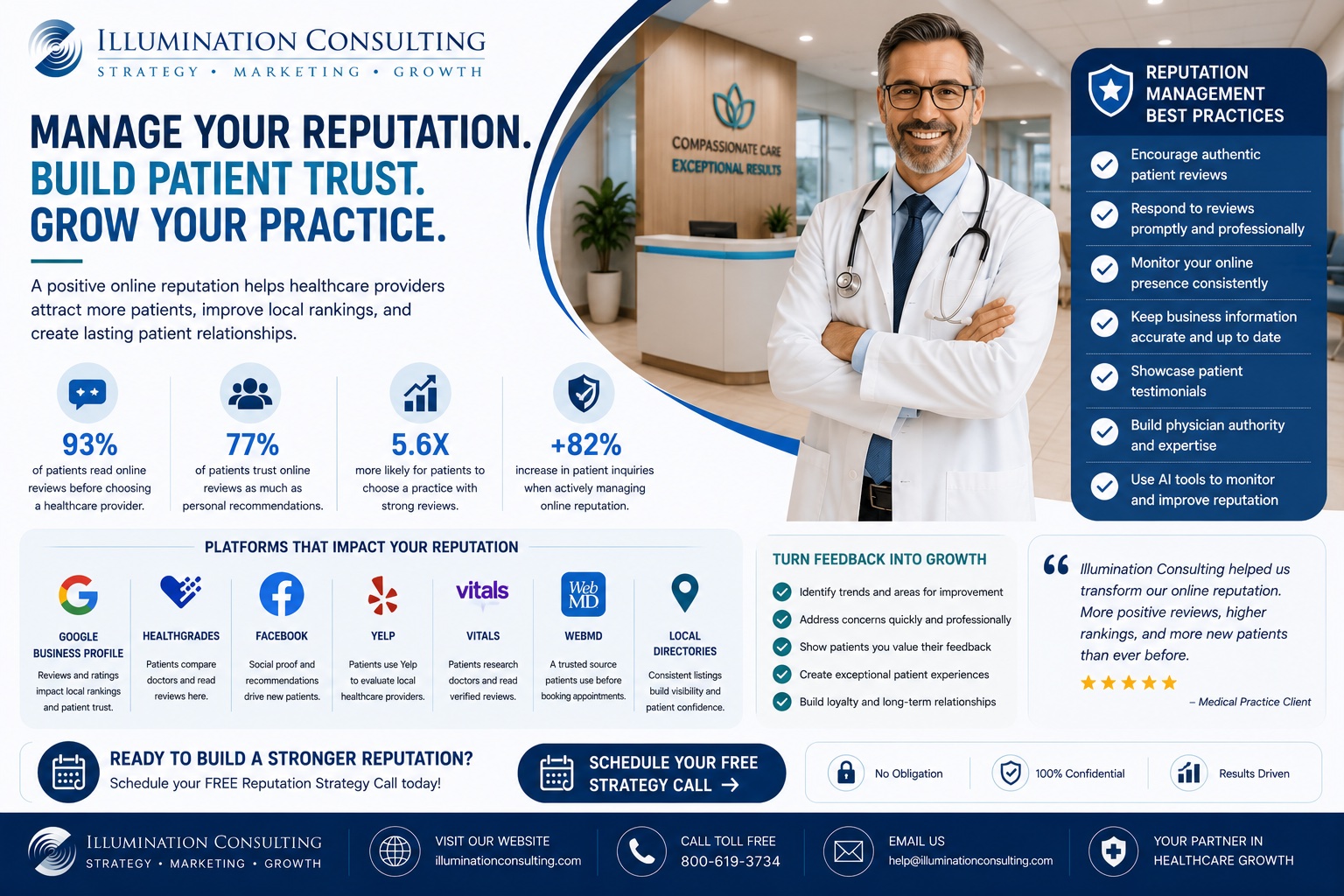
Common Reputation Management Mistakes
Many healthcare organizations unintentionally weaken their online reputation by overlooking simple but important practices. Avoiding these common mistakes helps build stronger patient confidence while supporting long-term growth.
Ignoring Online Reviews
One of the biggest mistakes healthcare providers make is failing to monitor or respond to patient reviews.
Whether reviews are positive or negative, thoughtful responses demonstrate that your practice values patient feedback and is committed to delivering exceptional care.
Practices should avoid:
- Ignoring negative reviews
- Responding emotionally
- Discussing patient information publicly
- Delaying responses
- Using generic replies
- Arguing with reviewers
- Violating HIPAA privacy requirements
- Removing legitimate criticism
Professional communication reinforces trust while protecting your practice’s reputation.
Inconsistent Business Information
Patients become frustrated when different websites display conflicting information.
Every online profile should consistently include:
- Practice name
- Office address
- Phone number
- Website URL
- Office hours
- Appointment scheduling link
- Physician information
- Medical specialties
Consistent information improves patient confidence while strengthening local SEO performance.
Neglecting Social Media
Patients increasingly evaluate healthcare providers through social media before scheduling appointments.
An inactive or outdated profile can create the impression that a practice is no longer engaged with its community.
Healthcare practices should regularly share:
- Health education
- Wellness tips
- Community events
- Practice updates
- New providers
- Office announcements
- Seasonal healthcare advice
- Educational videos
Consistent social media activity reinforces credibility while supporting your overall reputation.
Use Artificial Intelligence to Strengthen Reputation Management
Artificial intelligence is helping healthcare providers monitor and improve their online reputation more efficiently.
AI-powered tools can assist with:
- Review sentiment analysis
- Brand monitoring
- Review response suggestions
- Competitor reputation analysis
- Social listening
- Performance reporting
- Reputation trend analysis
- Workflow automation
- Patient engagement insights
- Content recommendations
When combined with experienced marketing strategy and human oversight, AI enables practices to respond faster, identify emerging trends, and strengthen patient relationships.
Measure Reputation Performance
Successful healthcare online reputation management requires continuous evaluation.
Practices should regularly monitor:
- Average review rating
- Total review volume
- Review response time
- Patient satisfaction trends
- Google Business Profile engagement
- Local search rankings
- Website traffic
- Appointment conversions
Tracking these metrics helps healthcare organizations identify improvement opportunities while measuring the impact of their reputation management efforts.
Frequently Asked Questions
What is healthcare online reputation management?
Healthcare online reputation management is the ongoing process of monitoring, improving, and protecting a medical practice’s online presence through patient reviews, business listings, physician profiles, social media, and digital engagement.
Why are online reviews important for healthcare providers?
Online reviews help prospective patients evaluate the quality of care, professionalism, and patient experience offered by a practice. They also influence local SEO rankings and improve visibility in Google Search and Google Maps.
Should healthcare providers respond to negative reviews?
Yes. Healthcare providers should respond professionally while protecting patient privacy and complying with HIPAA regulations. Respectful responses demonstrate accountability and reinforce a commitment to patient care.
How can medical practices generate more positive reviews?
Practices can encourage satisfied patients to leave authentic reviews after appointments, simplify the review process, train staff to request feedback appropriately, and consistently deliver outstanding patient experiences.
Does reputation management improve local SEO?
Yes. Positive reviews, active engagement, consistent business information, and a strong online presence contribute to improved local search visibility while increasing patient trust and appointment requests.
Grow Your Practice with Illumination Consulting
Successful healthcare online reputation management combines patient review management, physician branding, local SEO, social media engagement, accurate business information, and continuous monitoring to strengthen patient trust and generate sustainable growth. Healthcare organizations that actively manage their online reputation improve local visibility, increase appointment requests, reinforce their credibility, and create lasting competitive advantages.
At Illumination Consulting, we help healthcare providers grow through online reputation management, local SEO, search engine optimization, healthcare website design, content marketing, AI-powered business solutions, digital marketing, and strategic consulting. Our customized marketing strategies are designed to strengthen your online reputation, improve local search rankings, attract qualified patients, and deliver measurable business results.
Whether you’re launching a new healthcare practice or expanding an established medical organization, our team can help you implement healthcare online reputation management strategies that build patient trust, improve online visibility, generate more qualified patient inquiries, and support sustainable long-term growth.