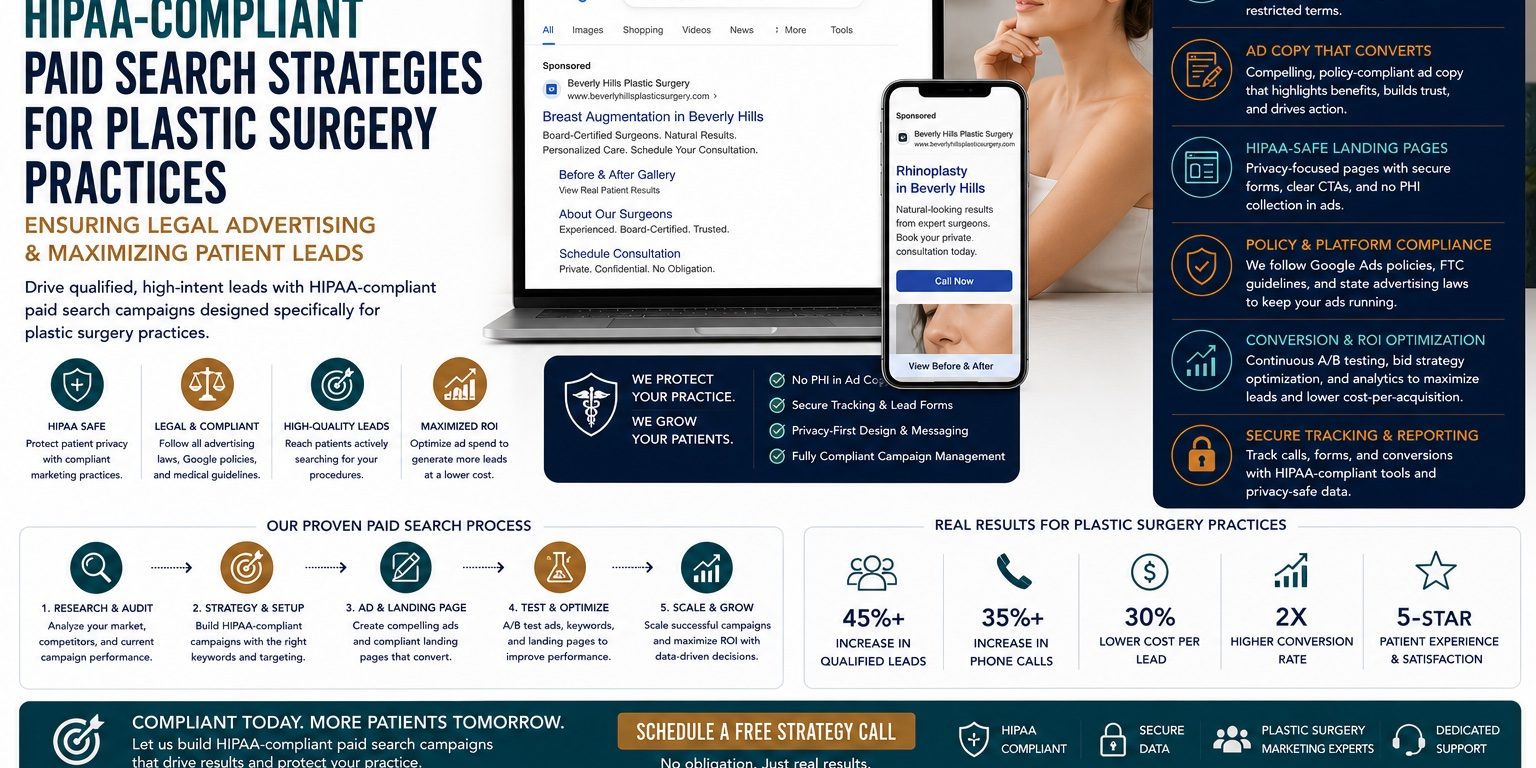
In the competitive landscape of plastic surgery, adhering to HIPAA regulations while harnessing the power of paid search strategies is paramount for attracting and retaining patients. This guide delivers essential insights into creating effective HIPAA-compliant paid search campaigns that balance legal adherence with successful lead generation. Readers will explore the critical HIPAA requirements for digital advertising and how these standards impact patient data privacy in paid search campaigns. Tackling the nuances of compliance while optimizing PPC performance can significantly enhance a plastic surgery practice’s patient engagement and trust.
Understanding HIPAA regulations is crucial for any medical practice, especially for plastic surgeons who aim to ensure their advertising practices are above reproach. This article outlines key compliance guidelines that must be followed, effective PPC campaign design, and best management practices for Google Ads in the healthcare sector. Moreover, this guide will uncover the importance of medical advertising compliance not just for legal safety but also for fostering patient trust and lead quality.
Maintaining strict data privacy standards is a fundamental component of modern healthcare marketing strategies as outlined in industry research.
Ensuring Data Privacy and HIPAA Compliance in Healthcare Digital Advertising
Marketers must ensure that data use complies with HIPAA and other data protection regulations. Patients should be informed when their data is used for segmentation or targeting. Leveraging Emerging Technologies in Digital Marketing, 2025
What Are the Key HIPAA Requirements for Digital Advertising in Plastic Surgery?
HIPAA establishes a framework to protect patient privacy and ensures that their health information is secured. The primary requirements for digital advertising in plastic surgery include:
- Data Security Protocols: Ensure patient data is securely stored and accessed to prevent unauthorized access.
- Patient Consent: Obtain explicit patient consent before using their information for advertising purposes.
- Privacy Policies and Transparency: Maintain clear policies that inform patients how their data will be used.
These measures are fundamental to not only comply with legal principles but also to uphold a practice’s reputation and build trust with potential patients.
How Does HIPAA Regulate Patient Data Privacy in Paid Search Campaigns?
HIPAA governs how healthcare providers can handle sensitive patient information, particularly in paid search campaigns. The regulation mandates that:
- Key Compliance Measures: Practices must have robust protocols for accessing and using patient data, ensuring protection against breaches.
- Data Security Necessities: Secure web hosting is required to safeguard online forms and patient interactions.
- Clear Communication: Practices must transparently communicate how patient information will be utilized in advertising, preventing misunderstandings.
Adhering to these guidelines not only curates a compliant environment but also fortifies the practice’s credibility in the digital space.
Which Specific Compliance Guidelines Must Plastic Surgery Practices Follow?
To create compliant and effective advertising, plastic surgery practices should focus on several essential guidelines:
- Collect Necessary Information for Consultation Requests: Gather only the information necessary for effective patient engagement.
- Ensure Secure Online Forms: Utilize forms that prioritize encryption and security measures to protect patient data.
- Maintain Clarity on Data Usage Policies: Clearly outline how patient information will be utilized and provide options for opting out.
These guidelines enhance trust and effectiveness in patient interactions, ultimately leading to better lead conversion.
How to Design Effective and Compliant PPC Campaigns for Plastic Surgery Practices?
Designing effective PPC campaigns for plastic surgery practices requires a deep understanding of both compliance and strategic marketing. Important considerations include:
- Targeting Strategies: Use demographic targeting tailored to prospective patients seeking specific procedures, while ensuring ads do not disclose sensitive patient information.
- Performance Measurement Techniques: Monitor campaign performance metrics closely to assess ROI without breaching HIPAA by inadvertently exposing patient data.
- Optimizing for Compliance: Constantly review campaigns to ensure they adhere to HIPAA regulations while also driving engagement and conversions.
By maintaining a firm grip on compliance, practices can enhance their advertising effectiveness without jeopardizing patient trust.
What Are Best Practices for HIPAA-Compliant Google Ads Management?
Efficient management of Google Ads under HIPAA involves several best practices:
- Compliance Requirements: Regular audits of ads to ensure all content abides by HIPAA regulations.
- Patient Consent Importance: Implement systems to acquire patient consent before including their testimonials or case studies in advertising.
- Data Security Measures: Utilize secure channels to protect sensitive data during the ad management process.
These practices foster a robust framework for reinforcing trust while maximizing the effectiveness of digital advertising efforts.
How Can Medical Advertising Compliance Improve Patient Trust and Lead Quality?
Compliance with medical advertising regulations not only protects the practice legally but significantly enhances patient trust. When patients see clear, transparent practices regarding their data usage, they are more likely to engage. Key benefits include:
- Link Between Compliance and Patient Trust: A compliant approach demonstrates respect for patient rights and privacy, increasing confidence.
- Importance of Thoroughly Following Guidelines: Strict adherence to regulations minimizes the risk of violations, further solidifying a practice’s reputation.
- Better Lead Quality Through Compliance: Compliant advertising attracts patients who value professionalism and ethical practices, often leading to higher quality leads.
By showcasing a commitment to adherence, practices can cultivate a loyal patient base that values trust and transparency.
What Are the Medical Ad Retargeting Compliance Techniques for Healthcare Paid Search?
Retargeting ads can effectively re-engage visitors, but they must remain within legal frameworks. Compliance techniques include:
- Data Security Protocols: Ensure that re-engagement strategies do not compromise sensitive patient information during the retargeting process.
- Anonymization Methods: Utilize data anonymization techniques to practice retargeting without risking patient identity exposure.
- Patient Consent Strategies: Confirm consent for using data in retargeting campaigns, reinforcing ethical practices in digital marketing.
These techniques allow plastic surgery practices to effectively re-engage potential patients while remaining compliant.
How to Run Retargeting Campaigns Without Violating Patient Privacy Laws?
Running retargeting campaigns requires careful planning to ensure compliance:
- Security of Patient Data: Protect patient data through encryption and secure protocols.
- Methods of Anonymization: Employ technologies that prevent personal identification in target data.
- Patient Consent Requirements: Acquire clear consent from patients regarding their data use in advertising.
By strategically implementing these measures, practices can enhance engagement while keeping patient information secure.
Which Privacy-First Retargeting Strategies Are Emerging in Plastic Surgery PPC?
The rise of privacy-first strategies in PPC advertising requires innovative thinking from plastic surgery practices. Key approaches include:
- Data Security Measures: Implementing stronger encryption and security techniques when handling patient data.
- Anonymization Practices: Using advanced analytics that anonymizes patient data for effective targeting without compromising personal identifiers.
- Understanding Patient Consent: Developing transparent, easy-to-understand policies regarding how patient consent is obtained and used in advertising efforts.
These strategies are pivotal for adapting to changing regulations while still effectively reaching potential patients.
What Google Ads Policies Must Plastic Surgery Practices Follow Under HIPAA?
Incorporating Google Ads into a HIPAA-compliant marketing strategy demands strict adherence to policies including:
- Policies on Patient Data: Ensure that all patient data is managed in compliance with HIPAA regulations.
- Advertising Restrictions Under HIPAA: Understand and respect the limitations imposed on medical advertising to prevent violations.
- Best Practices for Compliance: Always review and audit advertising content to ensure it meets all compliance standards before publication.
Following these policies will safeguard practices against potential legal repercussions while optimizing target advertising strategies.
How Does Google Enforce HIPAA-Related Advertising Restrictions?
Google implements stringent oversight on healthcare advertisements to ensure compliance with HIPAA. This involves:
- Google’s Compliance Enforcement: Regular audits of ads to ensure they comply with legal standards.
- Role of Patient Data Protection: Strict measures are put in place to safeguard all patient data used or referenced in advertisements.
- Impact of Violations: Clear consequences for practices that fail to adhere to Google’s and HIPAA’s advertising guidelines.
Understanding this enforcement mechanism encourages practices to prioritize compliance in their advertising efforts.
What Are Common Compliance Pitfalls and How to Avoid Them in Google PPC?
Practices often encounter compliance pitfalls in their PPC efforts. To avoid these issues, consider:
- Privacy Violations: Ensure no personal identifiers are shared in ads or landing pages.
- Data Security Issues: Regularly update security protocols to prevent unauthorized access to patient data.
- Misleading Claims: Maintain transparency in advertising to avoid potential accusations of misleading patients regarding procedures.
By recognizing and addressing these pitfalls, practices can fortify their advertising strategies and maintain compliance.
Which Industry Trends and Case Studies Illustrate Effective HIPAA-Compliant Paid Search?
Current trends highlight the shift towards compliance in digital advertising, with successful case studies demonstrating effective HIPAA adherence. Key insights include:
- Latest HIPAA Updates: Staying informed on regulatory changes is crucial for maintaining compliance.
- Trends in Digital Advertising: The rise of privacy-first marketing and data-centric advertising is reshaping norms in PPC strategies.
- Case Studies of Successful PPC Campaigns: Analyzing practices that have successfully integrated compliance into their paid search can provide valuable lessons for others.
Understanding these trends helps practices adopt forward-thinking strategies while ensuring compliance.
What Are Recent Compliance Updates in Healthcare Digital Advertising?
Staying current with healthcare advertising compliance is vital. Recent updates to consider include:
- Changes in HIPAA Regulations: Regularly review how new regulations may impact advertising practices.
- New Advertising Guidelines: Adapt to updates that affect how healthcare can engage prospective patients online.
- Impact on Healthcare Marketing: Acknowledge how compliance influences marketing strategies and patient outreach methods.
Being proactive in compliance allows practices to navigate the changing landscape effectively.
How Have Plastic Surgery Practices Achieved ROI Through Compliant PPC Campaigns?
Plastic surgery practices can achieve significant ROI by utilizing compliant PPC strategies. Essential insights include:
- Case Studies of Specific Practices: Review successful implementations of PPC campaigns that prioritized compliance and showcased transparency.
- Quantitative Results of PPC: Analyze the data reflecting increased patient engagement and conversions resulting from compliant advertising efforts.
- Long-Term Benefits of Compliance: Recognize that building patient trust through compliance ultimately leads to sustained growth and loyalty.
Ultimately, compliant PPC campaigns are not only necessary for legal reasons, but they also financially benefit practices when done correctly.