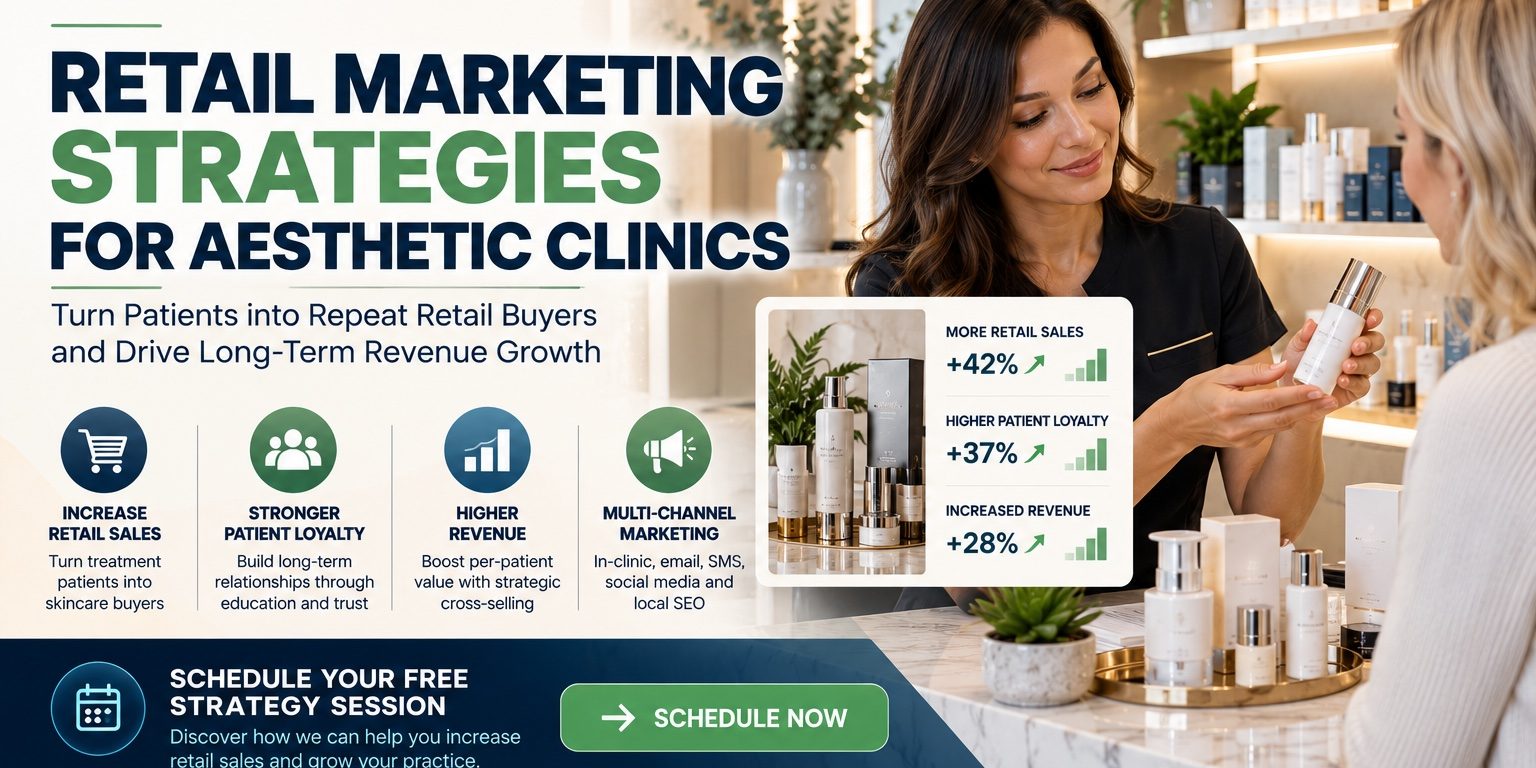
Aesthetic clinic retail strategies combine in-room skincare merchandising, structured email and SMS retention campaigns, provider-recommended product bundles, and local SEO to turn one-time Botox or filler patients into repeat retail buyers. Clinics that connect treatment visits to take-home product recommendations drive medical spa retail revenue growth, strengthening loyalty and converting episodic bookings into ongoing, measurable retail income streams.
Key Takeaways
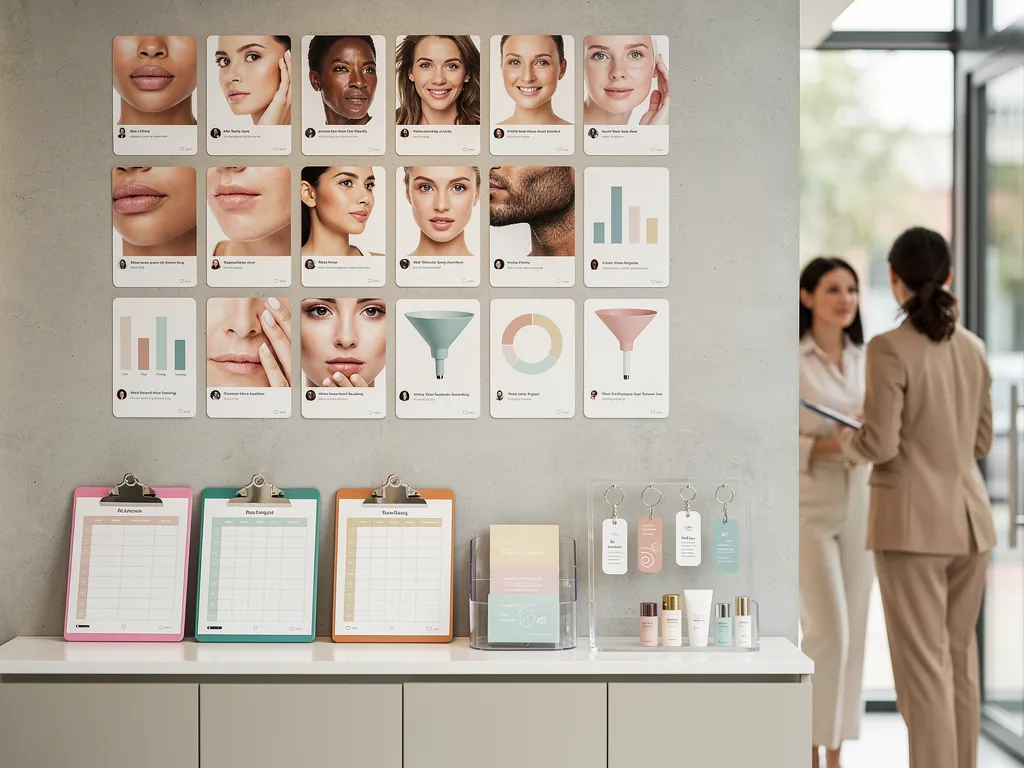
- Focus marketing efforts on 2-3 high-impact channels like local SEO and Instagram for maximum ROI.
- Track cost per booking and conversion metrics to measure which strategies drive qualified patient consultations.
- Build structured systems that convert prospect interest into consultations, then consultations into actual aesthetic treatments.
- Develop long-term patient relationships through trust-based marketing that keeps clients returning for additional procedures.
Why Are Clinics Leaving Retail Revenue on the Table?
Aesthetic practices routinely underprice their retail potential because product sales get treated as an afterthought, not a revenue line. Clinics selling skincare products compete inside one of the most demanding retail environments in business today. Consumers compare options across more channels and hold higher expectations than any previous generation of shoppers.
That competitive pressure explains why so many practice managers feel outmatched. Aesthetics has become a booming, high-growth category, and rising patient demand makes standing out from competing clinics harder every year. Standing still is not neutral; it is a slow leak of revenue to practices that merchandise retail with intention.
Why does retail revenue slip through the cracks at aesthetic practices?
Retail revenue disappears when product sales depend on a provider’s memory instead of a repeatable system. Clinics that treat skincare retail as an afterthought lose the recurring purchases that build predictable monthly income. Thriving in a saturated aesthetics market requires actively attracting new patients while retaining the ones already walking through the door. Retail sits at the center of retention.
Common gaps include:
- No structured product recommendation at checkout or post-treatment.
- Staff undertrained on ingredient benefits and pairing products to procedures.
- Retail display and e-commerce treated separately from patient marketing.
- No tracking of retail revenue per patient visit.
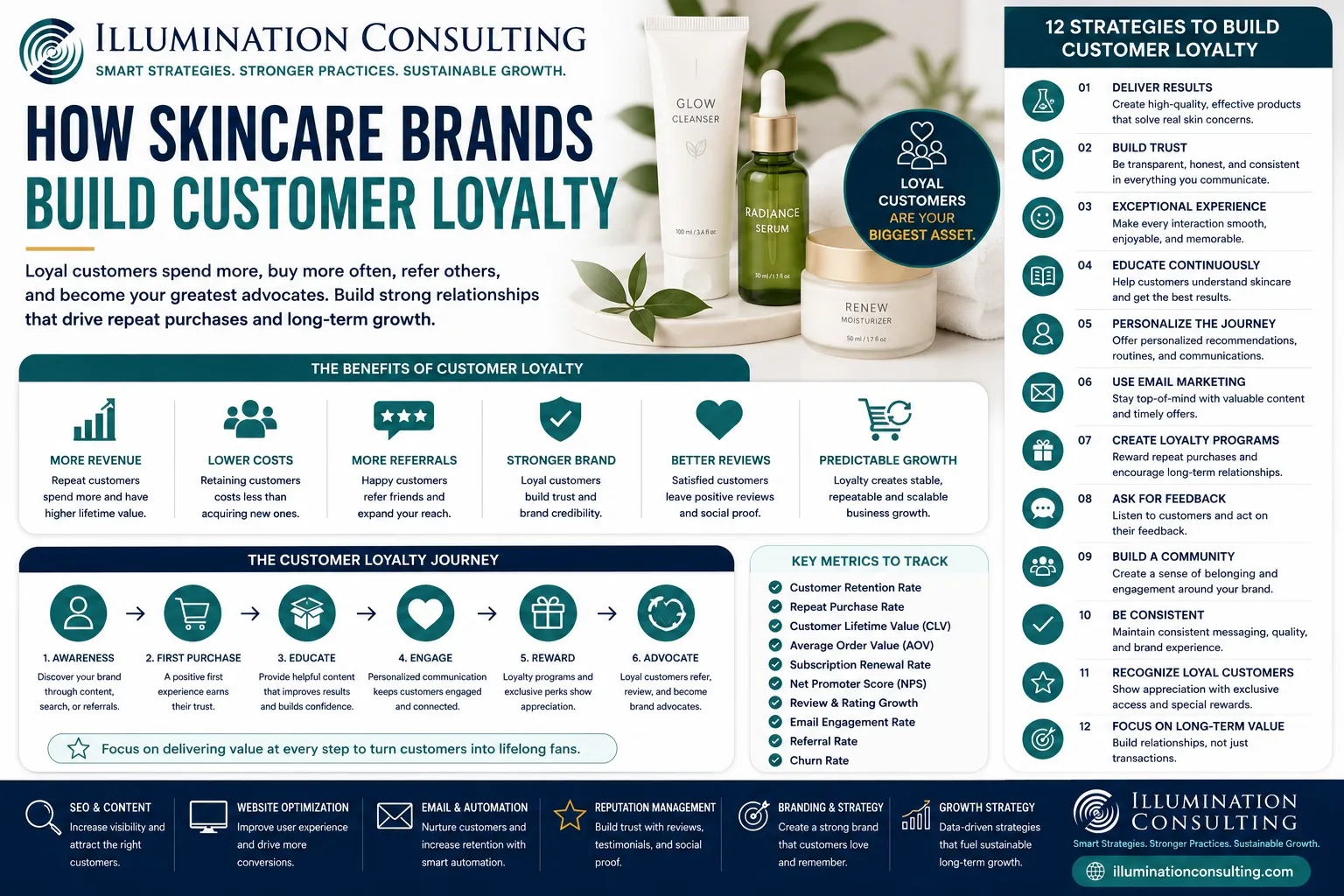
Closing these gaps is where aesthetic practice retail merchandising and retail marketing strategies for growth become essential, connecting patient acquisition, in-office merchandising, and digital storefronts into one coordinated system rather than three disconnected efforts. Practices that build this structure convert existing patient trust into a second revenue stream instead of leaving it on the shelf.

What Makes a Retail Marketing Strategy Effective?
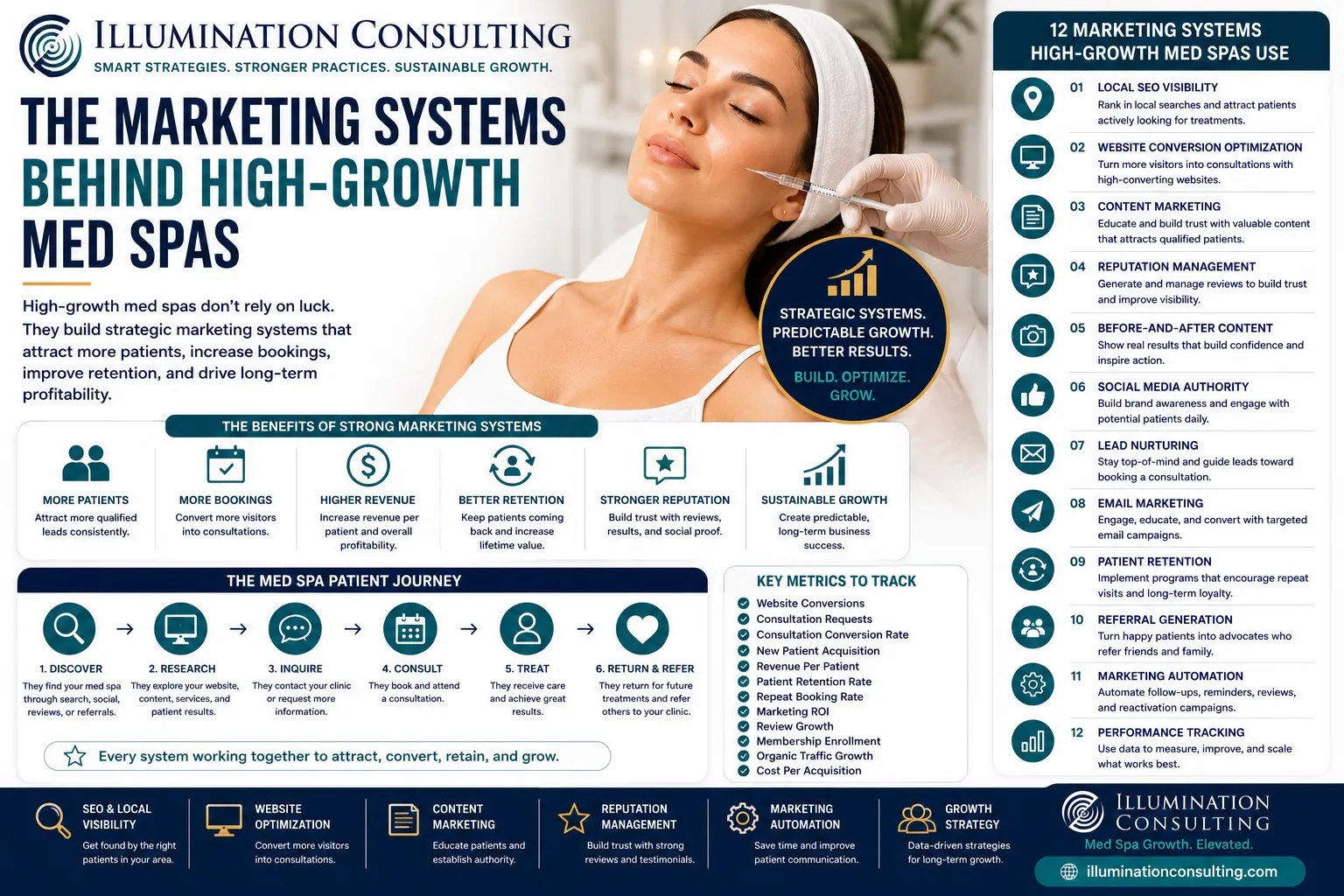
Effective retail marketing strategies for growth combine multiple disciplines into one coordinated system rather than relying on a single tactic. Advertising alone rarely moves the needle for aesthetic clinics selling retail skincare. A coordinated approach blending brand positioning, search engine optimization, content marketing, social media marketing, paid advertising, conversion optimization, email marketing, and customer retention initiatives produces measurable revenue growth instead of scattered activity.
Many practice managers treat these channels as separate line items. One team runs social ads, another manages email, and the website sits untouched for months. That disconnection costs clinics qualified leads and repeat retail purchases that a unified system would capture.
A coordinated structure, by contrast, aligns every channel around a shared patient journey, from first search to repeat skincare purchase.
Clinics benefit most when the strategy reflects their specific business model. Customized marketing systems built for local practices, e-commerce-enabled storefronts, specialty aesthetic retailers, and multi-location medical spas increase both new patient acquisition and long-term retail retention. Each business type faces different competitive pressures and purchase patterns.
What channels matter most for retail skincare sales?
Search visibility, content marketing, and email retention consistently matter most for clinics selling retail skincare. Paid advertising drives initial discovery, but conversion optimization and retention campaigns determine whether that traffic becomes repeat product revenue.
Why do disconnected marketing efforts underperform?
Disconnected efforts underperform because each channel operates without shared data or messaging. A clinic running Instagram ads separately from its email retention program loses the compounding effect that a unified strategy produces. Attribution becomes nearly impossible to measure accurately.
Illumination Consulting builds these coordinated systems specifically for aesthetic and medical spa businesses, aligning positioning, technology. Retention programs so retail skincare revenue grows alongside core treatment services rather than competing for attention against them.
How Does Product Positioning Drive Retail Sales?
Product positioning determines whether a retail skincare line sits on the shelf or leaves with the patient. Clear positioning connects a product’s formulation, price point, and promise to a specific patient need, turning a post-treatment recommendation into a repeat purchase. Clinics that skip this step rely on staff memory and guesswork, and revenue suffers as a result.
Skincare sales at an aesthetic practice succeed when the business builds retail marketing strategies for growth around how patients actually shop. Patients entering an aesthetic practice often evaluate ingredients, compare alternatives, and look for trusted expertise before committing to a product. A medical-grade retinol or peptide serum needs a shelf story, not just a label, explaining why it outperforms a drugstore substitute.
Many practices struggle here because they market retail products without clarity or structure, treating them as an afterthought rather than a revenue line. The fix starts with three positioning questions:
- What specific skin concern does this product solve?
- Why does it outperform comparable retail alternatives?
- Which patient segment benefits most, and when should staff recommend it?
What makes retail skincare positioning fail in a clinical setting?
Positioning fails when a product’s benefits are explained in clinical jargon instead of patient language. Staff who cannot articulate a clear before-and-after outcome lose the sale at checkout. Consistent messaging across the front desk, website, and post-treatment instructions closes that gap.
Does content marketing support product positioning?
Content marketing for skin care brands has become one of the most effective long-term growth strategies in the beauty industry, and clinics benefit from the same approach. Educational content, before-and-after imagery, and ingredient explanations reinforce the positioning patients already heard in the treatment room. Illumination Consulting builds these messaging frameworks directly into a clinic’s broader retail growth strategy.
Which Digital Channels Increase Retail Visibility?
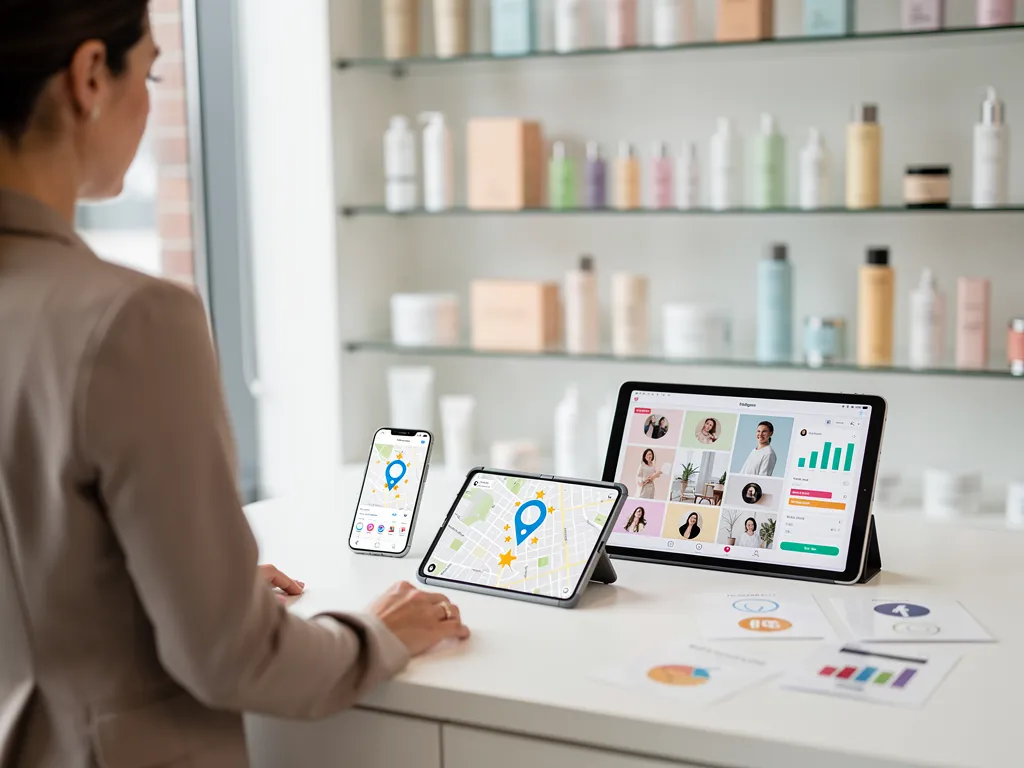
Local search, Instagram, and paid advertising deliver the strongest returns for retail skincare visibility inside an aesthetic practice. Concentrating budget and staff time on two to three high-impact channels, rather than spreading effort across every platform available, consistently outperforms a scattered approach. Practice managers who treat channel selection as a strategic decision, not a marketing afterthought, see stronger conversion from browser to buyer.
Retail marketing strategies for growth work best when built around a focused channel mix:
- Local SEO: captures patients already searching for skincare products near a clinic or med spa.
- Instagram: showcases product results, before-and-after education, and staff recommendations.
- Paid ads: accelerates visibility for new product launches or seasonal retail promotions.
Content plays an equally important role in cross-selling retail med spa treatments once a channel brings a prospective buyer to the storefront or website. Clinics that publish genuinely useful educational content, ingredient breakdowns, skin type guidance, and usage instructions, attract highly engaged audiences actively seeking reliable information rather than casual browsers. Consistent expert guidance builds trust with that audience while strengthening the practice’s digital visibility over time.
Does posting on every social platform help retail sales?
No. Spreading content across five or six platforms dilutes quality and strains staff bandwidth. A tighter channel strategy, paired with strong product education, produces more consistent retail revenue than broad, shallow coverage.
Building this kind of coordinated visibility strategy requires specialized expertise in both aesthetics and digital marketing. Consultants at Illumination Consulting provide skin care marketing, content marketing, and search engine optimization services that help clinics communicate retail product value clearly and convert interest into purchases.
How Do You Track and Sustain Retail Growth?

Sustained med spa retail sales marketing depends on measurement, not momentum. Clinics that monitor cost per booking, consultation conversion rates, client lifetime value, and retention build a clearer picture of performance than those watching likes and follower counts. Vanity metrics flatter a social feed; they rarely predict revenue.
Retail marketing strategies for growth work best when tied to a defined scorecard. A practice manager who knows the cost to generate one retail skincare booking can forecast margin with far more confidence than one guessing from impressions alone.
What keeps growth consistent month over month?
Automation keeps growth steady once the right metrics are in place. Repeatable systems, built around email follow-ups, reorder reminders, and retention campaigns, let marketing run without constant manual oversight. This frees staff to focus on patient care rather than chasing spreadsheets.
Why do clinics need outside guidance to interpret the data?
Data alone does not sustain growth; interpretation does. A trusted consulting partner like Illumination Consulting helps a clinic stop guessing. Start making smarter marketing decisions based on real numbers. With expert support, skin care-focused practices build systems that increase awareness and drive consistent, measurable retail sales.
FAQ
What are retail marketing strategies for aesthetic clinics?
They combine in-room skincare merchandising, structured email and SMS retention campaigns, provider-recommended product bundles, and local SEO to turn one-time treatment patients into repeat retail buyers, increasing per-patient revenue and loyalty.
Why do aesthetic clinics lose retail revenue?
Retail revenue slips away when product sales depend on a provider’s memory instead of a repeatable system, with gaps like no structured checkout recommendations, undertrained staff, and no tracking of retail revenue per visit.
What makes a retail marketing strategy effective for aesthetic clinics?
Effective strategies combine brand positioning, SEO, content marketing, social media, paid advertising, conversion optimization, email marketing, and retention initiatives into one coordinated system rather than relying on a single tactic.
Conclusion
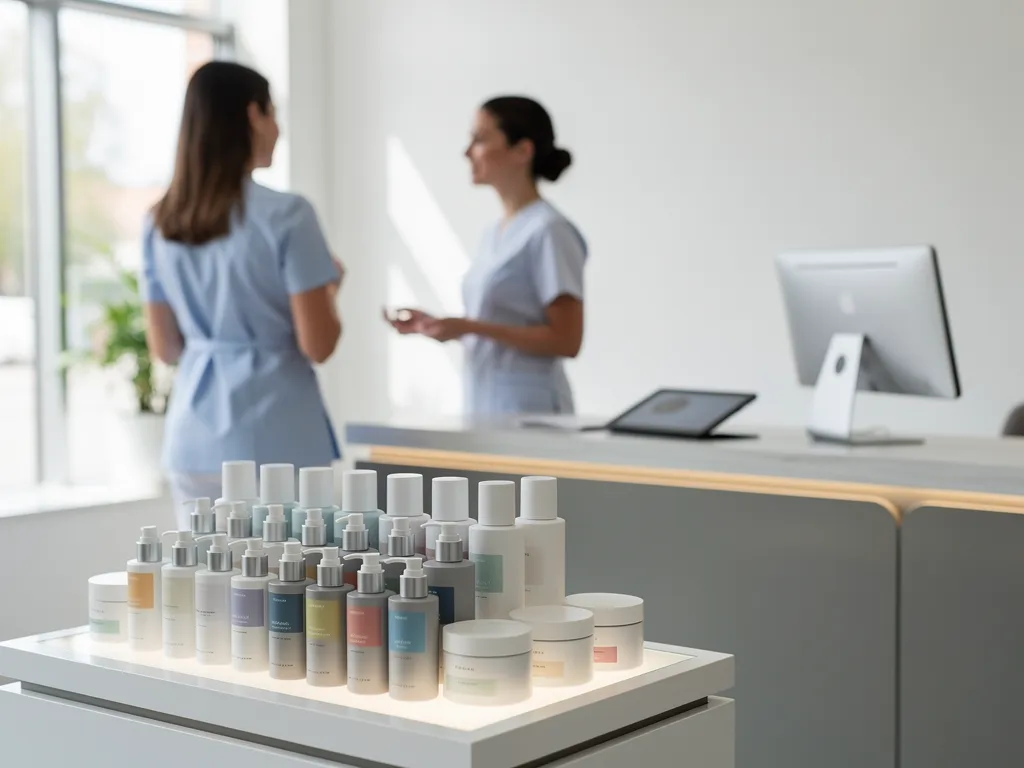
In closing, retail marketing strategies for aesthetic clinics require the integration of strategic planning, digital visibility, patient education, and conversion optimization into one coordinated growth system. By combining local search optimization, compelling website design, targeted digital advertising, and reputation management, aesthetic practices strengthen their competitive position while attracting qualified patients who value expertise and results. The most successful clinics treat marketing as a strategic business function rather than an isolated expense, building sustainable patient acquisition systems that support long-term profitability and practice growth.