By Illumination Consulting Editorial Team · Updated 2026-07-29
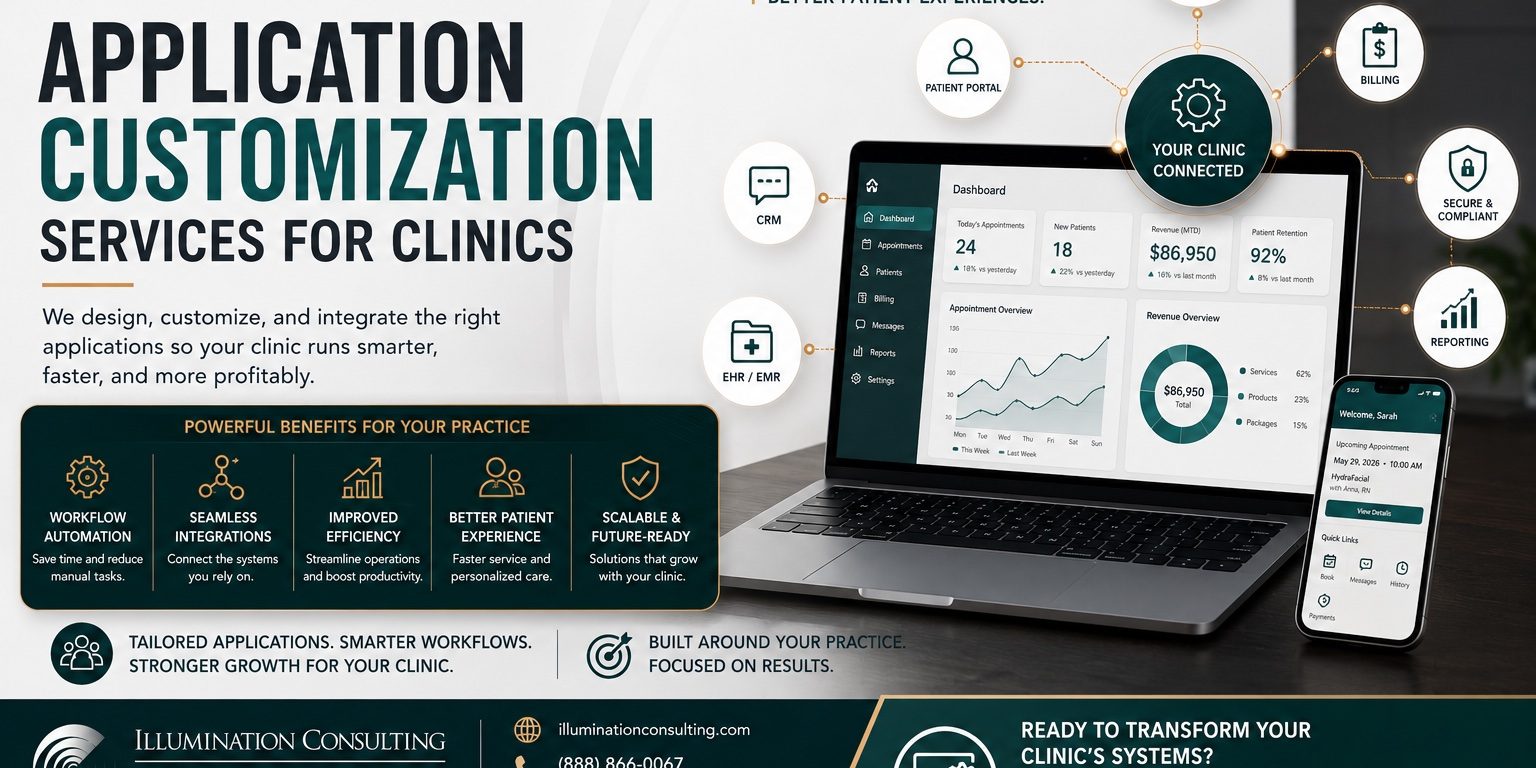
Illumination Consulting delivers application customization and integrations for clinics, connecting EHR systems, scheduling platforms, and billing software into unified workflows. Based in Beverly Hills, CA, the team configures APIs, automates data syncing, and tailors clinical applications to match each practice’s operational requirements and compliance standards.
Application customization and integrations give clinics software built around existing workflows instead of forcing staff to adapt to rigid, off-the-shelf systems. Custom EMR development connects scheduling, billing, and patient records into one coordinated system. Illumination Consulting evaluates whether integrating current platforms or building custom solutions delivers stronger measurable results for multi-location practices.
Key Takeaways: Clinic Application Customization and Integration
- Custom EMR applications eliminate workflow mismatches that off-the-shelf systems create for clinic operations.
- Tailored healthcare software reduces implementation timelines from typical year-long projects to faster deployment cycles.
- Clinic-specific integrations streamline intake, billing, and patient data management into unified systems.
- Illumination Consulting in Beverly Hills delivers customized solutions addressing unique clinic requirements and processes.
Why Doesn’t Off-the-Shelf Software Fit Your Clinic?
Generic software fails clinics because it forces daily workflows to bend around rigid, one-size-fits-all templates. Most clinics start on off-the-shelf EMR systems, drawn in by promises of broad functionality. Over time, though, the gap between what the software offers and what the clinic actually needs widens. Staff compensate with manual workarounds, and each one becomes a hidden cost that never disappears. That ongoing tax on staff time drains resources that should fund patient growth instead.
What Happens When Software Doesn’t Match Clinical Workflow?
Mismatched systems create friction at every patient touchpoint, from intake to billing to follow-up. Front-desk staff re-enter data the software should have captured automatically. Application customization services solve this by adapting the platform to existing clinical processes instead of forcing new ones.
Growth-focused clinics need more than functional software. They need systems built around bookings, retention, and revenue. Three priorities separate a system that scales from one that stalls: search engine optimization seo
- Clinic software integration connecting scheduling, records, and billing into one coherent workflow
- CRM integration for clinics that tracks patient relationships and drives repeat visits
- Website and booking tools engineered to convert search traffic into scheduled consultations
Coordinated systems, not disconnected tools, produce measurable growth. Clinics that unify these pieces see fewer workarounds and stronger patient retention.
What Should Clinic Software Integration Include?
Complete integration requires uninterrupted data flow between electronic health records and every supporting system a clinic depends on. Gaps between platforms cost staff hours in duplicate data entry and delay patient care. A clinic evaluating application customization services should expect a checklist, not a vague promise of connectivity.
Does clinic software integration require more than EHR connections?
Yes. Clinic software integration extends well beyond linking a single records system to a billing platform. A properly built stack depends on uninterrupted EHR and EMR integration paired with HIPAA-compliant infrastructure. Patient data security cannot be an afterthought. Beyond records, clinics gain measurable value from network optimization, telehealth infrastructure, and automated workflows that keep systems interoperable and reduce administrative friction.
A comprehensive integration project typically addresses:
- Uninterrupted EHR/EMR connectivity paired with HIPAA-compliant cloud and cybersecurity infrastructure
- Network optimization and telehealth infrastructure supporting remote and in-office care
- Automated workflows and system interoperability that cut down manual data entry
- Website design connected to conversion optimization tools, ensuring booking pages convert visitors into scheduled patients
- CRM integration for clinics tied directly to brand positioning and revenue growth systems
Why does integration need to connect to revenue, not just records?
Isolated IT upgrades rarely move the needle on growth. Integration decisions should connect directly to brand positioning. Revenue systems, turning technology investments into visible business outcomes rather than backend fixes nobody notices. A clinic that treats integration as a strategic layer, not a maintenance task, positions itself to convert more inquiries into booked visits while protecting patient data at every touchpoint.
How Can CRM Integration Improve Patient Retention?
Centralized patient data keeps every follow-up, reminder, and outreach message consistent. Crm integration for clinics connects scheduling, communication, and treatment history into one system, so no patient falls through the cracks between visits. Clinics that rely on scattered spreadsheets or disconnected tools lose the context that makes retention campaigns effective.
A structured patient acquisition and growth strategy depends on this kind of centralized data. Once information lives in one place, staff can automate the ongoing content and communication that build trust long before a consultation gets booked. Educational messages, treatment updates, and answers to common questions all flow automatically instead of relying on manual follow-up.
Does CRM integration work with existing clinic software?
Yes. Clinic software integration connects a CRM platform to intake forms, scheduling tools, and existing databases already in use. Custom web applications range from simple intake forms to complex systems tied directly into the CRM. This flexibility means practices don’t have to abandon current systems to gain retention benefits.
What role do inquiries play in retention?
Application customization services help route inquiries generated from search directly into the CRM pipeline, so qualified leads convert into recurring patients rather than one-time visits.
Application customization and integrations represent a strategic investment in your clinic’s operational efficiency and patient experience. By aligning your technology infrastructure with your specific clinical workflows. Business objectives, you establish a competitive foundation for sustainable growth. The systems you implement today directly influence your capacity to scale tomorrow, making thoughtful integration decisions essential to long-term success in an increasingly digital healthcare landscape.
FAQ
Why doesn’t off-the-shelf software fit a clinic’s workflow?
Generic EMR systems force daily workflows to bend around rigid templates, widening the gap between clinic needs and software capability. Staff compensate with manual workarounds that drain resources meant for patient growth.
What does clinic software integration need to include?
Integration requires uninterrupted data flow between EHR and EMR systems paired with HIPAA-compliant infrastructure, plus network optimization, telehealth infrastructure, and automated workflows. This connects scheduling, records, and billing into one coherent system.
Who evaluates whether integration or custom development fits a multi-location practice?
Illumination Consulting, based in Beverly Hills, CA, evaluates whether integrating current platforms or building custom solutions delivers stronger measurable results. They deliver customized solutions addressing each clinic’s unique requirements and processes.
Facts
- Illumination Consulting is located in Beverly Hills, CA, USA.