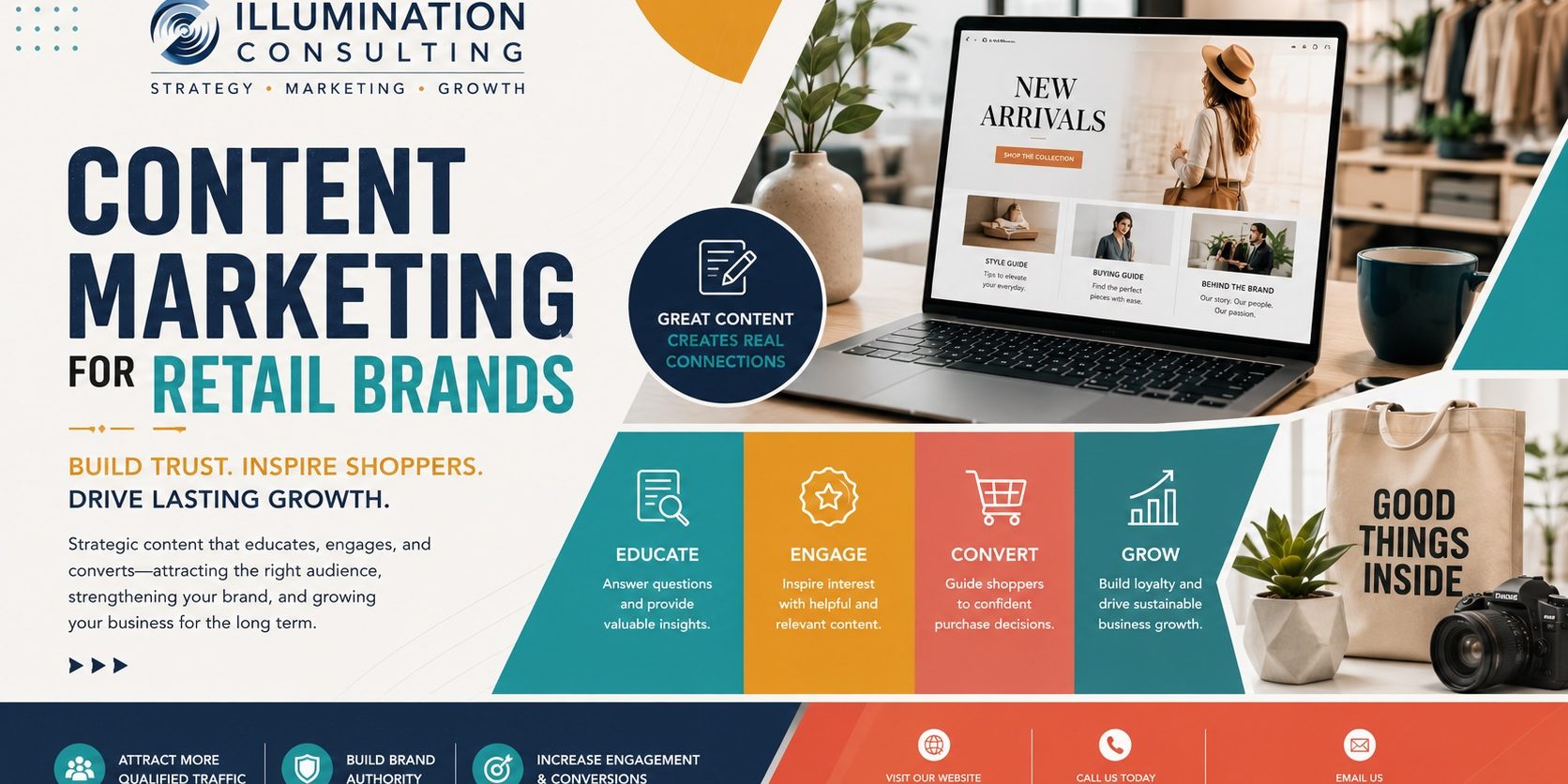
Retail marketing has evolved far beyond promotional campaigns and seasonal discounts. Today’s consumers expect brands to educate, inspire, and provide meaningful value long before they make a purchase. Whether they are researching products, comparing options, learning about industry trends, or looking for buying advice, shoppers increasingly rely on informative content to guide their purchasing decisions. Retail brands that consistently publish valuable, relevant content position themselves as trusted resources while creating stronger customer relationships that extend well beyond a single transaction.
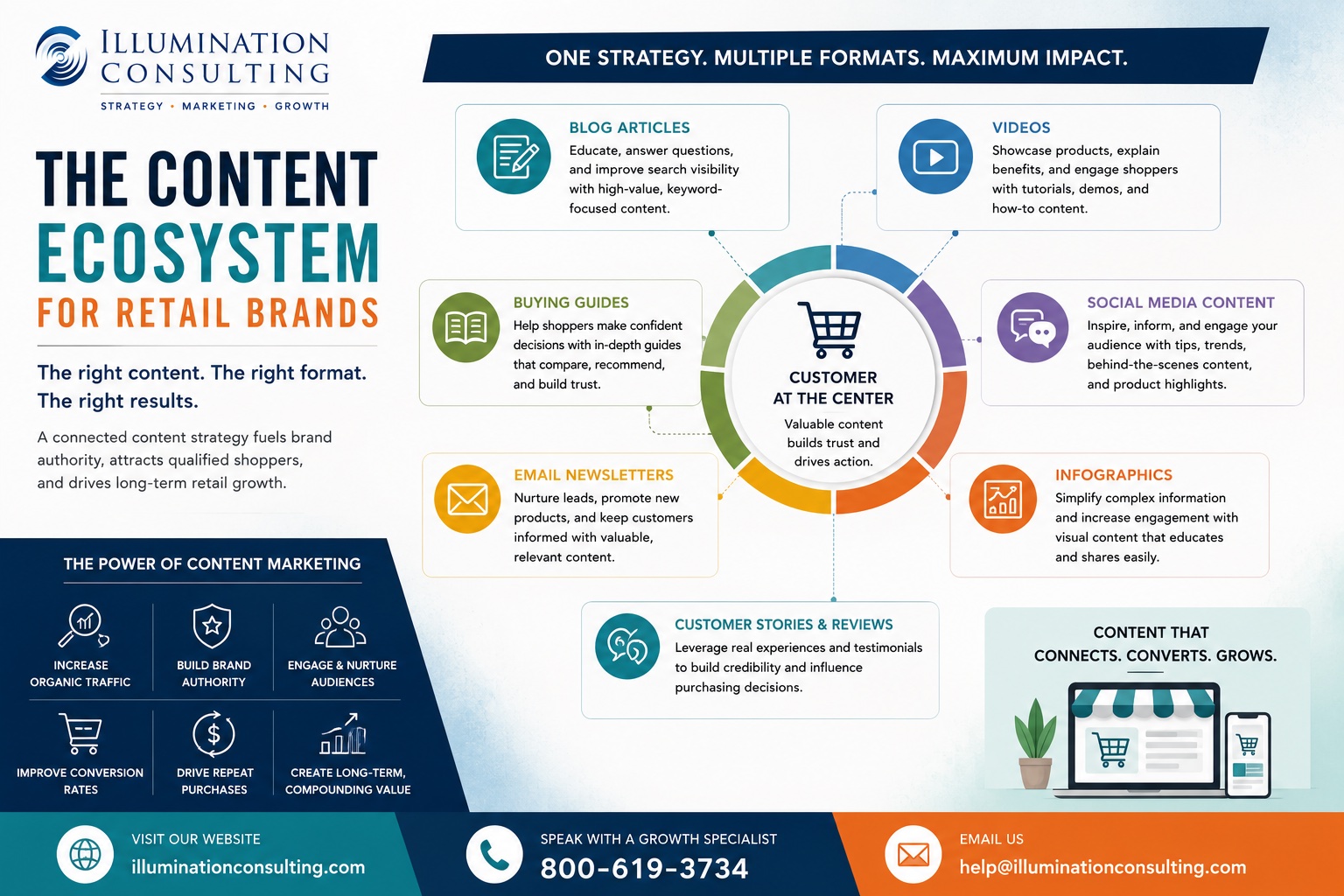
An effective content marketing for retail brands strategy is much more than writing occasional blog articles. It combines educational resources, buying guides, product comparisons, videos, infographics, social media content, email newsletters, customer stories, and search engine optimization into a comprehensive digital marketing system. Together, these content assets attract qualified visitors, improve search visibility, nurture customer trust, and support every stage of the buying journey.
Content marketing also provides long-term value that many traditional advertising campaigns cannot match. While paid advertising stops generating traffic once budgets are exhausted, well-optimized content continues attracting organic visitors for months and often years. Every high-quality article, buying guide, or educational resource becomes a digital asset that strengthens your website’s authority while supporting future marketing initiatives.
Artificial intelligence is transforming content marketing as well. AI-powered tools help retailers research customer questions, identify emerging trends, organize content clusters, analyze competitors, generate topic ideas, and streamline content production. When paired with experienced human strategy and editorial oversight, AI enables retailers to publish more relevant, higher-quality content while maintaining consistency across every marketing channel.
Content also amplifies every other digital marketing effort. Search engine optimization depends on valuable content to improve rankings. Social media campaigns gain greater engagement when linked to useful resources. Email marketing becomes more informative and less promotional, while paid advertising benefits from stronger landing pages that educate customers before asking them to purchase. Together, these channels create an integrated marketing ecosystem that builds credibility, attracts qualified audiences, and supports sustainable business growth.
Whether you’re launching a new e-commerce brand or expanding an established retail business, investing in strategic content marketing helps build authority, increase organic traffic, strengthen customer relationships, and create long-term competitive advantages that continue delivering value well into the future.
In this article, you’ll learn how successful retail brands use content marketing to attract qualified shoppers, educate customers, improve search visibility, and build sustainable online growth.
Why Content Marketing Matters More Than Ever
Today’s consumers rarely make purchasing decisions after seeing a single advertisement.
Instead, they spend time researching products, comparing brands, reading reviews, watching videos, exploring buying guides, and looking for answers before making a purchase. Every piece of helpful content a retail brand publishes becomes another opportunity to build credibility and earn customer trust.
Rather than interrupting consumers with promotional messages, content marketing attracts potential customers by answering their questions and solving their problems.
Successful retail brands use content to:
- Educate shoppers
- Build brand authority
- Increase organic website traffic
- Improve customer confidence
- Support purchasing decisions
- Strengthen customer relationships
- Improve search engine rankings
- Increase customer retention
- Generate qualified leads
- Support every marketing channel
When executed consistently, content marketing becomes one of the highest-return long-term investments a retailer can make.
Understand the Modern Customer Journey
Today’s buying journey is rarely linear.
A customer may discover your brand through a Google search, watch a product video on YouTube, read a buying guide, subscribe to your email newsletter, follow your social media accounts, compare products on your website, and only then make a purchase.
Every stage presents an opportunity to provide valuable content.
A modern retail content strategy should support:
- Product discovery
- Product research
- Brand comparison
- Purchase decisions
- Customer onboarding
- Product education
- Customer support
- Repeat purchases
- Brand advocacy
- Customer loyalty
Retailers that consistently provide useful information throughout this journey create stronger customer relationships and improve conversion rates.
Build Content Around Customer Questions
The best retail content begins with understanding what customers genuinely want to know.
Instead of creating content based solely on products, focus on answering the questions your audience is already asking.
Examples include:
- Which product is right for me?
- How do I choose between different models?
- What features should I look for?
- Is this product worth the investment?
- How does it compare to competitors?
- How do I maintain it?
- What accessories should I buy?
- What mistakes should I avoid?
- How long will it last?
- What do other customers think?
Answering these questions positions your business as a trusted advisor rather than simply another retailer.
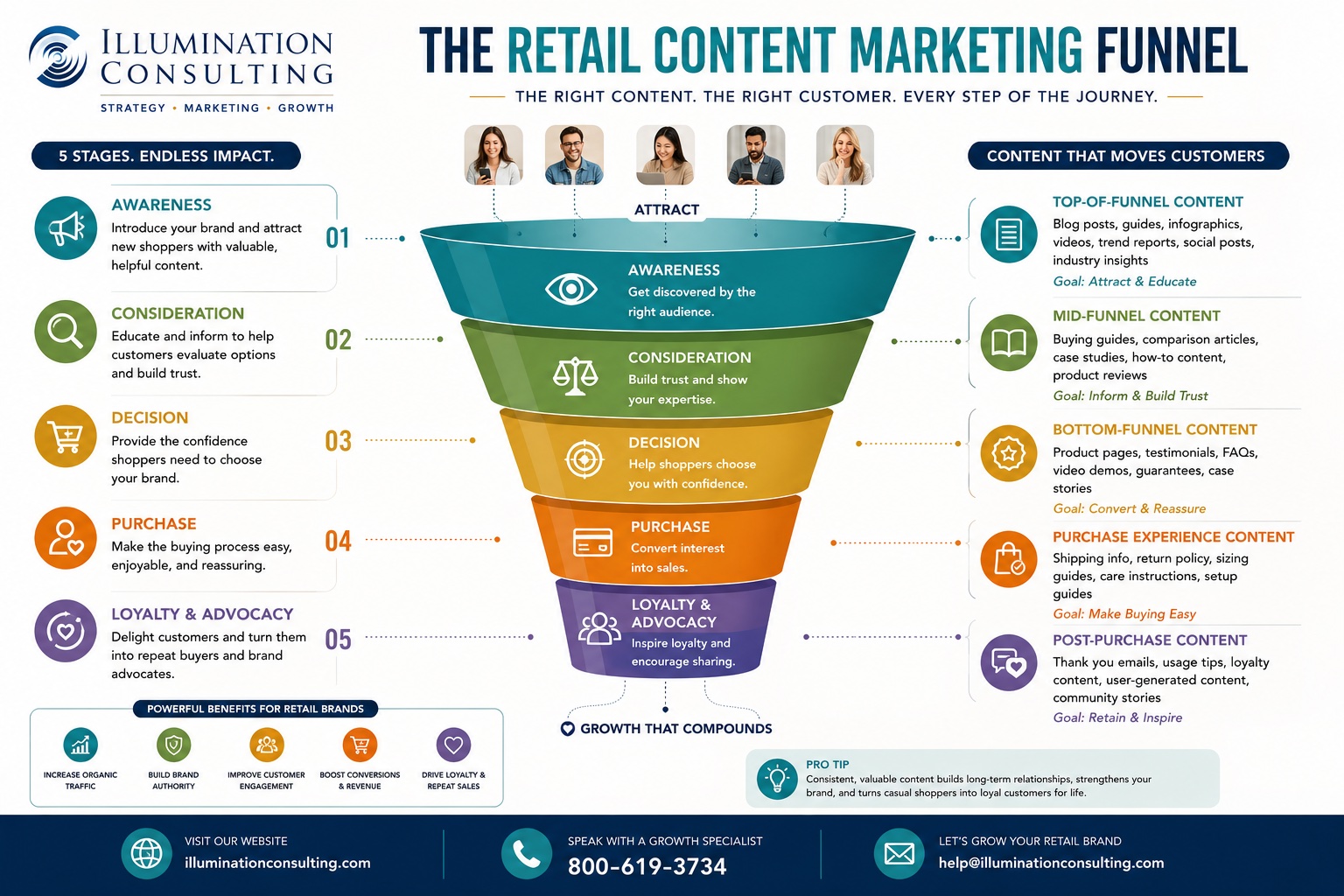
Create Content for Every Stage of the Buying Journey
Different customers require different information depending on where they are in the purchasing process.
An effective content strategy addresses every stage of the sales funnel.
Awareness Content
Introduce new audiences to your brand and educate them about common problems or industry trends.
Examples include:
- Industry insights
- Educational blog articles
- Infographics
- Social media posts
- Videos
- Trend reports
Consideration Content
Help shoppers compare products and evaluate potential solutions.
Examples include:
- Buying guides
- Product comparisons
- Feature breakdowns
- Customer reviews
- Frequently asked questions
- Product demonstrations
Decision Content
Provide the confidence customers need before making a purchase.
Examples include:
- Detailed product pages
- Case studies
- Testimonials
- Product videos
- Shipping information
- Return policies
- Warranty information
- Trust signals
Supporting each stage creates a smoother customer journey while increasing the likelihood of conversion.
Publish a Variety of Content Formats
Not every customer consumes information the same way.
Diversifying your content helps you reach broader audiences while strengthening your overall marketing strategy.
High-performing retail brands regularly publish:
- Educational blog articles
- Buying guides
- Product comparison pages
- Infographics
- Videos
- Short-form social media content
- Email newsletters
- Product tutorials
- Customer success stories
- Downloadable resources
Repurposing content across multiple formats also increases efficiency while maximizing the return on every piece of content you create.
Strengthen Your Brand Through Storytelling
Consumers connect with stories far more than they connect with sales messages.
The most successful retail brands share the inspiration behind their company, the values that guide their business, and the people who make their products and services possible. Storytelling humanizes your brand while creating emotional connections that encourage long-term customer loyalty.
Stories worth sharing include:
- Your company’s origin story
- Founder insights
- Behind-the-scenes content
- Product development process
- Customer success stories
- Employee spotlights
- Sustainability initiatives
- Community involvement
- Brand milestones
- Innovation updates
Authentic storytelling helps differentiate your business in competitive retail markets while making your brand more memorable.
Build Topical Authority with Content Clusters
Publishing individual blog articles is valuable, but organizing related content into topic clusters creates a much stronger SEO strategy.
A content cluster consists of one comprehensive pillar article supported by several in-depth articles covering related subjects.
For example, a retail marketing content cluster may include:
- Retail Marketing Strategies
- Retail E-Commerce Website Design
- AI Marketing for Retail Businesses
- Content Marketing for Retail Brands
- Retail SEO
- Email Marketing for Retail Brands
- Social Media Marketing for Retail Businesses
- Conversion Rate Optimization
- Customer Loyalty Programs
- Omnichannel Marketing
This approach demonstrates expertise to both search engines and customers while making it easier for visitors to explore related topics.
Optimize Every Piece of Content for Search Engines
Creating valuable content is only part of the strategy.
Your content should also be optimized so customers can easily discover it through search engines.
Best practices include:
- Target one primary keyword per article
- Write compelling page titles
- Create informative meta descriptions
- Use descriptive headings
- Optimize images
- Add internal links
- Improve page loading speed
- Structure content for readability
- Answer common customer questions
- Update older content regularly
Combining high-quality writing with technical SEO significantly increases the long-term value of every article you publish.
Repurpose Content Across Multiple Marketing Channels
One well-written article can support your entire digital marketing strategy.
Rather than creating new content for every platform, successful retailers repurpose existing content into multiple formats that reach different audiences.
A single blog article can become:
- Social media posts
- LinkedIn articles
- Email newsletters
- Infographics
- Short-form videos
- YouTube content
- Downloadable guides
- Podcast discussion topics
- Webinar presentations
- Sales enablement materials
Repurposing content increases efficiency while extending the reach of every marketing asset you create.
Use Artificial Intelligence to Improve Content Marketing
Artificial intelligence has become an invaluable tool for content planning, research, and production.
Rather than replacing human creativity, AI helps retailers produce higher-quality content more efficiently.
AI can assist with:
- Topic research
- Keyword discovery
- Content calendars
- Competitive analysis
- Content outlines
- Product description generation
- Headline ideas
- Content optimization
- Performance analysis
- Content refresh recommendations
Human expertise remains essential for strategic planning, brand voice, fact-checking, and creating content that genuinely resonates with customers.
Measure Content Marketing Performance
Content marketing should produce measurable business results over time.
Tracking key performance indicators helps retailers understand which topics, formats, and channels generate the strongest return on investment.
Important Content Marketing Metrics
Monitor metrics such as:
- Organic website traffic
- Search engine rankings
- Page views
- Average engagement time
- Conversion rate
- Newsletter subscriptions
- Social media shares
- Backlinks earned
- Returning visitors
- Revenue generated from organic traffic
- Customer acquisition cost
- Customer lifetime value
Regular analysis allows you to refine your content strategy while focusing on the subjects that deliver the greatest business impact.
Common Content Marketing Mistakes
Many retail brands publish content consistently but fail to achieve meaningful results because they overlook strategic fundamentals.
Avoid these common mistakes:
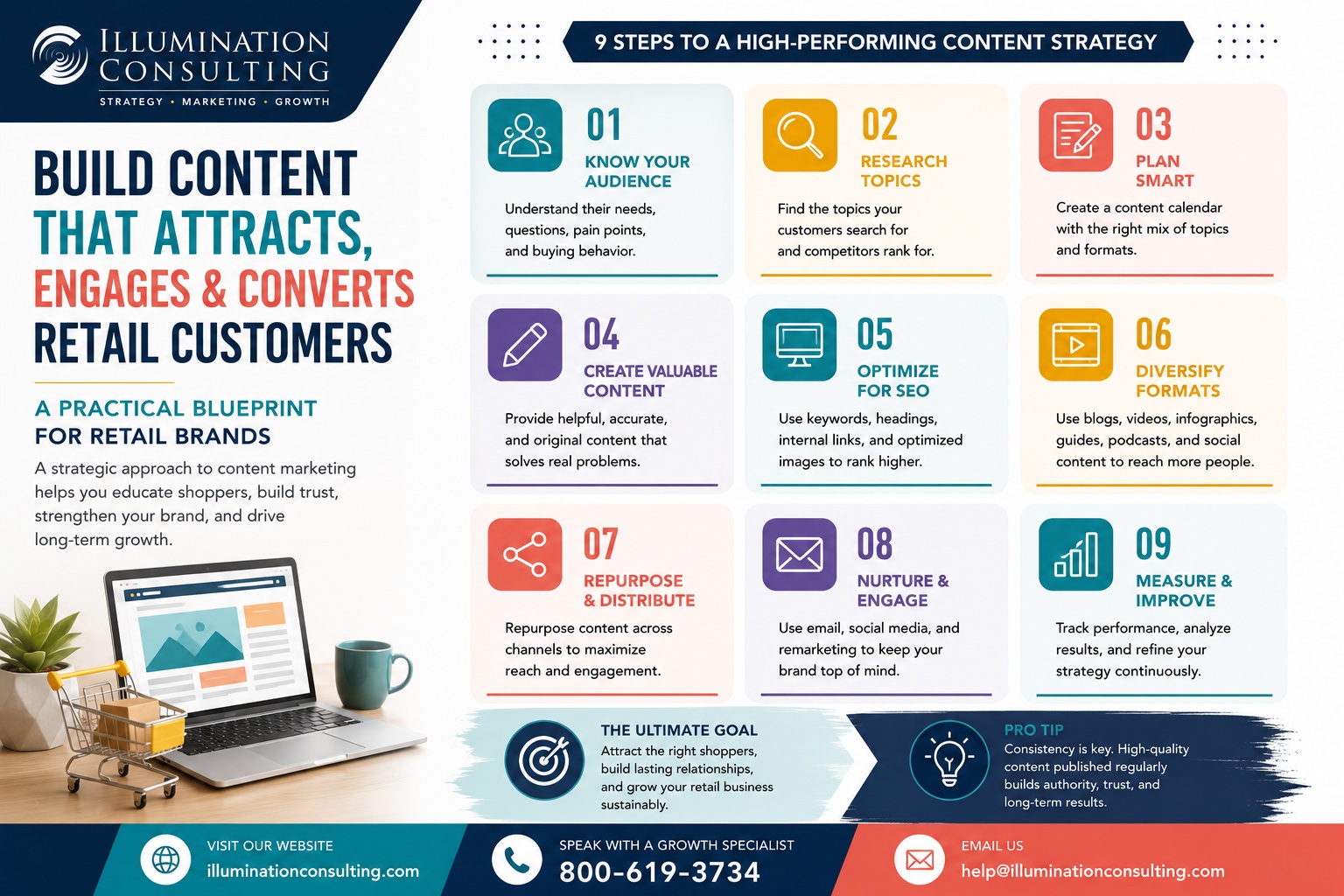
- Publishing without a content strategy
- Writing only promotional content
- Ignoring customer search intent
- Producing inconsistent content
- Neglecting SEO best practices
- Publishing low-quality visuals
- Failing to update older articles
- Overlooking internal linking opportunities
- Ignoring performance data
- Prioritizing quantity over quality
Avoiding these pitfalls helps ensure your content continues building authority, attracting qualified traffic, and supporting long-term growth.
Frequently Asked Questions
Why is content marketing important for retail brands?
Content marketing helps retail brands attract qualified customers by providing valuable information throughout the buying journey. Educational articles, buying guides, videos, and other resources build trust, improve search engine rankings, support purchasing decisions, and create long-term customer relationships that drive sustainable business growth.
Which types of content perform best for retail businesses?
The most effective retail content includes buying guides, product comparison articles, educational blog posts, product demonstrations, customer success stories, infographics, videos, email newsletters, seasonal shopping guides, and frequently asked questions. Publishing a variety of formats helps engage different audiences while supporting multiple marketing channels.
How often should a retail brand publish new content?
Consistency is more important than volume. Most retailers benefit from publishing high-quality content on a regular schedule while continually updating existing articles to keep information accurate, relevant, and optimized for search engines.
Does content marketing improve SEO?
Yes. High-quality content is one of the strongest foundations of search engine optimization. Publishing informative, keyword-focused content helps increase organic visibility, improve search rankings, attract backlinks, strengthen topical authority, and generate qualified website traffic over time.
Can artificial intelligence improve content marketing?
Absolutely. AI assists with topic research, keyword analysis, content planning, editorial calendars, optimization, and performance analysis. When combined with experienced writers and strategic oversight, AI helps retailers create more valuable content while improving efficiency and maintaining consistency.
Build a Content Marketing Strategy That Creates Lasting Value
Content marketing has become one of the most powerful long-term growth strategies available to retail businesses. Unlike traditional advertising, which often focuses on immediate promotions, content marketing builds trust over time by educating customers, answering questions, and helping shoppers make informed purchasing decisions. Every buying guide, product comparison, educational article, infographic, and video strengthens your brand’s authority while creating valuable digital assets that continue attracting customers long after they are published.
The most successful retail brands recognize that great content supports every stage of the customer journey. It increases search engine visibility, enhances social media engagement, strengthens email marketing campaigns, improves conversion rates, supports paid advertising, and builds stronger customer relationships. Rather than viewing content as a standalone marketing tactic, successful businesses integrate it into a comprehensive digital strategy where every article, video, infographic, and email contributes to long-term business growth.
Artificial intelligence is further enhancing content marketing by helping retailers identify customer interests, uncover emerging trends, optimize content performance, and streamline production workflows. However, the most effective content continues to combine AI-powered efficiency with human creativity, industry expertise, and authentic storytelling. Retail brands that consistently provide valuable, customer-focused content position themselves as trusted industry leaders while creating sustainable competitive advantages.
At Illumination Consulting, we help retail businesses develop strategic content marketing programs that generate measurable business results. Our services include content strategy, SEO, AI-powered content development, e-commerce marketing, blog writing, infographics, video marketing, social media content, and digital growth consulting. We focus on creating high-quality content that increases organic visibility, strengthens brand authority, engages customers, and drives long-term online growth.
Get Your Growth Strategy today or Speak with a Growth Specialist to learn how a customized content marketing strategy can help your retail brand attract more qualified customers, build lasting authority, and create sustainable business growth.