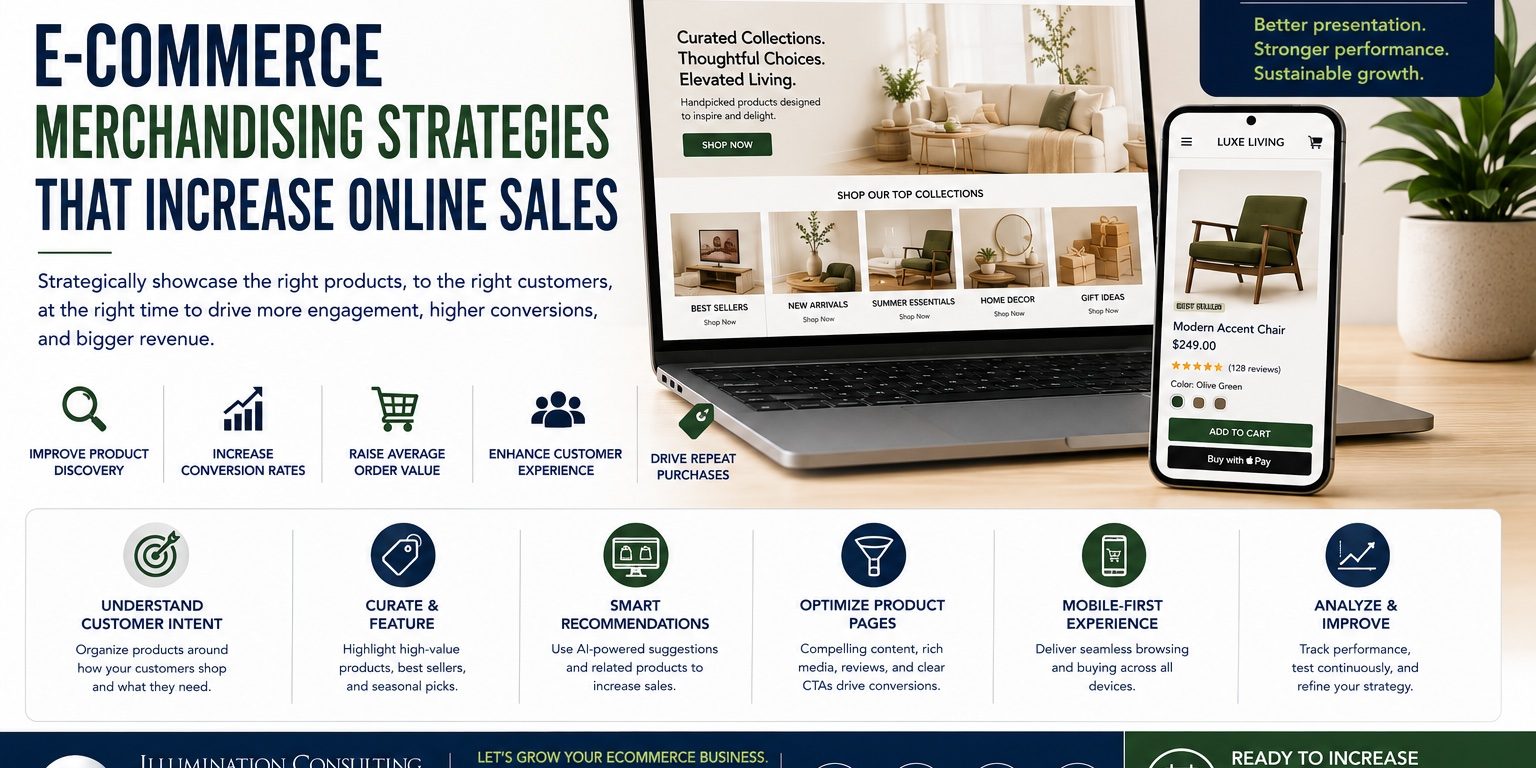
Effective ecommerce merchandising strategies help retailers present products in ways that encourage discovery, improve customer engagement, and increase online sales. While many ecommerce businesses focus heavily on driving traffic, successful retailers understand that product presentation plays an equally important role in converting visitors into customers.
Unlike physical retail stores, ecommerce websites must create compelling shopping experiences entirely through digital interactions. Every collection page, product recommendation, featured category, promotional banner, and product image influences purchasing decisions. Thoughtful merchandising helps customers quickly find relevant products while increasing confidence throughout the shopping journey.
Today’s online shoppers expect intuitive navigation, personalized recommendations, high-quality product photography, and seamless browsing across every device. Retailers that invest in strategic merchandising create shopping experiences that not only improve conversions but also strengthen customer loyalty and encourage repeat purchases.
In this guide, we’ll explore proven ecommerce merchandising strategies that help retail brands improve product visibility, increase average order value, reduce shopping friction, and support sustainable ecommerce growth.
Why Ecommerce Merchandising Matters
Outstanding products alone do not guarantee strong online sales.
Customers must be able to discover products easily, understand their value, compare options, and feel confident before making purchasing decisions.
Strategic merchandising helps retailers:
- Increase product visibility
- Improve product discovery
- Increase conversion rates
- Raise average order value
- Reduce bounce rates
- Encourage additional purchases
- Improve customer satisfaction
- Strengthen brand consistency
- Increase repeat purchases
- Support long-term ecommerce growth
Strong merchandising transforms browsing into buying by making every stage of the shopping experience more intuitive.
Organize Products Around Customer Needs
Many online stores organize products according to internal inventory structures rather than how customers naturally shop.
Successful merchandising begins by understanding customer intent.
Collections can be organized by:
- Product category
- Lifestyle
- Use case
- Season
- Skin concern
- Best sellers
- New arrivals
- Price range
- Brand
- Featured collections
Organizing products around customer needs helps shoppers locate relevant products faster while improving overall usability.
Create Meaningful Collections
Well-designed collections simplify product discovery while supporting internal linking and search engine optimization.
Examples include:
- Best Sellers
- Staff Favorites
- New Arrivals
- Limited Edition
- Gift Ideas
- Seasonal Collections
- Premium Products
- Budget-Friendly Options
Meaningful collections encourage customers to browse more products while increasing opportunities for cross-selling.
Highlight High-Value Products
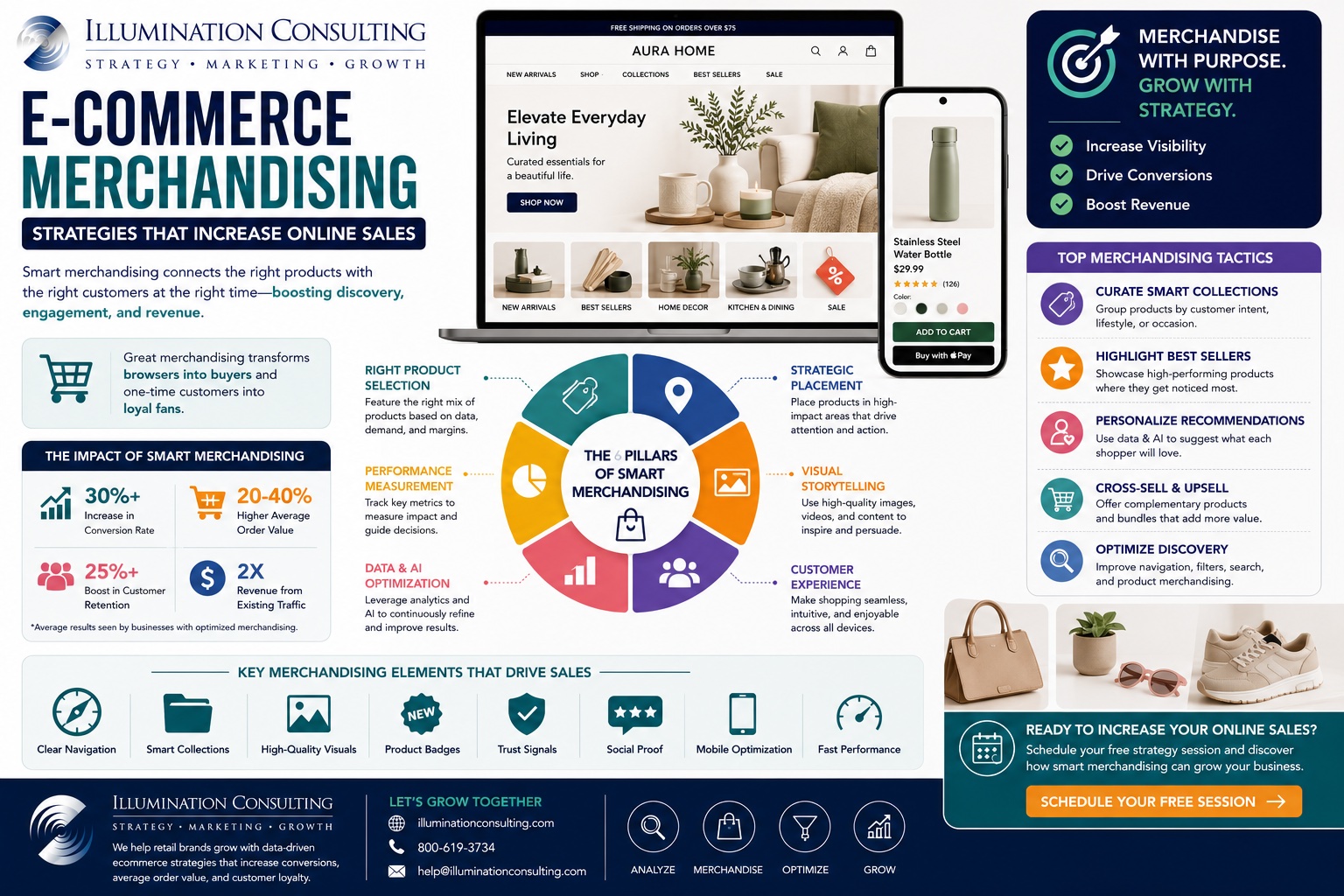
Not every product deserves equal visibility.
Strategic merchandising prioritizes products that support business objectives while still serving customer needs.
Feature products based on:
- Best-selling performance
- Profit margins
- Seasonal demand
- Inventory availability
- Customer ratings
- Product launches
- Promotional campaigns
- Complementary purchases
Thoughtful product placement increases visibility without overwhelming shoppers.
Use High-Quality Product Photography
Product images often determine whether shoppers continue exploring or leave the website.
Professional photography should include:
- Multiple viewing angles
- Lifestyle images
- Close-up details
- Scale references
- Product packaging
- Zoom capability
- Consistent backgrounds
- Mobile optimization
High-quality visuals reduce uncertainty while increasing purchase confidence.
Improve Product Discovery
Helping shoppers quickly find relevant products remains one of the most effective ecommerce merchandising strategies.
Retailers should continually optimize:
- Navigation menus
- Product filters
- Search functionality
- Collection pages
- Internal recommendations
- Recently viewed products
- Related products
- Personalized suggestions
Improving product discovery increases engagement while reducing frustration during the shopping experience.
Personalize Product Recommendations
Modern ecommerce shoppers expect personalized shopping experiences that reflect their interests, browsing behavior, and purchase history.
Strategic product recommendations improve engagement while increasing both conversion rates and average order value.
Useful recommendation types include:
- Frequently bought together
- Customers also purchased
- Recently viewed products
- Recommended for you
- Complete the collection
- Similar products
- Trending products
- Seasonal recommendations
Relevant recommendations help shoppers discover products they may have otherwise overlooked.
Cross-Sell and Upsell Naturally
Successful upselling focuses on providing additional value rather than simply increasing order size.
Examples include:
- Product bundles
- Premium product upgrades
- Accessories
- Complementary products
- Refill options
- Subscription programs
- Gift wrapping
- Extended warranties
Natural recommendations improve customer satisfaction while increasing revenue.
Optimize Collection Pages
Collection pages often generate substantial organic search traffic while serving as important entry points for shoppers.
Rather than displaying only product grids, collection pages should include:
- Helpful category introductions
- Buying guidance
- Product filters
- Sorting options
- Featured collections
- Educational content
- Internal links
- Frequently asked questions
Well-designed collection pages improve both user experience and search engine visibility.
Make Filtering Simple
Filtering allows customers to narrow large product catalogs quickly.
Useful filters may include:
- Price
- Color
- Size
- Material
- Brand
- Rating
- Availability
- Features
Easy-to-use filters reduce frustration while helping shoppers reach purchasing decisions more efficiently.
Create Strong Product Pages
Successful ecommerce merchandising strategies depend heavily on high-converting product pages.
Every product page should answer the questions customers typically ask before purchasing.
Include:
- Benefit-focused descriptions
- Product specifications
- High-quality photography
- Product videos
- Customer reviews
- Frequently asked questions
- Shipping details
- Return policy
- Related products
- Clear calls to action
Comprehensive product pages build confidence while reducing purchase hesitation.
Showcase Social Proof
Consumers frequently rely on the experiences of other customers before making purchasing decisions.
Effective social proof includes:
- Verified customer reviews
- Product ratings
- User-generated photos
- Customer testimonials
- Before-and-after examples
- Media mentions
- Industry awards
Authentic customer experiences increase trust while improving conversion rates.
Support Merchandising with Search Engine Optimization
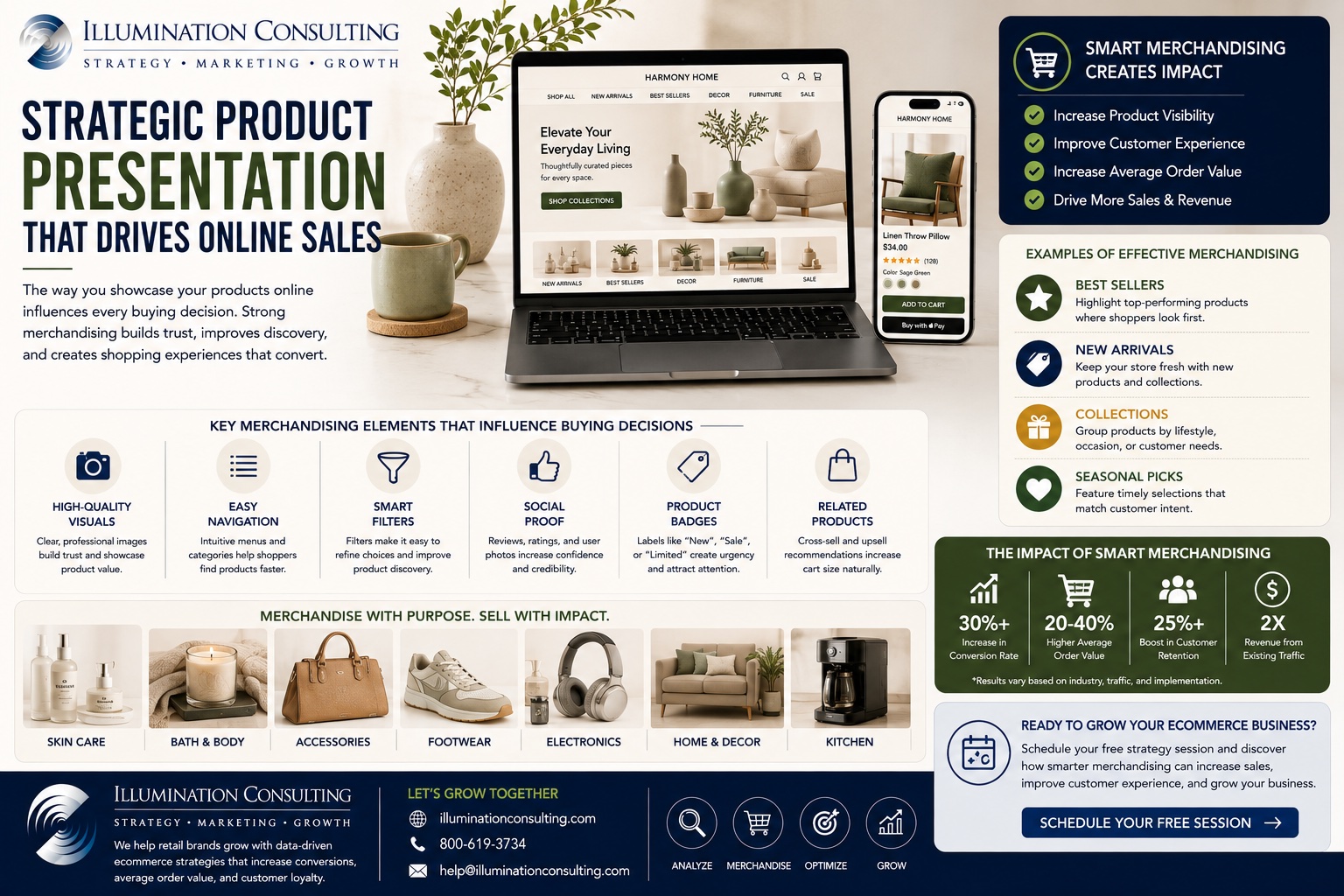
Merchandising and SEO should work together rather than independently.
Optimized merchandising supports stronger search visibility by improving website structure, internal linking, and user engagement.
SEO best practices include:
- Optimized collection pages
- Keyword-focused product descriptions
- Internal linking
- Schema markup
- Optimized images
- Descriptive URLs
- Fast page speeds
- Mobile optimization
Combining merchandising with SEO helps retailers attract more qualified traffic while increasing conversions.
Measure Merchandising Performance
Successful ecommerce merchandising strategies rely on continuous measurement and refinement.
Key performance indicators include:
- Conversion rate
- Product page engagement
- Average order value
- Revenue per visitor
- Collection page performance
- Product discovery rate
- Internal search usage
- Bounce rate
- Cart abandonment
- Repeat purchase rate
Regular analysis helps identify opportunities to improve merchandising decisions while maximizing online revenue.
Common Ecommerce Merchandising Mistakes
Even successful online retailers often overlook merchandising opportunities that directly influence purchasing behavior. Avoiding these common mistakes helps improve customer satisfaction while increasing conversions and revenue.
Overwhelming Customers with Too Many Choices
Offering a large product catalog is valuable, but presenting every product equally can create decision fatigue.
Instead, guide shoppers with curated collections and featured products that simplify decision-making.
Examples include:
- Best Sellers
- Editor’s Picks
- Staff Favorites
- Trending Now
- New Arrivals
- Seasonal Collections
- Limited-Time Offers
- Customer Favorites
Reducing complexity helps customers shop with greater confidence while increasing conversion rates.
Ignoring Mobile Merchandising
Most ecommerce traffic now comes from mobile devices, yet many retailers still design primarily for desktop users.
Mobile merchandising should prioritize:
- Touch-friendly navigation
- Fast-loading images
- Clear product photography
- Simplified filtering
- Sticky add-to-cart buttons
- Easy checkout
- Readable typography
- Mobile search optimization
A seamless mobile experience improves engagement while reducing abandonment.
Failing to Refresh Merchandising
Returning visitors expect to see fresh products and updated collections.
Regular merchandising updates keep the shopping experience engaging through:
- Seasonal campaigns
- Holiday collections
- Product launches
- Trending products
- Limited editions
- Promotional features
- Updated banners
- Featured categories
Frequently refreshing merchandising encourages repeat visits while increasing customer engagement.
Use Artificial Intelligence to Improve Merchandising
Artificial intelligence is transforming ecommerce merchandising by helping retailers deliver more personalized and data-driven shopping experiences.
AI-powered merchandising can assist with:
- Personalized product recommendations
- Dynamic product sorting
- Customer segmentation
- Predictive inventory planning
- Search optimization
- Product tagging
- Pricing analysis
- Promotional recommendations
- Demand forecasting
- Performance reporting
When combined with human merchandising expertise, AI helps retailers create more relevant shopping experiences while improving operational efficiency.
Optimize Seasonal Merchandising
Customer buying behavior changes throughout the year.
Retailers should proactively adjust merchandising for:
- Holiday shopping
- Back-to-school
- Summer collections
- Winter promotions
- Product launches
- Gift guides
- Clearance events
- Industry trends
Seasonal merchandising keeps the website relevant while maximizing revenue opportunities during peak shopping periods.
Continuously Test Your Merchandising Strategy
Effective merchandising evolves alongside customer behavior.
Retailers should regularly evaluate:
- Homepage layouts
- Collection organization
- Featured products
- Promotional banners
- Product recommendations
- Navigation menus
- Search performance
- Landing pages
Continuous testing helps identify which merchandising decisions generate the strongest business results.
Frequently Asked Questions
What are ecommerce merchandising strategies?
Ecommerce merchandising strategies are methods used to organize, present, and promote products in ways that improve product discovery, increase customer engagement, strengthen conversions, and generate more online sales.
Why is ecommerce merchandising important?
Effective merchandising helps shoppers quickly find relevant products, understand product value, build confidence, and complete purchases more easily, leading to higher conversion rates and increased revenue.
How can retailers improve product discovery?
Retailers can improve product discovery by creating intuitive navigation, optimizing search functionality, building meaningful collections, offering personalized recommendations, implementing effective filtering, and highlighting featured products throughout the website.
Does merchandising improve SEO?
Yes. Well-organized collections, optimized product pages, improved internal linking, descriptive category content, and stronger user engagement all support better search engine visibility while improving the overall shopping experience.
How often should ecommerce merchandising be updated?
Merchandising should be reviewed regularly throughout the year. Retailers should update collections, featured products, promotions, seasonal campaigns, navigation, and homepage content based on customer behavior, inventory, market trends, and business objectives.
Improve Your Ecommerce Strategy with Illumination Consulting
Successful ecommerce merchandising strategies combine customer psychology, data analysis, user experience, search engine optimization, visual presentation, and continuous optimization to create shopping experiences that convert more visitors into loyal customers. Retailers that consistently refine their merchandising approach improve product discovery, increase average order value, strengthen customer satisfaction, and generate sustainable long-term revenue growth.
At Illumination Consulting, we help retail brands grow through ecommerce website design, conversion optimization, search engine optimization, digital marketing, content marketing, AI-powered business solutions, and strategic consulting. Our customized ecommerce strategies are designed to improve user experience, optimize merchandising, increase conversions, and deliver measurable business results.
Whether you’re launching a new online store or optimizing an established ecommerce business, our team can help you implement ecommerce merchandising strategies that increase online sales, strengthen customer loyalty, and support long-term growth.