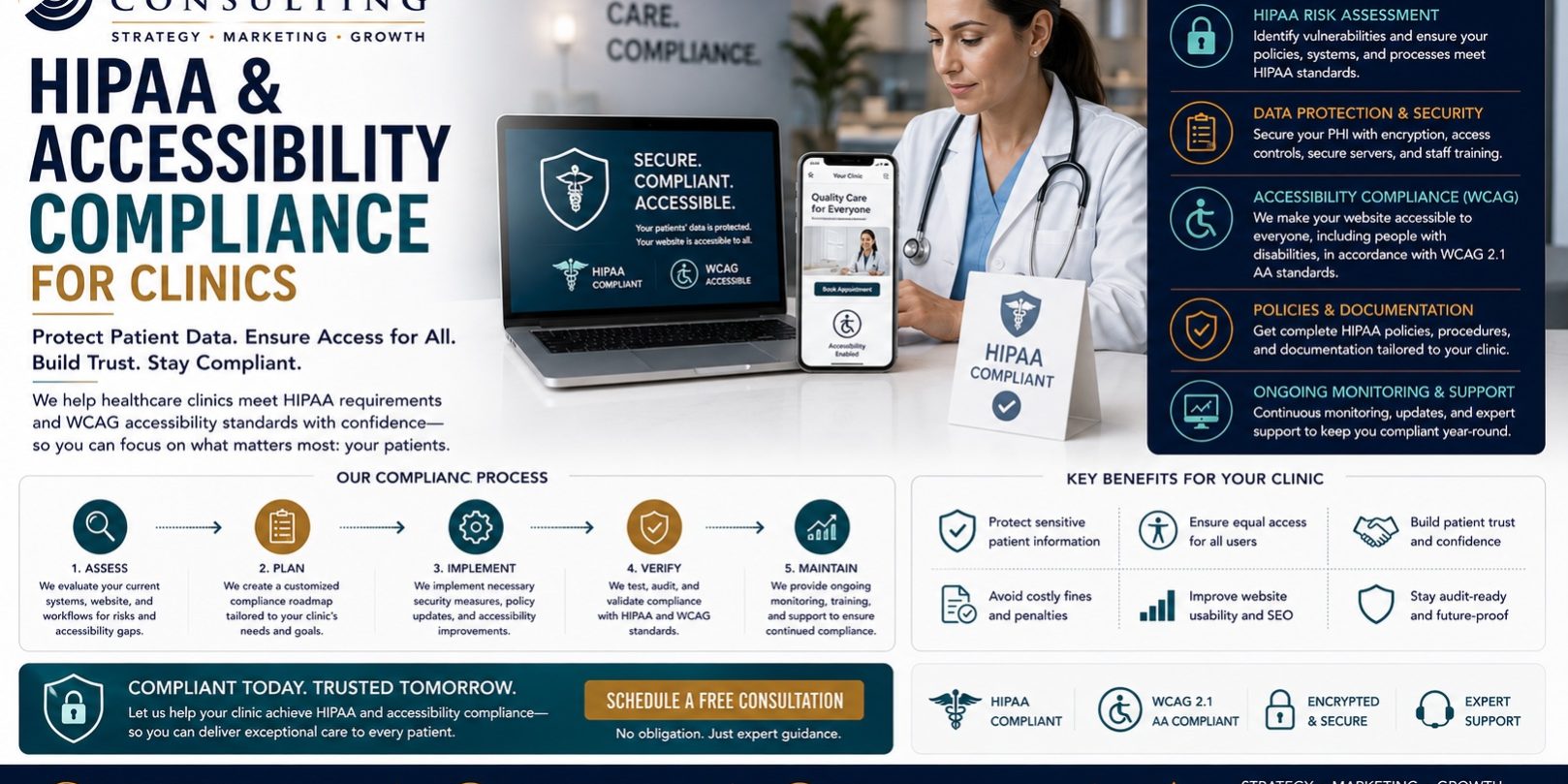
Clinic websites require simultaneous compliance with HIPAA’s patient data privacy rules. WCAG 2.1 accessibility standards, ensuring protected health information remains secure while all users, including those with disabilities, access services equally. Illumination Consulting in Beverly Hills, CA helps healthcare providers implement both frameworks without compromising functionality or legal standing.
Clinic websites face dual compliance obligations: HIPAA’s Security Rule (45 CFR Part 164 Subpart C) requires administrative, physical. Technical safeguards protecting electronic protected health information, while accessibility standards ensure all patients can navigate digital services. Even a basic appointment request form triggers these requirements, making simultaneous HIPAA and accessibility compliance essential for healthcare organizations.
Clinic websites collecting patient data must satisfy HIPAA compliance requirements and web accessibility standards simultaneously. Healthcare organizations that skip either standard risk legal exposure and lost patient trust. HIPAA-aligned design protects protected health information, while accessibility ensures every visitor reaches the care information they need. Two non-negotiable pillars of a compliant digital presence.
Key Takeaways
- HIPAA requires healthcare websites collecting patient data to implement strict security and privacy safeguards.
- The ADA mandates clinic websites meet WCAG 2.1 accessibility standards for disabled users.
- Over 250 healthcare organizations use compliance platforms like Siteimprove to manage digital requirements.
- Official U.S. government health sites use HTTPS encryption to protect all sensitive patient information.
What prerequisites does clinic website compliance require?
Clinic-website-compliance begins with a single non-negotiable threshold: any website that collects patient information triggers requirements under the HIPAA Security Rule, codified at 45 CFR Part 164 Subpart C. Even a basic appointment request form crosses that threshold — clinics that ignore this reality expose patient data and face regulatory consequences.
Covered entities must establish three categories of safeguards before launching or relaunching a patient-facing site:
- Administrative safeguards — documented policies governing who accesses electronic protected health information (ePHI)
- Physical safeguards — controls over the hardware and infrastructure that store or transmit ePHI
- Technical safeguards — encryption, access controls, and audit mechanisms protecting ePHI in transit and at rest
What does a HIPAA-compliant website require at the architecture level?
A hipaa-compliant-website requires compliance-ready architecture from the ground up — not retrofitted security patches. Illumination Consulting, headquartered in Beverly Hills, CA, builds digital foundations for aesthetic clinics that incorporate these structural compliance requirements before a site goes live.
How does accessibility factor into med spa website compliance?
Accessibility-med-spa compliance operates alongside HIPAA obligations as a parallel prerequisite. Clinics that neglect digital accessibility standards risk excluding patients and weakening their legal standing. A compliant clinic website satisfies both patient privacy requirements and accessibility standards simultaneously, creating a trustworthy digital experience that supports long-term practice growth.
How do you build a HIPAA-compliant website step by step?
Building a hipaa-compliant-website requires a structured sequence of technical, legal, and operational decisions. Clinics that skip foundational steps expose patient data to breaches and face regulatory penalties that disrupt long-term operations.
Prerequisites: Identify all forms, booking tools, and data collection points on the site before beginning. Confirm which vendors will sign a Business Associate Agreement (BAA).
- Conduct a compliance audit of every existing page, form, and third-party integration that touches patient data.
- Select a secure CMS platform built for healthcare. A properly developed CMS provides greater control, security, and long-term value — forming the technical backbone of compliant clinic operations.
- Configure the CMS for scalability. Modern platforms allow organizations to manage content, support ecommerce functionality, and expand digital capabilities without relying on ongoing developer assistance.
- Implement technical safeguards — SSL encryption, access controls, and audit logging — to meet minimum standards that protect patient privacy and defend against data breaches and cyber attacks.
- Configure privacy-first analytics so healthcare teams track digital patient journeys without exposing protected health information inside reporting systems.
- Test accessibility standards to satisfy accessibility-med-spa requirements, ensuring every patient can navigate booking and intake flows without barriers.
- Document policies and train staff on data handling procedures to complete clinic-website-compliance obligations.
What happens if a clinic skips the analytics configuration step?
Improperly configured analytics tools transmit protected health information to third-party reporting platforms, creating direct HIPAA violations. Complying with HIPAA laws ensures a website maintains defenses against data breaches. Analytics misconfiguration removes one of those critical defenses.
Which CMS features matter most for healthcare compliance?
Role-based access controls, encrypted data storage, and audit trails are non-negotiable CMS features for healthcare environments. These capabilities allow organizations to expand digital services without sacrificing the security standards that patient trust demands.
How do you resolve common accessibility and compliance mistakes?
Resolving clinic-website-compliance failures requires a structured, step-by-step remediation process built on scalable technology and consistent trust signals. Aesthetic clinics that neglect digital compliance risk losing patient confidence at every touchpoint — and losing search visibility alongside it.
What steps should a clinic take to fix compliance gaps?
Follow these steps in order:
- Audit all patient-facing forms for data collection practices that trigger HIPAA Security Rule requirements.
- Add visible confidentiality and security reassurances throughout the website experience to build trust at every digital touchpoint.
- Migrate to a CMS platform engineered for scalability, security, and simplified content management so compliance keeps pace with evolving regulations.
- Test all pages against accessibility standards to ensure every visitor reaches the information needed without barriers.
How does an accessible med spa website support long-term growth?
An accessibility-med-spa strategy does more than satisfy legal requirements — it directly expands the addressable patient audience. Illumination Consulting partners with med spas, dermatologists. Plastic surgeons to build digital foundations that strengthen market positioning and support sustainable business growth. A properly structured hipaa-compliant-website signals professionalism, reduces legal exposure, and converts more visitors into booked appointments.
FAQ
Does a basic appointment request form trigger HIPAA compliance requirements?
Yes — even a simple appointment request form crosses the threshold that activates the HIPAA Security Rule under 45 CFR Part 164 Subpart C, requiring clinics to implement strict safeguards protecting patient data.
What three categories of safeguards does HIPAA require clinic websites to establish?
Covered entities must implement administrative safeguards governing ePHI access, physical safeguards controlling hardware and infrastructure. Technical safeguards including encryption, access controls, and audit mechanisms.
Do clinic websites need to satisfy both HIPAA and accessibility standards at the same time?
Yes — HIPAA-aligned design protects protected health information while accessibility ensures every visitor reaches care information they need, making both standards non-negotiable pillars of a compliant digital presence.