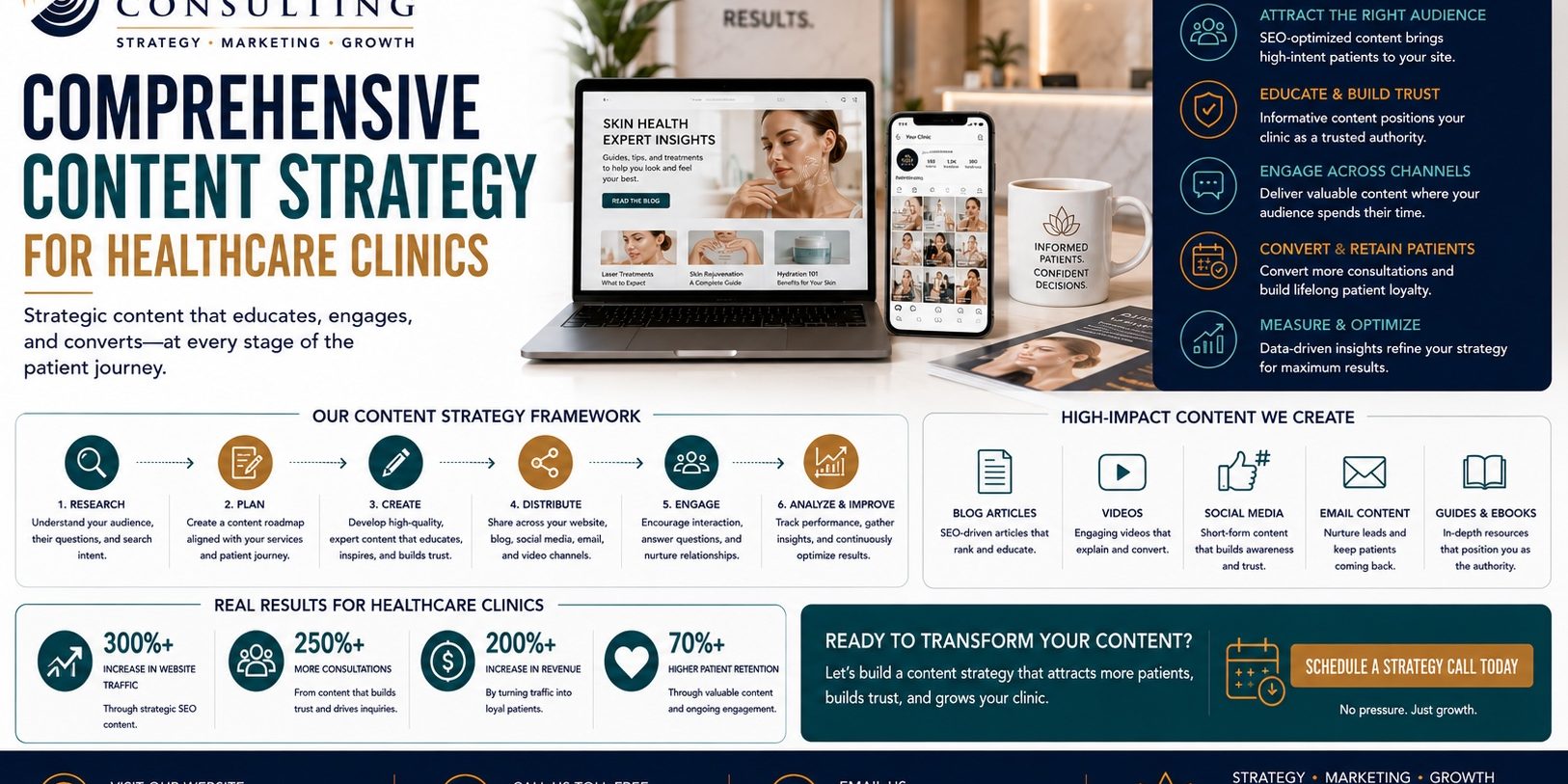
Comprehensive Content Strategy for Healthcare Clinics: Enhancing Patient Engagement and Clinic Growth
In the rapidly evolving healthcare landscape, clinics must adopt innovative content strategies to effectively engage patients and drive growth. This article delves into the critical components of creating a comprehensive content strategy tailored specifically for healthcare and aesthetic clinics. Readers will explore how educational content, diverse formats, and personalized communication can significantly enhance patient engagement. The importance of optimizing digital presence through robust healthcare content marketing solutions, centered on medical E-E-A-T (Experience, Expertise, Authoritativeness, Trustworthiness), cannot be overstated, as it serves to build trust and improve accessibility to valuable healthcare information.
This guide will cover strategies for enhancing patient engagement, exploring methods for effective clinic growth, and outlining best practices for creating impactful marketing services. By understanding and implementing these tactics, healthcare clinics and medical providers can better connect with their audience through a tailored clinic content strategy, improve patient education content, and ultimately foster clinic growth.
Overview of Content Strategy for Healthcare Clinics
A clinic content strategy focuses on creating valuable, relevant resources that address patients’ needs and preferences while complying with HIPAA content compliance guidelines. The integration of strategic content helps clinics enhance visibility, inform patient decision-making, and build lasting relationships. A well-defined content strategy positions clinics as trusted sources of healthcare information and empowers patients through education that reflects medical E-E-A-T standards.
Importance of Content Strategies in Healthcare
- Patient Acquisition: Effective content strategies attract new patients by addressing their needs and concerns, guiding them through the patient journey stages of awareness, consideration, and appointment booking.
- Education: Providing valuable patient education content empowers patients to actively participate in their healthcare decisions.
- Visibility: Strong content improves search engine placement, helping clinics reach a broader audience and achieve greater impact via omnichannel distribution, including blog posts, email newsletters, video content, and patient portals.
Role of Content in Patient Acquisition and Education
Engaging content fosters relationships between clinics and patients, establishing trust through transparency and accessible information supported by physician/practitioner author bios and medical review board attribution. By addressing common patient queries and leveraging symptom-checker style informational content framed within FAQ schema integration, clinics can become go-to resources for valuable health information, ensuring high user engagement throughout the entire patient journey.
Modern digital marketing shifts are fundamentally changing how practices attract new patients through search engine optimization and social media integration.
AI-Driven SEO Strategies for Modern Aesthetic Healthcare Clinics
Marketing in aesthetic plastic surgery has shifted from traditional print and television toward digital-first strategies, with social media and search engine optimization (SEO) now shaping how patients engage with practices. More than 90% of cosmetic patients seek information through web searches and social platforms before a consultation. Artificial intelligence (AI) is accelerating this transformation by automating keyword research, trend forecasting, and content generation, making advanced SEO strategies more accessible to individual surgeons and small practices. Plastic Surgery Search Engine Optimization in the Artificial Intelligence Era, 2026
Enhancing Patient Engagement:

Strategies for engaging patients through content are multifaceted, encompassing various methods and formats. These approaches aim to foster a deeper connection between clinics and their patients while ensuring that patients feel informed and empowered about their health choices. Integral to this is patient journey mapping—understanding patient needs at different stages such as awareness, consideration, and appointment booking—to deliver timely and relevant content.
Educational Content:
Creating patient education content is fundamental in healthcare. This can include articles, videos, and infographics designed to enhance patient understanding of services and treatments, developed with a focus on medical E-E-A-T principles and reviewed by credentials-verified medical review boards.
- Types of Educational Content: Examples include treatment guides, FAQs enriched with FAQ schema, symptom-checker style content, and evergreen health guides that maintain relevance over time.
- Benefits of Patient Education: Increases health literacy and fosters informed decision-making, while building trust through transparent medical author bios and consistent content reviewed for accuracy and compliance.
- Impact on Patient Health Literacy: Well-crafted content with medical expertise backing can significantly improve patients’ understanding of their health conditions and available treatments, enhancing satisfaction and adherence.
Diverse Content Formats:
Utilizing various content formats aids in addressing the diverse preferences of patients while supporting omnichannel distribution strategies.
- Variety in Content Formats: Integrating videos, podcasts, infographics, blogs, email newsletters, and patient portal content engages a wider audience across multiple channels.
- Benefits of Using Multiple Formats: Diversified content keeps patients interested and informed, accommodating different learning styles and preferences.
- How to Integrate Formats into a Cohesive Strategy: Establish an overarching theme that encompasses all content pieces while ensuring each format serves a specific purpose aligned with the patient journey stages.
Strategies for Clinic Growth:
Clinic growth hinges on effectively utilizing healthcare content marketing strategies. By combining insightful content with innovative digital marketing techniques and adherence to HIPAA content compliance guidelines, clinics can not only attract but also retain patients.
- Local SEO Optimization: Prioritizing local search visibility ensures that nearby patients can easily find clinics when seeking healthcare or aesthetic solutions, strengthening community presence.
- Authority Building: Establish clinics as authoritative figures in the healthcare space by producing high-quality content that addresses patient needs, supported by verified practitioner author bios and medical review board oversight.
- Referral and Retention Programs: Loyalty initiatives, supported by personalized content strategies and behavioral tracking, can encourage repeat visits and referrals from existing patients, cementing a clinic’s reputation.
Best Practices for Effective Content Creation:

Creating effective content necessitates adherence to best practices that ensure consistency, quality, and engagement within a structured content calendar planning framework.
- Consistency in Branding: Establish a recognizable identity through uniform messaging, professional tone, HIPAA guidelines compliance, and regular updates scheduled in a comprehensive content calendar.
- Quality Over Quantity: Focus on delivering high-quality content that serves strategic purposes, such as enhancing medical E-E-A-T, rather than churning out high volumes of low-value material.
- Performance Monitoring: Assess engagement metrics through KPIs such as patient feedback, conversion rates, and content consumption analytics to refine content strategies continually and enhance effectiveness.
Partner with Illumination Consulting for Expert Healthcare Content Marketing
Illumination Consulting specializes in advising healthcare clinics on effective content strategy solutions, including creation of tailored content marketing frameworks designed to educate patients, enhance clinic visibility, and optimize digital presence through comprehensive SEO and semantic content planning anchored in industry best practices.
What Are the Core Components of an Effective Content Strategy for Healthcare Clinics?
An effective content strategy comprises several interconnected components that together drive engagement and growth, grounded in healthcare content marketing principles and respectful of regulatory compliance:
- Patient-Centric Approach: Prioritizing patient needs and questions mapped through patient journey stages and behavioral insights.
- Comprehensive SEO: Utilizing keywords effectively to enhance visibility, combined with semantic SEO, FAQ schema integration, and structured data markup.
- Engaging Formats: Integrating varied content types—video, blogs, FAQs, symptom-checkers, and patient portal materials—to connect with different audience segments and facilitate omnichannel content distribution.
How Does Patient Education Content Build Trust and Improve Engagement?
Patient education content plays a vital role in fostering trust within the healthcare community. By providing accurate, understandable information developed under rigorous medical E-E-A-T standards and verified through medical review boards, clinics establish themselves as reliable sources. Inclusion of physician/practitioner author bios further enhances authoritativeness and transparency, encouraging increased patient engagement and loyalty.
Which Healthcare Content Marketing Techniques Drive Clinic Visibility?
To increase clinic visibility, specialized content marketing techniques are essential. These include:
- SEO Strategies: Implementing local SEO tactics, semantic SEO, and structured data to ensure patients find clinics nearby and relevant content ranks prominently.
- Content Marketing: Focusing on high-quality articles, evergreen health guides, FAQ schema-enabled content, and symptom-checker informational tools that address common patient queries and concerns.
- Social Media Engagement: Regular interaction with patients through platforms like Facebook and Instagram enhances clinic reputation and supports omnichannel patient communication.
How to Optimize Clinic SEO Techniques to Enhance Healthcare Digital Marketing?
Effective SEO practices are crucial in today’s digital landscape for clinics seeking to increase visibility and attract more patients while ensuring compliance with HIPAA content guidelines.
What Semantic SEO Practices Improve Patient Search Experience?
Semantic SEO focuses on optimizing content for search intent rather than just keywords. This involves:
- Understanding User Intent: Tailoring content to the questions and needs of potential patients, aligned with the stages of the patient journey—awareness, consideration, and appointment booking.
- Utilizing Related Terms: Incorporating synonyms, related concepts, and medically accurate terminology to build a comprehensive framework around primary topics.
How Can Structured Data and Schema.org Boost Healthcare Clinic Content Visibility?
Integrating structured data helps search engines understand content better and can result in enhanced visibility, improving click-through rates and patient engagement.
- Benefits of Schema Markup: Provides context to search engines, improving the chances of being featured in rich snippets, knowledge panels, and FAQ sections.
- Implementation Tips: Use relevant healthcare schemas, FAQ schema integration, and symptom-checker microdata to help patients find necessary and trustworthy information quickly.
What Patient Engagement Strategies Maximize Healthcare Patient Communication?
Various strategies can enhance patient communication, building bridges that foster understanding and loyalty, including mapping patient journey stages and utilizing omnichannel platforms for distribution.
Which Content Formats Best Support Patient Retention and Education?
- Webinars and live Q&A sessions: Engage patients directly and address concerns with real-time interaction.
- Email newsletters: Keep patients informed of clinic updates and health tips through personalized and segmented mailing lists.
- Social media posts: Regularly interact with patients to maintain engagement across multiple platforms.
- Patient portal content: Provide secure, personalized health education and appointment information ensuring HIPAA compliance.
How Does Personalized Patient Content Impact Clinic Growth?
Personalizing content enriches patient experiences and reinforces loyalty.
- Targeted Communication: Tailoring messages based on patient demographics and behavioral tracking fosters a sense of individual attention and relevance.
- Behavioral Tracking: Using analytics to understand patient behavior allows clinics to adjust communication strategies effectively, improving retention and appointment conversions.
How to Measure and Audit Content Effectiveness in Healthcare Clinics?
Measuring content effectiveness involves monitoring various key performance indicators (KPIs) that indicate success and inform strategic adjustments.
What Key Performance Indicators Track Patient Education and Marketing Success?
- Engagement Rates: Assessing how patients respond to different content types, including time on page, video watch rates, and interaction with symptom-checkers, guides future content strategies.
- Conversion Rates: Tracking new patient sign-ups directly linked to specific content campaigns demonstrates effectiveness in clinic growth.
- Patient Feedback: Utilizing surveys and feedback tools to gauge educational content effectiveness yields actionable insights for continuous improvement.
How to Use Data-Driven Insights to Refine Content Strategy?
Leveraging data analytics helps clinics refine their content strategies by highlighting successful tactics and areas needing improvement, tailoring outreach to patients’ evolving needs and preferences.
Which Emerging Trends Should Healthcare Clinics Integrate into Their Content Strategy in 2026?
As the healthcare industry evolves, clinics must remain adaptable and responsive to emerging trends, adopting solutions that align with digital-first patient education priorities and enhanced search engine capabilities.
Why Is Digital-First Patient Education Critical in the Current Healthcare Landscape?
A digital-first approach to patient education ensures that clinics can effectively reach and engage tech-savvy patients, who increasingly seek information online through diverse digital touchpoints including mobile devices, social media, and patient portals.
How Can Clinics Adapt to Evolving Search Engine Entity Recognition and Optimize Content?
Understanding search engine changes, such as the growing emphasis on entity recognition and user intent, is crucial for maintaining visibility. Clinics should continually refine their content strategies to include semantically rich content, structured data, and HIPAA-compliant communication methods to align with evolving algorithms and user expectations.
There is an emerging expectation that clinics not only provide services but also act as educators, enhancing overall patient experience and satisfaction. Integrating these evolving strategies—including omnichannel distribution, rich medical content, and patient journey mapping—will enable healthcare clinics to thrive in an increasingly competitive and regulated landscape.