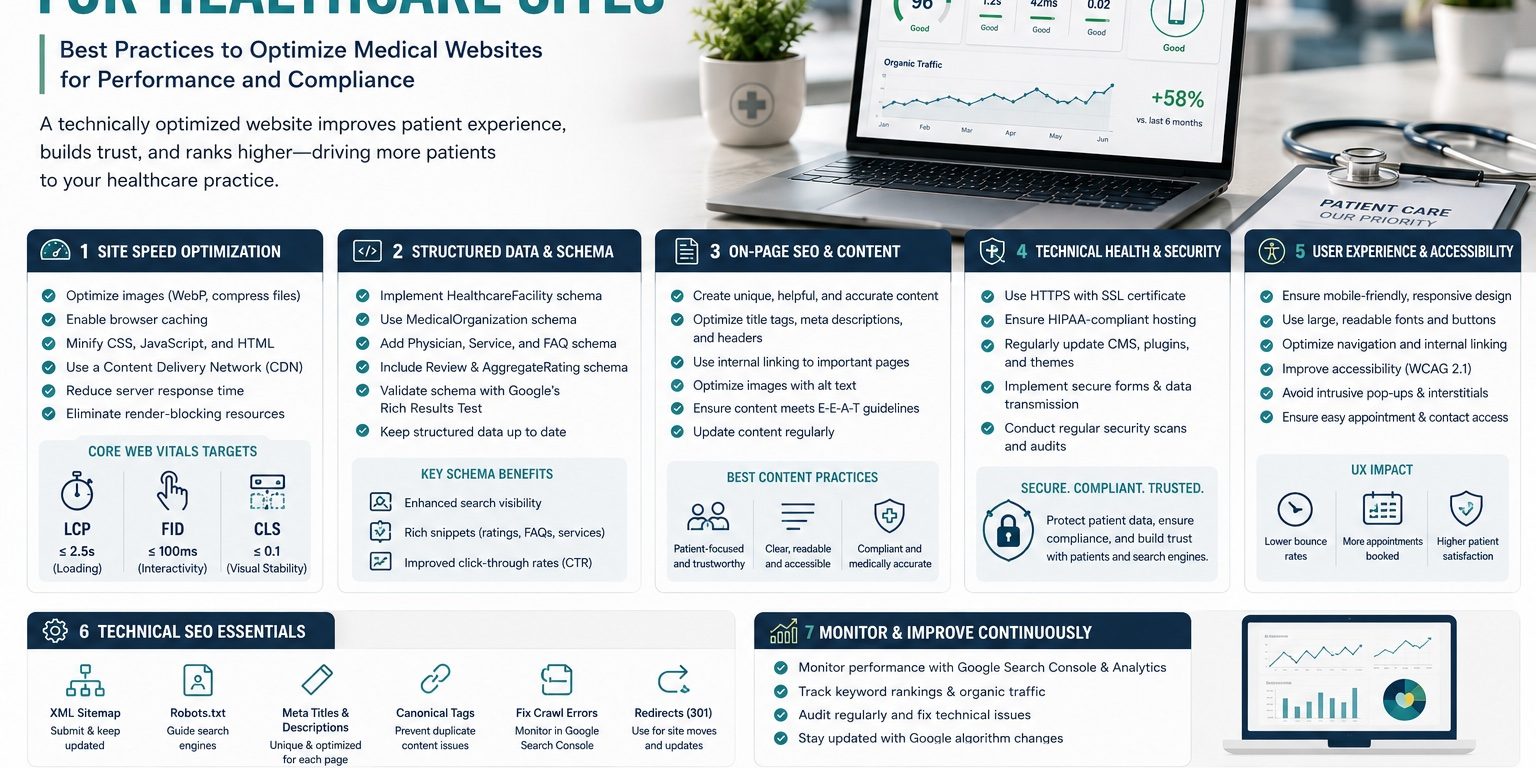
In the rapidly evolving landscape of healthcare, having a robust “technical SEO strategy” is essential for visibility and accessibility. This guide provides a thorough exploration of the critical components necessary for conducting effective SEO audits on healthcare websites. Readers will learn the various facets of technical SEO, including site performance, compliance considerations, structured data implementation, and local SEO strategies. With many healthcare organizations facing challenges in maintaining high search rankings, understanding and applying these best practices can lead to significant improvements in online presence and patient engagement. This article will cover essential elements like site speed, the importance of crawlability, compliance with HIPAA, and effective use of structured data, concluding with strategies for ongoing SEO monitoring.
What Are the Essential Components of a Healthcare SEO Audit?
Performing a healthcare SEO audit is crucial to understand how well a website is optimized for search engines. Key components to assess include the technical aspects that support site performance, user experience, and SEO effectiveness. An effective audit helps identify areas for improvement and ensures that the website conforms to best practices in healthcare SEO. The main elements to review include:
- Technical Performance: Assessing site speed, mobile responsiveness, and overall usability.
- Crawlability and Indexation: Ensuring search engines can navigate and index the site effectively.
- Content Quality: Reviewing the relevance and quality of medical information provided.
- Compliance with Regulations: Checking adherence to HIPAA and other regulatory requirements.
Understanding these components lays the foundation for a well-structured “SEO strategy” tailored to the unique needs of healthcare sites.
How to Evaluate Site Speed and Performance for Medical Websites

Evaluating site speed and performance is vital for healthcare websites, as delays can deter patient engagement. Fast-loading pages lead to better user experiences, directly influencing conversion rates. Key metrics to track include: marketing services.
- Page Load Time: Aim for under 3 seconds for optimal user experience.
- Time to First Byte (TTFB): This metric indicates the responsiveness of a web server.
- Mobile Performance: Ensure that the site is optimized for mobile users, who may represent a significant portion of web traffic for healthcare services.
Utilizing tools such as Google PageSpeed Insights or GTmetrix can help diagnose issues and offer actionable insights into improving site speed.
Why Is Indexation and Crawlability Critical for Clinic SEO?
Indexation and crawlability are fundamental aspects of SEO that determine how easily search engines access and rank a website. If a site is not properly indexed, it may not appear in search results, severely limiting its visibility. Possible consequences of poor indexation include:
- Reduced Visibility: Potential patients may not find your services through search engines.
- Misleading Site Structures: If search engines cannot navigate your site, users may encounter broken links or missing pages.
To optimize crawlability, use tools like “Google Search Console” to identify crawling issues and ensure your site architecture allows search engines to navigate efficiently.
How Does Compliance Affect Technical SEO for Healthcare Websites?
Compliance with healthcare regulations, particularly HIPAA, plays a crucial role in shaping technical SEO strategies. It is essential for maintaining the integrity of patient data while also ensuring optimized online visibility.
What Are the HIPAA and Privacy Compliance SEO Requirements?
The HIPAA compliance requirements necessitate that healthcare websites not only safeguard patient data but also convey this security to users. Key SEO requirements include:
- Secure Hosting: Utilize HTTPS to encrypt user data during transmission.
- Privacy Policies: Clearly state how patient data is used and protected within the site.
- Content Accuracy: Ensure all medical content adheres to current guidelines and reflects ethical practices.
Adhering to these requirements not only protects patient information but also boosts the website’s credibility and search rankings.
How to Ensure Patient Data Security While Optimizing SEO
Balancing SEO optimization with patient data security involves implementing best practices that protect sensitive information. Strategies include:
- Data Encryption: Always encrypt user information to safeguard against breaches.
- Regular Compliance Audits: Conduct periodic reviews of your site to ensure compliance with the latest regulations.
- User Consent Mechanisms: Implement clear consent forms for data collection, explaining to users how their information will be used.
By prioritizing data security, healthcare organizations can build patient trust, which in turn supports SEO growth.
Maintaining high standards of accessibility and regulatory compliance is a fundamental aspect of managing a professional healthcare patient portal.
Optimizing Healthcare Patient Portals for Accessibility and HIPAA Compliance
Besides, the paper stresses the importance of considering the use of accessibility along with such principles as the WCAG-compliant design and user-friendly interface. A secure architecture for real-time data exchange in HIPAA-compliant patient portals, 2022
What Role Does Structured Data Play in Healthcare SEO Optimization?
Structured data is essential in enhancing a healthcare website’s search presence, as it helps search engines understand the content better. Correctly implementing structured data can lead to rich snippets in search results, increasing click-through rates.
Expert research highlights how structured data directly contributes to improved search visibility and better resource navigation for patients.
Leveraging Structured Data for Healthcare SEO Visibility
The use of structured data in healthcare websites can increase the visibility of health resources through search engine optimization (SEO), show rich, personalized results to target users, and allow the website to serve as a living digital directory of resource information for patients.
Utilization of Structured Data to Improve Visibility of Digital Health Websites, S Mitragotri, 2025
How to Implement MedicalBusiness and AuditAction Schema Markup
Implementing schema markup relevant to the healthcare sector involves using structured data to enhance search visibility. Steps to consider include:
- Identify Key Pages: Determine which pages would benefit most from schema markup.
- Use Relevant Markup: Implement MedicalBusiness and AuditAction schema types suitable for clinics.
- Validate Markup: Use Google’s Structured Data Testing Tool to ensure proper implementation.
Adopting these steps can significantly enhance how search engines interpret and present a healthcare website’s information.
Which FAQ and HowTo Schemas Improve Healthcare Site Snippets?
Utilizing FAQ and HowTo schemas can improve search presence by targeting specific user queries. Implementing these schemas helps to:
- Enhance Search Visibility: FAQs help address common patient concerns directly in search results.
- Increase Engagement: HowTo guides can engage users by providing actionable content.
Employing these schemas allows healthcare sites to stand out in search results, potentially leading to a higher volume of traffic and patient engagement.
How Can Clinic and Medspa Websites Optimize Mobile and Local SEO?
Mobile and local SEO are integral for healthcare websites aiming to attract and retain patients effectively. As many users seek healthcare services on mobile devices, ensuring optimized experiences is crucial.
What Are the Best Practices for Mobile-First Indexing in Healthcare?
Mobile-first indexing necessitates that healthcare websites offer excellent mobile responsiveness. Best practices include:
- Responsive Design: Use fluid grids and flexible images to ensure compatibility across devices.
- Fast Loading Times: Prioritize loading speed on mobile to retain visitors and improve search ranking.
- User-Friendly Navigation: Simplify navigation menus to enhance the user experience on smaller screens.
Implementing these practices will ensure that mobile users have access to critical information without hindrance.
How to Enhance Local SEO with Schema and NAP Consistency for Clinics

Establishing a strong local SEO presence is essential for clinics and medspas, helping them connect with nearby patients. Effective strategies include:
- NAP Consistency: Ensure that your Name, Address, and Phone number are consistent across all platforms.
- Local Schema Markup: Use schema to mark up your clinic’s location and services.
- Patient Reviews: Encourage satisfied patients to leave reviews on Google and Yelp.
These strategies will enhance local visibility, allowing healthcare businesses to attract more regional patients effectively.
Adopting targeted local search tactics is a proven way for medical practices to bridge the gap between digital visibility and physical patient visits.
Local SEO Strategies to Increase Visibility for Medical Practices
local SEO for medical practices, emphasizing how healthcare providers can improve online visibility and attract more patients through strategic optimization. Mastering Local SEO for Medical Practices, 2025
Which Tools and Metrics Best Monitor Healthcare Technical SEO Success?
Monitoring healthcare SEO success involves utilizing specialized tools and metrics that track performance, compliance status, and overall health of the site.
How to Track Crawl Errors, Core Web Vitals, and Compliance Status
Using a systematic approach to track important metrics can significantly impact a website’s SEO effectiveness. Key strategies include:
- Google Search Console: Regularly check for crawl errors and indexation issues.
- Core Web Vitals Assessment: Focus on metrics like loading performance, interactivity, and visual stability to assess user experience.
- Compliance Monitoring Tools: Utilize tools that help check for HIPAA compliance issues periodically.
By employing these monitoring techniques, healthcare sites can ensure continuous compliance and optimize performance.
What Are Effective Strategies for Ongoing SEO Audits and Updates in Healthcare?
Continuous improvement is key in the evolving world of healthcare SEO. Effective strategies for regular audits include:
- Setting Regular Audit Schedules: Conduct audits quarterly to identify new challenges or improvements.
- Staying Updated: Keep abreast of SEO developments and algorithm changes to adapt strategies accordingly.
- Reviewing Analytics: Regularly assess website analytics to identify trends and areas for enhancement.
These strategies ensure that a healthcare site remains competitive and compliant with ongoing changes in search engine optimization best practices.