This analysis compares Shopify Plus and Headless Architecture to help beauty brands select the platform that best supports growth and customer engagement. It evaluates features, benefits, and suitability for skincare businesses and explains how each architecture affects operations, flexibility, and market positioning. The report covers strategic analysis, benefits for beauty brands, suitability by business model, and the technical components that influence long-term performance.
Key Takeaways
- Shopify Plus offers a fully hosted platform with user-friendly tools ideal for rapid skincare brand growth.
- Headless Architecture provides customizable frontend solutions enabling unique and flexible customer experiences.
- Shopify Plus integrates marketing tools that streamline campaigns and enhance customer engagement effectively.
- Headless Architecture’s API-first approach supports seamless integration with third-party services and complex systems.
- Direct-to-consumer brands benefit from Shopify Plus, while subscription models favor Headless Architecture’s flexibility.
- Technical components like APIs and headless CMS enable tailored frontend experiences for skincare ecommerce platforms.
- Scalability is a key strength of Shopify Plus, supporting high traffic and large inventories efficiently.
- Headless commerce adoption is growing among beauty brands seeking speed, customization, and adaptability.
- Optimizing SEO with structured data and content strategies enhances visibility and qualified lead generation on both platforms.
Strategic Analysis: Shopify Plus vs. Headless Architecture for Beauty Brands
When comparing Shopify Plus and Headless Architecture, examine operational capabilities, flexibility, and the specific advantages each platform delivers to beauty brands. Both address different business models and feature sets that materially affect customer experience and operational efficiency. Understanding these differences enables brands to make “informed decisions” about their ecommerce strategy.
Overview of Platforms:
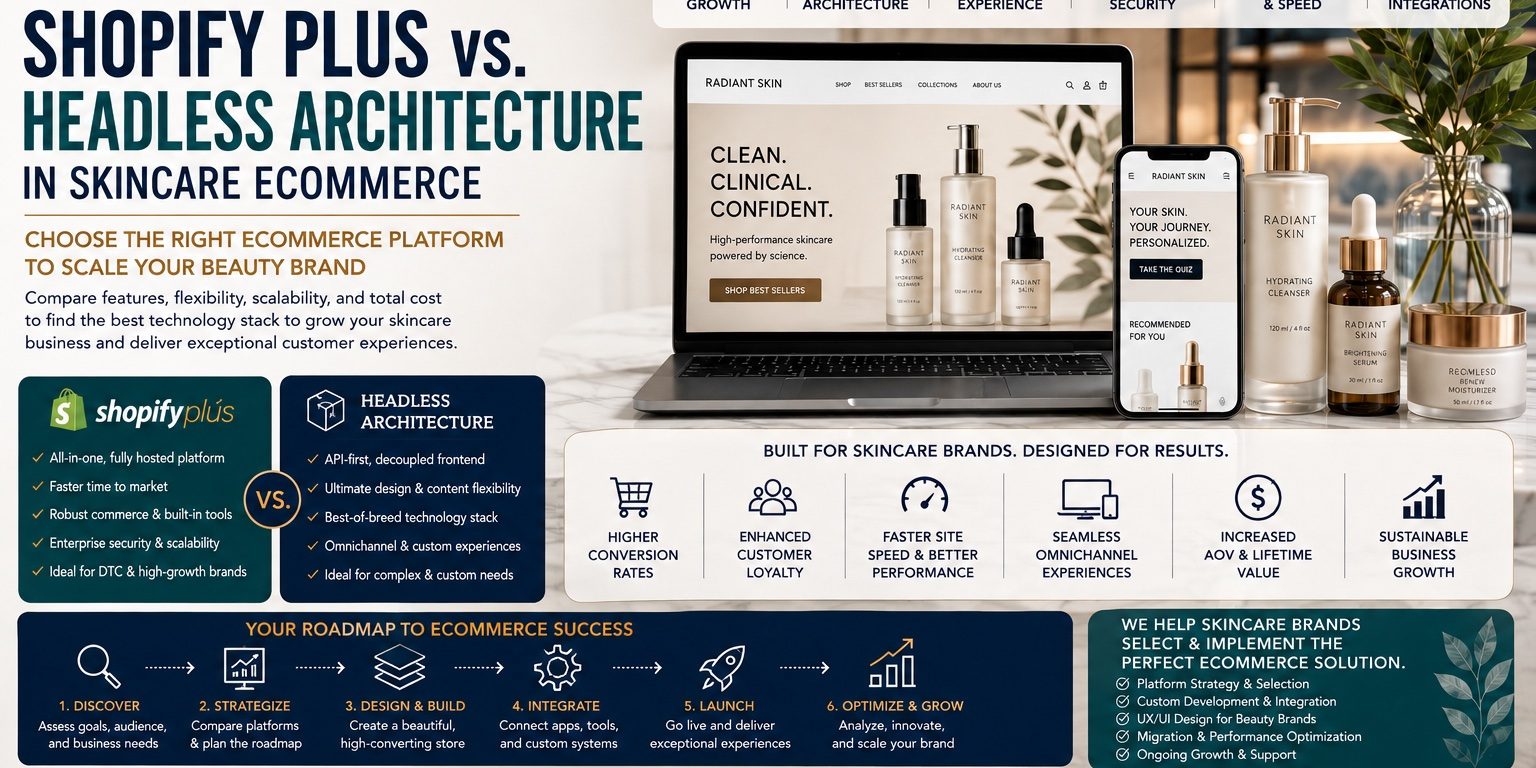
Shopify Plus is a fully hosted commerce platform built for high-growth brands, offering an intuitive dashboard and tools to manage large inventories and high order volumes. Headless Architecture decouples frontend and backend systems, enabling brands to craft tailored experiences across channels and integrate preferred technologies for each touchpoint. This structural difference determines how each platform meets distinct business needs.
These insights illustrate how decoupling commerce functions can drive strategic innovation for modern retail brands.
Composable Commerce: Advantages of Headless Architecture for Retail Composable commerce decouples core commerce functions—checkout, catalog, inventory, and personalization—enabling parallel development, faster time-to-market, and real-time integration with customer preferences. Composable commerce architectures: Building agile retail systems, 2025
Features Comparison:
This section compares key features of Shopify Plus and Headless Architecture, emphasizing usability and flexibility to guide platform selection for beauty brands.
The comparison demonstrates that each platform offers distinct capabilities aligned with different strategic priorities within the beauty sector.
Benefits for Beauty Brands:
Brands can leverage either platform to strengthen operations and customer interactions; the following advantages clarify where each solution delivers value.
- Quick Setup: Shopify Plus enables brands to launch quickly, making it an ideal choice for those looking to enter the market rapidly without complex integrations.
- Customization Options: For brands seeking unique digital experiences, Headless Architecture allows comprehensive customization, accommodating various aesthetic and functional requirements.
- Robust Marketing Tools: With built-in marketing tools, Shopify Plus helps brands implement effective campaigns to reach their audience, increasing customer engagement and sales.
After reviewing these benefits, brands should map platform capabilities to their business model and growth targets to select the best fit.
Suitability for Business Models:
Assessing suitability across business models yields clear guidance on where each platform performs best.
- Direct-to-Consumer (DTC) Compatibility: Shopify Plus is well-suited for brands establishing a direct relationship with consumers, providing tools tailored for personalized engagement.
- Subscription Models: For brands incorporating subscription services, “Headless Architecture” offers greater flexibility in customization and integration of recurring billing systems.
- Retail Partnerships: Brands looking to maintain ease in retail partnerships may find Shopify Plus more accommodating, given its comprehensive support for omnichannel sales.
What Are the Core Differences Between Shopify Plus and Headless Commerce in Skincare Ecommerce?
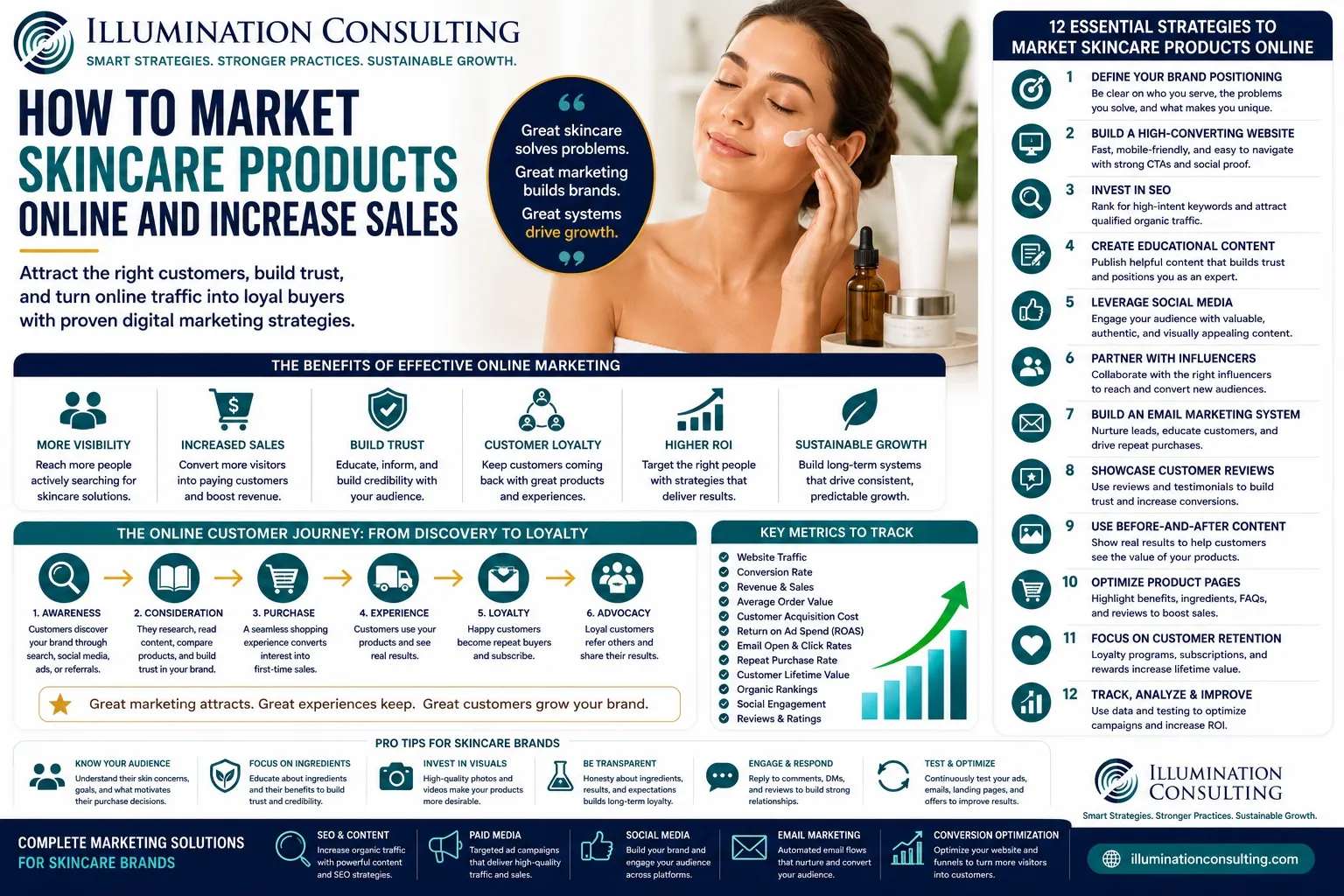
Core differences pivot on control and speed to market: Shopify Plus is an all-in-one solution that prioritizes ease of use and rapid deployment, suited to teams with limited technical resources. Headless Commerce emphasizes frontend flexibility and customization, appropriate for brands that require unique interfaces and integrations across multiple channels.
How Do Shopify Plus Features Support Scalable Beauty Brand Growth?
Shopify Plus delivers scalable infrastructure and a suite of tools designed to handle increased traffic and larger inventories while maintaining operational efficiency. Its integrated marketing capabilities support engagement and conversion optimization as brands expand.
What Headless Architecture Benefits Enhance Flexibility and Integration for Skincare Stores?
Headless Architecture offers flexible integration patterns and the ability to use preferred development stacks for custom frontends. This modular approach supports rapid iteration, differentiated customer experiences, and easier integration with specialised services—advantages that help brands respond to shifting consumer preferences.
Transitioning to modular systems is a strategic step for brands that prioritize long-term adaptability and competitive differentiation.
Microservices vs. Monoliths: Scalability in E-commerce Architecture This article examines the impact of microservices and modular architectures on e-commerce platforms, outlining the limits of monolithic systems under high transaction volumes and how microservices enhance performance, scalability, and innovation capacity. Microservices and modular architecture: Revolutionizing e-commerce scalability, 2025
How to Choose the Best Ecommerce Platform for Beauty and Skincare Brands?
Select the platform by matching technical requirements, customization needs, growth expectations, and operational capacity to the platform’s strengths. The decision between Shopify Plus and Headless Architecture should reflect the brand’s customer experience objectives and long-term growth plan.
Which Ecommerce Tech Stack Aligns with Healthcare and Aesthetic Clinic Requirements?
Healthcare and aesthetic clinics require a tech stack that prioritizes compliance, data security, and reliable customer engagement. Headless Architecture can accommodate specialised integrations needed for regulatory compliance while preserving a seamless user experience.
What Are the Long-Term Growth Implications of Platform Selection?
Platform selection affects future scalability, integration flexibility, and the ability to adopt emerging trends. Brands should prioritize options that align with their projected growth trajectory and integration requirements to avoid costly replatforming later.
What Are the Technical Components of Skincare Ecommerce Platforms?
Key technical components that underpin successful platforms include APIs, frontend frameworks, and content management systems to ensure data consistency, responsive interfaces, and streamlined content operations.
How Do APIs and Headless CMS Enable Custom Frontend Experiences?
APIs and Headless CMS enable modular frontends by exposing data and content in a consistent manner, allowing teams to implement tailored features while keeping data synchronized across systems. This setup supports the specialised interactions skincare brands require.
What User Experience Frameworks Optimize Customer Journeys on Different Platforms?
Applying proven UX frameworks and design best practices improves navigation, conversion paths, and retention—delivering measurable gains in customer satisfaction across platforms.
What Does Market Data Reveal About Skincare Ecommerce Platform Trends in 2025-2026?
Market data shows a continued move toward personalised shopping experiences. Consumers increasingly expect customized interactions, which places pressure on both hosted and headless solutions to support richer, data-driven experiences.
How Is Headless Commerce Adoption Growing Among Beauty Brands?
Headless commerce adoption is rising as brands prioritize speed, customization, and the ability to integrate specialized services that support differentiated user experiences.
What Are the Scalability Trends of Shopify Plus in Skincare Ecommerce?
Shopify Plus is built to scale, handling spikes in traffic and large catalogs while maintaining performance. The platform’s architecture supports growth with minimal operational overhead.
Which Real-World Case Studies Illustrate Platform Impact in Beauty Ecommerce?
Case studies show that brands on Shopify Plus often achieve faster time-to-market and improved customer management, while brands on Headless Architecture report gains in performance and the ability to tailor experiences to specific customer segments.
How Have Healthcare Brands Transformed Sales Using Shopify Plus?
Healthcare brands using Shopify Plus have streamlined sales and marketing operations by leveraging the platform’s integrated tools, resulting in improved lead generation and more efficient processes.
What Are the Benefits Experienced by Aesthetic Clinics with Headless Platforms?
Aesthetic clinics using Headless platforms can customize patient-facing interfaces and automate booking workflows, improving the patient experience and supporting loyalty.
How Can Brands Optimize SEO and Lead Generation on Shopify Plus and Headless Platforms?
Implement structured data, consistent content strategies, and technical SEO best practices to increase visibility and drive qualified traffic on both platform types.
Which Structured Data Markups Improve Ecommerce Visibility and Entity Recognition?
Structured data markups such as schema.org improve visibility in search results and help search engines recognize entities and product details more accurately.
How Does Internal Linking and Content Strategy Enhance Qualified Lead Generation?
A deliberate internal linking and content strategy channels visitors to relevant product and informational pages, supporting conversion funnels and qualified lead generation.
Frequently Asked Questions
What types of skincare brands benefit most from Shopify Plus?
Shopify Plus suits direct-to-consumer skincare brands that prioritize rapid deployment, operational simplicity, and integrated marketing capabilities. It supports large inventories and high order volumes while providing scalability and tools that reduce technical overhead, allowing teams to focus on growth and customer engagement.
How does Headless Architecture support innovative marketing strategies for beauty brands?
Headless Architecture supports advanced marketing by enabling API-driven integrations with marketing platforms, dynamic content delivery, and tailored promotion mechanics. This flexibility allows brands to implement interactive campaigns and personalised experiences that respond to customer behavior in real time.
What are the cost implications of choosing between Shopify Plus and Headless Architecture?
Cost profiles differ: Shopify Plus generally follows a subscription model that includes hosting and platform support. Headless Architecture often requires higher upfront investment for custom development and integrations and may incur ongoing costs for maintenance and specialised services. Budget planning should reflect development, integration, and total cost of ownership over time.
Can Headless Architecture improve user retention for skincare brands, and how?
Yes. Headless Architecture enables highly personalised interfaces and experimental design changes, allowing brands to iterate on customer experiences quickly. These tailored interactions and rapid adaptations can increase loyalty and repeat purchases when aligned with user data and feedback.
How do payment options differ between Shopify Plus and Headless Architecture?
Shopify Plus provides a range of built-in payment options and gateway integrations to simplify checkout. Headless Architecture offers flexibility to integrate specific payment providers and custom flows, but implementation typically requires additional technical resources.
What role does customer feedback play in choosing an ecommerce platform?
Customer feedback identifies friction points and feature gaps that should inform platform choice. Use feedback on navigation, checkout, and functionality to determine whether a platform’s out-of-the-box capabilities or a custom headless solution better aligns with user needs.
How does analytics integration differ between Shopify Plus and Headless Architecture?
Analytics on Shopify Plus are more straightforward thanks to built-in reporting and native integrations. Headless Architecture allows fully custom analytics stacks and deeper data control but requires more engineering effort to implement and manage.
Conclusion
Selecting the right ecommerce platform is a strategic decision that affects operational efficiency, customer engagement, and growth potential. By comparing the strengths of Shopify Plus and Headless Architecture against business objectives, brands can make informed platform choices that align with their long-term strategy. Consult targeted resources to determine the best fit and begin optimizing your brand’s online presence for sustainable growth.