By Illumination Consulting Editorial Team · Updated 2026-07-29
Illumination Consulting designs skincare storefronts using clean product grids, large ingredient-focused photography, and skin-concern navigation (acne, aging, brightening). Beverly Hills-based teams prioritize mobile-first layouts, prominent reviews, subscription options, and streamlined checkout with minimal fields to maximize conversions and build trust with skincare shoppers.
Platforms like Shopify anchor a strong skincare storefront, paired with clean product photography, ingredient-focused descriptions, and trust-building elements like reviews—strategies critical given global beauty eCommerce is projected to surpass $150 billion by 2027. Illumination Consulting, based in Beverly Hills, CA, designs conversion-focused storefronts emphasizing brand identity and seamless mobile checkout experiences.
Skincare storefront design combines a fast, mobile-optimized platform (Shopify remains a top choice), clear product categorization, and conversion-focused product pages with ingredient transparency. Strong visuals, customer reviews, and simplified checkout reduce cart abandonment. Brands like Glossier and The Ordinary succeed by pairing distinct brand identity with SEO-driven content that guides skincare buyers from research to purchase.
Strategic Essentials for Aesthetic E-Commerce Success
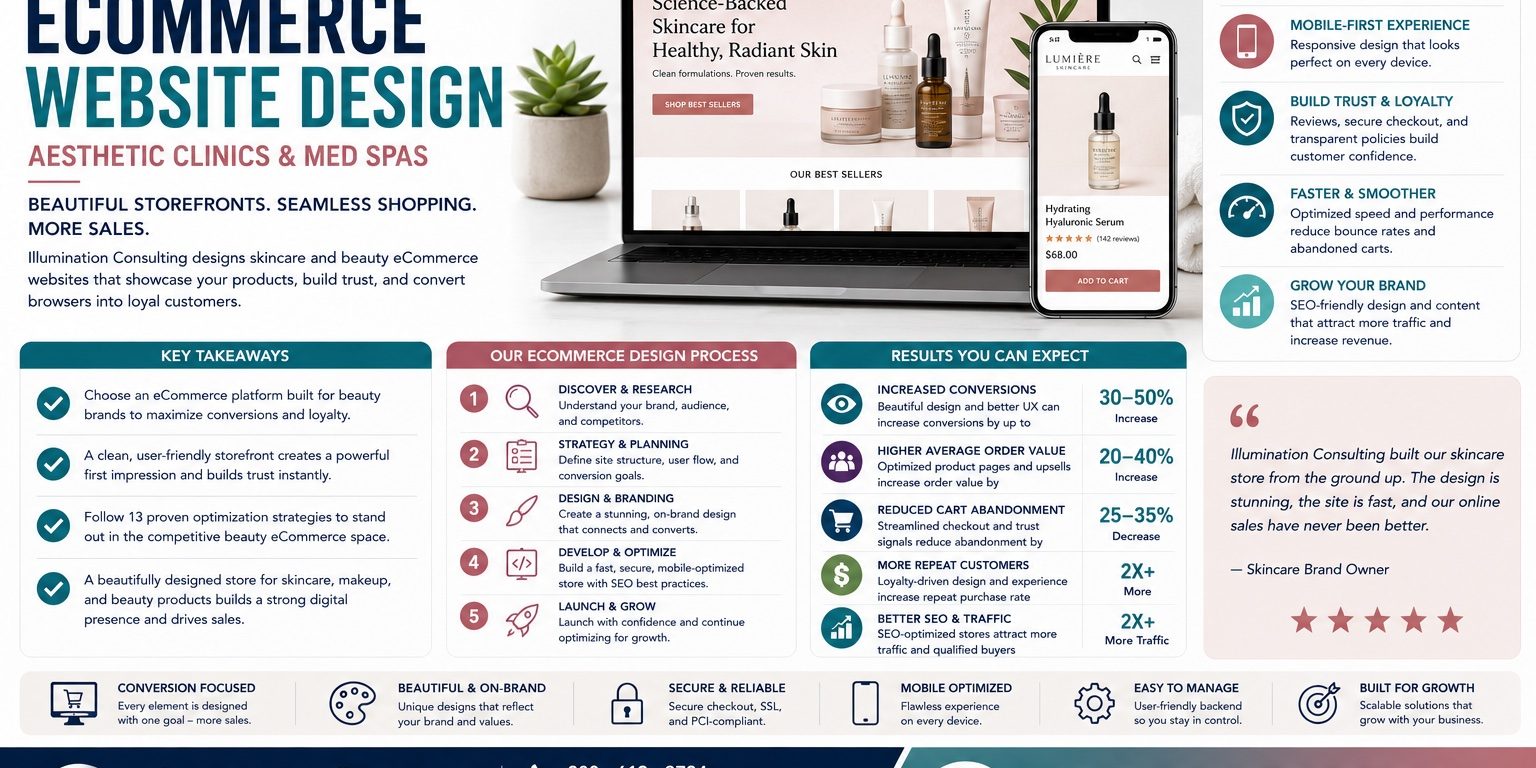
- Select an e-commerce platform optimized for beauty products to maximize conversion rates and customer loyalty.
- Design an aesthetically appealing, user-friendly storefront as the critical first point of contact with potential customers.
- Implement 13 powerful optimization steps specifically for cosmetics websites to stand out in the booming online beauty industry.
- Create a well-designed online store for skincare, makeup, or beauty tools to establish effective digital retail presence.
What Makes a Skincare Storefront Convert?
Conversion hinges on first impressions, structural clarity, and trust signals working together. Consumers form opinions about a skincare storefront within seconds of landing on it, which means design quality, ease of navigation, and visible credibility markers carry real weight before a single product loads. A brand with strong formulations can still lose sales if the site feels cluttered, slow, or unclear.
Strong ecommerce website design treats the storefront as a growth engine, not a digital catalog. The layout should be optimized for visibility, conversions, and long-term growth rather than simple product display. That distinction separates brands that scale from those stuck reordering the same customer base.
Does good design really affect skincare sales?
Yes. A thoughtfully built storefront showcases products while communicating brand personality and building trust simultaneously. Shoppers read polish as a proxy for product quality, especially in skincare, where ingredient trust matters as much as aesthetics.
What does a high-converting skincare site actually need?
Beyond listing SKUs, the store must be intuitive and built for action. Effective skincare ecommerce solutions and thoughtful online storefront design typically include:
- Clear navigation by skin concern or product category
- Fast-loading, mobile-first layouts
- Trust elements like reviews and ingredient transparency
- Checkout flows with minimal friction
Sites missing these elements convert visitors into browsers, not buyers.
Which Platform and Features Actually Matter?
Platform choice determines nearly everything downstream: design flexibility, checkout speed, and long-term scalability for a skincare brand. A weak foundation for ecommerce website design can hinder future growth once products are launched. Strong skincare ecommerce solutions start with matching platform capability to business stage and catalog complexity.
Shopify and WooCommerce dominate the beauty space for different reasons.
Which platform is best for a skincare brand?
No single platform fits every skincare business. Brands prioritizing speed to launch and app-driven features often lean toward Shopify. Teams needing granular content control, especially those pairing product pages with education-heavy content, gravitate toward WooCommerce.
What features matter beyond the platform itself?
A modern online storefront design needs more than good visuals; it needs infrastructure. Illumination Consulting builds retail and eCommerce websites that stay responsive across devices while supporting both customer acquisition and revenue generation. A properly configured content management system matters just as much. It lets marketing teams publish content, manage product media, and run ecommerce functionality without waiting on developers for every update.
Medical-Grade Skincare Ecommerce: Specialized Considerations
Medical-grade skincare products and aesthetic clinic services present unique challenges and opportunities in ecommerce design. Selling prescription-strength or treatment-associated products online requires clear communication of benefits, safety compliance, and professional trust. Online storefronts serving clinics and med spas must balance educational content, regulatory information, and straightforward paths for booking treatments or purchasing product packages.
Seamless Checkout UX for Aesthetic Packages and Services
Checkout experiences for aesthetic packages differ from typical ecommerce transactions. Users often purchase bundled services or subscription-based regimens alongside products. Integrating options for appointment scheduling, consultation forms, and multi-tiered pricing models within a minimal-step, mobile-first checkout flow is critical. Reducing friction in collecting necessary medical information while securing trust through privacy assurances elevates conversion rates.
Subscription Models for Product Replenishment
Subscription ecommerce has become essential for medical-grade skincare products, encouraging loyalty and predictable revenue streams. Effective subscription models on skincare storefronts allow customers to customize frequency, swap products, and pause deliveries. Automated reminders, easily accessible subscription management from user accounts, and clear communication of benefits (such as cost savings or exclusive access) foster sustained engagement and higher lifetime value.
Mobile-First Design Considerations
Given the growing dominance of mobile shopping among skincare consumers, especially in medical aesthetics, the mobile experience demands deliberate optimization. This includes responsive layouts, quick load times via image optimization and caching, thumb-friendly navigation, and mobile-optimized payment gateways. Integrating mobile wallet options, autofill for forms, and simplified user flows supports effective conversions on small screens.
High-Converting Product Pages: Best Practices
Product pages for medical-grade skincare must combine rich, transparent ingredient information with clinical efficacy details, user testimonials, and professional endorsements. Visuals should include high-quality photography and, where applicable, videos demonstrating application or results. Interactive elements such as skin type selectors or ingredient explainers help customers navigate complex choices. Clear calls to action paired with trust badges (FDA compliance, dermatologist recommendations) reinforce buyer confidence.
Integrating Online Retail With In-Clinic POS Systems
Omnichannel unity between ecommerce platforms and in-clinic point-of-sale (POS) systems is essential for aesthetic clinics. Synchronizing inventory, customer data, and purchase history across channels enables personalized marketing, coherent loyalty programs, and seamless customer experiences. Flexible integration solutions support real-time updates, enabling staff to access online orders or upsell complementary services during in-person appointments.
Best-Practice Framework for High-Performing Medical-Grade Skincare Ecommerce
- Platform Selection: Choose ecommerce platforms supporting healthcare compliance, subscription services, and versatile POS integrations (e.g., Shopify Plus, WooCommerce with HIPAA-compliant plugins).
- Mobile-First UX: Design responsive, fast-loading layouts emphasizing ease of navigation, succinct product/service information, and intuitive checkout.
- Comprehensive Product Pages: Provide detailed ingredient breakdowns, clinical evidence, professional endorsements, and interactive educational tools.
- Seamless Checkout: Implement streamlined multi-step checkout optimized for service bundles, appointment scheduling, and subscription management with secure payment options.
- Subscription Flexibility: Allow customers to easily customize, pause, or cancel subscriptions from their accounts, maintaining transparency in billing cycles.
- Trust and Compliance: Display necessary disclaimers, certifications, and privacy policies prominently to reassure customers of safety and professionalism.
- Omnichannel Integration: Synchronize online and in-clinic sales and customer data to deliver unified service and personalized marketing.
- Data-Driven Optimization: Continuously analyze customer behavior, A/B test design and flow elements, and refine SEO and content strategies to increase conversion and retention.
How Do You Turn Design Into Sales?
Sales grow when structure and strategy work together, not from visual polish alone. Skincare brands frequently plateau after early traction because product quality was never the real barrier. What’s missing is a system built to attract new visitors, convert them into buyers, and bring them back for repeat purchases. Strong ecommerce website design creates that system by turning browsing sessions into measurable revenue.
Design alone rarely closes the gap. The brands that scale successfully treat their site as one piece of an integrated engine, combining SEO, content marketing, social media, and skincare ecommerce solutions into a single, coordinated strategy rather than isolated tactics run in silos.
Why Does SEO Matter More Than Paid Ads for Long-Term Growth?
Paid campaigns stop producing traffic the moment budgets run dry. SEO behaves differently. It builds a durable asset that keeps attracting qualified shoppers and generating sales for years, long after the initial investment.
What Role Does the Storefront Play in the Sales Process?
For most skincare and beauty companies, the online storefront isn’t a supporting asset. It’s the primary sales and marketing engine the brand controls directly.
- Converts organic traffic earned through SEO into transactions
- Supports content and social campaigns with a consistent purchase path
- Reduces dependence on rising ad costs over time
Thoughtful online storefront design ties these elements together, turning strategy into repeatable, predictable revenue.
A thoughtfully designed e-commerce storefront transforms your skincare brand into a conversion-focused asset that builds customer trust and drives sustainable revenue growth. By prioritizing intuitive navigation, compelling product storytelling, seamless checkout experiences, and omnichannel integration, you establish the digital foundation necessary for long-term market success. Strategic design decisions compound over time, positioning your brand as an authority in the competitive skincare landscape and fostering the customer loyalty that fuels business expansion.
FAQ
Which ecommerce platform works best for a skincare storefront?
Shopify anchors a strong skincare storefront. Remains a top choice for beauty brands, dominating the space alongside WooCommerce based on business stage and catalog complexity.
What elements build customer trust on a skincare site?
Trust builds through ingredient transparency, customer reviews, clean product photography, clear product categorization by skin concern, and compliance transparency—all working alongside a simplified checkout flow designed for both products and aesthetic services.
Why does mobile optimization matter for skincare ecommerce?
Mobile-first, fast-loading layouts reduce cart abandonment and support seamless checkout experiences. Illumination Consulting emphasizes this when designing conversion-focused storefronts for aesthetic brands, especially as mobile shopping continues to dominate the beauty sector.
Facts
- Illumination Consulting is located in Beverly Hills, CA, USA.
Author Bio
Illumination Consulting’s Editorial Team is composed of experts in skincare ecommerce and medical aesthetics website design. Based in Beverly Hills, CA, they specialize in crafting conversion-optimized online storefronts that combine clean design, brand storytelling, and technical excellence to foster trust and drive growth for aesthetic clinics and med spas.
Ecommerce Architecture & Conversion Optimization Checklist for Skincare Storefronts
Frequently Asked Questions
Which ecommerce platform works best for a skincare storefront?
Shopify anchors a strong skincare storefront and remains a top choice for beauty brands, dominating the space alongside WooCommerce based on business stage and catalog complexity.
What elements build customer trust on a skincare site?
Trust builds through ingredient transparency, customer reviews, clean product photography, clear product categorization by skin concern, and compliance transparency—all working alongside a simplified checkout flow designed for both products and aesthetic services.
Why does mobile optimization matter for skincare ecommerce?
Mobile-first, fast-loading layouts reduce cart abandonment and support seamless checkout experiences. Illumination Consulting emphasizes this when designing conversion-focused storefronts for aesthetic brands, especially as mobile shopping continues to dominate the beauty sector.