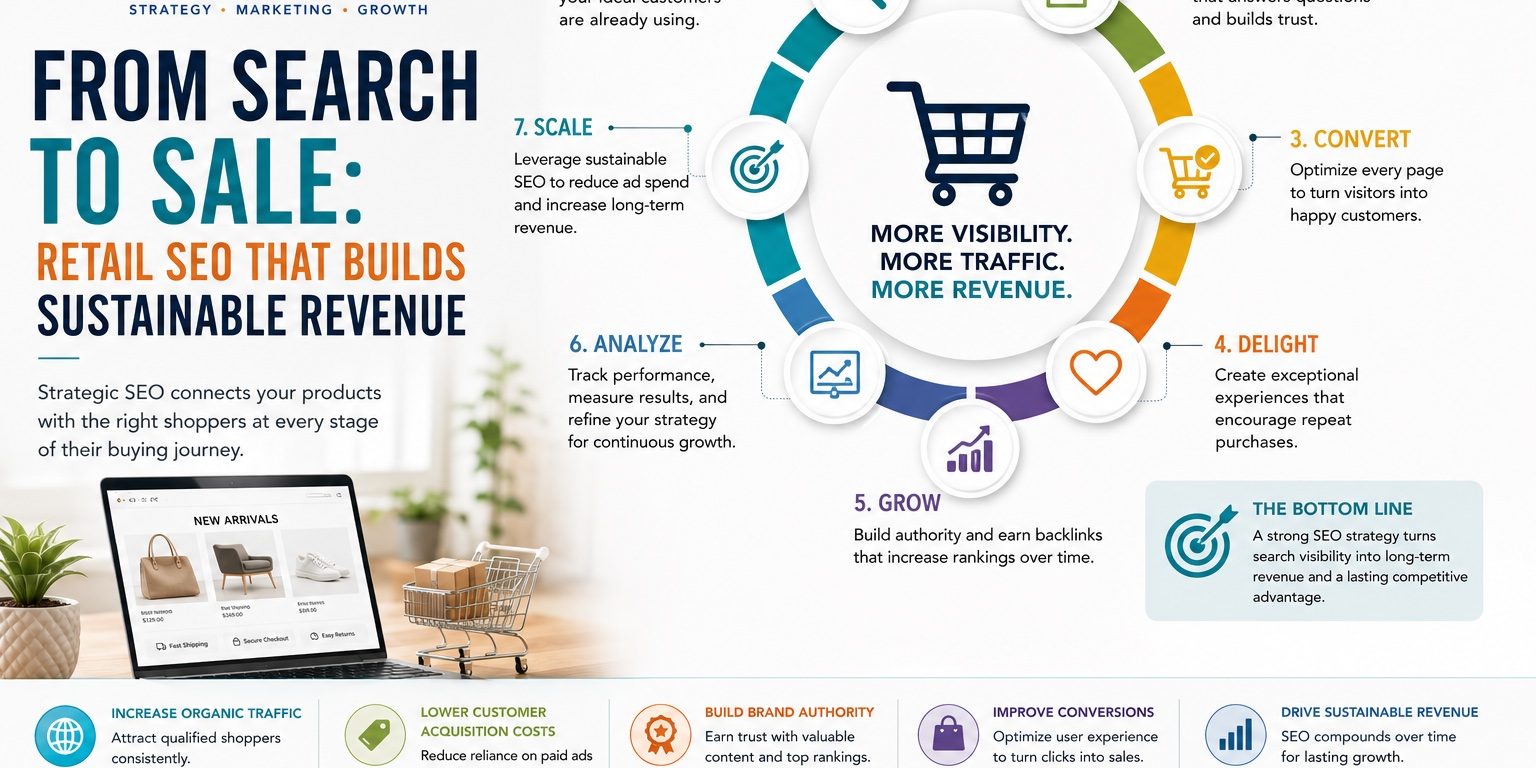
Search engines have become one of the most influential forces shaping modern retail. Long before customers visit an online store, they search for products, compare brands, read reviews, explore buying guides, and evaluate their options. Every search represents an opportunity to connect with a shopper who is actively looking for solutions. Retail brands that consistently appear in these moments gain a significant competitive advantage by attracting highly qualified visitors without relying exclusively on paid advertising.
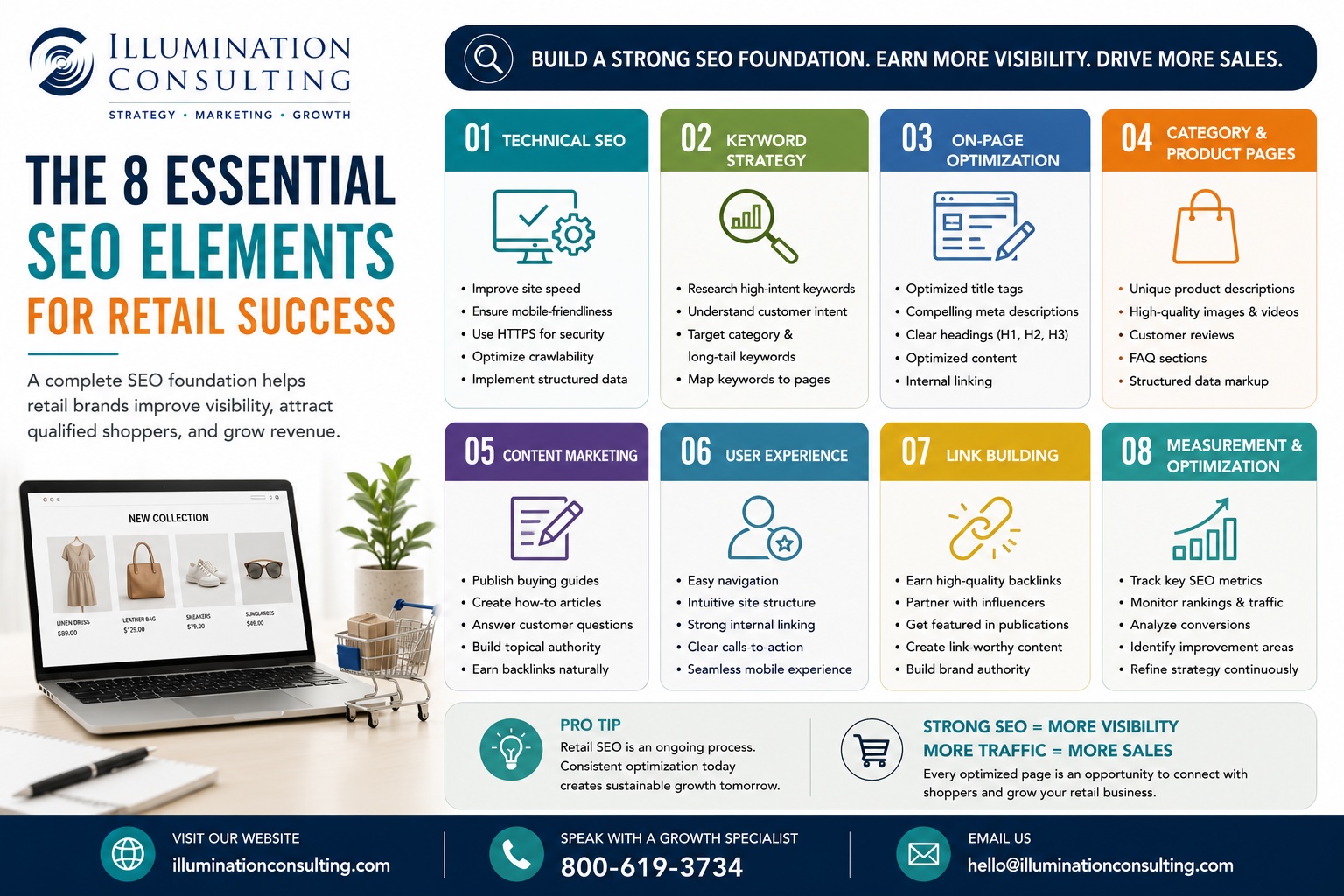
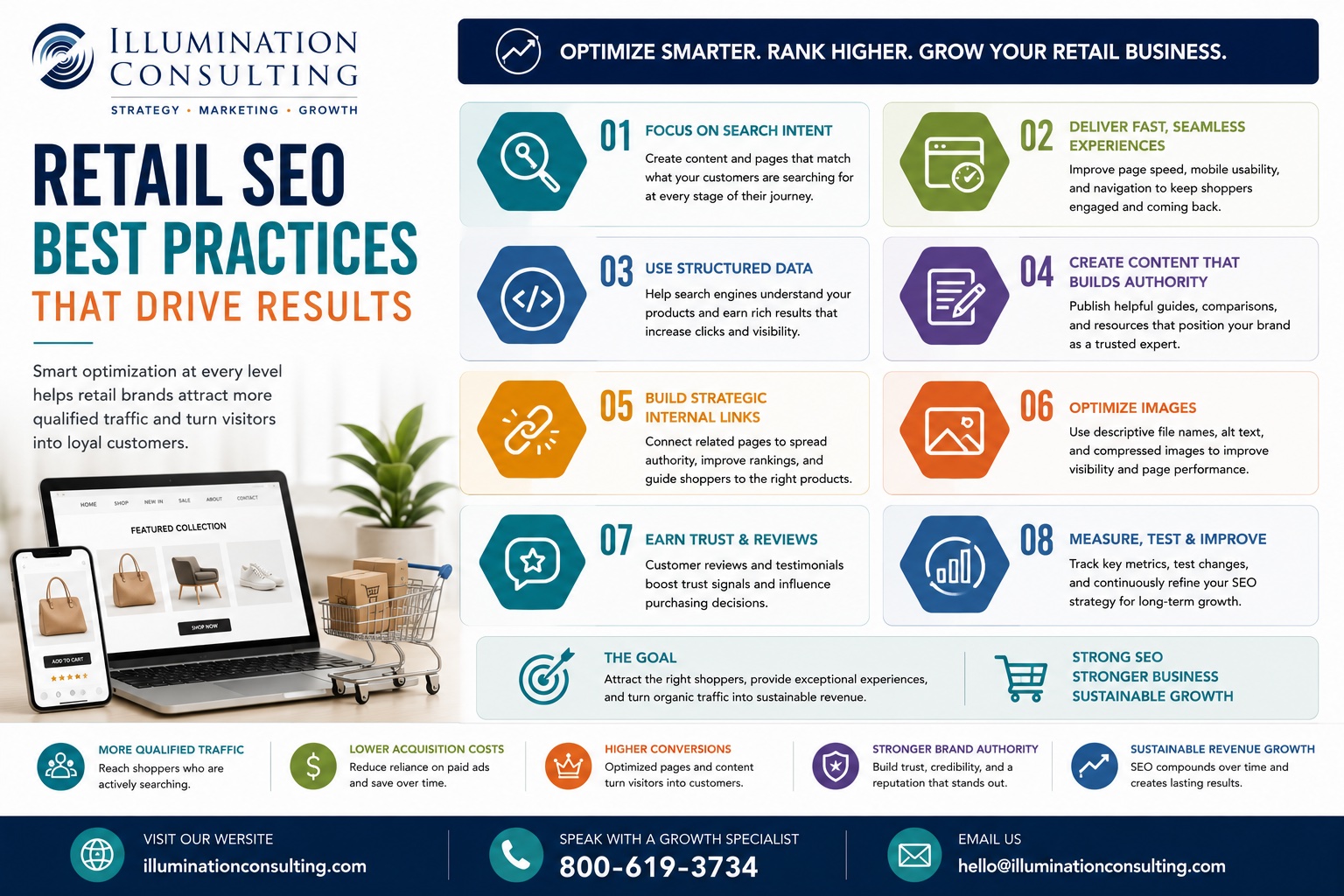
Successful retail SEO extends far beyond inserting keywords into product pages. It is a comprehensive digital strategy that combines technical optimization, exceptional user experience, content marketing, category page architecture, structured data, internal linking, and ongoing performance analysis. Together, these elements improve search visibility while creating a seamless shopping experience that encourages visitors to become loyal customers.
Unlike advertising campaigns that stop generating traffic when budgets are exhausted, search engine optimization creates long-term digital assets. Every optimized collection page, educational article, buying guide, product page, and frequently asked question strengthens your website’s authority while expanding your visibility across thousands of relevant searches. As your authority grows, so does your ability to attract consistent organic traffic and reduce customer acquisition costs over time. Retail marketing is a smart investment.
Artificial intelligence is also reshaping search optimization. AI-powered tools now help retailers uncover customer intent, identify emerging search trends, analyze competitors, optimize technical performance, and prioritize content opportunities. When combined with experienced SEO strategy and high-quality content, artificial intelligence enables retailers to make smarter decisions while accelerating long-term growth.
Retail SEO also amplifies every other marketing initiative. Content marketing expands keyword coverage and topical authority, optimized landing pages improve advertising performance, email campaigns bring visitors back to valuable content, and social media increases brand awareness that can generate backlinks and brand searches. Instead of operating independently, these channels work together to strengthen your overall digital presence.
Whether you manage a growing Shopify store, a national retail brand, or a large e-commerce operation, investing in strategic retail SEO helps increase visibility, attract qualified shoppers, strengthen brand authority, and create a sustainable source of revenue that continues growing year after year.
Why Retail SEO Matters More Than Ever
The way consumers shop has fundamentally changed.
Instead of walking into a store and browsing shelves, most purchasing journeys now begin with a search engine. Customers research products, compare brands, evaluate features, read reviews, and seek expert advice before making purchasing decisions.
Every search creates an opportunity to introduce your brand to a potential customer.
Retailers that consistently appear in search results gain a significant advantage by attracting shoppers who are already demonstrating purchase intent.
Common retail searches include:
- Best wireless headphones
- Sustainable clothing brands
- Luxury skincare products
- Modern office furniture
- Organic coffee beans
- Home fitness equipment
- Gifts under $100
- Kitchen appliance reviews
- Outdoor furniture sets
- Smart home technology
Appearing prominently for these searches helps retailers attract highly qualified traffic while reducing dependence on paid advertising.
Build an SEO-Friendly Website Architecture
Search engines reward websites that are organized logically and easy to navigate.
An effective website structure improves both user experience and crawlability, making it easier for search engines to understand relationships between products, categories, and supporting content.
A well-structured retail website typically includes:
- Homepage
- Primary product categories
- Subcategories
- Collection pages
- Individual product pages
- Brand pages
- Buying guides
- Educational resources
- Blog articles
- Frequently asked questions
This hierarchy creates clear pathways for both customers and search engines while strengthening topical relevance throughout the website.
Optimize Category Pages for High-Intent Searches
Category pages are often among the strongest organic traffic drivers for retail websites.
Many shoppers search broadly before selecting an individual product, making collection pages an important opportunity to capture early buying intent.
Strong category pages should include:
- Clear keyword-focused titles
- Helpful introductory copy
- Well-organized product filters
- Descriptive category content
- Internal links to related collections
- Frequently asked questions
- Customer reviews
- Featured products
- Optimized metadata
- High-quality imagery
Rather than functioning as simple product listings, category pages should educate shoppers while helping them narrow their choices.
Create Product Pages That Rank and Convert
Every product page should serve two purposes:
- Rank well in search engines.
- Convert visitors into customers.
High-performing product pages include:
- Unique product descriptions
- Professional photography
- Product videos
- Technical specifications
- Customer reviews
- Frequently asked questions
- Shipping information
- Return policies
- Related products
- Structured data markup
Avoid using manufacturer descriptions across multiple websites. Original content helps differentiate your products while improving search visibility.
Build Topical Authority Through Educational Content
Search engines increasingly reward websites that demonstrate expertise across an entire subject rather than individual keywords.
Retail brands can strengthen authority by publishing comprehensive educational resources that answer customer questions throughout the buying journey.
Examples include:
- Buying guides
- Product comparisons
- Industry trend articles
- Seasonal shopping guides
- Product care tips
- Style inspiration
- How-to tutorials
- Gift guides
- Frequently asked questions
- Expert advice
Educational content attracts visitors earlier in the purchasing process while supporting future conversions.
Strengthen Internal Linking
Internal links help search engines understand how your website is organized while encouraging visitors to explore additional content.
Strategic internal linking should connect:
- Category pages to products
- Products to related products
- Blog articles to collection pages
- Buying guides to product categories
- Educational resources to relevant products
- Frequently asked questions to supporting pages
- Brand pages to product collections
- Seasonal content to featured products
A thoughtful internal linking strategy distributes authority throughout your website while improving user engagement and navigation.
Leverage Artificial Intelligence to Strengthen SEO
Artificial intelligence has become one of the most valuable tools available to modern SEO professionals.
Rather than replacing strategic planning, AI accelerates research, uncovers optimization opportunities, and helps retailers make more informed decisions based on real customer behavior and search trends.
Retail businesses are using AI to improve:
- Keyword research
- Customer intent analysis
- Competitive research
- Content planning
- Technical SEO audits
- Internal linking recommendations
- Product page optimization
- Content gap analysis
- Search trend forecasting
- Performance reporting
When combined with experienced SEO strategy, artificial intelligence helps retailers build stronger search visibility while improving operational efficiency.
Improve Technical SEO Performance
Outstanding content alone will not produce consistent search rankings if your website suffers from technical issues.
Technical SEO provides the foundation that allows search engines to crawl, understand, and index your website efficiently.
Important technical elements include:
- Fast page loading speeds
- Mobile responsiveness
- Secure HTTPS encryption
- XML sitemaps
- Optimized robots.txt files
- Clean URL structures
- Canonical tags
- Structured data
- Image optimization
- Core Web Vitals
Regular technical audits help identify issues before they negatively affect rankings or customer experience.
Optimize Images for Search
Retail websites often contain hundreds—or even thousands—of images.
When optimized correctly, product photography becomes another valuable source of search visibility while improving page performance.
Best practices include:
- Descriptive file names
- Optimized alt text
- Modern image formats
- Image compression
- Responsive image sizing
- Product-specific captions
- Structured image data
- Lazy loading
- High-quality resolution
- Consistent branding
Well-optimized images improve both accessibility and opportunities to appear within Google Image Search.
Build Authority Through High-Quality Backlinks
Backlinks continue to be one of Google’s strongest indicators of trust and authority.
Rather than pursuing large quantities of low-quality links, retailers should focus on earning backlinks from respected, relevant websites.
Strong backlink opportunities include:
- Industry publications
- Product review websites
- Influencer collaborations
- Digital PR campaigns
- Guest articles
- Supplier partnerships
- Trade associations
- Shopping guides
- Business directories
- Original research and reports
High-authority backlinks strengthen domain authority while improving rankings across your entire website.
Measure SEO Success Beyond Rankings
While keyword rankings remain important, they should never be the only indicator of SEO success.
Retail brands should focus on business metrics that directly support revenue growth.
Important Retail SEO Metrics
Monitor performance using metrics such as:
- Organic website traffic
- Revenue from organic search
- Conversion rate
- Average order value (AOV)
- Customer acquisition cost (CAC)
- Customer lifetime value (LTV)
- Search visibility
- Click-through rate (CTR)
- Indexed pages
- Backlink growth
- Returning visitors
- Revenue by landing page
Evaluating SEO through a business lens helps retailers prioritize improvements that generate measurable financial results.
Common Retail SEO Mistakes
Many retailers unintentionally limit their organic growth by overlooking foundational SEO practices.
Common mistakes include:
- Duplicate product descriptions
- Thin category pages
- Poor internal linking
- Slow-loading websites
- Missing metadata
- Broken links
- Weak mobile experiences
- Ignoring structured data
- Publishing inconsistent content
- Neglecting ongoing SEO maintenance
Correcting these issues often leads to meaningful improvements in both search visibility and customer experience.
SEO Is a Long-Term Competitive Advantage
Unlike short-term advertising campaigns, SEO compounds over time.
Every optimized page, educational resource, buying guide, and product description contributes to a stronger digital presence that becomes increasingly difficult for competitors to replicate.
Retail brands that consistently invest in search optimization often experience:
- Lower customer acquisition costs
- Greater brand authority
- Higher-quality website traffic
- Increased customer trust
- Improved conversion rates
- Stronger competitive positioning
- More sustainable revenue growth
- Reduced dependence on paid advertising
- Greater marketing efficiency
- Long-term business resilience
Viewed strategically, SEO is not simply a marketing tactic—it is a business asset that continues generating value long after the initial investment.
Frequently Asked Questions
What is retail SEO?
Retail SEO is the process of optimizing an e-commerce website to improve its visibility in search engines. It includes technical SEO, product page optimization, category page optimization, content marketing, structured data, internal linking, and user experience improvements designed to attract qualified shoppers and increase organic revenue.
How long does retail SEO take to produce results?
SEO is a long-term investment. While technical improvements and content updates can produce early gains within a few months, sustainable growth typically comes from consistent optimization over time. The most successful retail brands treat SEO as an ongoing business strategy rather than a one-time project.
Why are category pages important for SEO?
Category pages often target broader, high-intent search queries that shoppers use before selecting individual products. Optimized collection pages improve search visibility while helping customers navigate your product catalog more efficiently.
Does artificial intelligence improve SEO?
Yes. Artificial intelligence helps retailers analyze search intent, identify keyword opportunities, optimize content, monitor competitors, improve technical performance, and streamline SEO workflows. AI works best when combined with experienced strategic planning and human editorial oversight.
Is SEO better than paid advertising?
SEO and paid advertising serve different purposes and deliver the strongest results when used together. Paid advertising generates immediate visibility, while SEO creates long-term organic traffic that continues producing value long after advertising campaigns end.
Transform Search Visibility into Lasting Business Growth
The most successful retail brands understand that search engine optimization is about much more than improving rankings. It’s about creating exceptional digital experiences that help customers discover products, answer important questions, and make confident purchasing decisions. Every optimized category page, product description, buying guide, and educational resource strengthens your authority while expanding opportunities to connect with shoppers actively searching for what you offer.
Retail SEO is also one of the few retail marketing investments that continues to appreciate over time. As your website earns authority, publishes valuable content, and improves technical performance, it becomes increasingly capable of generating qualified organic traffic without relying exclusively on paid advertising. This creates a scalable foundation for sustainable revenue growth while lowering customer acquisition costs and strengthening your competitive position.
At Illumination Consulting, we help retail brands develop comprehensive SEO strategies that combine technical expertise, content marketing, AI-powered optimization, e-commerce best practices, and ongoing performance analysis. Our goal is to help businesses improve search visibility, attract qualified customers, increase organic revenue, and build long-term digital assets that continue delivering measurable business results.
Get Your Growth Strategy today or Speak with a Growth Specialist to discover how a customized retail SEO strategy can help your business strengthen its search presence, outperform competitors, and transform search visibility into sustainable revenue.