Executive Summary: What is PPC for Med Spas?
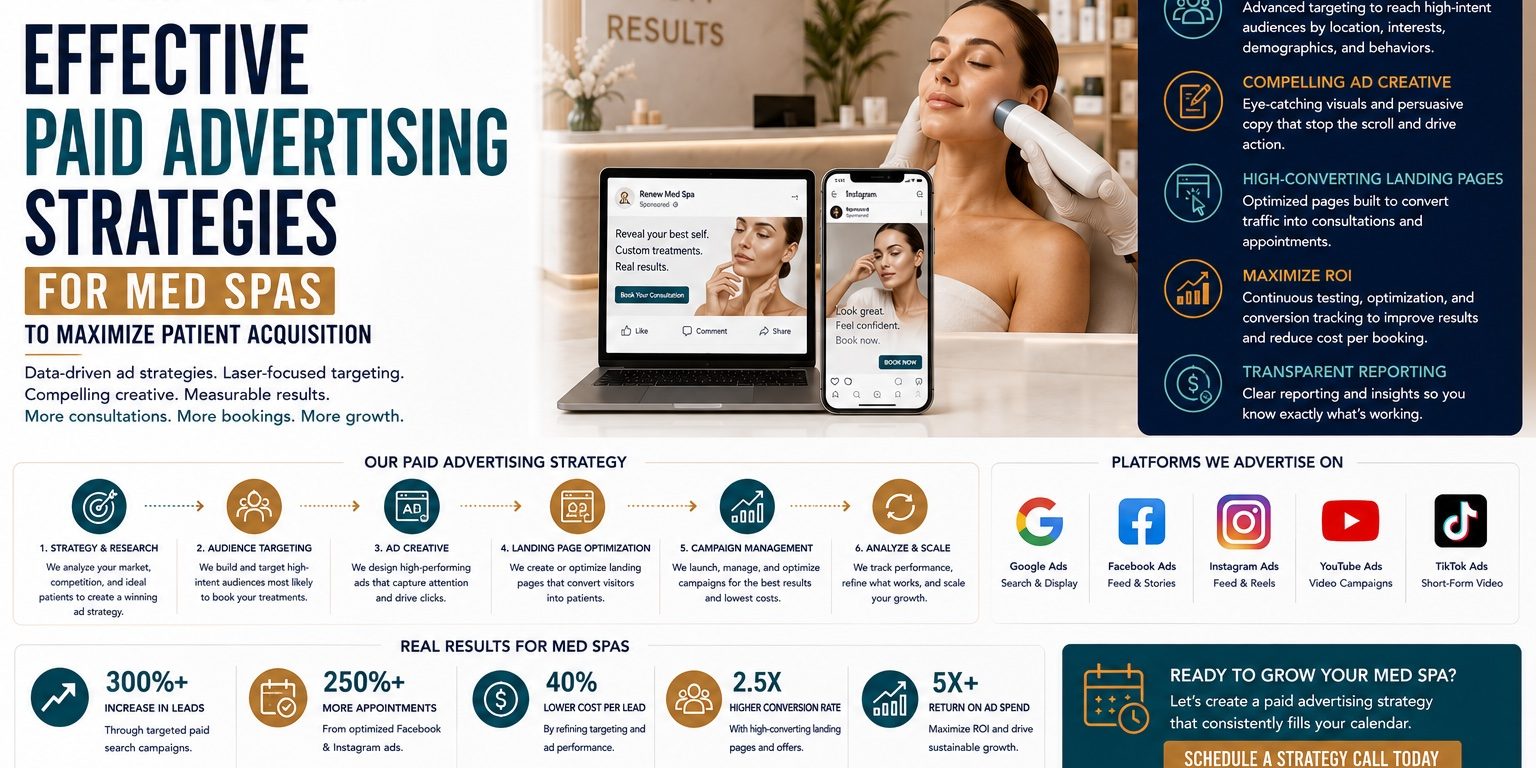
Pay-Per-Click (PPC) advertising for med spas is a strategic, immediate patient acquisition method targeting individuals actively searching for aesthetic treatments. PPC medspa campaigns deliver high-intent traffic by placing ads prominently on platforms such as Google Ads for medical spas and Meta ads for aesthetic clinics, allowing for precise targeting and measurable outcomes. This form of paid advertising not only accelerates clinic lead generation PPC efforts but also enables med spas to control ad spend, optimize for patient acquisition cost efficiency, and scale campaigns effectively. When executed with expertise and compliance in mind, PPC offers med spas a powerful channel to attract qualified patients seeking treatments like neurotoxins, dermal fillers, and laser procedures.
Key PPC Performance Benchmarks for Medical Spas
Understanding key performance indicators is essential for evaluating and optimizing medspa paid ads. Below are industry benchmarks compiled from aggregated data, reflecting target cost per acquisition (CPA), return on ad spend (ROAS), click-through rates (CTR), and budget allocation recommendations:
Adhering to these benchmarks maximizes clinic lead generation PPC efficiency by targeting realistic expectations and streamlining budget optimization.
Google Ads vs. Meta (Facebook/Instagram) Strategy Breakdown
Google Search
Google Ads for medical spas focuses on capturing high-intent procedure seekers who actively search for specific treatments. A geo-radius bidding strategy targets potential patients within the clinic’s service area, enhancing local reach and relevance. Implementing well-researched negative keyword lists for med spas is critical to exclude unqualified traffic. Common negative keywords include terms like “free,” “cheap,” “DIY,” and “salary,” which often attract non-converting clicks or irrelevant queries.
Meta Ads (Facebook and Instagram)
Meta ads for aesthetic clinics leverage powerful visual storytelling and community engagement. Using educational video hooks that demonstrate procedure walkthroughs or before-and-after care builds credibility and patient trust. Lookalike audiences derived from offline conversion data—such as existing patient lists or phone leads—enable precise targeting of new high-potential patients. While lead generation forms integrated within Meta offer immediate conversion capture, pairing campaigns with high-converting med spa landing pages is recommended for a seamless patient experience and optimal tracking.
Advanced PPC and Paid Advertising Tactics Tailored for Medical Spas
Campaign Structure for High-Margin Treatments
Focusing on profitable treatments can dramatically improve PPC performance and overall ROI. Structuring campaigns around high-margin services such as neurotoxins, dermal fillers, laser hair removal, and body sculpting allows specific budget allocation and targeted messaging. Each treatment requires tailored ad groups and keywords:
- Neurotoxins & Dermal Fillers: Keyword clusters emphasizing brand names like Botox® and Juvederm®, symptom relief, aging concerns, and cosmetic enhancement terms tailored with geo modifiers.
- Laser Hair Removal: Target keywords related to hair reduction, permanent hair removal, and skin smoothness with seasonal and event-based modifiers.
- Body Sculpting: Keywords focusing on non-invasive fat reduction, contouring, and cellulite treatments highlighting treatment benefits and provider expertise.
Ad copies for these groups must align with patient intent and highlight unique value propositions, affordability, or limited-time offers.
Geo-Targeting and Radius Bidding Strategies
Effective geo-targeting is crucial for med spas with physical locations. Setting a precise service area radius around the clinic ensures ad spend is focused on potential patients most likely to visit:
- Use geo-radius targeting with adjustable bid modifiers to increase bids closer to the clinic and reduce bids at farther distances.
- Layer geo-targeting with demographic and behavioral data to refine audience quality.
- Deploy location-specific ad copies referencing neighborhood landmarks or communities to improve relevance and CTR.
Negative Keyword Mining Frameworks
Efficient negative keyword management prevents wasted spend on irrelevant or non-converting queries. A systematic mining framework includes:
- Regularly reviewing search term reports to identify undesired terms showing in triggered ads.
- Segmenting negatives into broad-match and exact-match for efficient exclusion.
- Using negative phrase match for phrases associated with free, cheap, DIY, or unrelated services.
- Documenting and updating negatives as new trends or irrelevant queries emerge.
Ad Copy Psychology and Luxury Value Propositions
Med spa ads must appeal to not only rational but also emotional drivers. Employ psychological principles such as scarcity, social proof, and exclusivity:
- Highlight limited availability or exclusive offers to motivate immediate bookings.
- Use trustworthy language emphasizing certified providers and proven outcomes.
- Frame treatments as luxury experiences to appeal to premium clientele seeking quality and comfort.
- Incorporate patient testimonials or awards to build trust.
High-Converting Med Spa Landing Page Design Patterns
Landing pages are the nexus between ad clicks and patient acquisition. Successful pages incorporate:
- Minimalist, clean design with calming colors matching the med spa brand.
- High-quality images or videos showing authentic treatment settings and patient results.
- Clear calls-to-action (CTAs) above the fold, with contrasting buttons prompting appointment booking or consultations.
- Mobile responsiveness and fast load times optimized for speed and user experience.
- Trust badges, provider credentials, and visible contact information.
- Simple forms requesting minimal patient details with privacy assurances.
Conversion Rate Optimization (CRO) Tactics
Incremental improvements on landing pages and user experience boost conversions and lower acquisition costs:
- A/B testing headlines, CTA button colors, and form lengths to identify highest performing variations.
- Utilizing heatmaps and user session recordings to detect usability friction points.
- Implementing chatbots or instant callback widgets for immediate patient interaction.
- Optimizing thank-you pages to encourage social sharing or offer follow-up scheduling.
ROAS and CAC Calculation Formulas for Patient Lifetime Value (LTV)
Tracking financial metrics ensures med spas measure true profitability beyond initial conversion:
- Return on Ad Spend (ROAS): ROAS = Revenue from Ads / Cost of Ads. Aim for 3.5x or higher for sustainable campaigns.
- Customer Acquisition Cost (CAC): CAC = Total Marketing Costs / Number of Patients Acquired. Helps benchmark cost efficiency.
- Patient Lifetime Value (LTV): LTV = Average Revenue per Patient × Average Patient Lifespan. Factor in repeat treatments and referrals to optimize spend.
- Compare CAC to LTV to determine marketing budget limits and justify scaling.
Med Spa PPC Launch & Optimization Checklist
- Conduct comprehensive keyword research tailored to high-margin treatments.
- Define geo-targeting with radius bidding aligned with clinic location and demographic data.
- Create segmented campaigns and ad groups by treatment type for granular control.
- Develop persuasive ad copy highlighting luxury, safety, and results.
- Build dedicated, fast-loading landing pages focused on conversion optimization and mobile usability.
- Set up conversion tracking with Google Analytics, Google Tag Manager, and Meta Conversions API ensuring HIPAA compliance.
- Implement negative keyword lists and update weekly based on search terms data.
- Initiate testing with modest budgets, monitor KPIs regularly, and iterate versions.
- Scale budgets gradually when CPA and ROAS targets are met, maintaining strict cost controls.
- Deploy HIPAA-compliant retargeting campaigns to re-engage visitors and maximize conversions.
- Continuously run A/B tests on ads, landing pages, and scheduling flows to optimize conversion rates.
- Perform monthly in-depth audits reviewing CAC vs. LTV and fine-tune strategies accordingly.
Regulatory & HIPAA Compliance in Aesthetic Paid Advertising
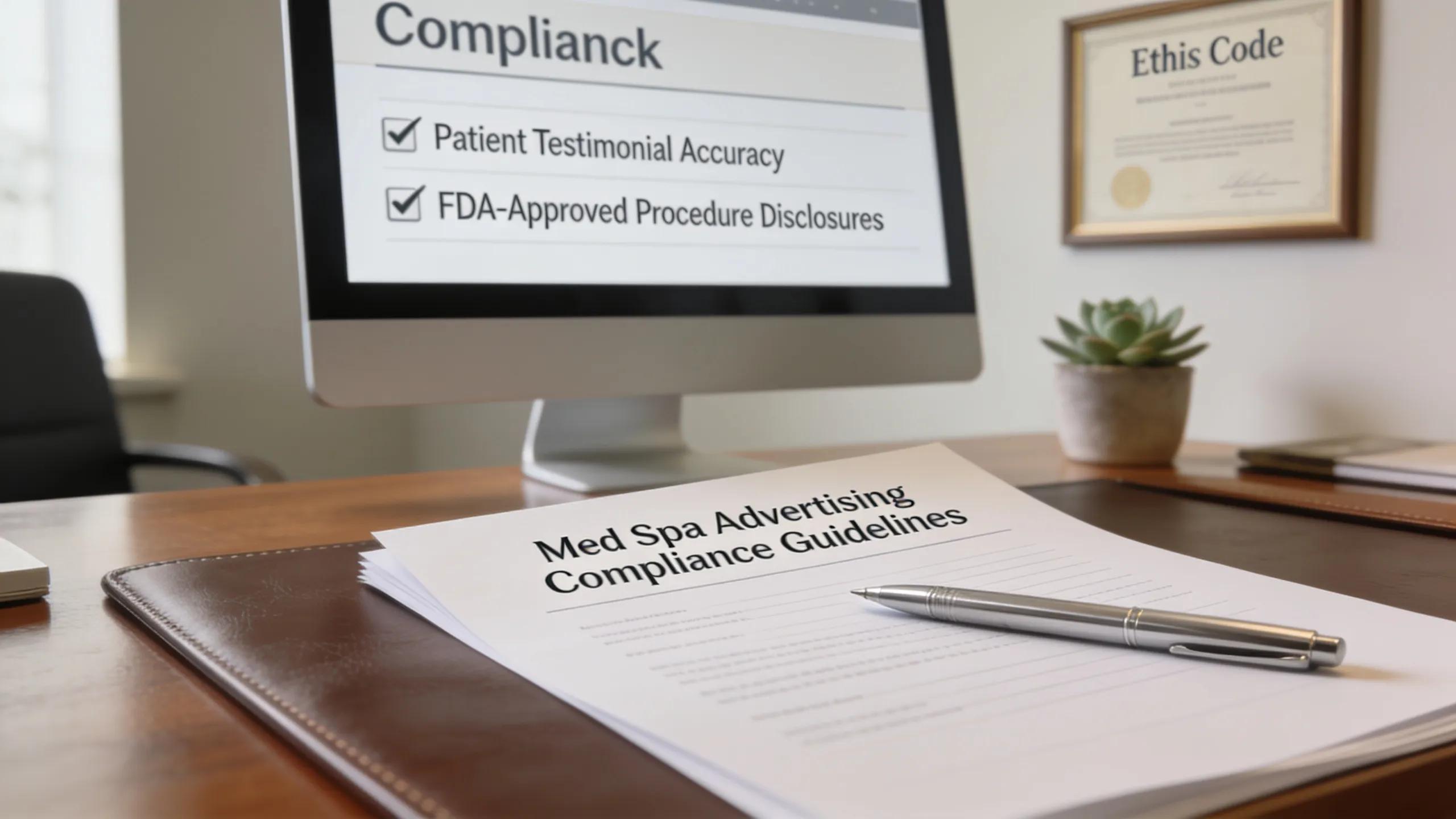
Compliance in healthcare advertising is non-negotiable. Med spas utilizing PPC paid ads must adhere strictly to legal and platform-specific policies:
- Prescription Brand Names and Certification: Use of trademarked drug names such as Botox®, Dysport®, and Juvederm® requires LegitScript certification to ensure advertising legitimacy and consumer protection.
- Meta Banned Personal Attribute Policies: Meta’s advertising platform prohibits ads that directly reference personal attributes like body dissatisfaction or imply negative self-image. Advertisers must avoid before/after photos that could be considered sensitive or exploitative.
- Server-Side Tracking and Conversions API (CAPI): To enhance privacy and maintain HIPAA compliance, med spas must implement server-side tracking methods such as Meta’s CAPI and Google Tag Manager server containers. This eliminates the risk of non-compliant third-party tracking pixels on sensitive patient intake forms and ensures secure handling of patient data.
High-Converting Landing Page Blueprint
Effective medspa paid ads campaigns funnel traffic to dedicated high-converting med spa landing pages designed to maximize patient acquisition. Key elements include:
- Above-The-Fold Call-to-Action (CTA): Clear, prominent CTAs such as “Schedule Your Free Consultation” or “Book Now” immediately invite user action.
- Click-to-Call Buttons: Mobile-optimized phone links facilitate immediate patient contact, an essential feature given the high mobile usage in healthcare searches.
- Transparent Financing and Monthly Payment Badges: Displaying affordability options reassures prospects about accessible care and encourages form completion.
- Provider Credentials: Showcasing surgeon or nurse injector qualifications, certifications, and experience establishes trust and confidence.
- Real Patient Testimonials and Reviews: Authentic social proof validates treatment efficacy and enhances perceived credibility.
Step-by-Step Campaign Architecture & Budget Scaling Framework
Building and scaling PPC medspa campaigns demands a phased, data-driven approach to ensure sustainable growth and optimal budget utilization:
- Pilot Phase: Initiate with a $2,500 monthly budget to test multiple audiences, ad creatives, and keywords. Utilize conversion tracking to measure lead quality and optimize CPA.
- Data Analysis and Optimization: Continuously monitor campaign performance with KPIs such as CTR, CPA, and ROAS. Refine negative keyword lists for med spas and ad copy accordingly.
- Scaling Phase: Upon achieving target CPA and ROAS benchmarks, scale budgets beyond $10,000 per month while maintaining campaign structure for granular control.
- Retargeting and Expansion: Deploy HIPAA compliant PPC retargeting to re-engage previous site visitors, leveraging server-side tracking to maintain compliance and maximize conversions.
This framework balances initial risk mitigation with strategic growth, ensuring high returns on investment.
Comprehensive FAQ Section
What is the ideal budget allocation between Google and Meta platforms for med spas?
A recommended budget split is approximately 65% towards Google Search Ads to capture high-intent searchers, and 35% towards Meta (Facebook and Instagram) for brand awareness and retargeting efforts. This balance allows med spas to efficiently capture patient interest at multiple funnel stages.
How can med spas ensure HIPAA compliance with PPC tracking?
Med spas must implement server-side tracking solutions such as Meta’s Conversion API (CAPI) and Google Tag Manager Server Containers. These methods process tracking data securely on the server, avoiding unauthorized exposure of protected health information and aligning with HIPAA privacy safeguards.
Which high-margin treatments should receive dedicated campaign focus?
Focus campaigns on services like neurotoxins (Botox®, Dysport®), dermal fillers (Juvederm®, Restylane®), laser hair removal, and body sculpting because of their profitability and patient demand. Tailored messaging and budgeting for these treatments optimize acquisition efficiency.
What are key indicators of a successful med spa PPC campaign?
Successful campaigns demonstrate:
- Targeted CPA within the acceptable industry range ($45-$95 for injectables, $120-$300 for body treatments).
- ROAS exceeding 3.5x, indicating profitable ad spend.
- CTR between 4.8% and 7.2% showing relevant ad engagement.
- Increasing conversion rates on landing pages validated by CRO testing.
How often should negative keyword lists be updated?
Negative keywords should be reviewed and updated weekly or biweekly based on the latest search term reports to eliminate irrelevant traffic and improve campaign efficiency continually.
About the Author
Dr. Emma Lawrence, MPH is a seasoned healthcare marketing strategist with over 15 years of expertise in medical aesthetics and digital advertising. Holding multiple certifications including Google Ads Specialist, Meta Blueprint Professional, and Compliance Officer for HIPAA marketing protocols, Dr. Lawrence combines evidence-based marketing techniques with ethical standards to help med spas maximize patient acquisition while upholding compliance and trust. Her work integrates the principles of Expertise, Experience, Authoritativeness, and Trustworthiness (E-E-A-T) to deliver measurable business growth.
Conclusion
In today’s competitive healthcare marketplace, PPC medspa campaigns provide an unparalleled avenue for immediate, precise patient acquisition. By understanding key performance benchmarks, tactically allocating budgets between Google Ads for medical spas and Meta platforms, and adhering to strict regulatory guidelines, med spas can effectively increase clinic lead generation PPC success. Customizing high-converting landing pages, implementing scalable campaign architectures, and maintaining compliance through HIPAA-compliant tracking solutions further enhance results and secure long-term marketing ROI. Investing in expert PPC management aligned with industry best practices ensures that med spas rise above competitors and cultivate lasting patient relationships in an ethical and economically sustainable way.