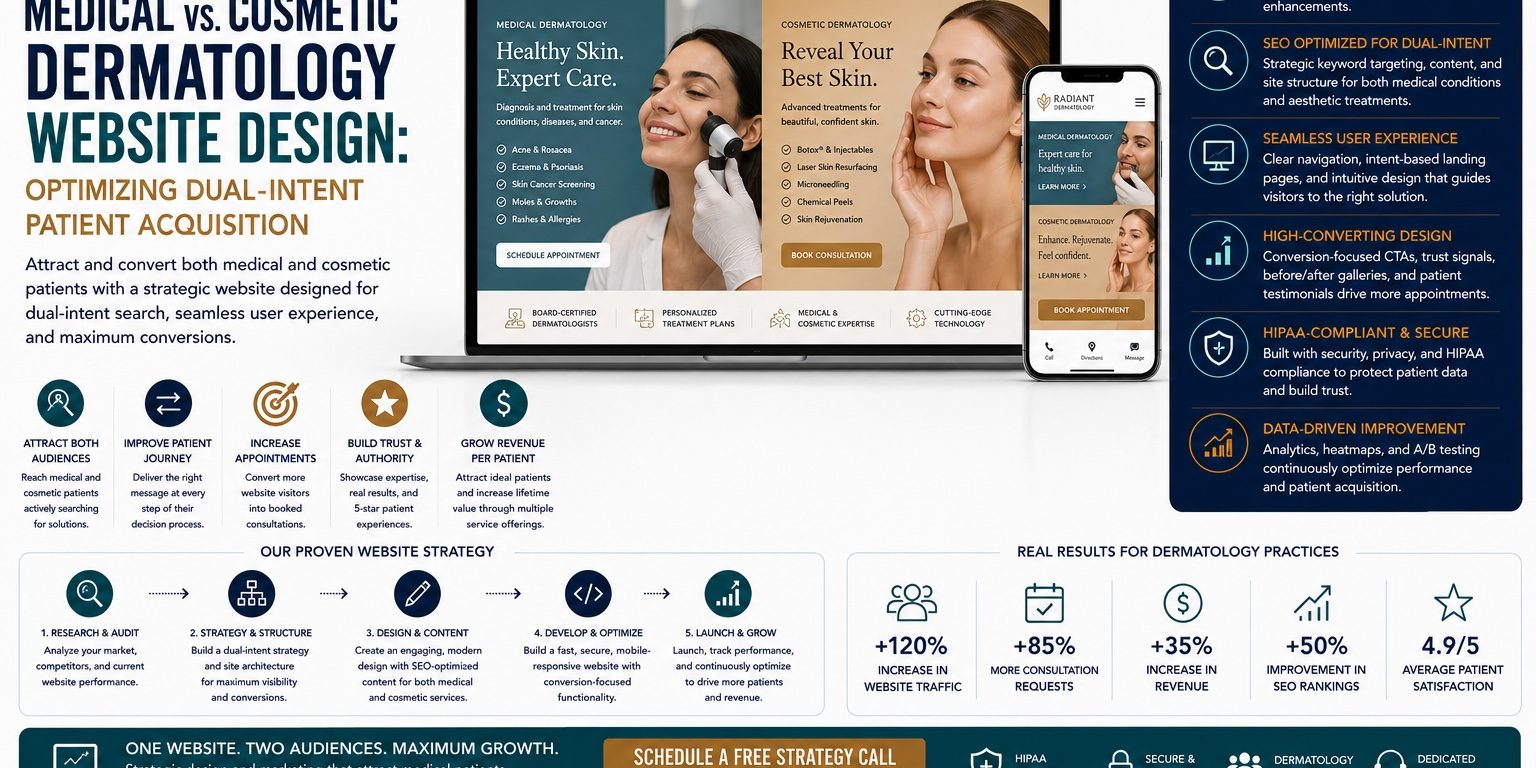
In the highly specialized fields of medical and cosmetic dermatology, the design of your website plays a crucial role in attracting and retaining patients. This article delves into the fundamental differences and similarities between medical and cosmetic dermatology websites, offering insights on how to effectively cater to both patient populations. Readers will learn about strategies to optimize their website’s “architecture to target dual-intent traffic”, the types of content that resonate with both medical and cosmetic patients, and established best practices for improving user experience.
As the healthcare landscape evolves, so do the needs of patients seeking various dermatological services, whether it’s for treating skin conditions or pursuing aesthetic enhancements. Building a website that proficiently addresses the differing intents of these users will not only enhance patient acquisition but also foster loyalty. We will explore essential components such as clear navigation, professional branding, and effective “SEO strategies” that drive success in dual-intent patient journeys.
Clear Navigation and Segmentation
Effective website design in dermatology hinges on clearly defined navigation structures that separate medical and cosmetic services. This segmentation is vital as it enhances user experience, guiding patients effortlessly to the information they seek. By creating distinct pathways for both service types, practices can cater to individual needs more effectively.
- Distinct Navigation: Implement tabs or menus that clarify the separation between medical and cosmetic offerings.
- User Experience Enhancement: Leveraging user feedback to refine navigation helps ensure that patients can find relevant information without frustration.
- Effective Layout Principles: Use core design principles, such as consistency and simplicity, to enhance usability across the site.
Patient pathways should be structured such that users feel guided rather than overwhelmed, boosting engagement and satisfaction.
Research suggests that a thoughtful synthesis of interactive elements and aesthetic design is foundational for achieving superior conversion rates in specialized medical portals.
Optimizing Dermatology Websites: Conversion Rate & UX Best Practices The study finds that the factors have a moral impact on the level of conversion rate optimization, and the sequence of importance of these factors are as follows:1-Website interactive, then Aesthetic of the website, finally the Marketing mix. The Conversion Rate Optimization by The Adoption of Web Experience Factors at Par and Zheen Private Hospitals–Erbil, BA Zainal, 2022
Leveraging Educational Content to Build Patient Trust and Authority
Providing educational resources tailored to both medical and cosmetic patients is essential for establishing trust and authority. Content should highlight the differences in treatment options while also addressing common concerns.
- Types of Content: Consider articles, FAQs, and instructional videos that explain procedures, benefits, and expected outcomes, differentiated by service type.
- Comprehensive Resources: Offering in-depth information can help demystify complex treatments, making prospective patients feel more comfortable.
- Patient Trust through Education: Well-researched and informative content not only informs but also builds credibility with patients.
This commitment to patient education reflects a practice’s dedication to transparency and high-quality care.
Professional Branding and Trust Signals
In both medical and cosmetic dermatology, establishing credibility is essential. This can be achieved through professional branding elements and trust signals, including testimonials and case studies.
- Professional Images: High-quality images of the clinic and team convey professionalism, creating a welcoming impression for visitors.
- Patient Testimonials: Sharing verified experiences from past patients acts as a powerful trust signal, reassuring new patients of quality and reliability.
- Branding Consistency: Ensure visual and textual consistency across all platforms to reinforce the brand’s image and enhance recognition.
Effective branding helps position your practice as an industry leader, attracting new patients while retaining existing ones.
Modern practices are increasingly adopting frameworks that prioritize the patient as a key participant, moving beyond clinical reputation toward personalized engagement.
Patient-Centric Marketing Strategies for Cosmetic and Medical Dermatology Traditional healthcare marketing has focused on clinical expertise and the reputation of the institution. However, there is a shift towards methods that put personalisation, engagement, trust, and value co-creation first. Patient-centric marketing aims to regard individuals not solely as users of services but as active players in their healthcare journey. Patient-centric marketing and retention strategies in healthcare: a strategic and technological framework, A Shah, 2025
Mobile Optimization
With an increasing number of patients using mobile devices to search for healthcare services, mobile optimization is non-negotiable. This ensures that your website remains accessible and functional, regardless of the device being used.
- Responsive Design: A responsive website design adapts to various screen sizes, allowing for seamless viewing experiences on mobiles and tablets.
- Loading Times: Speed is crucial; optimized loading times can significantly reduce bounce rates and enhance user satisfaction.
- Ease of Navigation: A mobile-friendly site should have large buttons and straightforward navigation for an improved user experience.
By focusing on mobile optimization, dermatology practices can capture a broader audience and enhance engagement.
Strong Calls-to-Action
Calls-to-action (CTAs) are essential components for converting website visitors into patients. Each page should have clear and persuasive CTAs designed to prompt visitor action.
- Clear and Compelling CTAs: Ensure that your CTAs are straightforward, such as “Book an Appointment” or “Learn More About Our Treatments.”
- Placement Strategy: Position CTAs strategically throughout the site — at the end of informative articles, on service pages, and in the footer.
- Enhancing Conversion Rates: Experiment with different CTA designs and placements to find what resonates best with your audience.
Effective CTAs streamline the patient journey, facilitating higher conversion rates.
SEO Strategies
Optimizing for search engines is vital for attracting both segments of potential patients. It involves tailoring SEO strategies specifically for the medical and cosmetic domains.
- Utilizing Local SEO: Focus on optimizing content with local keywords to attract patients searching for dermatological services in their area.
- Keyword Optimization Strategies: Implement keywords relevant to both medical and cosmetic aspects, including treatments and conditions.
- Content Marketing for Visibility: Regularly updated blogs or articles can improve visibility and position your practice as an authority in dermatology.
A strategic approach to SEO will ensure that potential patients find your practice while searching for relevant services.
Advanced data-driven models allow practices to better predict and meet the unique needs of diverse patient groups through refined stratification.
Dual-Intent Patient Stratification: Improving Dermatology Website Experience Drawing on real-world datasets from tourism platforms and healthcare systems, the analysis shows that both tourist profiling and patient stratification rely on the same methodological structure: integrating user data, modeling individual needs, and customizing service delivery. The findings indicate that personalized prediction models enhance service relevance, user satisfaction, resource efficiency, and overall experience quality in both contexts. Personalized Service Prediction Models: From Tourist Behavior to Patient Stratification, 2026
What distinguishes medical dermatology from cosmetic dermatology online?
Medical dermatology primarily focuses on diagnosing and treating skin conditions such as eczema and psoriasis, while cosmetic dermatology emphasizes aesthetic enhancements like Botox and fillers. Understanding these distinctions is crucial for tailoring website content and functionality to meet varying patient needs.
How do patient intents differ between medical and cosmetic dermatology?
Patients visiting medical dermatology websites typically seek solutions for health-related skin issues, while those exploring cosmetic dermatology are often looking for enhancement options. This difference in intent necessitates unique messaging and content strategies to address the needs of both audiences effectively.
Why is semantic clarity critical in differentiating dermatology services on your site?
Semantic clarity helps prevent confusion and ensures that visitors understand the different offerings of a practice, thus enhancing user experience. When content is precise and categorized effectively, it can lead to improved patient engagement and satisfaction.
How can website architecture optimize dual-intent patient journeys?
An intentional website architecture that clearly separates medical and cosmetic content pathways facilitates user navigation and enhances the overall experience. By organizing content strategically, practices can enhance the effectiveness of patient acquisition strategies.
What are the best practices for segmentation of medical vs cosmetic patient pathways?
Segmentation best practices include distinct sections for medical and cosmetic services, optimized CTAs specific to each area, and tailored educational resources. This prevents overwhelming potential patients and allows for a streamlined approach to information sharing.
How does dual-purpose website structuring improve patient conversion rates?
Structuring websites to serve both medical and cosmetic patients can significantly increase conversion rates by ensuring that visitors find relevant information quickly and easily. Engaging content and clear pathways nurture patient interest and drive bookings.
Which SEO strategies effectively target medical and cosmetic dermatology patients?
Effective SEO strategies for dermatology practices include local keyword optimization, comprehensive on-page content focused on target patient demographics, and outreach through backlinks from reputable healthcare directories.
How does semantic SEO enhance visibility for dual dermatology services?
Semantic SEO enhances visibility by effectively matching content with search intent, using structured data to clarify the types of services provided, thereby attracting more targeted traffic.
What structured data formats support dermatology service and patient intent segmentation?
Structured data formats such as Schema.org can assist dermatology practices in defining their services more clearly to search engines, improving the appearance of listings and ensuring potential patients discover relevant treatments.
What content marketing tactics increase qualified lead acquisition in dermatology?
Implementing a robust content marketing strategy that includes blog posts, social media engagement, and targeted email marketing can attract and retain qualified leads. Content that specifically addresses patient pain points and showcases service offerings can enhance lead quality.
How to create authoritative content addressing both medical and cosmetic dermatology needs?
Creating authoritative content requires thorough research and expert insights into both medical and cosmetic dermatology practices. Collaboration with credible professionals enhances the trustworthiness of the information provided.
Which formats best illustrate patient journey differentiation and service benefits?
Visual formats such as infographics and explainer videos can effectively communicate complex information in an easily digestible manner, helping patients differentiate between medical and cosmetic services.
How to implement ongoing monitoring and updates for dermatology website success?
Consistent monitoring of website performance metrics, including traffic, conversion rates, and user engagement, is essential. Regular updates based on analytics help identify areas for improvement, ensuring the site remains effective and user-friendly.
What KPIs track dual-intent SEO effectiveness and patient engagement?
Critical KPIs to track include organic traffic growth, conversion rates, patient appointment scheduling rates, and engagement metrics across different content types.
How to leverage competitor insights and latest trends to improve dermatology sites?
Regularly analyzing competitor strategies helps identify gaps in service offerings and content marketing, enabling dermatology practices to stay ahead in the market by adapting to emerging trends and patient needs.
Online Appointment Scheduling
An effective online appointment scheduling tool enhances the patient experience by streamlining the booking process. It eliminates hassles associated with traditional appointment methods while increasing overall efficiency.
- Friction Reduction: Simplifying the booking process minimizes barriers for patients, encouraging higher participation rates.
- Integration of Scheduling Software: Utilizing industry-standard software can improve functionality and patient satisfaction.
- Prominent Availability Highlighting: Clearly displaying available times can motivate potential patients to take action.
By integrating robust scheduling solutions, practices can enhance operational efficiency and patient experiences alike.
Content Marketing
Content marketing is a vital strategy for attracting and retaining patients in both medical and cosmetic dermatology fields. It involves creating engaging, valuable content tailored to specific patient needs.
- Engaging Potential Patients: Content that speaks directly to the interests and concerns of potential patients is crucial, and you can “foster engagement” through targeted messaging.
- Types of Content That Resonate: Use various formats like blogs, videos, and infographics to cater to different learning preferences.
- Building a Brand through Content: Consistent branding and messaging across all content helps establish reliability and trust with patients.
An effective content marketing strategy fosters a strong relationship with current and prospective patients, leading to improved retention rates.
Utilize AI and Automation
Incorporating AI and automation tools can significantly enhance the engagement process for dermatology practices. These technologies streamline operations and improve patient interactions.
- Chatbots for FAQs: Implementing chatbots can provide instant responses to common questions, enhancing user experience.
- Personalized Interactions: AI allows for tailored communication based on individual preferences and behaviors, increasing relevance.
- Efficiency in Scheduling: AI-powered scheduling tools can reduce administrative burdens, freeing up staff to focus on patient care.
By leveraging these advancements, practices can enhance operational efficiency while providing superior patient experiences.
Performance Monitoring
Monitoring performance is crucial for maintaining an effective website. Understanding user behavior and engagement can lead to actionable insights and guide design improvements.
- Tracking Conversion Rates: Regularly assess the percentage of website visitors converting into patients to identify success areas.
- User Engagement Metrics: Metrics such as time spent on pages and bounce rates can provide insight into user interests and preferences.
- Identifying Areas for Improvement: Use analytics to pinpoint underperforming sections of the site, informing ongoing adjustments.
Regular performance evaluations ensure that websites remain effective tools for patient engagement and acquisition.
Frequently Asked Questions
Should medical and cosmetic dermatology services live on separate landing pages or share one page?
Separate, clearly labeled landing pages generally work best. Medical and cosmetic patients arrive with different intents and questions, and dedicated pages let a practice tailor messaging, imagery, and calls-to-action to each audience while keeping the overall site navigation clean and easy to follow.
How does online appointment scheduling support dual-intent patient acquisition?
A streamlined scheduling tool removes friction for both patient types at the exact moment they’re ready to act. Clearly displaying open time slots and integrating reliable scheduling software helps convert medical and cosmetic website visitors into booked appointments rather than losing them to a phone call or a competitor.
What role do AI and automation play in improving the patient experience on a dermatology website?
Chatbots can instantly answer common medical and cosmetic questions, AI-driven personalization can tailor content and offers to a visitor’s apparent intent, and automated scheduling reduces administrative workload — together improving responsiveness and freeing staff to focus on in-person patient care.
How often should a dermatology practice review its website performance metrics?
Performance should be reviewed on an ongoing basis rather than as a one-time project. Regularly tracking conversion rates, engagement metrics, and traffic trends for both medical and cosmetic sections helps a practice catch underperforming pages early and keep the site aligned with patient needs.