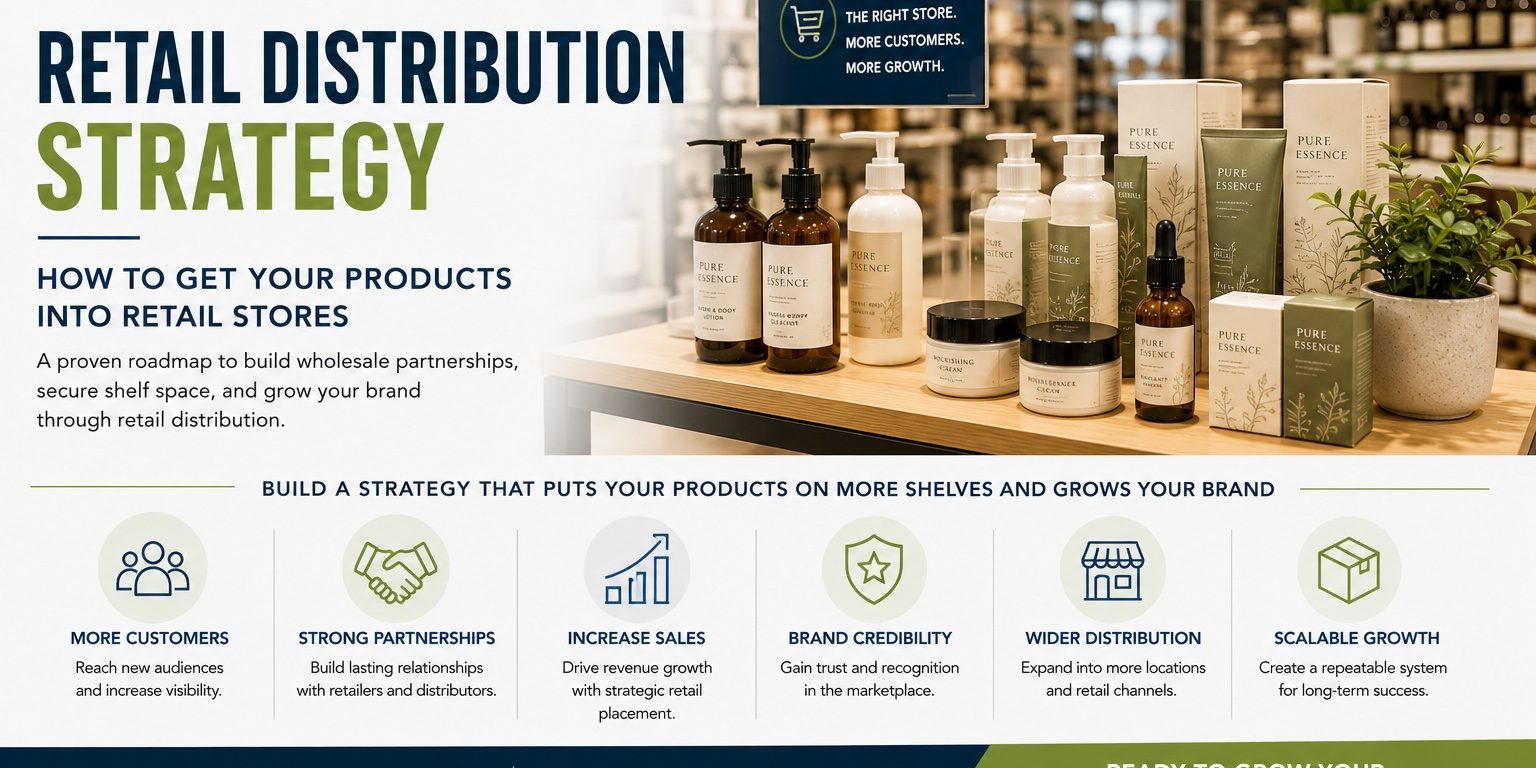
Selling products through your own website is an excellent way to build a brand, establish customer relationships, and maintain higher profit margins. However, many successful consumer brands eventually reach a point where expanding into retail becomes the next logical step for growth.
Retail distribution allows businesses to place their products in front of larger audiences through specialty retailers, regional chains, national stores, boutiques, distributors, and other wholesale partners. When executed strategically, retail distribution can significantly increase brand awareness, accelerate revenue growth, and create long-term opportunities that are difficult to achieve through direct-to-consumer sales alone.
Getting products onto retail shelves requires far more than having an outstanding product. Retail buyers evaluate hundreds of products every month, and shelf space is among the most valuable assets in any store. Brands that consistently succeed understand how to prepare their business, position their products, communicate their value, and build lasting relationships before making their first sales presentation. This includes having a retail marketing presence online already established.
This guide explores every stage of building a successful retail distribution strategy, from preparing your products for wholesale to developing partnerships that support sustainable long-term growth.
Understanding Retail Distribution
Retail distribution is the process of making your products available through third-party retailers instead of selling exclusively through your own website or physical location. For many brands, wholesale distribution becomes the next major growth opportunity after establishing direct-to-consumer sales.
Depending on your business objectives, your retail distribution strategy may include independent retailers, specialty stores, boutique shops, regional retail chains, national retailers, department stores, grocery stores, beauty supply stores, pharmacies, online marketplaces, or wholesale distributors.
Each distribution channel offers different customer demographics, purchasing requirements, order volumes, and growth opportunities. Choosing the right mix depends on your product category, manufacturing capacity, pricing strategy, target audience, and long-term business goals.
Why Retail Distribution Matters
Selling through retail partners provides advantages that extend beyond immediate sales.
A successful retail distribution strategy can help your business:
- Increase brand awareness
- Reach new customer segments
- Improve product credibility
- Diversify revenue streams
- Reduce dependence on direct-to-consumer sales
- Strengthen brand recognition
- Support national expansion
- Increase long-term company value
Many of today’s most recognizable consumer brands grew because they combined ecommerce with a carefully planned retail distribution strategy.
Is Your Business Ready for Retail Distribution?
One of the biggest mistakes startups make is approaching retailers before they are operationally prepared. Securing shelf space is exciting, but fulfilling larger wholesale orders consistently is equally important.
Before contacting retail buyers, evaluate whether your business can support wholesale growth without sacrificing quality, customer service, or profitability.
Evaluate Your Production Capacity
Retail buyers expect suppliers to deliver products consistently and on schedule. Delays, inventory shortages, or inconsistent quality can quickly damage relationships and reduce future opportunities.
Ask yourself:
- Can production increase if demand doubles?
- Can inventory be replenished quickly?
- Are your suppliers dependable?
- Is product quality consistent?
- Can you meet retailer delivery schedules?
- Do you have contingency plans for supply disruptions?
Reliable operations create confidence and help establish long-term retail partnerships.
Review Your Financial Readiness
Wholesale pricing differs significantly from direct-to-consumer pricing. Retailers require sufficient margins while your business must remain profitable after manufacturing, packaging, shipping, marketing, and operational expenses.
Before entering retail distribution, calculate your:
- Cost of goods sold
- Manufacturing costs
- Packaging expenses
- Shipping costs
- Wholesale pricing
- Suggested retail pricing
- Gross profit margins
- Marketing budget
- Promotional allowances
Understanding these numbers before negotiations allows you to price confidently without sacrificing profitability.
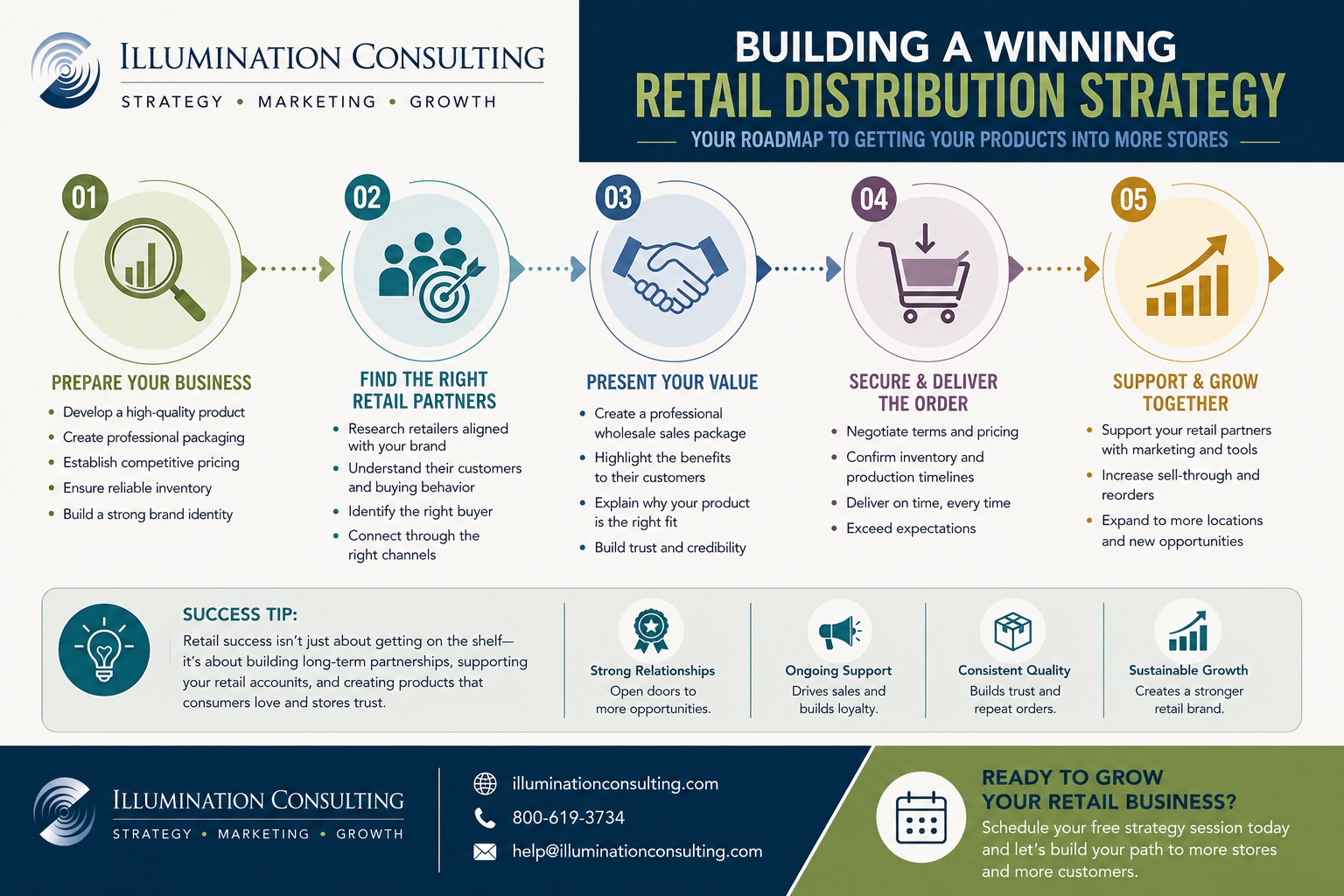
Build a Retail-Ready Brand
Retail buyers are rarely purchasing products alone. They are investing in brands that will help them sell more products to their customers.
A professionally presented brand immediately creates confidence and separates your business from competitors that appear unfinished or inconsistent.
Design Packaging That Sells
Packaging often determines whether a customer notices your product on a crowded shelf. Strong packaging should communicate quality, professionalism, and brand value within seconds.
Effective retail packaging should include:
- Clear brand identity
- Professional graphic design
- Easy-to-read product information
- Product benefits
- Ingredient or material details
- UPC barcode
- Regulatory compliance information
- Strong shelf presence
- Consistent visual branding
Successful packaging does more than protect the product—it becomes one of your most important marketing tools.
Tell a Compelling Brand Story
Today’s consumers increasingly purchase from brands they connect with emotionally. Retail buyers recognize this and often favor products with authentic stories that resonate with customers.
Your brand story should explain:
- Why your company was founded
- The problem your product solves
- Your mission
- Your values
- What makes your products different
- Why customers should trust your brand
A compelling story gives retailers another reason to place your products on their shelves while helping consumers develop stronger brand loyalty.
Identifying the Right Retail Channels
Not every retail store is the right fit for every product. One of the most common mistakes brands make is trying to sell to every retailer instead of focusing on those that align with their target audience, price point, and brand positioning.
A luxury skincare brand, for example, should not pursue the same distribution strategy as an affordable household product. Likewise, a premium food brand may find greater success in specialty retailers before approaching national grocery chains.
Understanding where your ideal customers shop will help you prioritize the right retail opportunities and improve your chances of long-term success.
Independent Retailers
Independent retailers are often the easiest entry point for emerging brands. Many local store owners are willing to test innovative products that fit their customer base, especially when they can work directly with the founder.
Benefits include:
- Faster purchasing decisions
- Lower minimum order quantities
- Personal relationships with store owners
- Opportunities for in-store events and promotions
- Valuable customer feedback
Independent retailers also provide an opportunity to refine your wholesale processes before approaching larger chains.
Regional Retail Chains
Once your operations become more established, regional chains can significantly expand your market presence while remaining more accessible than national retailers.
Regional retailers often appreciate working with brands that already demonstrate strong local demand and proven sales performance.
Success within regional chains also strengthens your credibility when approaching larger retail organizations.
National Retailers
National retailers offer tremendous exposure but also have significantly higher expectations. Buyers expect brands to demonstrate consistent sales performance, reliable manufacturing, professional marketing materials, and the operational capacity to fulfill larger purchase orders.
Before pursuing national accounts, ensure your business has:
- Proven sales history
- Reliable inventory management
- Strong financial stability
- Professional branding
- High-quality packaging
- Marketing support
- Customer demand
Entering a national retailer before your business is ready can create operational challenges that are difficult to overcome.
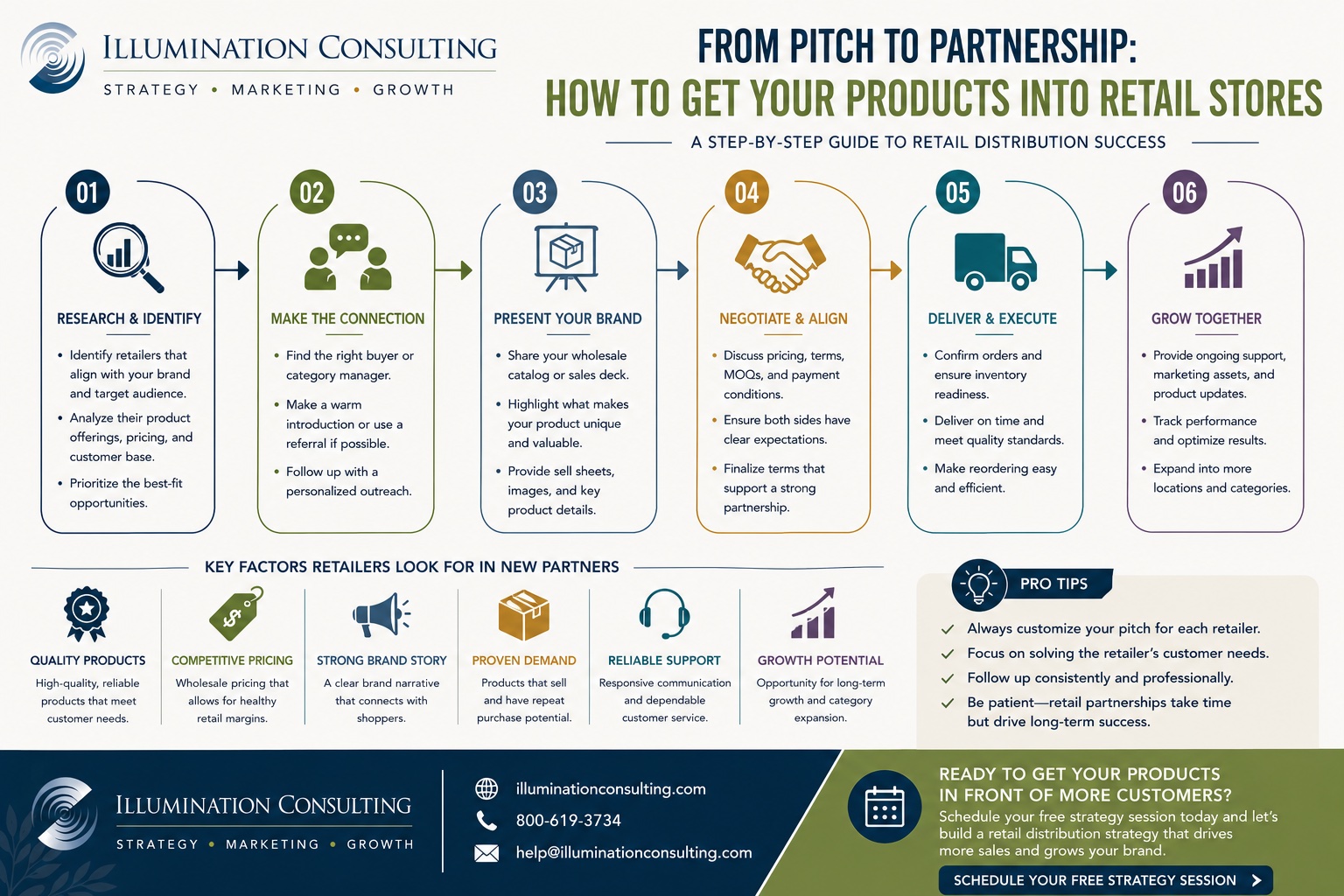
Developing a Wholesale Pricing Strategy
Wholesale pricing is one of the most important components of a successful retail distribution strategy. Your pricing must allow retailers to earn attractive margins while still generating sustainable profits for your business.
Many retailers expect wholesale pricing that allows them to achieve approximately a 50% gross margin, although this varies depending on the industry and product category.
Before setting your pricing, evaluate every expense associated with bringing your product to market, including manufacturing, packaging, freight, warehousing, marketing, commissions, and operational overhead.
Rather than competing on price alone, focus on delivering value. Strong branding, premium packaging, effective merchandising, and consumer demand often justify higher retail prices and improve profitability for both you and your retail partners.
Avoid Competing on Price Alone
Lower prices rarely create lasting competitive advantages.
Instead, compete by offering:
- Superior product quality
- Exceptional customer experience
- Professional branding
- Innovative packaging
- Strong consumer demand
- Marketing support for retailers
- Reliable fulfillment
- Ongoing product innovation
Retail buyers are looking for products that sell consistently—not simply products with the lowest wholesale cost.
Preparing Your Retail Sales Materials
Professional sales materials demonstrate that your business is prepared to support wholesale partnerships. Buyers often make initial decisions within minutes, making first impressions extremely important.
Every retail brand should have a polished sales package that clearly communicates the value of its products.
Create a Professional Line Sheet
A line sheet serves as a quick reference for retail buyers and should include all essential product information.
A professional line sheet typically contains:
- Company logo
- Product images
- Product descriptions
- Wholesale pricing
- Suggested retail pricing
- Available sizes or variations
- Minimum order quantities
- Case pack information
- Contact information
- Ordering instructions
A clean, organized line sheet makes it easier for buyers to evaluate your products and share them internally with purchasing teams.
Develop a Wholesale Catalog
While line sheets provide concise product information, a wholesale catalog tells a broader story about your brand.
A well-designed catalog should showcase your products through professional photography, lifestyle imagery, brand messaging, and merchandising ideas. It should reinforce why your products deserve valuable shelf space and demonstrate how they fit within the retailer’s existing assortment.
High-quality marketing collateral reinforces confidence in your company and reflects the professionalism buyers expect from long-term suppliers.
Creating a Retail Buyer Outreach Strategy
Securing retail partnerships rarely happens through a single email or phone call. Successful brands approach retailer outreach with patience, consistency, and preparation.
Before contacting buyers, research each retailer thoroughly. Understand their target customer, product mix, pricing strategy, and merchandising style. Tailoring your outreach to each retailer demonstrates professionalism and increases the likelihood of receiving a response.
Your initial communication should be concise and focused on how your products benefit both the retailer and their customers. Buyers receive countless unsolicited pitches, so your message should immediately communicate your unique value proposition without overwhelming them with unnecessary information.
Building genuine relationships often produces better long-term results than attempting to close a sale during the first interaction.
Attend Trade Shows and Industry Events
Trade shows remain one of the most effective ways to connect with retail buyers, distributors, and industry professionals.
These events allow buyers to experience your products firsthand while giving your team the opportunity to answer questions, demonstrate product quality, and establish personal relationships.
Even if immediate orders do not result, trade shows often generate valuable connections that lead to future retail opportunities.
Many successful retail partnerships begin with conversations held months before the first purchase order is placed.
Building Relationships with Retail Buyers
Retail distribution is built on relationships as much as it is on products. Buyers want to work with companies they can trust to deliver quality products, communicate professionally, and consistently support their retail partners.
Treat every interaction as the beginning of a long-term business relationship rather than a one-time sales opportunity.
Be responsive, prepared, and transparent. If a buyer requests additional information, pricing, samples, or production timelines, respond promptly and professionally. Reliability often becomes a deciding factor when buyers are choosing between competing brands.
Remember that buyers change companies, get promoted, and expand their purchasing responsibilities. A relationship that does not result in an immediate order today may create significant opportunities in the future.
Supporting Your Retail Partners After the Sale
Securing shelf space is only the beginning. Brands that succeed in retail continue supporting their partners long after the first purchase order has been delivered.
Retailers want products that sell quickly and consistently. Helping stores generate more sales strengthens your relationship and increases the likelihood of larger reorders.
Support your retail partners through:
- Consumer marketing campaigns
- Social media promotion
- Email marketing
- Point-of-sale displays
- Product demonstrations
- Educational materials
- Seasonal promotions
- Cooperative advertising
- Digital assets retailers can use online
The more successful your retail partners become, the more valuable your brand becomes to their business.
Make Reordering Simple
Retailers appreciate suppliers that make ordering efficient.
Provide clear reorder instructions, maintain accurate inventory information, communicate production schedules, and notify buyers about new product launches well in advance.
Excellent customer service often becomes a competitive advantage that is difficult for competitors to duplicate.
Using Ecommerce to Support Retail Distribution
Some brands mistakenly believe retail ecommerce and retail compete with one another. In reality, they are most effective when working together.
Consumers often discover products in retail stores before purchasing online, while others research products online before buying them in person. A strong omnichannel strategy creates multiple opportunities for customers to engage with your brand.
Your ecommerce website should support—not compete with—your retail partners whenever possible.
This can include:
- Store locator pages
- Retail partner directories
- Product education
- Frequently asked questions
- Consumer reviews
- Brand storytelling
- Product videos
- New product announcements
A professionally designed website also reassures retail buyers that your business is actively investing in brand growth and consumer awareness.
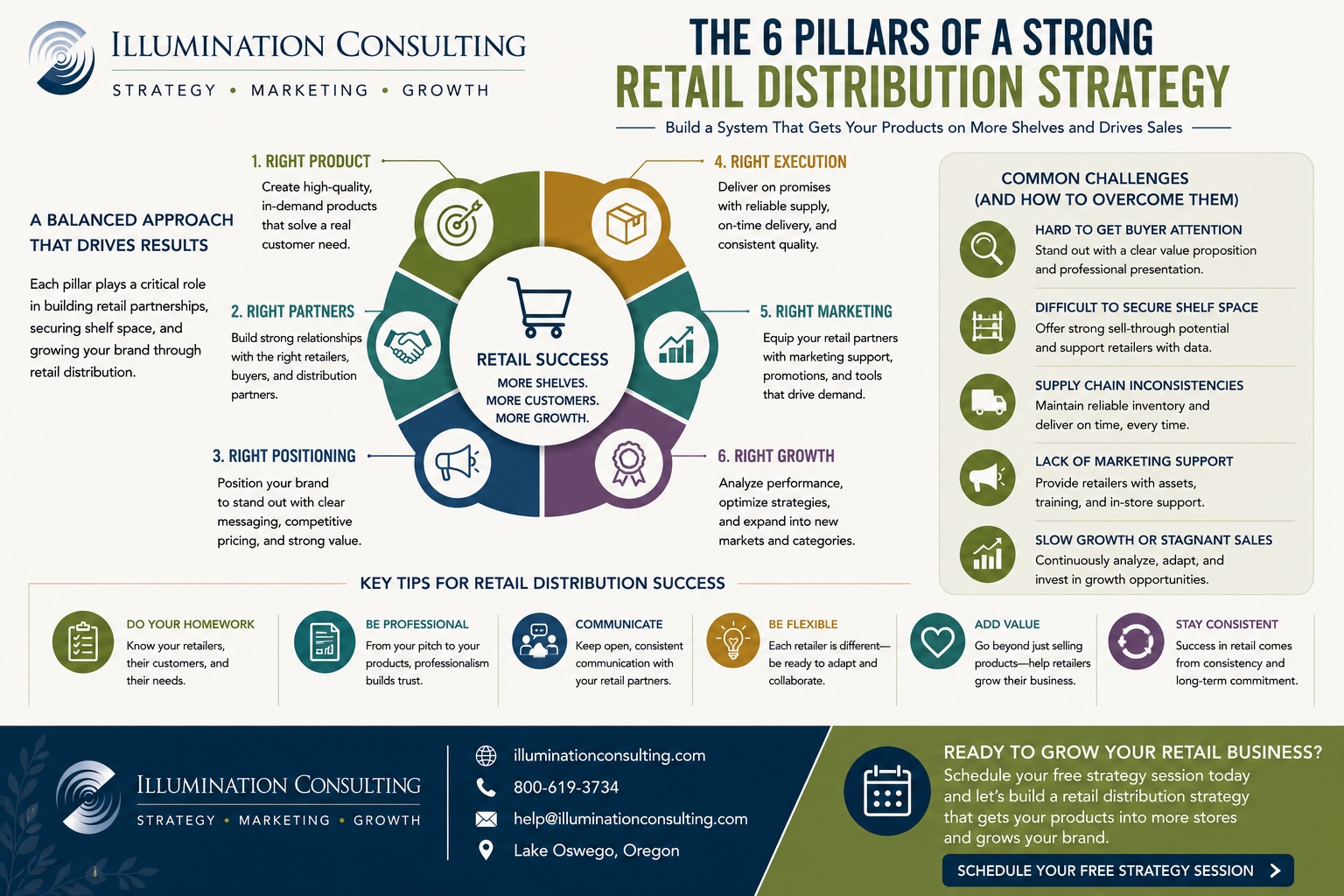
Common Retail Distribution Mistakes to Avoid
Many promising brands struggle with retail expansion because they focus exclusively on securing shelf space rather than building a scalable wholesale business.
Avoid these common mistakes:
- Approaching retailers before your business is ready
- Poor product packaging
- Inconsistent branding
- Unrealistic pricing
- Ignoring retailer profit margins
- Inadequate inventory management
- Weak sales materials
- Following up too aggressively—or not at all
- Failing to support retail partners after launch
- Expanding too quickly without operational capacity
Learning from these mistakes can save your business significant time, money, and frustration while improving your reputation within the retail industry.
Measuring the Success of Your Retail Distribution Strategy
Like any growth initiative, retail distribution should be measured using clearly defined performance indicators.
Rather than focusing solely on the number of stores carrying your products, evaluate the overall health and profitability of your wholesale business.
Important metrics include:
- Number of active retail accounts
- Monthly wholesale revenue
- Average order value
- Reorder frequency
- Sell-through rates
- Inventory turnover
- Customer acquisition costs
- Gross profit margins
- Geographic expansion
- Retail account retention
Regularly reviewing these metrics helps identify opportunities for improvement while guiding future expansion decisions.
Growing Beyond Your First Retail Accounts
Once your products have demonstrated success within a handful of retail locations, your business gains valuable credibility that can be leveraged when approaching larger opportunities.
Document your success by collecting sales data, testimonials from retailers, customer feedback, and merchandising photography. These assets become powerful tools during future sales presentations.
As your retail network grows, consider expanding into complementary channels such as distributors, sales representatives, international markets, online retail marketplaces, and strategic licensing partnerships.
Sustainable growth typically comes from expanding methodically rather than pursuing every available opportunity at once. Focus on strengthening existing partnerships while selectively adding new accounts that align with your long-term brand strategy.
Frequently Asked Questions
What is a retail distribution strategy?
A retail distribution strategy is a structured plan for getting products into retail stores through wholesale partnerships, distributors, or direct relationships with retailers. It defines how products move from the manufacturer to the consumer while supporting sustainable business growth.
Should startups pursue retail distribution immediately?
Not always. Startups should first establish reliable production, professional branding, strong packaging, and healthy profit margins before approaching retailers. Being operationally prepared greatly improves the likelihood of long-term retail success.
How do I approach retail buyers?
Research each retailer before making contact, personalize your outreach, clearly explain the value of your products, provide professional sales materials, and follow up respectfully. Building relationships is often more important than making an immediate sale.
What should be included in a wholesale sales package?
A professional wholesale sales package typically includes a line sheet, product catalog, wholesale pricing, product specifications, company information, high-quality photography, ordering details, and contact information. These materials help buyers evaluate your products quickly and professionally.
How can I increase my chances of getting into retail stores?
Focus on developing a strong brand, professional packaging, competitive wholesale pricing, dependable production, and high-quality marketing materials. Retailers are more likely to partner with brands that demonstrate reliability, consumer demand, and long-term growth potential.
Grow Your Retail Brand with Illumination Consulting
Building a successful retail distribution strategy requires more than a great product. It demands thoughtful planning, professional branding, effective marketing, operational readiness, and a clear roadmap for sustainable growth.
At Illumination Consulting, we help retail businesses, consumer product companies, startups, and established brands develop growth strategies that position their products for long-term success. From branding and ecommerce website design to retail digital marketing, SEO, content creation, and business consulting, our team provides the expertise needed to help your business grow both online and in retail environments.
Whether you’re preparing to approach your first retail buyer or expanding into national distribution, we’re here to help you build a stronger, more profitable retail brand.