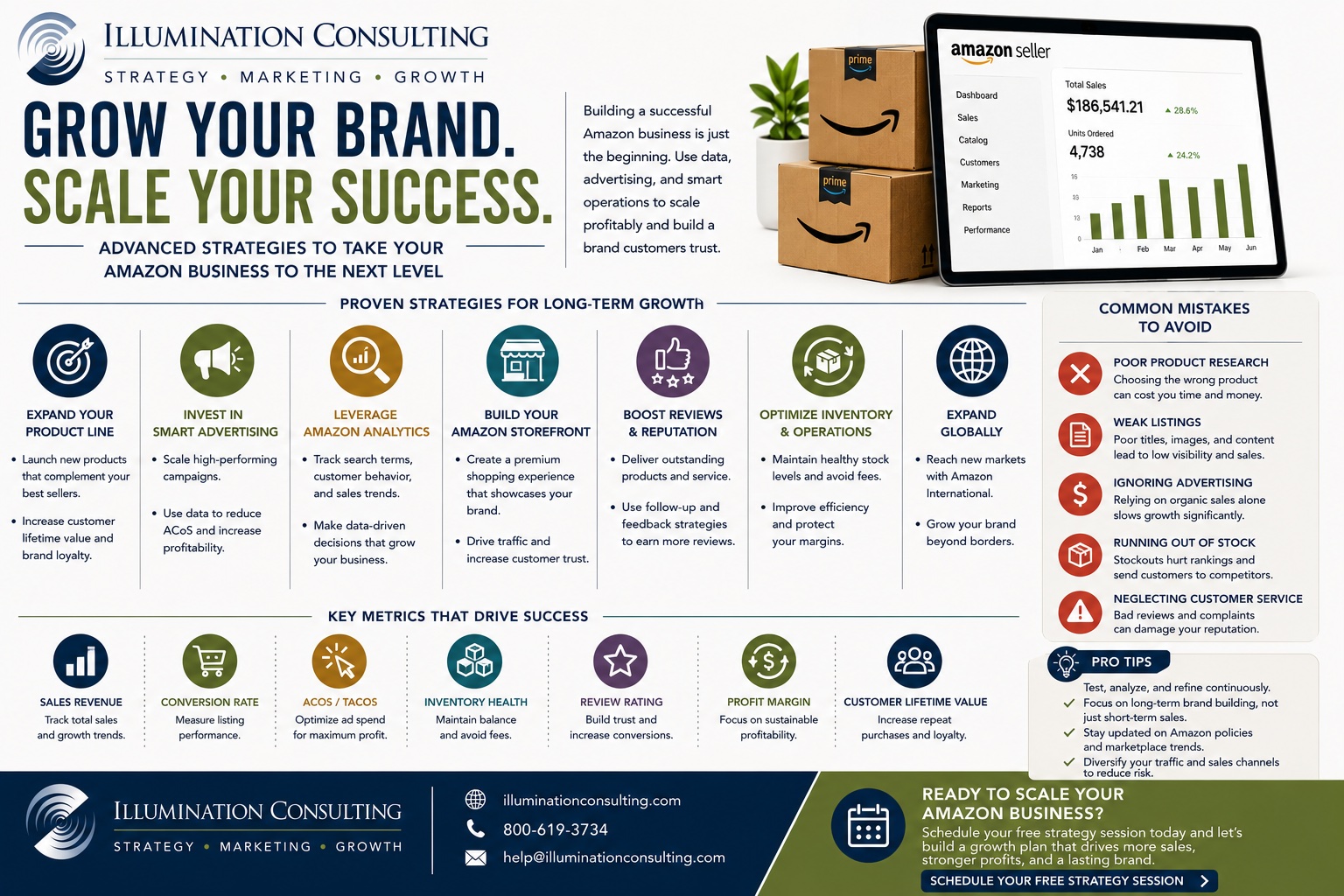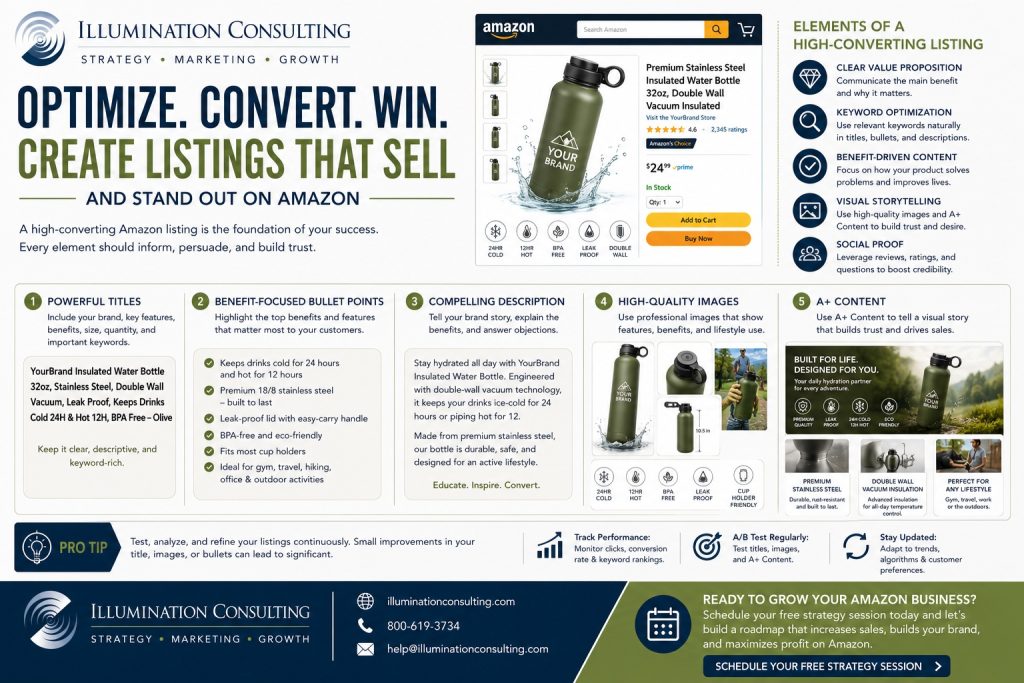
Fulfillment by Amazon (FBA) vs. Fulfillment by Merchant (FBM)
One of the first operational decisions every Amazon seller must make is how orders will be fulfilled. Amazon offers two primary fulfillment models, each with its own advantages depending on your products, business model, and long-term goals.
Understanding the differences between Fulfillment by Amazon (FBA) and Fulfillment by Merchant (FBM) will help you select the option that best supports your growth strategy.
Fulfillment by Amazon (FBA)
With FBA, you ship inventory to Amazon’s fulfillment centers. Amazon then stores your products, processes customer orders, ships purchases, manages customer service, and handles most returns.
Benefits of FBA include:
- Prime eligibility
- Fast nationwide shipping
- Professional order fulfillment
- Customer service handled by Amazon
- Easier inventory scaling
- Increased customer trust
- Greater potential for winning the Buy Box
FBA is often the preferred option for businesses focused on growth because it allows owners to spend more time developing products and marketing their brand instead of packing and shipping orders.
Fulfillment by Merchant (FBM)
With FBM, your business stores inventory and fulfills orders directly.
This approach offers greater control over inventory, packaging, and shipping processes while potentially reducing fulfillment costs for certain products.
FBM may be a good fit for:
- Oversized products
- Custom products
- Made-to-order items
- Low-volume businesses
- Businesses with established warehouse operations
- Products with specialized shipping requirements
Many successful brands use both fulfillment methods depending on individual product categories and seasonal demand.
Winning the Amazon Buy Box
The Buy Box is the section of a product listing where customers click “Add to Cart” or “Buy Now.” Winning the Buy Box dramatically increases visibility and sales because most customers purchase directly from the seller featured there.
Amazon evaluates numerous factors when determining Buy Box eligibility, including:
- Competitive pricing
- Inventory availability
- Order defect rate
- Shipping performance
- Customer satisfaction
- Account health
- Fulfillment method
- Response times
- Sales history
Although price is important, it is only one component of Amazon’s decision-making process. Reliable sellers with strong performance metrics often outperform competitors that compete solely on lower prices.
Developing an Amazon Advertising Strategy
Even outstanding products may struggle to gain visibility without advertising. Amazon’s advertising platform enables businesses to place their products in front of highly targeted shoppers who are actively searching for related items. Advertising is as well a key part of the Amazon selling guide for success.
Advertising not only generates sales but also helps improve product visibility, collect customer reviews, and accelerate ranking for important keywords.
Successful brands view advertising as an investment in long-term growth rather than simply an expense.
Sponsored Products
Sponsored Products promote individual listings directly within Amazon search results and product pages.
These campaigns are typically the first advertising strategy new sellers implement because they are relatively simple to manage while providing valuable performance data.
Sponsored Brands
Sponsored Brands allow companies enrolled in Brand Registry to promote their logo, custom headline, and multiple products together.
These advertisements help increase brand awareness while directing shoppers to either individual listings or a branded Amazon Store.
Sponsored Display
Sponsored Display advertisements help businesses reconnect with shoppers who previously viewed their products or similar items.
These campaigns can improve customer retention while increasing conversions from visitors who did not purchase during their first visit.
Understanding Amazon SEO
Just like Google, Amazon relies on algorithms to determine which products appear for customer searches.
Amazon SEO focuses on improving product visibility by optimizing listings around the keywords customers actually use when shopping.
Unlike traditional SEO, Amazon’s algorithm heavily prioritizes sales performance and conversion rates alongside keyword relevance. It is a key element of Amazon selling guide to become successful.
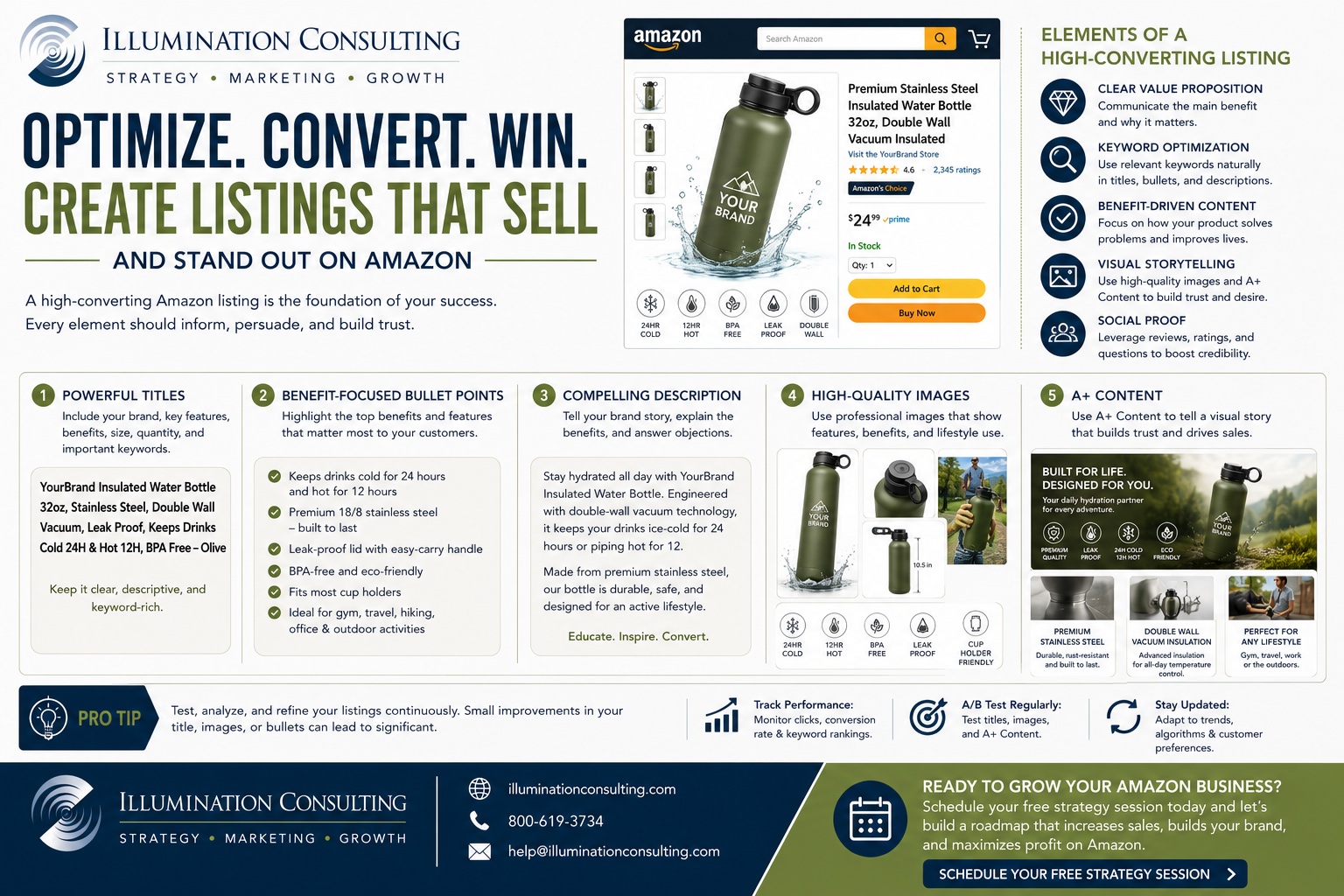
Optimizing your listings should include:
- Keyword research
- Optimized titles
- Compelling bullet points
- Detailed descriptions
- Backend search terms
- High-quality photography
- Competitive pricing
- Strong customer reviews
- Inventory availability
The better your listing converts, the more likely Amazon is to continue displaying it prominently in search results.
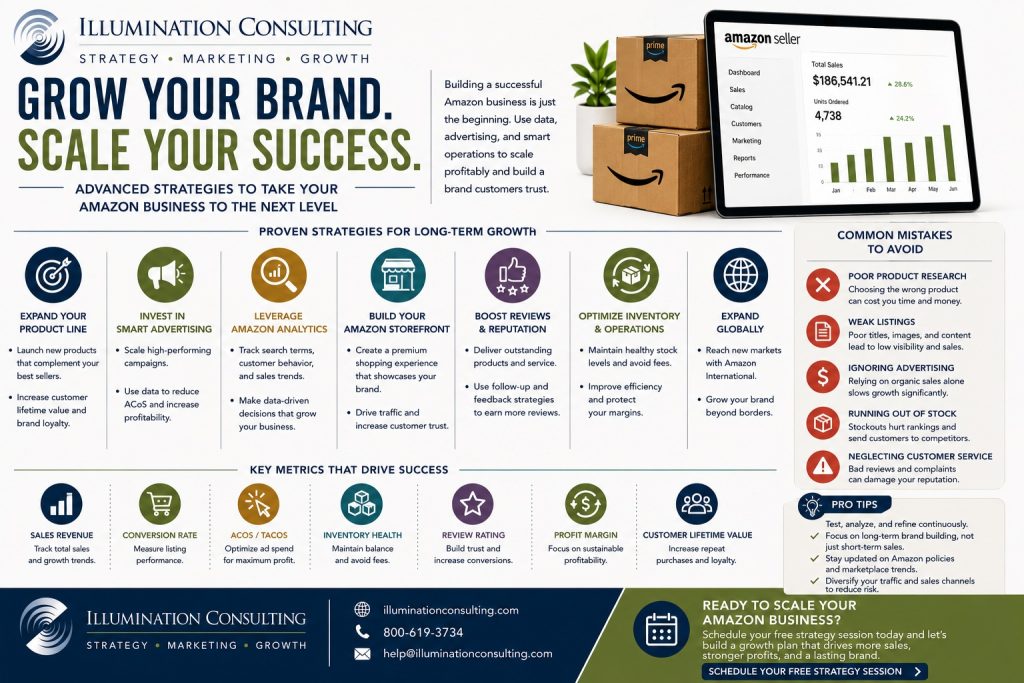
Managing Inventory Efficiently
Inventory management plays a critical role in maintaining sales momentum on Amazon.
Running out of stock can negatively impact search rankings, reduce advertising performance, and create opportunities for competitors to capture your customers.
Conversely, carrying excessive inventory increases storage fees and ties up valuable working capital.
Effective inventory planning requires monitoring:
- Sales velocity
- Seasonal demand
- Supplier lead times
- Manufacturing schedules
- Warehouse capacity
- Inventory turnover
- Restock timelines
- Safety stock levels
Businesses that maintain consistent inventory levels are better positioned to grow without disrupting customer experience.
Deliver Outstanding Customer Service
Although Amazon manages customer interactions for FBA orders, your reputation as a seller still depends on delivering an exceptional customer experience.
Every interaction influences customer trust, reviews, and long-term account performance.
Focus on:
- Accurate product descriptions
- Fast response times
- Professional communication
- Prompt issue resolution
- Honest expectations
- Reliable product quality
- Consistent packaging
- Continuous product improvements
Satisfied customers not only leave positive reviews but also become repeat buyers and advocates for your brand.
Protect Your Seller Account
Your Amazon Seller Account is one of your company’s most valuable business assets. Policy violations, poor performance metrics, or unresolved customer issues can result in account suspensions that significantly impact revenue.
Protect your account by consistently monitoring:
- Order Defect Rate (ODR)
- Late Shipment Rate
- Valid Tracking Rate
- Cancellation Rate
- Customer feedback
- Product policy compliance
- Intellectual property claims
- Performance notifications
Develop internal processes that prioritize compliance and operational excellence to reduce risk as your business grows.
Expanding Beyond the United States
Once your business has established a successful presence in the U.S. marketplace, international expansion may provide significant growth opportunities.
Amazon operates marketplaces across multiple countries, allowing brands to reach millions of additional customers without building entirely new ecommerce infrastructures.
Before expanding internationally, evaluate:
- Product demand
- Shipping logistics
- Import regulations
- Taxes and duties
- Currency considerations
- Product compliance requirements
- Translation and localization
- International fulfillment options
Expanding strategically into new markets can diversify revenue while strengthening your brand globally.
Common Mistakes New Amazon Sellers Make
Amazon provides incredible opportunities, but it is also highly competitive. Many sellers struggle not because they have poor products, but because they make avoidable mistakes during the launch and growth process.
Understanding these common pitfalls can help you build a stronger business while protecting your investment.
Choosing the Wrong Product
Many entrepreneurs begin by selecting products based solely on trends or personal interests instead of analyzing market demand, competition, and profitability.
Successful Amazon brands typically choose products that:
- Solve a real customer problem
- Have consistent year-round demand
- Offer healthy profit margins
- Can be differentiated from competitors
- Support future product expansion
Product research should always come before inventory purchases.
Ignoring Branding
Generic products with weak branding often struggle to compete against established companies.
Professional branding creates trust while allowing businesses to charge premium prices and build long-term customer loyalty.
Invest in:
- Professional logo design
- Consistent packaging
- Brand messaging
- Lifestyle photography
- Premium graphics
- Memorable customer experience
Customers remember brands—not generic products.
Poor Product Listings
Your product listing serves as your salesperson twenty-four hours a day.
Weak titles, poor photography, confusing descriptions, or missing product information can dramatically reduce conversion rates.
Every listing should clearly answer:
- What is the product?
- Why is it different?
- What problem does it solve?
- Why should someone trust your brand?
- Why should they purchase today?
Small improvements to your listings can produce significant increases in sales over time.
Underestimating Marketing
Many sellers assume that products will automatically generate sales simply because they are listed on Amazon.
In reality, successful brands invest continuously in visibility through advertising, optimized listings, external traffic, influencer partnerships, email marketing, and social media.
Marketing should remain an ongoing investment rather than a one-time expense.
Building a Long-Term Amazon Brand
The businesses that achieve lasting success on Amazon rarely focus on short-term sales alone. Instead, they build brands that customers recognize, trust, and actively seek out.
Rather than constantly chasing trending products, develop a long-term strategy centered around delivering exceptional value, expanding your product line, and strengthening customer relationships.
As your brand grows, consider investing in:
- New product development
- Premium packaging
- Enhanced product photography
- A+ Content
- Amazon Storefront optimization
- Video content
- Customer education
- Brand storytelling
- Product bundles
- Subscription opportunities
The goal should be to create a business that becomes increasingly valuable over time rather than relying on a handful of individual products.
Integrating Amazon with Your Overall Business Strategy
While Amazon is one of the world’s largest ecommerce platforms, it should not become your only source of revenue.
Successful consumer brands build an integrated sales strategy that includes multiple channels working together.
A diversified approach may include:
- Your ecommerce website
- Amazon Marketplace
- Retail distribution
- Independent retailers
- Wholesale accounts
- Social commerce
- Email marketing
- Paid advertising
- Organic search
- Content marketing
Diversifying your sales channels reduces risk while creating multiple opportunities for customers to discover and purchase your products.
Measuring Success on Amazon
Growing an Amazon business requires ongoing analysis rather than relying on assumptions.
Reviewing key performance indicators helps identify opportunities to improve profitability, customer satisfaction, and long-term growth. A vital part of Amazon selling guide for success.
Important metrics include:
- Sales revenue
- Conversion rate
- Advertising Cost of Sales (ACoS)
- Total Advertising Cost of Sales (TACoS)
- Click-through rate
- Organic keyword rankings
- Inventory turnover
- Buy Box percentage
- Return rate
- Customer reviews
- Average star rating
- Repeat purchase rate
- Profit margin
- Customer lifetime value
Monitoring these metrics regularly allows you to make informed decisions that improve overall business performance.
Frequently Asked Questions
Is Amazon a good platform for new businesses?
Yes. Amazon provides access to millions of active shoppers and offers tools that help new businesses compete with established brands. Success depends on selecting the right products, building a professional brand, optimizing product listings, and investing in long-term growth strategies.
Should I use Fulfillment by Amazon (FBA)?
For many businesses, FBA offers significant advantages, including Prime eligibility, fast shipping, and outsourced order fulfillment. However, Fulfillment by Merchant (FBM) may be a better option for oversized, customized, or low-volume products.
What is Amazon Brand Registry?
Amazon Brand Registry is a program for trademarked brands that provides enhanced listing control, intellectual property protection, A+ Content, Sponsored Brands advertising, Amazon Stores, and valuable analytics that help businesses grow more effectively.
How important are customer reviews?
Customer reviews play a major role in purchasing decisions and can significantly influence product visibility and conversion rates. Providing exceptional products and customer service is the most effective way to earn positive, authentic reviews over time.
Can I build a successful business selling only on Amazon?
Many businesses generate substantial revenue through Amazon alone, but relying exclusively on one marketplace increases risk. Building your own ecommerce website, expanding into retail distribution, and diversifying your marketing channels can help create a more resilient and valuable business.
Launch and Grow Your Amazon Business with Illumination Consulting
Selling on Amazon offers tremendous opportunities, but long-term success requires more than simply uploading products to a marketplace. It demands thoughtful planning, professional branding, optimized listings, compelling product photography, strategic advertising, and a scalable growth strategy.
At Illumination Consulting, we help startups, retail brands, consumer product companies, and ecommerce businesses build stronger brands and develop comprehensive growth strategies. From business consulting and branding to ecommerce website design, digital marketing, SEO, content creation, and retail growth planning, we provide the expertise businesses need to compete in today’s increasingly competitive marketplace.
Whether you’re preparing to launch your first Amazon product, expanding an existing catalog, or building a nationally recognized consumer brand, our team is ready to help you create a strategy that drives sustainable growth and long-term success.