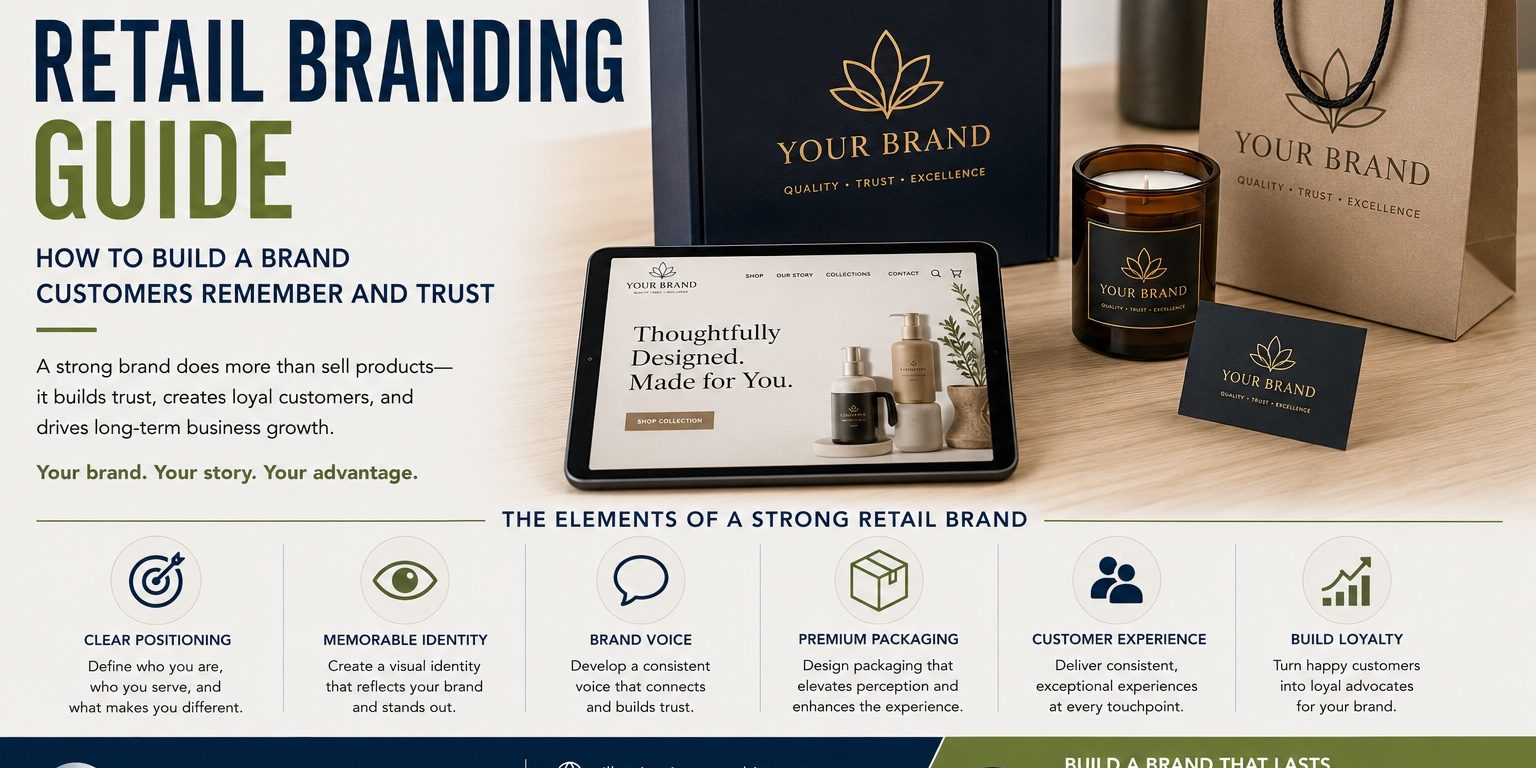
Walk through almost any shopping center, browse a retail website, or search for products online, and you’ll immediately notice one thing: customers have countless choices. Nearly every product category is filled with competitors offering similar products at comparable prices. In today’s crowded marketplace, having a great product alone is rarely enough to build a successful business.
The brands that consistently outperform their competitors have something much more valuable than products—they have strong brand identities that customers recognize, trust, and remember. Effective retail branding influences purchasing decisions long before a customer compares features or prices. It creates emotional connections, establishes credibility, and transforms first-time buyers into loyal advocates. A vital part of retail marketing efforts.
Whether you’re launching a new retail business, introducing a consumer product, or refreshing an established company, investing in professional branding is one of the most valuable long-term decisions you can make.
This guide explores the essential elements of retail branding, explains why branding influences customer behavior, and outlines practical strategies for creating a memorable brand that supports sustainable business growth.
What Is Retail Branding?
Retail branding is the process of developing a unique identity that differentiates your business from competitors while creating a consistent experience across every customer interaction. It encompasses far more than a logo or color palette. Retail branding defines how customers perceive your business before, during, and after making a purchase.
A successful retail brand combines visual identity, messaging, customer experience, product presentation, and company values into a cohesive system that builds familiarity and trust.
Strong retail branding influences every aspect of your business, including:
- Brand recognition
- Customer trust
- Product perception
- Purchase decisions
- Customer loyalty
- Premium pricing
- Marketing effectiveness
- Long-term business value
Companies with consistent branding often find it easier to attract customers, justify higher prices, and compete effectively—even in saturated markets.
Branding vs. Marketing
Although branding and marketing work together, they serve different purposes.
Branding defines who your company is, what it stands for, and why customers should care. Marketing communicates that brand to potential customers through advertising, content, social media, email campaigns, search engines, and other promotional channels.
Think of branding as the foundation and marketing as the vehicle that introduces your business to the world.
Without strong branding, even the most effective marketing campaigns often struggle to create lasting customer relationships.
Why Branding Matters More Than Ever
Consumers no longer purchase products based solely on price or convenience. They increasingly choose companies that reflect their values, inspire confidence, and deliver consistent experiences.
Strong branding reduces uncertainty during the buying process. When customers recognize a professional brand, they naturally associate it with quality, reliability, and credibility.
For retail businesses, branding can also influence purchasing decisions before customers even interact with your products.
Effective branding helps businesses:
- Stand out in competitive markets
- Increase customer confidence
- Strengthen perceived value
- Improve customer retention
- Generate word-of-mouth referrals
- Support premium pricing
- Increase repeat purchases
- Build long-term business equity
The strongest brands don’t simply sell products—they create experiences customers want to revisit.
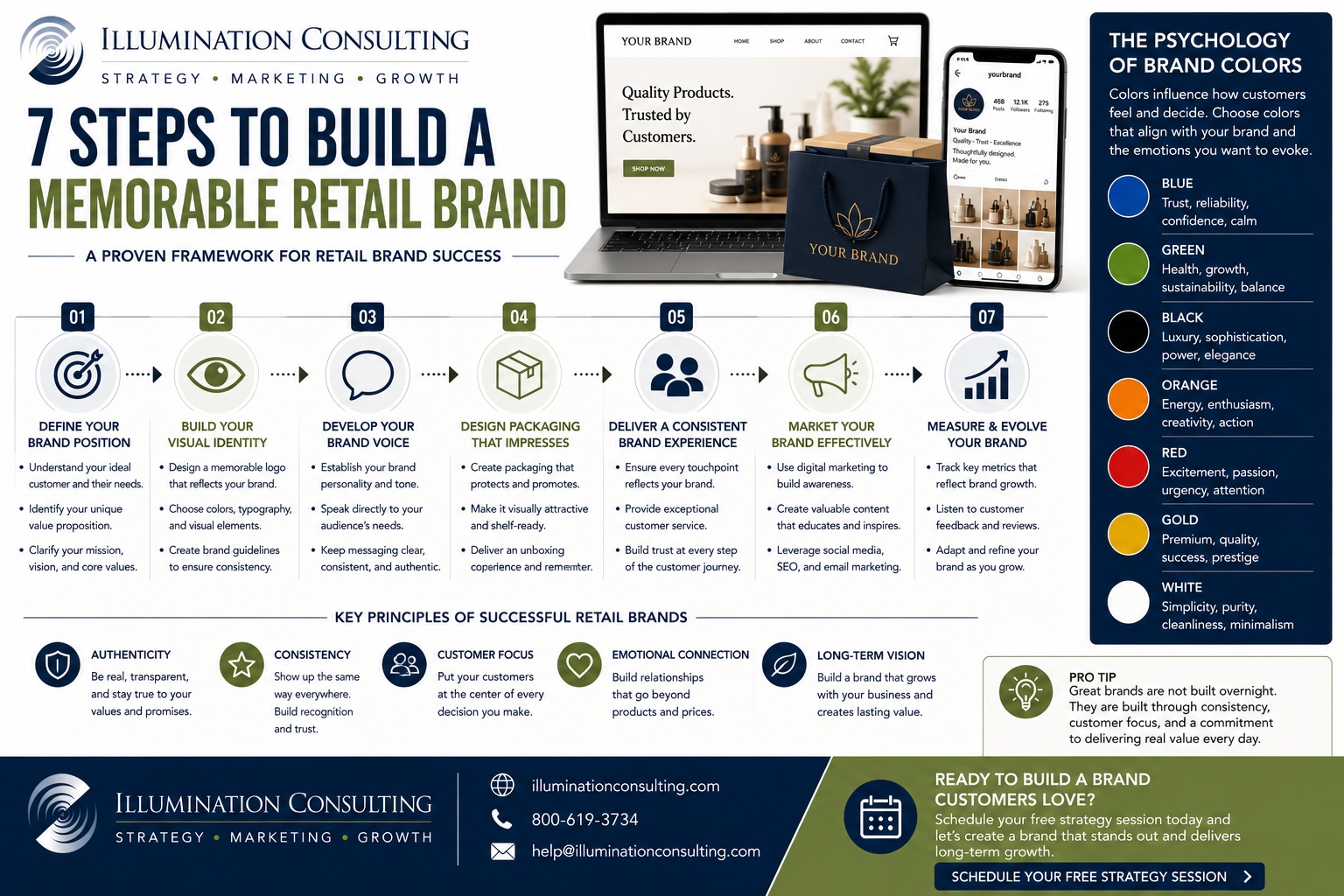
Define Your Brand Position
Every successful retail brand begins with a clear position in the marketplace. Before designing logos or selecting colors, you must determine what your business represents and why customers should choose you instead of your competitors.
Your brand position should answer several fundamental questions:
- Who is your ideal customer?
- What problems do you solve?
- What makes your products different?
- What experience do you want customers to have?
- What values define your company?
- Why should customers trust your brand?
Clearly answering these questions creates the strategic foundation for every branding decision that follows.
Identify Your Ideal Customer
Successful brands rarely attempt to appeal to everyone.
Instead, they develop a deep understanding of their ideal customer and create products, messaging, and experiences specifically for that audience.
Consider factors such as:
- Age
- Lifestyle
- Income
- Shopping habits
- Interests
- Purchasing motivations
- Pain points
- Brand preferences
The better you understand your customers, the easier it becomes to create branding that resonates with their needs and expectations.
Develop Your Unique Value Proposition
Your value proposition explains why customers should purchase from your company instead of choosing a competitor.
An effective value proposition communicates your greatest strengths clearly and concisely.
It may emphasize:
- Superior product quality
- Innovation
- Sustainability
- Luxury positioning
- Exceptional customer service
- Competitive pricing
- Craftsmanship
- Convenience
- Exclusive product features
Every element of your branding should reinforce this unique value proposition and consistently communicate it across every customer touchpoint.
Build a Memorable Visual Identity
Your visual identity is often the first interaction customers have with your brand. Within seconds, consumers begin forming opinions about your business based on your logo, colors, typography, product packaging, website, and marketing materials.
A professional visual identity communicates credibility before a customer ever reads a product description or visits your store.
Consistency is essential. Every visual element should reinforce the same personality, values, and positioning across every customer touchpoint.
Design a Professional Logo
Your logo serves as the cornerstone of your visual identity.
An effective retail logo should be:
- Simple and memorable
- Easy to recognize
- Scalable for digital and print
- Timeless rather than trend-driven
- Appropriate for your target audience
- Consistent with your brand positioning
A well-designed logo becomes a recognizable symbol that customers associate with quality, trust, and positive experiences.
Choose Colors That Reflect Your Brand
Color plays a powerful role in consumer psychology. Different color palettes evoke different emotions, making color selection an important strategic decision rather than simply a design preference.
For example:
- Blue often communicates trust, professionalism, and reliability.
- Green is commonly associated with wellness, sustainability, and growth.
- Black conveys sophistication and luxury.
- White represents simplicity, cleanliness, and minimalism.
- Gold suggests premium quality and exclusivity.
- Orange and red create energy, excitement, and urgency.
Rather than following trends, select colors that align with your brand personality and remain consistent across your website, packaging, advertising, social media, and printed materials.
Create Brand Guidelines
As your business grows, maintaining consistency becomes increasingly important.
A brand style guide helps ensure every employee, designer, marketing partner, and vendor presents your company consistently.
A comprehensive brand guide typically includes:
- Logo usage
- Color palette
- Typography
- Photography style
- Graphic elements
- Iconography
- Brand voice
- Messaging guidelines
- Social media standards
- Packaging specifications
Clear brand guidelines help build familiarity, which strengthens customer recognition over time.
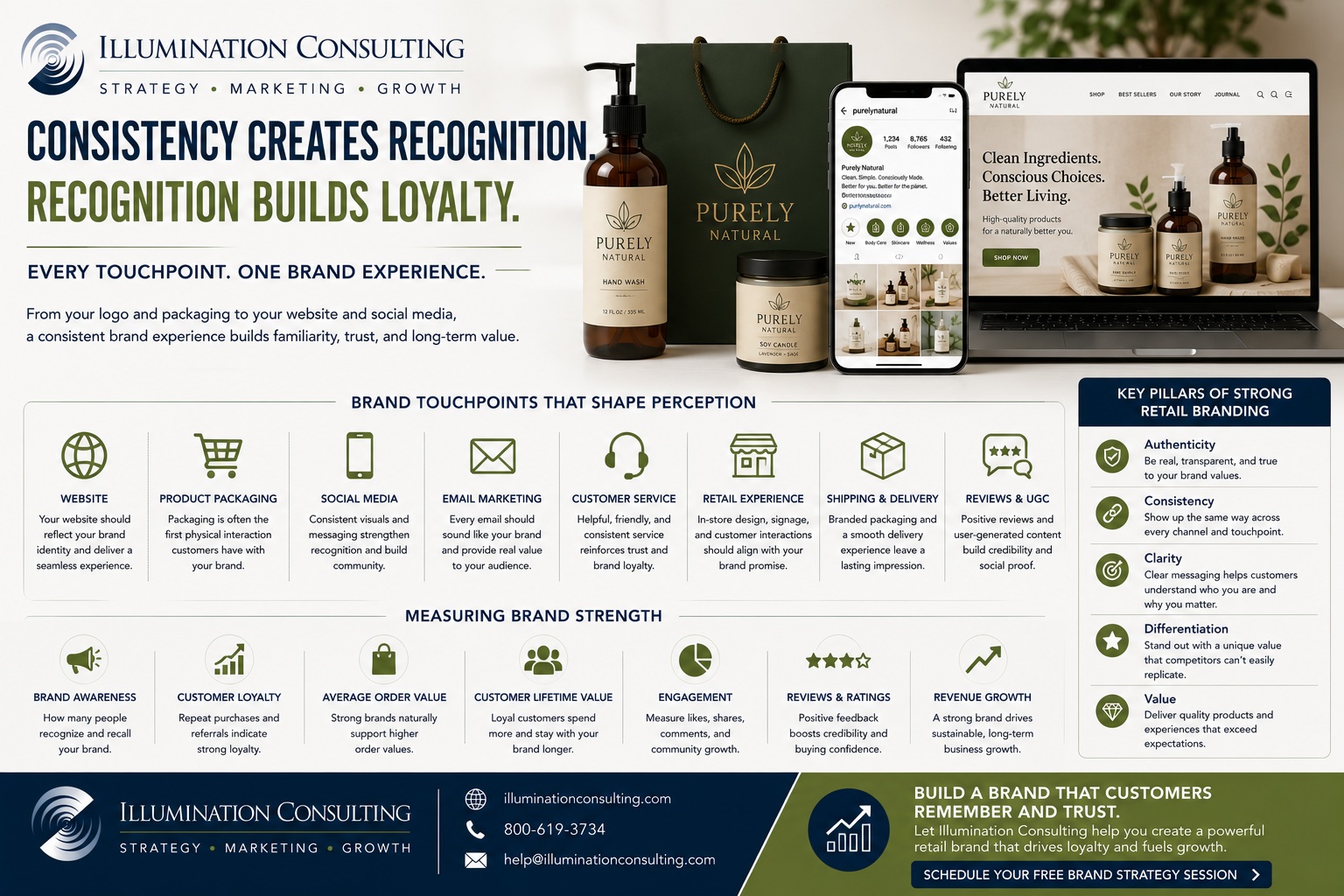
Create Packaging That Strengthens Your Brand
Packaging is far more than a protective container—it is an extension of your brand.
Whether your products are displayed on retail shelves, shipped through ecommerce, or featured in social media videos, packaging influences how customers perceive your company.
Professional packaging can:
- Increase perceived product value
- Improve shelf visibility
- Reinforce brand recognition
- Encourage repeat purchases
- Support premium pricing
- Enhance the unboxing experience
- Generate social media sharing
Consumers often judge product quality based on packaging long before they experience the product itself.
Design for Both Retail and Ecommerce
Today’s retail brands frequently sell through multiple channels, including their own ecommerce website, Amazon, specialty retailers, and national chains.
Packaging should perform well in every environment.
Consider:
- Shelf visibility
- Shipping durability
- Clear product information
- High-quality materials
- Easy-to-read labels
- Sustainable packaging options
- Consistent branding
A package that looks impressive in-store should be equally memorable when delivered to a customer’s home.
Develop a Consistent Brand Voice
Visual branding attracts attention, but your brand voice creates personality.
Every piece of communication should sound like it comes from the same company, whether customers are reading your website, social media posts, email newsletters, advertising campaigns, or product packaging.
Consistency builds familiarity, and familiarity builds trust.
Define Your Personality
Ask yourself how you want customers to describe your business.
Examples include:
- Professional
- Friendly
- Innovative
- Luxurious
- Approachable
- Educational
- Inspirational
- Premium
- Modern
- Authentic
Once your personality has been defined, every marketing message should reinforce those characteristics.
Speak to Your Audience
Your messaging should always focus on your customers rather than your business.
Instead of simply describing products, explain how those products improve your customers’ lives, solve their problems, or help them achieve their goals.
Customer-focused messaging is more engaging, more persuasive, and more memorable than company-focused communication.
Deliver a Consistent Customer Experience
Branding extends well beyond visual design. Every interaction customers have with your business influences how they perceive your brand.
A positive customer experience creates trust and encourages repeat purchases, while inconsistent experiences can quickly weaken even the strongest visual identity.
Every customer touchpoint should reinforce the same brand promise.
This includes:
- Your website
- Ecommerce store
- Product packaging
- Customer service
- Email communication
- Social media
- Advertising
- In-store experience
- Shipping and fulfillment
- Returns and exchanges
The goal is to create a seamless experience where customers know exactly what to expect every time they interact with your brand.
Build Trust Through Authenticity
Modern consumers value transparency as much as product quality.
People increasingly support businesses that communicate honestly, demonstrate expertise, and remain authentic in their messaging.
Rather than trying to appeal to everyone, focus on building genuine relationships with your ideal customers.
Ways to strengthen authenticity include:
- Sharing your company’s story
- Highlighting your mission and values
- Introducing your team
- Showing behind-the-scenes content
- Demonstrating product development
- Publishing educational content
- Responding openly to customer feedback
- Supporting meaningful community initiatives
Authentic brands create stronger emotional connections that are difficult for competitors to replicate.
Use Digital Marketing to Reinforce Your Brand
Branding does not end after your logo and website are complete. Every marketing activity should strengthen brand recognition and reinforce the identity you’ve worked to build.
Whether customers discover your business through search engines, social media, online advertising, or email campaigns, they should immediately recognize your visual identity and messaging.
Consistent digital retail marketing helps transform occasional buyers into loyal customers while increasing long-term brand equity.
Effective brand-building channels include:
- Search engine optimization (SEO)
- Content marketing
- Email marketing
- Social media marketing
- Video marketing
- Paid advertising
- Influencer partnerships
- Public relations
- Customer loyalty programs
The most successful retail brands maintain a consistent presence across multiple channels while delivering the same core message at every customer touchpoint.
Common Retail Branding Mistakes to Avoid
Even businesses with outstanding products can struggle to build a recognizable brand if they overlook the fundamentals. Retail branding is a long-term investment, and consistency is far more valuable than constantly changing direction.
Avoiding these common mistakes can help your business establish stronger customer relationships while maximizing the effectiveness of your marketing efforts.
Inconsistent Branding
One of the fastest ways to weaken your brand is by presenting different identities across your marketing channels.
If your website uses one style, your social media another, and your packaging a third, customers may question the professionalism and credibility of your business.
Maintain consistency across:
- Logo usage
- Color palette
- Typography
- Photography
- Messaging
- Packaging
- Advertising
- Social media
- Website design
- Printed materials
Consistency builds familiarity, and familiarity builds trust.
Trying to Appeal to Everyone
Many businesses attempt to broaden their audience by creating generic messaging that speaks to everyone. Unfortunately, this often results in a brand that connects with no one.
Instead, focus on serving a clearly defined audience exceptionally well.
Brands with a strong niche position frequently outperform competitors attempting to serve every possible customer.
Competing Only on Price
Price can attract customers once, but branding creates loyalty.
Businesses that compete primarily on discounts often struggle with shrinking profit margins and weak customer retention.
Strong brands compete on:
- Quality
- Experience
- Trust
- Innovation
- Service
- Expertise
- Customer relationships
- Product value
Customers are often willing to pay more for brands they believe in.
Evolving Your Brand as Your Business Grows
Your brand should remain consistent, but it should also evolve as your business matures.
As new products are introduced, customer expectations change, and markets evolve, occasional refinements help keep your brand relevant while maintaining recognition.
Brand evolution may include:
- Updating packaging
- Modernizing your website
- Refining messaging
- Refreshing photography
- Expanding product categories
- Improving customer experiences
- Enhancing digital marketing
- Introducing new retail channels
Successful companies continuously improve their brands without abandoning the core identity customers already recognize.
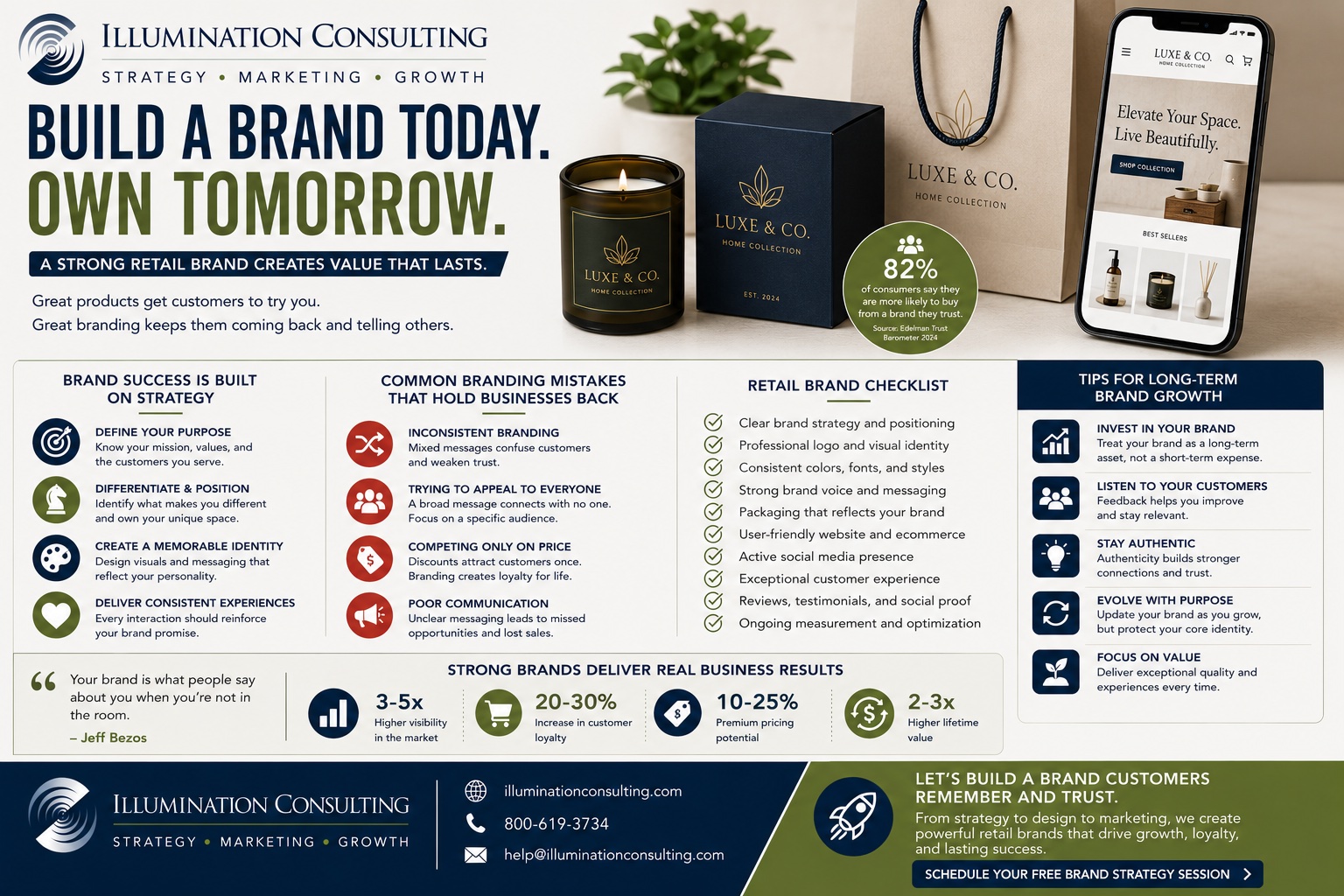
Measuring the Strength of Your Brand
Branding is often viewed as subjective, but its impact can be measured using meaningful business metrics.
Monitoring these indicators helps determine whether your branding efforts are strengthening customer relationships and supporting long-term growth.
Important metrics include:
- Brand awareness
- Website traffic
- Direct website visits
- Customer retention rate
- Repeat purchase rate
- Average order value
- Customer lifetime value
- Social media engagement
- Email subscriber growth
- Referral traffic
- Online reviews
- Net Promoter Score (NPS)
Over time, improvements in these areas often indicate that your brand is becoming more recognizable, trusted, and valuable.
Retail Branding Trends Shaping the Future
Consumer expectations continue to evolve, and successful retail brands adapt without losing their core identity.
Several trends are influencing how customers evaluate and engage with brands today.
Personalization
Customers increasingly expect personalized shopping experiences, product recommendations, and communications tailored to their interests and purchasing behavior.
Brands that use customer insights responsibly to deliver relevant experiences often build stronger relationships and improve customer loyalty.
Sustainability
Environmental responsibility has become an important consideration for many consumers.
Businesses that adopt sustainable packaging, ethical sourcing, responsible manufacturing, and transparent business practices can strengthen their brand while appealing to environmentally conscious shoppers.
Authenticity remains essential—customers quickly recognize when sustainability claims are exaggerated or unsupported.
Artificial Intelligence
Artificial intelligence is transforming how retail brands interact with customers.
Businesses are using AI to improve:
- Customer support
- Product recommendations
- Inventory forecasting
- Marketing personalization
- Content creation
- Sales analytics
- Advertising optimization
Companies that thoughtfully integrate AI while maintaining a human-centered brand experience will be better positioned for long-term growth.
Frequently Asked Questions
What is retail branding?
Retail branding is the process of creating a unique identity for a retail business through its visual design, messaging, customer experience, products, and values. Strong branding helps businesses stand out, build trust, and encourage long-term customer loyalty.
Why is branding important for retail businesses?
Effective branding increases recognition, strengthens customer confidence, supports premium pricing, improves marketing performance, and creates lasting relationships with customers. It often becomes one of a company’s most valuable long-term assets.
How is branding different from marketing?
Branding defines who your company is and how customers perceive it. Marketing promotes that brand through channels such as advertising, search engines, social media, content marketing, and email campaigns. Branding creates the foundation that marketing builds upon.
How long does it take to build a successful retail brand?
Building a respected brand is an ongoing process rather than a one-time project. Consistent branding, exceptional customer experiences, and effective marketing gradually strengthen recognition and customer trust over months and years.
Can small businesses build strong retail brands?
Absolutely. Many of today’s most recognizable brands began as small businesses with a clear vision and consistent identity. Professional branding, quality products, and a customer-focused experience allow smaller companies to compete successfully with much larger competitors.
Build a Stronger Retail Brand with Illumination Consulting
A memorable brand is one of the most valuable investments any retail business can make. Strong branding influences customer perception, supports premium pricing, improves marketing performance, and creates lasting relationships that drive long-term growth.
At Illumination Consulting, we help startups, consumer product companies, ecommerce businesses, and established retail brands build strategic brand identities that stand out in competitive markets. From brand strategy and graphic design to ecommerce website development, digital marketing, content creation, and business consulting, we develop integrated solutions that position businesses for sustainable success.
Whether you’re launching a new retail brand, refreshing an existing identity, or preparing to expand into ecommerce, Amazon, or retail distribution, our team can help you create a brand that customers recognize, trust, and remember.