Walk through the aisles of any retail store and you’ll notice that some products immediately capture your attention while others blend into the background. In many cases, the difference isn’t the product itself—it’s the packaging. Long before customers experience what’s inside, they form opinions based on the design, colors, materials, messaging, and overall presentation.
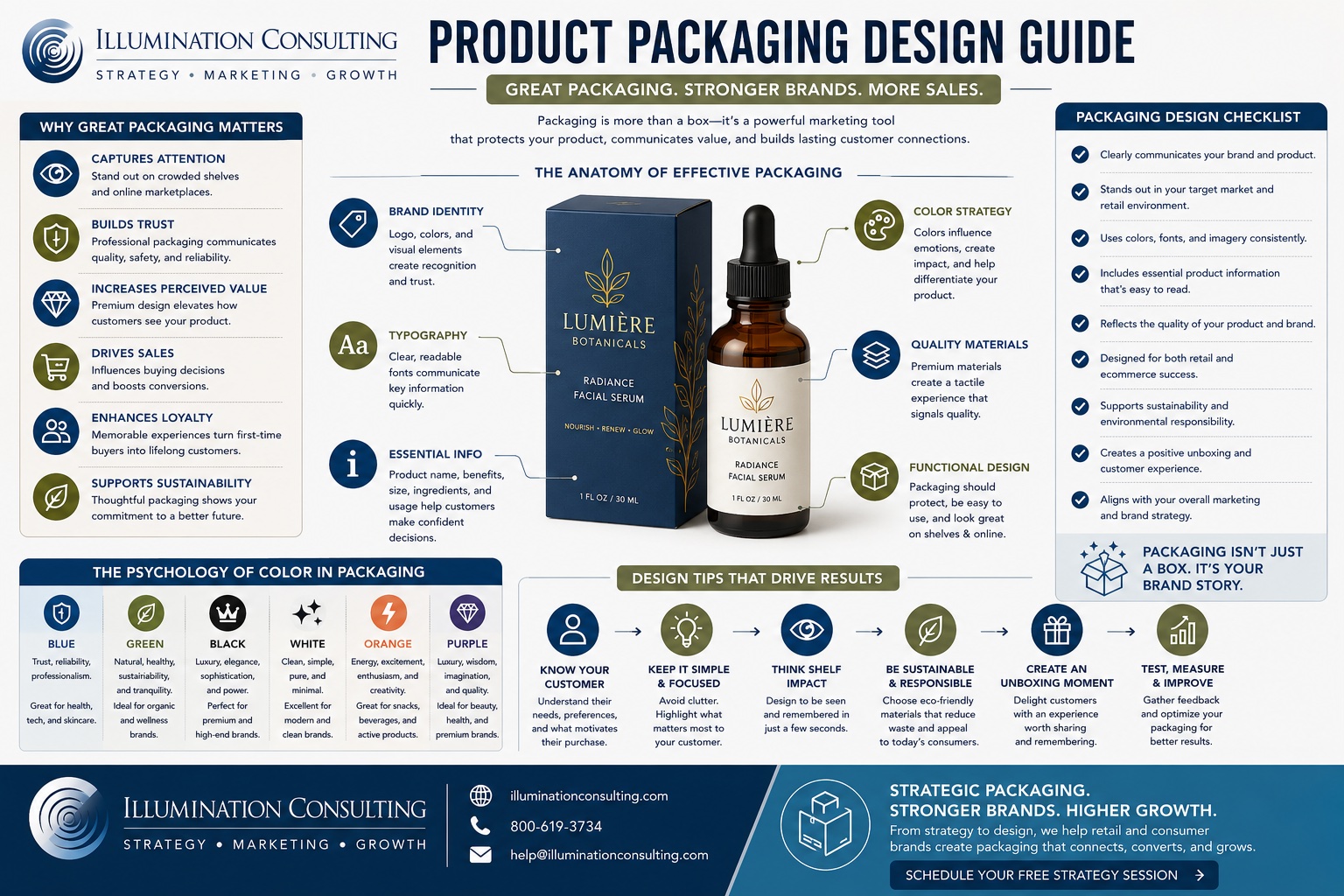
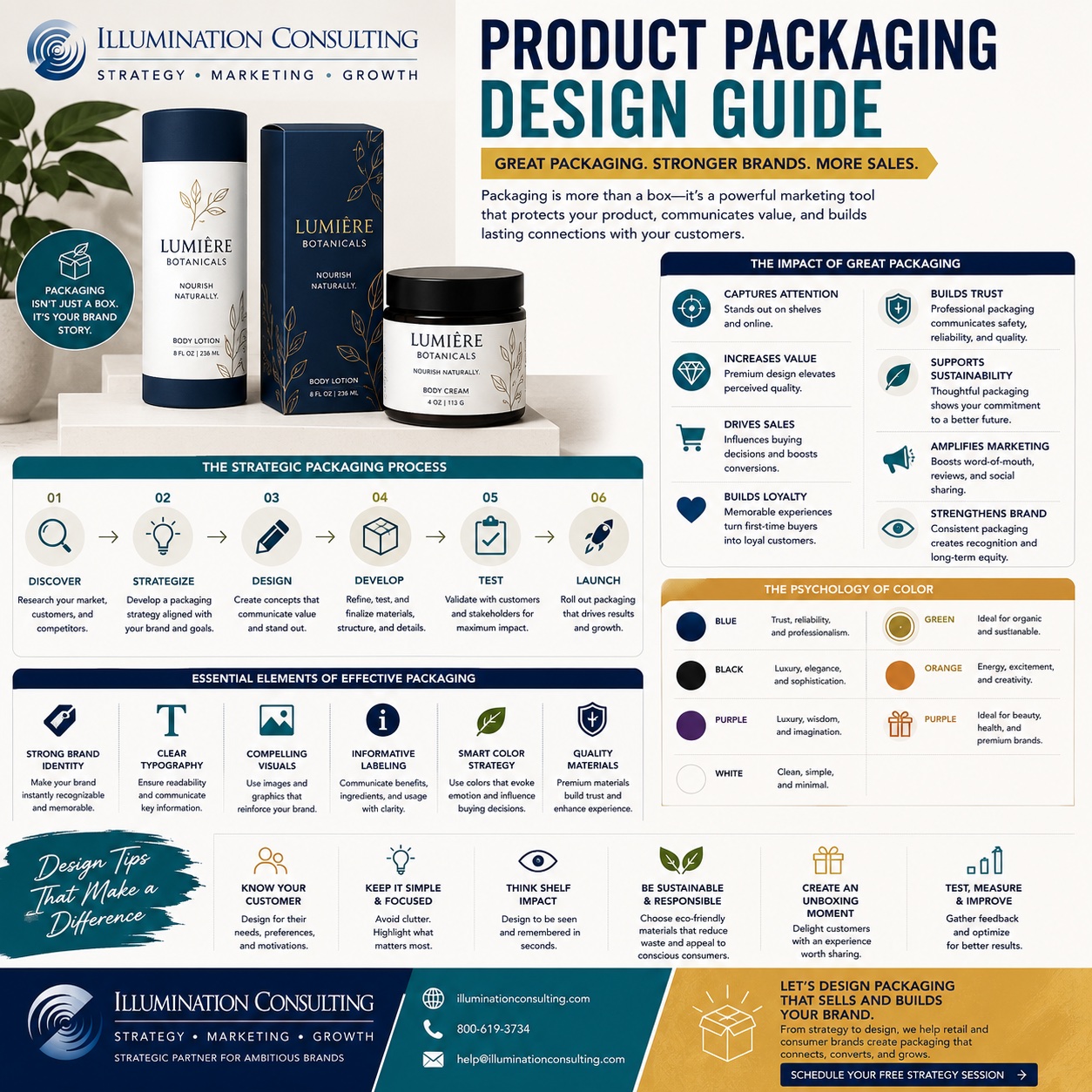
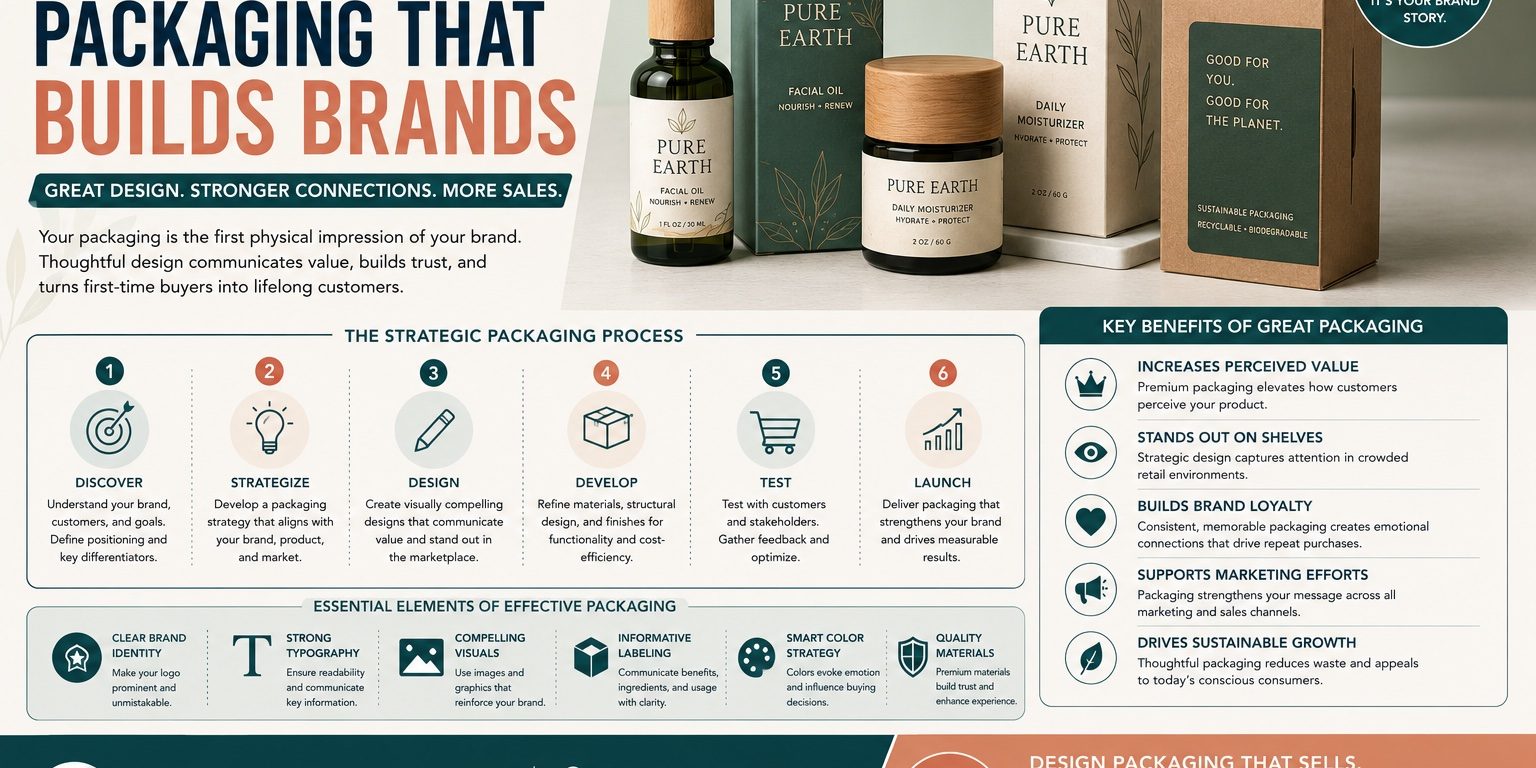
Product packaging has evolved far beyond simply protecting merchandise during shipping and storage. Today, it serves as one of the most powerful marketing tools available to retail brands. Effective packaging communicates quality, builds trust, reinforces brand identity, and influences purchasing decisions within seconds.
Whether your products are displayed on store shelves, sold through ecommerce, or listed on marketplaces like Amazon, thoughtful packaging creates memorable first impressions that can significantly impact sales and customer loyalty.
This guide explores the principles of successful product packaging design, the psychology behind consumer purchasing decisions, and practical strategies for creating packaging that strengthens your brand while driving long-term business growth.
Why Packaging Matters More Than Ever
Consumers are presented with countless buying options every day. In crowded retail environments, packaging often becomes the deciding factor between competing products with similar features and pricing.
Professional packaging helps businesses:
- Capture attention on crowded shelves
- Increase perceived product value
- Build customer confidence
- Strengthen brand recognition
- Support premium pricing
- Improve the customer experience
- Encourage repeat purchases
- Increase word-of-mouth referrals
- Create memorable unboxing experiences
For many businesses, packaging serves as the first physical interaction customers have with the brand. That first impression can shape perceptions long after the purchase has been made.
Packaging Is an Extension of Your Brand
Successful brands treat packaging as an extension of their overall identity rather than a separate design project.
Every package should reinforce the same visual language, messaging, and personality customers encounter through your website, advertising, social media, and retail displays.
Consistent packaging strengthens:
- Brand recognition
- Customer trust
- Product consistency
- Professional appearance
- Long-term brand equity
Customers should recognize your products immediately—even before reading the label.
Start with Your Ideal Customer
Effective packaging begins with understanding who you’re designing for.
Different audiences respond to different visual styles, materials, messaging, and purchasing motivations.
Consider questions such as:
- Who is your ideal customer?
- Where will the product be sold?
- What emotions should the packaging create?
- Is the product positioned as premium, affordable, sustainable, luxurious, or innovative?
- What purchasing problem does it solve?
Design decisions should always support the expectations of your target audience rather than following short-lived design trends.
Balance Form and Function
Beautiful packaging is important, but functionality is equally critical.
Customers expect packaging that protects the product, communicates essential information clearly, and delivers a positive user experience from purchase through disposal.
Well-designed packaging should:
- Protect the product during shipping
- Be easy to open
- Clearly communicate product information
- Display branding consistently
- Support retail merchandising
- Photograph well for ecommerce
- Minimize waste where possible
The best packaging combines attractive design with practical usability.
Use Color Strategically
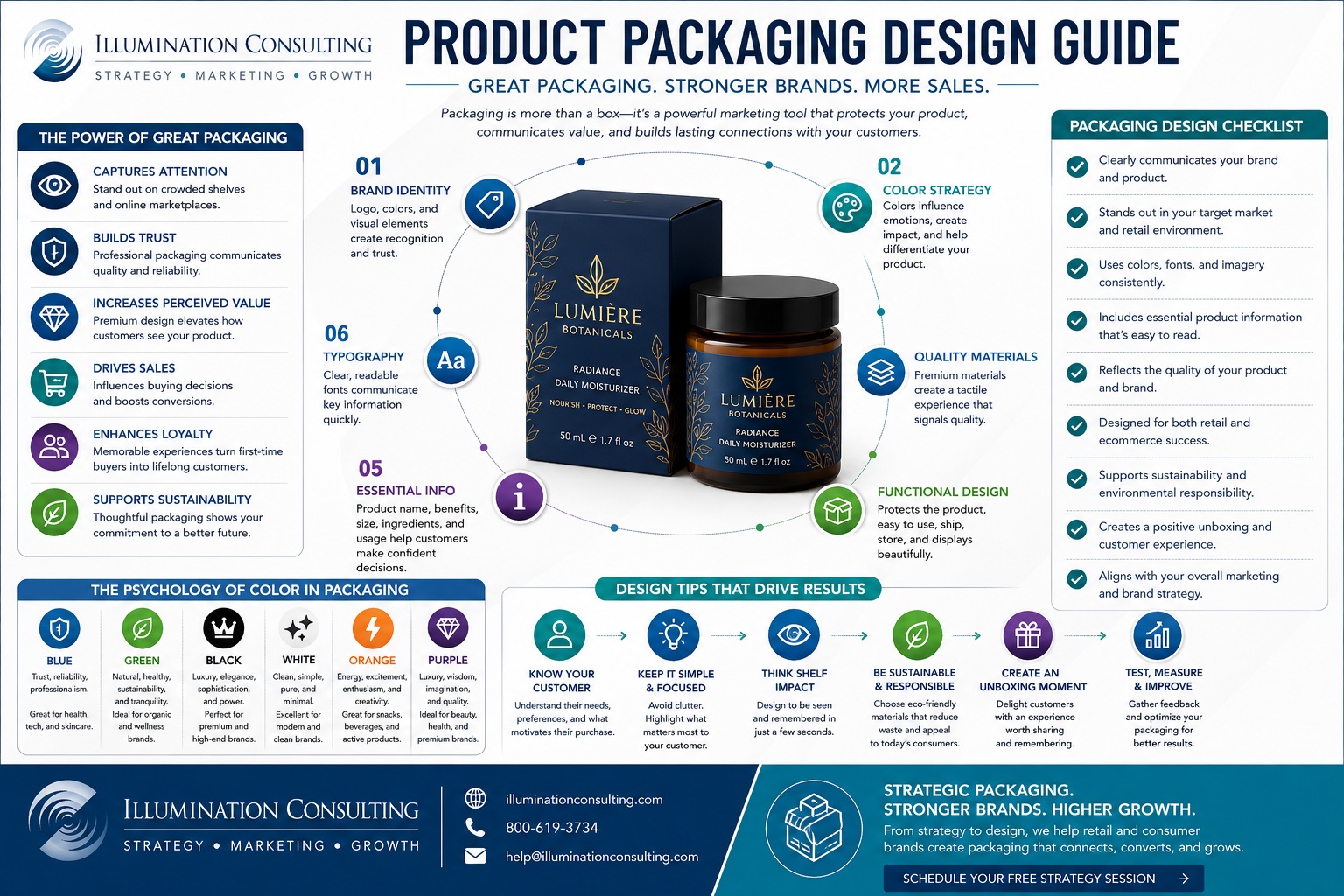
Color influences purchasing behavior long before customers read product descriptions.
Different color palettes communicate different emotions and expectations.
For example:
- Blue conveys trust and professionalism.
- Green represents wellness, sustainability, and natural products.
- Black suggests luxury and sophistication.
- White communicates simplicity and cleanliness.
- Gold reinforces premium quality.
- Orange creates excitement and energy.
Color selection should align with your overall brand identity while helping products stand out in competitive retail environments.