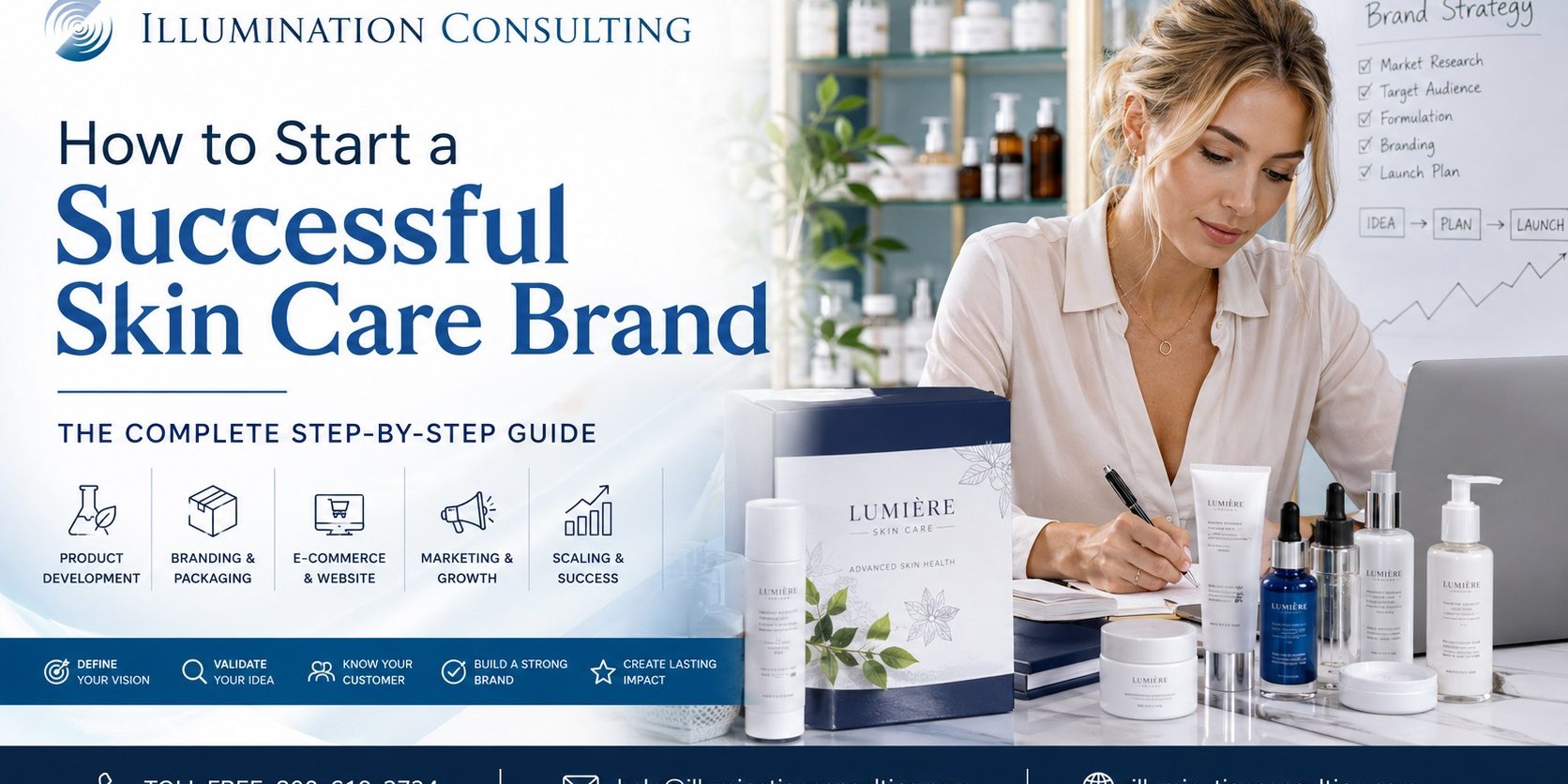
Starting a skin care brand has never been more achievable—or more competitive. Advances in product manufacturing, e-commerce, digital marketing, and artificial intelligence have lowered the barriers to entry, allowing entrepreneurs to launch professional beauty brands without owning a laboratory or manufacturing facility. Here find out how to start a successful skin care brand. Consumer expectations have never been higher. Today’s customers expect high-quality formulations, transparent ingredient lists, sustainable packaging, exceptional customer experiences, and brands they can trust. Creating a great product is no longer enough. Building a successful skin care company requires careful planning, strategic branding, effective marketing, and continuous innovation.
Whether your goal is to launch a direct-to-consumer beauty brand, develop products for medical spas and dermatology practices, or eventually secure retail distribution, success begins long before your first product reaches the market. Every decision—from selecting your niche and choosing a manufacturer to designing your packaging and building your website—plays an important role in the long-term success of your business.
The good news is that entrepreneurs have more resources available today than ever before. Contract manufacturers, private label suppliers, Shopify, digital advertising, influencer marketing, search engine optimization, and AI-powered marketing tools have made it possible for smaller brands to compete with much larger companies.
This guide walks through every stage of launching a successful skin care brand, from validating your business idea and developing products to creating your brand, building your online store, attracting customers, and scaling your business for long-term growth. For more assistance, work with experts through skin care business consulting services.
Why the Skin Care Industry Continues to Grow
The global skin care industry continues to experience strong growth as consumers increasingly prioritize healthy skin, preventative care, and wellness. Rather than viewing skin care as an occasional luxury purchase, many consumers now consider it an essential part of their daily routine.
This shift has created opportunities across virtually every market segment, including luxury skin care, clean beauty, medical-grade products, anti-aging solutions, acne treatments, sensitive skin formulations, men’s grooming, and products developed specifically for aesthetic clinics and medical practices.
Consumers are also significantly more informed than they were just a decade ago. Before purchasing a product, many research ingredients, compare reviews, watch educational videos, and evaluate brands based on transparency, clinical evidence, sustainability, and customer experiences.
Several trends continue to drive industry growth:
- Growing consumer awareness of skin health and preventative care.
- Increased demand for clinically proven ingredients and formulations.
- Continued expansion of direct-to-consumer e-commerce.
- Greater influence of social media and creator-driven product discovery.
- Rapid adoption of artificial intelligence for personalized shopping experiences.
- Strong demand for premium, science-backed skin care products.
For entrepreneurs, these trends represent significant opportunities—but only for brands that enter the market with a clear strategy and meaningful differentiation.
Choose a Niche Before You Develop Products
One of the most common mistakes new entrepreneurs make is trying to create products for everyone.
While it may seem logical to target the broadest possible audience, this approach almost always leads to weak branding, ineffective marketing, and increased competition against well-established companies with significantly larger budgets.
Instead, successful skin care brands begin by solving one specific problem for one specific audience.
Rather than asking:
“What products should I sell?”
Ask yourself:
“Who am I helping, and what problem am I solving?”
Answering this question first will influence nearly every decision you make throughout the life of your business, including product development, branding, packaging, pricing, website design, advertising, and customer acquisition.
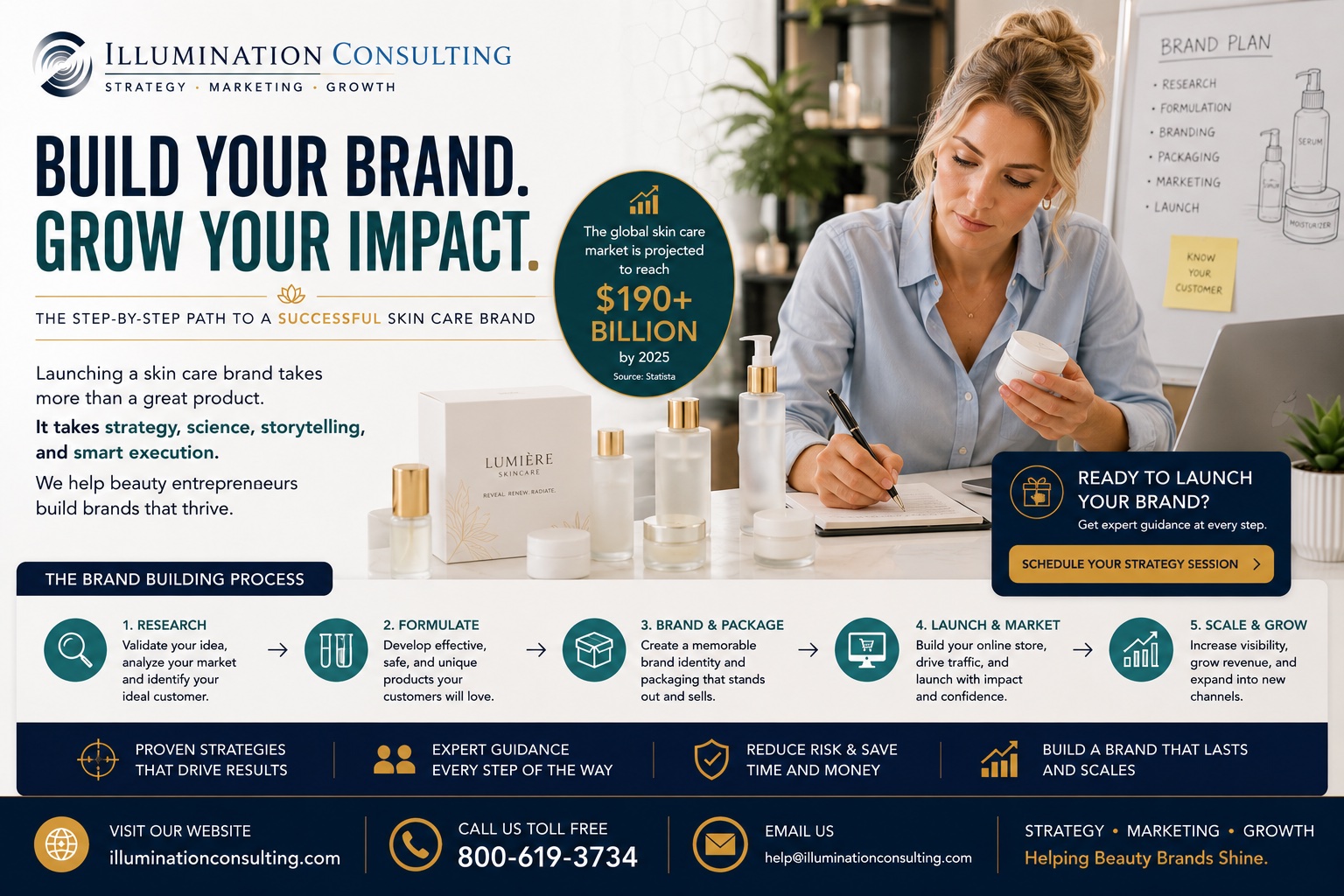
Examples of Profitable Skin Care Niches
Some of today’s fastest-growing market segments include:
- Medical-grade skin care
- Clean beauty
- Sensitive skin
- Acne-prone skin
- Healthy aging and anti-aging products
- Men’s skin care
- Barrier repair products
- Pregnancy-safe skin care
- Vegan and cruelty-free products
- Luxury skin care
- Professional spa products
- Dermatologist-developed skin care
- Products designed for aesthetic clinics and medical spas
The narrower your initial focus, the easier it becomes to establish authority, build trust, and create marketing messages that resonate with your ideal customer.
Many of today’s most recognizable beauty companies started with only one or two flagship products before expanding into complete product collections. Instead of trying to become another general beauty brand, focus on becoming the leading solution within a specific niche. Once you’ve built credibility and customer loyalty, expanding into additional categories becomes significantly easier.
How to Validate Your Skin Care Business Idea Before Investing Money
One of the biggest mistakes aspiring entrepreneurs make is investing thousands of dollars into product development before confirming there is actual demand for their idea. While enthusiasm is important, successful businesses are built on research and validation—not assumptions.
Many skin care startups fail because founders create products they personally like instead of products customers are actively searching for and willing to purchase. Before spending money on formulations, inventory, packaging, or branding, take the time to understand the market, identify opportunities, and evaluate your competition.
Validating your business idea early can save thousands of dollars and significantly improve your chances of building a profitable brand.
Identify a Real Market Opportunity
Every successful skin care brand solves a problem. The more clearly you define that problem, the easier it becomes to position your products and communicate their value.
Ask yourself questions such as:
- What skin concern am I helping customers solve?
- Who experiences this problem most frequently?
- What products are they currently buying?
- What frustrations do customers have with existing solutions?
- How can my products provide a better experience?
For example, instead of creating another generic moisturizer, you might focus on moisturizers designed specifically for sensitive skin after cosmetic procedures, barrier repair products for eczema-prone skin, or anti-aging products formulated for women over 50. The more specific your positioning, the easier it becomes to stand out in a crowded marketplace.
Research Your Competitors
Competition is not something to fear—it is evidence that customers are already spending money within your market. Instead of avoiding competitive niches, study the companies that are already succeeding.
Review their websites, product collections, pricing, packaging, messaging, customer reviews, and marketing strategies. Pay close attention to both positive and negative reviews, as they often reveal unmet customer needs that present opportunities for your brand.
Questions to consider include:
- What products generate the most reviews?
- Which ingredients are mentioned most often?
- What complaints appear repeatedly?
- How are products priced?
- What promises are brands making?
- What makes each competitor unique?
The goal is not to copy successful brands but to identify ways to differentiate your own.
Understand Your Ideal Customer
One of the most valuable exercises you can complete is creating a detailed customer profile. The more you understand your ideal customer, the more effective every business decision becomes.
Consider factors such as:
- Age
- Gender
- Income level
- Occupation
- Lifestyle
- Skin concerns
- Purchasing habits
- Shopping preferences
- Budget
- Preferred social media platforms
For example, a luxury anti-aging brand targeting women between 45 and 65 will require completely different branding, pricing, packaging, photography, and messaging than a clean beauty brand designed for Gen Z consumers.
Understanding your customer also influences where you invest your marketing budget. Younger audiences may discover products through TikTok or Instagram, while older consumers often rely on Google searches, YouTube, dermatologist recommendations, and online reviews before making purchasing decisions.
Look for Gaps in the Market
Successful brands often identify opportunities that larger competitors overlook.
Market gaps can include:
- Underserved demographics
- Innovative ingredient combinations
- Cleaner formulations
- Better educational content
- Superior customer service
- More sustainable packaging
- Subscription programs
- Professional products for clinics and spas
- Products designed for specific skin conditions
Rather than competing solely on price, focus on creating additional value that customers cannot easily find elsewhere.
Validate Search Demand
Search engine data provides valuable insight into consumer interest before you launch your business.
Research keywords related to your niche and determine how frequently consumers search for topics related to your products. For example:
- Best vitamin C serum
- Skin care routine for acne
- Moisturizer for sensitive skin
- Retinol for beginners
- Medical-grade skin care
- Peptide serum
- Barrier repair cream
These searches reveal what consumers are actively looking for and can guide both product development and your long-term content marketing strategy.
Publishing educational articles around these topics can begin attracting organic traffic long before your product catalog is complete, helping establish authority and build trust with future customers.
Validate Demand Before Manufacturing
Before committing to large production runs, consider validating customer interest through smaller-scale initiatives.
Many successful founders begin by:
- Building a landing page describing their upcoming products.
- Collecting email addresses from interested customers.
- Publishing educational content around their niche.
- Sharing product development updates on social media.
- Running small advertising campaigns to measure interest.
- Gathering feedback from potential customers.
- Working with estheticians, dermatologists, or medical professionals to evaluate concepts.
This approach allows you to collect valuable market feedback before investing significant capital in inventory.
The objective is simple: reduce risk while increasing confidence that customers are ready to purchase once your products become available.
Choosing Between Private Label and Custom Formulation
One of the first major decisions every skin care entrepreneur faces is whether to launch with private label products or invest in developing custom formulations.
There is no universal right answer. The best option depends on your budget, timeline, long-term goals, and how you plan to position your brand in the marketplace.
Understanding the advantages and limitations of each approach will help you make an informed decision before investing in product development.
Private Label vs. Custom Formulation: Which Is Right for Your Brand?
One of the most important decisions you’ll make when starting a skin care brand is choosing how your products will be developed. Most entrepreneurs begin with one of two approaches: private label manufacturing or custom formulation.
Both models have helped launch successful beauty companies, but they offer very different advantages, costs, timelines, and levels of control. Understanding these differences before investing will help you choose the approach that best aligns with your business goals.
What Is Private Label Skin Care?
Private label skin care allows entrepreneurs to purchase pre-developed formulations from a manufacturer and sell them under their own brand. Instead of creating products from scratch, you select existing formulations, customize the packaging and labeling, and bring them to market quickly.
This option is attractive because it significantly reduces product development time and startup costs.
Benefits of private label manufacturing include:
- Faster time to market.
- Lower initial investment.
- Proven formulations that have already been tested.
- Lower minimum order quantities from many manufacturers.
- Simplified product development process.
- Ability to launch a complete product line within a relatively short period.
Private label is often an excellent choice for entrepreneurs who want to validate their business concept before investing heavily in proprietary products.
However, there are limitations. Other companies may sell similar formulations under different brand names, making it more challenging to differentiate your products solely through ingredients. Your competitive advantage must come from branding, customer experience, education, marketing, and positioning.
What Is Custom Formulation?
Custom formulation involves developing unique products specifically for your brand. A cosmetic chemist or formulation laboratory creates products based on your requirements, ingredient preferences, target customer, and desired performance.
This approach offers considerably more flexibility but also requires greater investment.
Advantages of custom formulation include:
- Exclusive formulations.
- Greater product differentiation.
- Full control over ingredients and performance.
- Ability to develop proprietary product collections.
- Stronger long-term brand value.
- Better opportunities for intellectual property and innovation.
Custom formulation is generally the preferred path for brands seeking premium positioning, medical-grade credibility, or long-term expansion into retail distribution.
The tradeoff is a longer development timeline, higher formulation costs, multiple testing rounds, and larger financial commitments before products are ready for market.
Which Option Is Best for New Entrepreneurs?
There is no single answer that applies to every business.
If your primary objective is to launch quickly, validate demand, and begin generating revenue, private label manufacturing is often the most practical starting point.
If your vision is to build a differentiated premium brand with proprietary products and significant long-term value, investing in custom formulations may provide a stronger competitive advantage.
Some entrepreneurs successfully combine both approaches. They launch initially with carefully selected private label products while simultaneously developing proprietary formulations that are introduced as the business grows.
This phased strategy reduces financial risk while allowing the brand to establish customer relationships and generate cash flow.
Selecting the Right Manufacturing Partner
Your manufacturer is more than a supplier—they become one of the most important business partners your company will have.
A reliable manufacturer directly influences product quality, customer satisfaction, inventory availability, production timelines, and ultimately your brand reputation.
Choosing the wrong manufacturer can lead to inconsistent products, delayed launches, inventory shortages, regulatory issues, and dissatisfied customers.
For that reason, selecting a manufacturing partner should never be based solely on price.
Evaluate Manufacturing Experience
Look for manufacturers that specialize in skin care rather than general cosmetic production.
Ask questions such as:
- How many years have you been manufacturing skin care products?
- Which product categories do you specialize in?
- Do you manufacture products for established brands?
- What quality control procedures do you follow?
- Are your facilities certified?
- Can you provide references or client testimonials?
Experience often translates into fewer production issues and more consistent product quality.
Understand Minimum Order Quantities
Every manufacturer establishes minimum order quantities (MOQs), which determine the smallest production run available.
Some manufacturers accommodate startups with relatively small orders, while others require production runs of several thousand units per product.
Understanding these requirements early helps you accurately estimate startup costs and inventory needs.
Avoid purchasing excessive inventory simply because larger quantities reduce the per-unit cost. Cash flow is often far more valuable than maximizing manufacturing discounts during the early stages of your business.
Review Product Testing and Quality Assurance
Consumers expect consistent, safe, and effective products.
Ask prospective manufacturers about their testing procedures, including:
- Stability testing.
- Compatibility testing.
- Microbial testing.
- Preservative efficacy testing.
- Batch consistency.
- Quality assurance protocols.
Reliable testing protects both your customers and your brand reputation.
Communication Matters
Many entrepreneurs underestimate the importance of communication.
During product development, you’ll likely have questions regarding formulations, ingredients, packaging compatibility, production schedules, shipping timelines, and inventory planning.
Choose a manufacturer that communicates clearly, responds promptly, and demonstrates a willingness to support your business as it grows.
Strong communication often becomes just as valuable as manufacturing expertise.
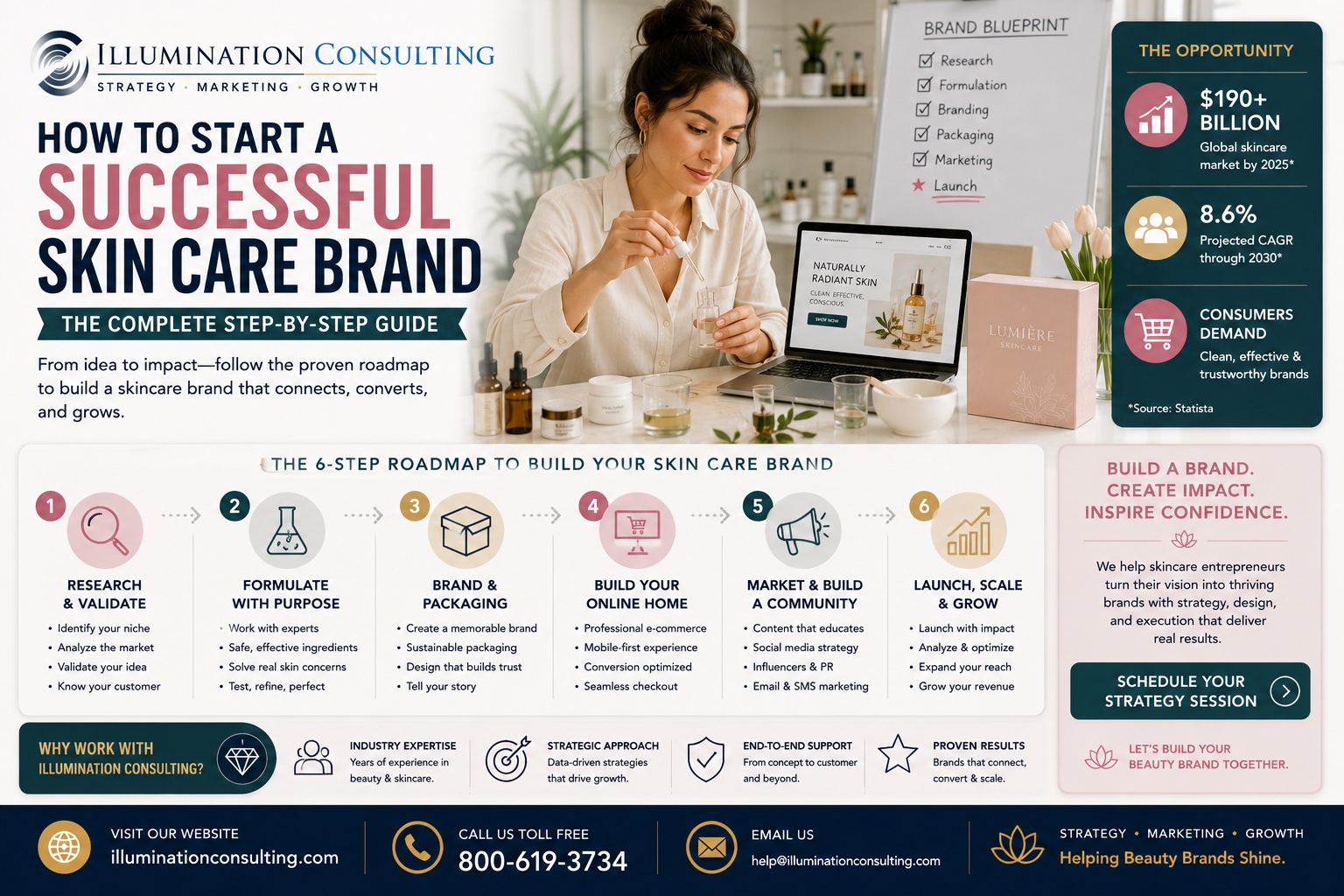
Building a Brand Customers Remember
Excellent products alone rarely create successful companies.
Consumers purchase brands they trust, identify with, and remember.
Your brand represents far more than a logo or color palette. It is the complete perception customers develop through every interaction with your business—from your website and packaging to customer service, educational content, advertising, and product performance.
Strong branding creates emotional connections that encourage repeat purchases and customer loyalty.
Define Your Brand Positioning
Before designing your visual identity, clearly define how you want customers to perceive your company.
Ask yourself:
- What does my brand stand for?
- What values define my business?
- What makes my products different?
- Why should customers choose my brand instead of competitors?
- What emotions should customers experience when interacting with my company?
Clear positioning creates consistency across every customer touchpoint.
Develop a Memorable Brand Identity
A professional brand identity should communicate quality immediately.
This includes:
- Company name.
- Logo.
- Typography.
- Color palette.
- Packaging style.
- Product photography.
- Brand voice.
- Website design.
- Marketing materials.
Consistency across these elements builds recognition and strengthens consumer trust over time.
Luxury brands typically emphasize simplicity, premium photography, elegant typography, and refined packaging. Clinical brands often communicate science, expertise, and measurable results. Wellness brands frequently focus on natural ingredients, sustainability, and lifestyle imagery.
Your visual identity should reinforce your positioning at every opportunity.
Tell Your Brand Story
Customers increasingly buy from companies they feel connected to.
Your brand story should explain why your company exists, what inspired its creation, and the mission behind your products.
Authentic stories build credibility and humanize your business.
Whether your inspiration came from solving your own skin concerns, working alongside dermatologists, creating cleaner formulations, or helping patients after aesthetic procedures, your story should clearly communicate your purpose and values.
A compelling brand story helps transform first-time buyers into long-term advocates who genuinely believe in your mission.
Designing Packaging That Sells Your Products
Packaging is often the first physical interaction a customer has with your brand. Long before they experience the quality of your cleanser, serum, or moisturizer, they form an opinion based on the appearance, feel, and presentation of the product.
In a highly competitive industry, packaging influences purchasing decisions almost as much as the formulation itself. Attractive, functional packaging increases perceived value, strengthens brand recognition, and communicates professionalism.
Consumers frequently associate premium packaging with premium products. Investing in thoughtful design helps build trust before the product is even opened.
Your Packaging Should Reflect Your Brand Positioning
Your packaging should immediately communicate who your products are designed for and where your brand fits within the marketplace.
For example:
- Luxury brands typically feature minimalist designs, premium materials, embossed finishes, and elegant typography.
- Clinical brands emphasize clean layouts, scientific credibility, ingredient transparency, and simplicity.
- Natural and wellness brands often incorporate earthy colors, sustainable materials, and botanical imagery.
- Medical spa and dermatologist-exclusive brands usually prioritize professional, sophisticated aesthetics that reinforce clinical expertise.
Every design decision should support the perception you want customers to have of your brand.
Balance Beauty With Functionality
While attractive packaging is important, functionality should never be overlooked.
Customers expect packaging that is:
- Easy to use.
- Durable during shipping.
- Hygienic.
- Easy to store.
- Leak-resistant.
- Compatible with the product formulation.
- Environmentally responsible whenever possible.
Airless pumps, UV-resistant containers, droppers, glass bottles, and recyclable materials each have advantages depending on the type of product being packaged.
Selecting the wrong container can reduce product stability, shorten shelf life, or negatively affect the customer experience.
Labeling Requirements
Skin care products are subject to labeling regulations that vary by country. While specific legal requirements should always be reviewed with regulatory professionals, product labels generally include:
- Product name.
- Net contents.
- Ingredient list.
- Manufacturer or distributor information.
- Directions for use.
- Appropriate warnings.
- Batch or lot number.
- Expiration or period-after-opening information when applicable.
Accurate labeling helps build consumer confidence while reducing regulatory risk.
Create an Unboxing Experience
Today’s consumers frequently share purchases on social media. A memorable unboxing experience can generate valuable user-generated content while increasing customer satisfaction.
Consider incorporating:
- Premium product boxes.
- Branded tissue paper.
- Personalized thank-you cards.
- Educational inserts.
- Product usage guides.
- Loyalty program invitations.
- Samples of complementary products.
- Discount codes for future purchases.
These relatively inexpensive additions often increase repeat purchase rates while reinforcing your brand identity.
Pricing Your Products for Profit
Pricing is one of the most misunderstood aspects of launching a skin care brand.
Many entrepreneurs attempt to compete by offering the lowest prices. In reality, competing solely on price usually results in lower profit margins, reduced marketing budgets, and limited long-term growth.
Instead, pricing should reflect the value your products provide while generating sufficient margins to support marketing, operations, product development, and future expansion.
Calculate Your True Product Cost
Before establishing retail pricing, determine the total cost of delivering each product to the customer.
This includes:
- Manufacturing.
- Packaging.
- Labels.
- Shipping materials.
- Freight.
- Warehousing.
- Payment processing fees.
- Marketing costs.
- Customer support.
- Returns and replacements.
Understanding your total cost prevents underpricing and ensures your business remains financially sustainable.
Position Your Products Strategically
Consumers often associate higher prices with higher quality, particularly within the beauty industry.
Premium pricing can reinforce your brand positioning when supported by:
- Superior formulations.
- Clinical ingredients.
- Professional branding.
- Outstanding customer service.
- Premium packaging.
- Educational content.
- Strong customer reviews.
Rather than asking, “How cheaply can I sell this?” ask, “What value does this product create for my customer?”
That perspective often results in healthier profit margins and stronger brand perception.
Build Product Collections
Customers rarely purchase just one skin care product.
Develop complementary routines that encourage multiple-item purchases.
Examples include:
- Cleanser + Toner + Serum.
- Cleanser + Moisturizer.
- Morning Routine Bundle.
- Evening Routine Bundle.
- Anti-Aging Collection.
- Acne Treatment System.
- Sensitive Skin Kit.
- Medical Procedure Recovery Kit.
Bundles increase average order value while simplifying purchasing decisions for customers.
Subscription programs offering recurring deliveries can further improve customer retention while generating predictable monthly revenue.
Build a High-Converting E-Commerce Website
Your website is your digital storefront.
Even the best products struggle to sell if the online shopping experience is confusing, slow, or unprofessional.
A professionally designed e-commerce website should educate visitors, build trust, answer questions, and guide customers toward making a purchase.
For most new brands, Shopify remains one of the strongest platforms because it combines flexibility, security, scalability, and a large ecosystem of integrations.
Essential Pages Every Skin Care Website Should Include
Beyond product pages, every professional skin care website should include:
- Home page.
- About Us.
- Shop.
- Individual product pages.
- Ingredient education.
- Skin concerns.
- Blog.
- Frequently Asked Questions.
- Contact page.
- Shipping policy.
- Returns policy.
- Privacy policy.
- Terms and conditions.
Educational content significantly improves both customer confidence and search engine visibility.
Optimize Product Pages for Conversions
Every product page should answer the questions customers are already asking.
Include:
- High-quality product photography.
- Lifestyle imagery.
- Ingredient highlights.
- Product benefits.
- Directions for use.
- Clinical information when appropriate.
- Before-and-after imagery where permitted.
- Customer reviews.
- Frequently asked questions.
- Shipping information.
- Related products.
- Clear calls to action.
The goal is to eliminate uncertainty before the customer reaches the checkout page.
Invest in Professional Photography
Photography is one of the highest-return investments a skin care brand can make.
Professional images communicate quality immediately.
Consider including:
- White background product photography.
- Lifestyle photography.
- Ingredient photography.
- Texture shots.
- Clinical environments.
- Customer lifestyle imagery.
- Video demonstrations.
Strong visuals improve advertising performance, social media engagement, and website conversion rates.
Prioritize Website Speed
Customers expect websites to load almost instantly.
Slow websites increase bounce rates, reduce conversions, and negatively impact search rankings.
Optimize your website by:
- Compressing images.
- Using modern image formats.
- Minimizing unnecessary apps.
- Choosing high-performance themes.
- Implementing content delivery networks.
- Regularly testing page speed.
A fast website creates a better customer experience while improving SEO performance.
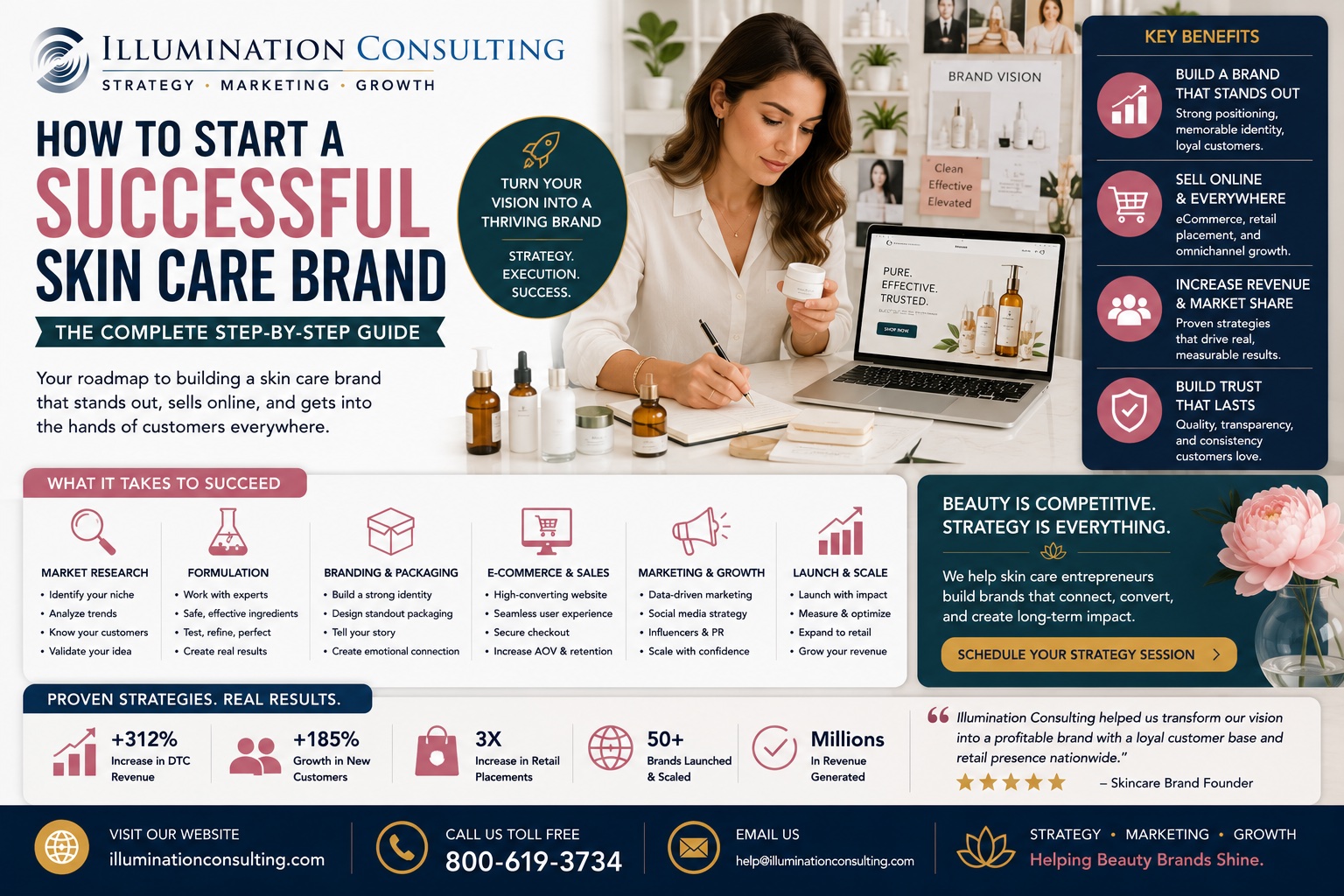
Build Trust Before Asking Customers to Buy
Trust is the foundation of every successful skin care brand.
Consumers apply your products directly to their skin. They want reassurance that your company is credible, transparent, and committed to quality.
Your website should include multiple trust signals throughout the customer journey, including:
- Verified customer reviews.
- Testimonials.
- Clinical information.
- Ingredient transparency.
- Frequently asked questions.
- Professional certifications where applicable.
- Secure payment options.
- Easy return policies.
- Responsive customer support.
- Educational content written by knowledgeable professionals.
The more confidence customers have in your brand, the more likely they are to complete a purchase and return for future orders.
The most successful skin care companies don’t simply sell products—they educate, solve problems, and build long-term relationships with their customers. That trust becomes one of the most valuable competitive advantages a brand can develop over time.
Develop a Marketing Strategy Before You Launch
One of the biggest reasons new skin care brands struggle is that they spend months developing products and almost no time developing a marketing strategy. Launching a beautiful website without a plan to attract visitors is like opening a retail store in the middle of the desert—your products may be excellent, but very few people will ever see them.
Marketing should begin long before your first product becomes available. Building awareness early allows you to develop an audience, collect email subscribers, generate excitement, and establish credibility before launch day.
The brands that grow the fastest rarely wait until products arrive at their warehouse to start promoting themselves. Instead, they document the journey, educate their audience, and build relationships throughout the product development process.
Build Your Brand Through Search Engine Optimization (SEO)
Search engine optimization remains one of the most valuable long-term marketing investments for any skin care brand. Unlike paid advertising, which stops generating traffic as soon as your budget runs out, SEO continues attracting qualified visitors for months or even years after quality content is published.
Consumers search Google every day for answers to questions about their skin, ingredients, routines, and product recommendations. Ranking for these searches positions your brand as a trusted authority while introducing potential customers to your products.
Examples of high-value search topics include:
- Best skin care routine for sensitive skin
- Vitamin C serum benefits
- How to repair the skin barrier
- Retinol for beginners
- Best moisturizer for dry skin
- How to reduce acne scars
- Peptides vs. retinol
- Niacinamide benefits
- Morning skin care routine
- Medical-grade skin care
Educational articles addressing these topics help establish expertise while naturally guiding readers toward your products.
Publishing valuable content consistently also supports long-term authority in Google’s search results and emerging AI-powered search experiences.
Create Educational Content That Builds Trust
Today’s consumers don’t simply buy products—they buy expertise.
Educational content allows your company to demonstrate knowledge while helping customers make informed decisions.
Content marketing can include:
- Blog articles.
- Buying guides.
- Ingredient spotlights.
- Skin care routines.
- Frequently asked questions.
- Video tutorials.
- Product comparisons.
- Clinical education.
- Dermatologist interviews.
- Esthetician tips.
Every piece of content should answer real customer questions while reinforcing your brand’s credibility.
Over time, a comprehensive content library becomes one of your strongest competitive advantages because it attracts organic traffic, supports social media, generates backlinks, and improves conversion rates.
Build an Email List From Day One
Email marketing remains one of the highest-return marketing channels available.
Unlike social media platforms, where algorithms control visibility, your email list is an asset your business owns.
Start collecting email subscribers before your products launch by offering value such as:
- Early product access.
- Educational guides.
- Exclusive promotions.
- Skin care consultations.
- Product launch announcements.
- VIP membership opportunities.
Once customers subscribe, nurture the relationship through valuable educational emails instead of constant promotional messages.
A well-developed email marketing strategy increases repeat purchases, customer loyalty, and lifetime customer value.
Use Social Media to Educate, Not Just Sell
One of the biggest mistakes beauty brands make is filling their social media feeds with endless product promotions.
Consumers visit social media to learn, discover, and be entertained—not to view advertisements all day.
Successful skin care brands create a balanced content strategy that includes:
- Educational tips.
- Ingredient explanations.
- Before-and-after transformations where appropriate.
- Product demonstrations.
- Customer testimonials.
- Frequently asked questions.
- Founder stories.
- Behind-the-scenes content.
- Manufacturing insights.
- Skin care myths.
- Professional advice.
This approach builds trust while naturally introducing products without appearing overly promotional.
Consistency is far more important than posting frequency. A regular publishing schedule supported by high-quality content produces better long-term results than occasional bursts of activity.
Partner With Influencers and Industry Professionals
Influencer marketing has become one of the most effective customer acquisition channels within the beauty industry.
However, success isn’t determined by working with celebrities or influencers with millions of followers.
Many brands achieve better results by partnering with micro-influencers who have highly engaged audiences and stronger relationships with their followers.
Potential collaboration partners include:
- Estheticians.
- Dermatologists.
- Medical spas.
- Plastic surgery practices.
- Beauty creators.
- Makeup artists.
- Wellness coaches.
- Lifestyle influencers.
- Beauty bloggers.
- Professional educators.
Focus on building genuine relationships instead of one-time promotional campaigns.
Authentic recommendations often generate significantly better results than traditional advertising.
Invest in Paid Advertising Strategically
Paid advertising can accelerate growth, but it should complement—not replace—your long-term marketing strategy.
Many new brands make the mistake of directing advertising budgets toward cold audiences before establishing trust.
Instead, develop a complete customer acquisition funnel.
An effective strategy often looks like this:
- Educational content introduces your brand.
- Website visitors join your email list.
- Email campaigns build trust.
- Retargeting advertisements remind visitors about your products.
- Customers complete their purchase.
- Post-purchase emails encourage repeat business.
This approach typically produces better returns than relying solely on direct-response advertising.
Popular advertising platforms include:
- Google Ads.
- Meta Ads (Facebook and Instagram).
- Pinterest Ads.
- TikTok Ads.
- YouTube Ads.
Each platform serves a different purpose and should be evaluated based on your target audience and customer acquisition costs.
Use Artificial Intelligence to Scale Marketing
Artificial intelligence is rapidly changing how successful skin care brands operate.
Rather than replacing marketing professionals, AI enables businesses to work more efficiently while delivering more personalized customer experiences.
AI can assist with:
- Content creation.
- Search engine optimization.
- Customer segmentation.
- Email personalization.
- Product recommendations.
- Chatbots and customer support.
- Advertising optimization.
- Predictive analytics.
- Inventory forecasting.
- Marketing automation.
Brands that thoughtfully integrate AI into their operations gain a competitive advantage by improving efficiency while maintaining consistent communication with customers.
Measure the Metrics That Matter
Growing businesses rely on data rather than assumptions.
Instead of focusing solely on revenue, monitor the key performance indicators that influence long-term profitability.
Important metrics include:
- Website traffic.
- Organic search traffic.
- Conversion rate.
- Average order value.
- Customer acquisition cost.
- Return on advertising spend.
- Email open rate.
- Email click-through rate.
- Customer lifetime value.
- Repeat purchase rate.
- Cart abandonment rate.
- Revenue by marketing channel.
Reviewing these metrics consistently allows you to identify opportunities, improve marketing performance, and make informed business decisions.
Create an Exceptional Customer Experience
Acquiring a new customer is significantly more expensive than retaining an existing one.
For this reason, customer experience should become one of your company’s highest priorities.
Delivering exceptional experiences increases customer satisfaction while encouraging repeat purchases, referrals, positive reviews, and long-term loyalty.
Small improvements often create lasting impressions.
Examples include:
- Fast shipping.
- Personalized thank-you notes.
- Educational product guides.
- Responsive customer support.
- Simple return policies.
- Loyalty rewards.
- Birthday offers.
- Subscription discounts.
- Surprise product samples.
- Consistent communication after purchase.
Every interaction contributes to how customers perceive your brand.
Companies that consistently exceed expectations transform first-time buyers into loyal advocates who recommend products to friends, family, and colleagues.
Ultimately, sustainable growth comes from combining exceptional products with outstanding customer experiences. Businesses that invest in both are far more likely to build recognizable brands, achieve consistent revenue growth, and create long-term enterprise value.
How to Scale Your Skin Care Brand
Launching your first products is only the beginning. Once you’ve established consistent sales and positive customer feedback, the next objective is building a business that can scale profitably without sacrificing product quality or customer satisfaction.
Scaling successfully requires planning, systems, and disciplined decision-making. Many brands experience rapid early growth but struggle because they expand too quickly, introduce too many products, or fail to build the operational infrastructure needed to support increased demand.
Sustainable growth is achieved by strengthening your foundation before accelerating expansion.
Expand Your Product Line Strategically
One of the biggest mistakes new brands make is launching too many products too quickly.
Instead of introducing ten or twenty products during your first year, focus on building a core collection that delivers exceptional results and generates repeat purchases.
Once those products have proven successful, expand into complementary categories that naturally fit your customers’ routines.
For example, if your first product is a Vitamin C serum, logical additions may include:
- Gentle cleanser
- Hydrating moisturizer
- Broad-spectrum sunscreen
- Retinol serum
- Eye cream
- Overnight treatment
- Exfoliating toner
Each new product should strengthen your brand rather than simply increasing your catalog size.
Increase Customer Lifetime Value
Many businesses focus almost exclusively on acquiring new customers while overlooking the tremendous value of existing ones.
Increasing Customer Lifetime Value (CLV) is often far more profitable than continuously increasing advertising budgets.
Strategies include:
- Subscription programs
- Loyalty rewards
- Product bundles
- Automated replenishment reminders
- Personalized email recommendations
- Exclusive VIP offers
- Educational newsletters
- Seasonal product launches
- Referral programs
Customers who trust your products are far more likely to purchase additional items when you continue providing value after the initial sale.
Expand Into Professional Channels
As your brand matures, consider opportunities beyond direct-to-consumer sales.
Professional distribution channels can significantly increase revenue while enhancing brand credibility.
Potential opportunities include:
- Medical spas
- Dermatology practices
- Plastic surgery clinics
- Wellness centers
- Esthetician studios
- Luxury spas
- Boutique retailers
- Specialty beauty stores
- Independent pharmacies
- Professional treatment providers
These partnerships often generate recurring wholesale revenue while introducing your products to new audiences.
If you plan to sell through professional channels, consider developing educational materials, treatment protocols, wholesale pricing, and professional support programs specifically designed for business clients.
Prepare for Retail Expansion
Retail distribution can accelerate growth, but it also introduces additional complexity.
Retail buyers expect:
- Consistent inventory
- Professional packaging
- Reliable fulfillment
- Marketing support
- Strong branding
- Proven sales performance
- Consumer demand
Before pursuing retail partnerships, ensure your operational systems are capable of supporting larger production volumes without compromising quality.
Many successful brands first establish strong online sales before expanding into retail because direct-to-consumer performance demonstrates market demand and strengthens negotiations with retail buyers.
Common Mistakes to Avoid
Every year, promising skin care brands fail because they repeat many of the same avoidable mistakes.
Understanding these pitfalls can help you make better decisions throughout your entrepreneurial journey.
Trying to Compete on Price
Lower prices rarely create long-term competitive advantages.
Instead, compete on:
- Product quality
- Customer experience
- Education
- Brand reputation
- Innovation
- Service
- Community
Premium brands often enjoy healthier margins and stronger customer loyalty than companies competing solely on affordability.
Ignoring Branding
Your brand is much more than a logo.
Weak branding creates confusion, while strong branding builds recognition, trust, and emotional connections with customers.
Invest in professional design from the beginning whenever possible.
Launching Without a Marketing Plan
Many entrepreneurs spend months developing products but very little time planning how customers will discover them.
Marketing should begin well before your products become available.
Building an audience before launch often leads to significantly stronger sales during your first months of business.
Neglecting Search Engine Optimization
SEO is one of the most valuable long-term marketing investments available.
Publishing educational content consistently allows your website to attract qualified visitors who are actively searching for solutions related to your products.
Unlike paid advertising, quality SEO continues producing results long after an article has been published.
Choosing Manufacturers Based Only on Price
Manufacturing partners directly influence your brand’s reputation.
Poor quality control, inconsistent production, delayed shipments, and communication issues can quickly damage customer trust.
Choose partners based on quality, experience, reliability, and communication—not simply the lowest production cost.
Expanding Too Quickly
Growth should be intentional.
Adding too many products, hiring too rapidly, or increasing inventory before validating demand can create unnecessary financial pressure.
Focus on sustainable growth supported by strong operational systems.
Frequently Asked Questions
How much does it cost to start a skin care brand?
Startup costs vary depending on your manufacturing model, packaging, branding, website, inventory, and marketing budget. Many entrepreneurs begin with private label products requiring a relatively modest investment, while custom-formulated brands generally require substantially larger budgets.
Should I choose private label or custom formulation?
Private label is often the fastest and most affordable option for validating a business concept. Custom formulation provides greater differentiation and long-term brand value but requires more time and investment.
What is the best platform for selling skin care products online?
Shopify is one of the most widely used e-commerce platforms because it offers excellent scalability, flexibility, security, and integrations with marketing, inventory, and fulfillment tools.
How long does it take to launch a skin care brand?
Depending on manufacturing, packaging, branding, regulatory requirements, and website development, many brands launch within several months. Custom product development typically requires additional time for formulation, testing, and production.
How important is digital marketing?
Digital marketing is essential. Even exceptional products require visibility to generate sales. Combining search engine optimization, content marketing, social media, email marketing, paid advertising, and influencer partnerships creates a diversified customer acquisition strategy that supports long-term growth.
Final Thoughts
Building a successful skin care brand requires far more than creating high-quality products. It demands strategic planning, disciplined execution, consistent branding, effective marketing, and an unwavering commitment to delivering value to your customers.
The brands that achieve lasting success understand that every aspect of the business matters—from selecting the right niche and manufacturing partner to developing professional packaging, building a high-converting website, publishing educational content, and creating exceptional customer experiences.
While the beauty industry is highly competitive, it also offers tremendous opportunities for entrepreneurs willing to approach their business strategically. By validating your ideas before investing heavily, focusing on quality, building customer trust, and continuously improving your products and marketing, you can create a brand capable of generating sustainable long-term growth.
Whether your vision is to build a direct-to-consumer brand, supply products to medical spas and dermatology practices, expand into retail, or ultimately create a nationally recognized beauty company, success begins with a strong foundation and a commitment to continuous improvement.
If you’re preparing to launch a new skin care brand or looking to accelerate the growth of an existing one, partnering with experienced professionals can help you avoid costly mistakes and shorten your path to success. At Illumination Consulting, we help entrepreneurs and established beauty companies develop winning strategies for branding, product launches, Shopify e-commerce websites, search engine optimization, digital marketing, AI-powered marketing solutions, and long-term business growth. Whether you’re starting with your first product or scaling an established brand, our team can help you build a stronger, more profitable business.