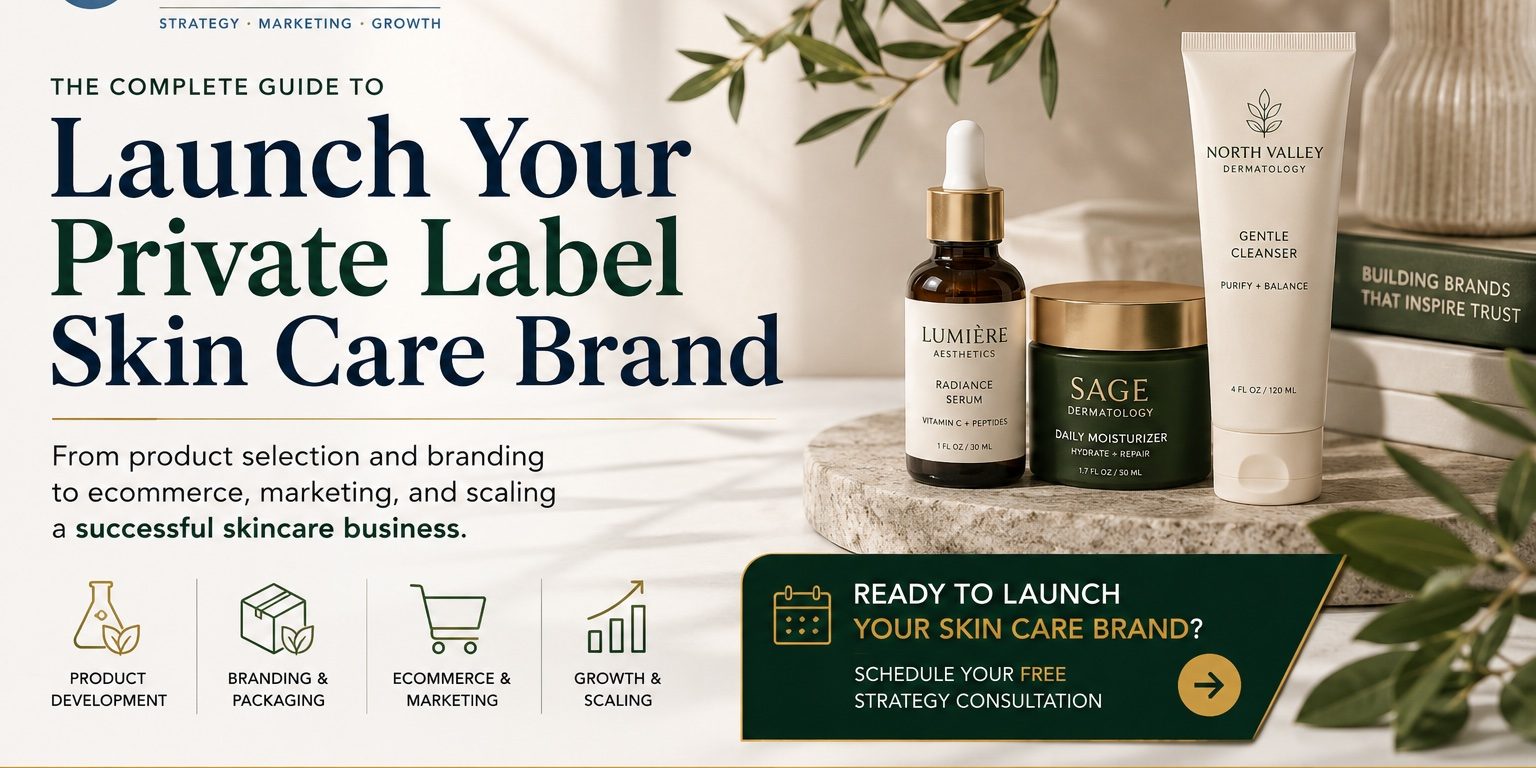
The global skincare industry continues to experience tremendous growth, creating one of the most attractive opportunities for entrepreneurs, dermatologists, medical spas, aesthetic clinics, influencers, wellness brands, and beauty professionals looking to launch their own product line. Consumers are spending more on skincare than ever before, driven by increased awareness of ingredient science, preventative skincare, personalized routines, clean beauty, and online shopping. At the same time, advances in private label manufacturing have dramatically lowered the barriers to entry, making it possible to launch a professional skincare brand without owning a laboratory or manufacturing facility. Interested in a private label skin care brand? Here is your complete guide.
Private labeling has transformed how skincare companies are built. Instead of investing hundreds of thousands of dollars and years of research into developing proprietary formulations, entrepreneurs can partner with experienced manufacturers that have already created high-quality, market-tested products. This allows founders to focus their time and capital on building a recognizable brand, creating an exceptional customer experience, and implementing effective marketing strategies that drive sales and long-term growth.
However, launching a successful private label skin care brand involves much more than selecting a moisturizer and placing your logo on a bottle. The brands that achieve lasting success understand their target market, develop a clear positioning strategy, create memorable branding, build a high-converting ecommerce website, implement search engine optimization from day one, and continuously invest in customer acquisition and retention. Simply having quality products is no longer enough in today’s competitive beauty market.
This comprehensive guide walks through every stage of launching a successful private label skincare business—from selecting a niche and choosing a manufacturer to branding, packaging, ecommerce, digital marketing, retail expansion, and scaling your company. Whether your goal is to create a boutique skincare brand, launch products within an existing medical practice, or build a nationally recognized beauty company, the strategies outlined below will help you avoid common mistakes and establish a stronger foundation for long-term success.
Why Start a Private Label Skin Care Brand?
Launching a private label skincare company offers entrepreneurs one of the fastest paths into the beauty industry. Compared to developing custom formulations from scratch, private labeling significantly reduces startup costs, shortens product development timelines, and minimizes many of the technical challenges associated with cosmetic manufacturing.
The Skincare Industry Continues to Grow
The global skincare market has experienced sustained growth over the past decade, fueled by increasing consumer interest in preventative skincare, wellness, anti-aging solutions, and ingredient-focused products. Ecommerce has further accelerated this growth by allowing brands to sell directly to consumers without relying exclusively on traditional retail distribution. Consumers now routinely discover, research, and purchase skincare products through Google, social media, YouTube, AI search engines, and online reviews before ever visiting a physical store.
For entrepreneurs, this shift creates an unprecedented opportunity to build digitally native skincare brands with relatively low overhead while reaching customers nationwide and internationally.
Lower Startup Costs Than Traditional Manufacturing
One of the biggest advantages of private labeling is avoiding the substantial costs associated with custom product development.
Instead of investing heavily in laboratory research, formulation chemistry, stability testing, and manufacturing equipment, entrepreneurs gain access to professionally developed products that are ready for branding and commercialization.
This allows startup capital to be invested where it often delivers a much higher return, including:
- Professional branding
- Website development
- Shopify ecommerce
- Product photography
- Digital marketing
- Search engine optimization
- Paid advertising
- Email marketing
- Social media marketing
- Inventory management
- Customer acquisition
For most startups, allocating resources toward growth rather than research and development provides a significantly stronger path to profitability.
Faster Time to Market
Developing proprietary skincare products can require months—or even years—before commercial production begins. By comparison, private label manufacturers already maintain proven formulations that have been tested for quality, stability, and manufacturing consistency.
This dramatically reduces the time required to launch your business.
Instead of waiting through lengthy development cycles, entrepreneurs can focus on:
- Designing their brand
- Creating packaging
- Building their website
- Producing marketing assets
- Planning product launches
- Developing advertising campaigns
- Growing their audience
Launching faster allows businesses to begin generating revenue sooner while gathering valuable customer feedback that can guide future product expansion.
Proven Formulations Reduce Risk
One of the greatest risks when developing custom skincare products is uncertainty. Even experienced cosmetic chemists may require multiple revisions before achieving the desired texture, fragrance, performance, and stability.
Private label products have typically already undergone extensive formulation refinement and production testing. This significantly reduces technical risk while allowing founders to offer products with greater confidence.
Although branding and marketing remain critical, removing much of the formulation uncertainty allows entrepreneurs to focus on building the business rather than solving manufacturing challenges.
Scalability From Day One
A quality private label manufacturer can support businesses as they grow.
Many manufacturers offer:
- Expanded product catalogs
- Packaging customization
- Label printing
- Warehousing
- Fulfillment support
- International shipping
- Regulatory guidance
- Future custom formulation services
This enables brands to begin with a focused collection of products while maintaining the flexibility to expand into additional categories as customer demand increases.
Ideal Businesses for Private Label Skincare
Private label skincare is an excellent business model for many types of entrepreneurs and organizations.
Some of the most successful private label brands are launched by:
- Dermatologists
- Plastic surgeons
- Medical spas
- Aesthetic clinics
- Estheticians
- Beauty influencers
- Wellness practitioners
- Retailers
- Ecommerce entrepreneurs
- Luxury spas
- Salon owners
- Health and wellness brands
These businesses often already possess an established customer base, making private label skincare a natural extension of their existing services while creating additional recurring revenue opportunities.
Key Advantages of Private Label Skin Care
Before moving forward, it’s helpful to summarize why private labeling has become one of the fastest-growing business models in the beauty industry.
The primary advantages include:
- Lower startup investment
- Faster product launches
- Reduced manufacturing risk
- Professional formulations
- Access to experienced cosmetic manufacturers
- Scalable production capabilities
- Strong ecommerce opportunities
- Higher profit margins than retail resale
- Brand ownership
- Greater customer loyalty
- Recurring revenue through repeat purchases
- Opportunities for wholesale and retail expansion
These advantages explain why thousands of entrepreneurs choose private labeling as the foundation for building successful skincare businesses. The next step is understanding how private label skincare differs from white label products and fully custom formulations so you can choose the business model that best aligns with your goals, budget, and long-term vision.
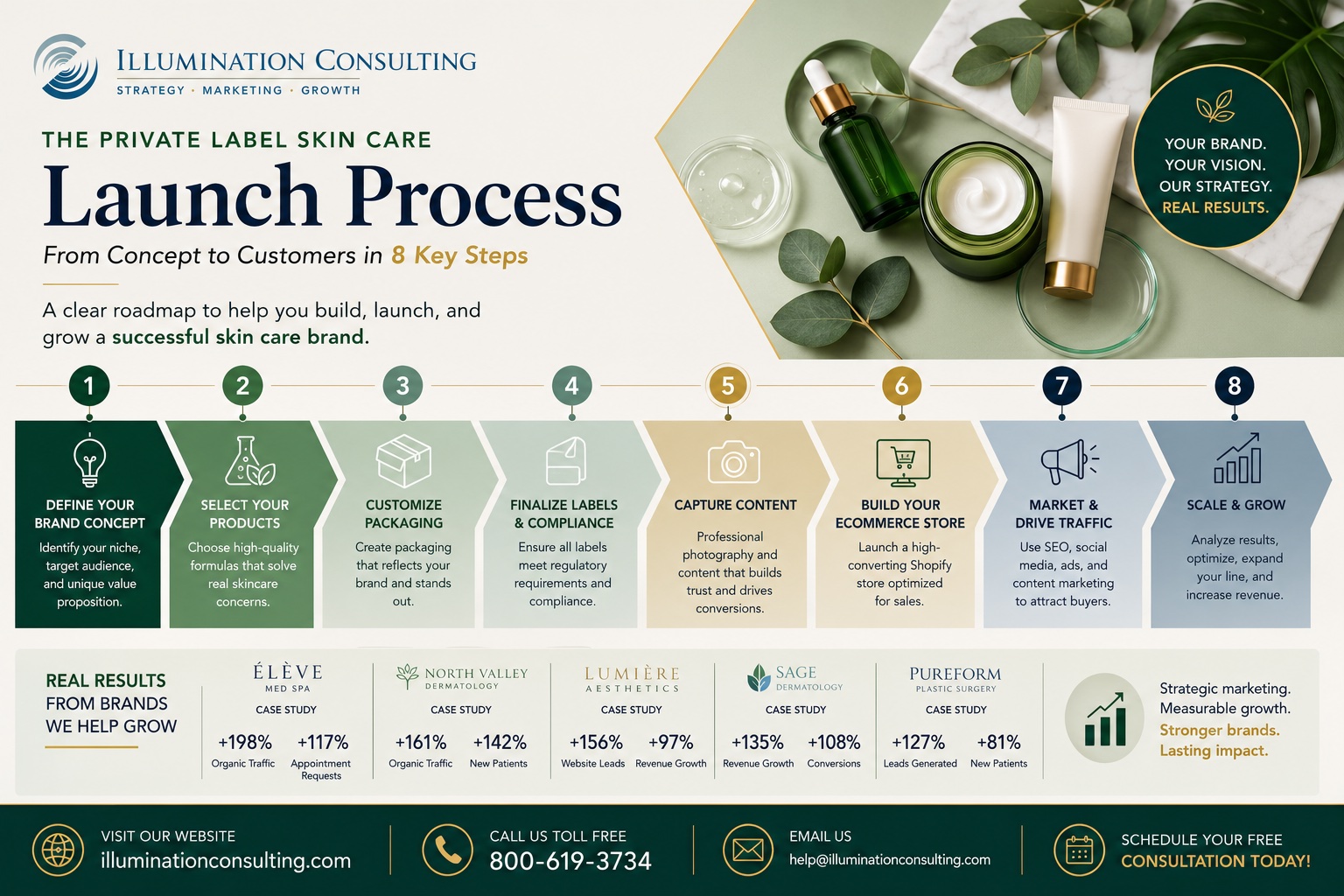
Understanding the Different Business Models
Choosing the right manufacturing model is one of the first strategic decisions you’ll make when launching your skincare company. Although the terms private label, white label, and custom formulation are often used interchangeably, they represent three very different approaches to product development, branding, investment, and long-term growth.
Understanding the Different Private Label Business Models
Before selecting a manufacturer or ordering your first products, it’s important to understand the three primary business models used within the skincare industry. Although many entrepreneurs use the terms private label, white label, and custom formulation interchangeably, they differ significantly in terms of cost, exclusivity, customization, speed to market, and long-term growth potential. Choosing the right model can have a lasting impact on your startup costs, profitability, competitive advantage, and brand positioning.
What Is Private Label Skin Care?
Private label skincare refers to professionally developed cosmetic formulations manufactured by an established laboratory and sold under your own brand name. Rather than investing in years of research and product development, you license proven formulations and customize the branding, packaging, product names, and marketing to create a unique customer experience.
The manufacturer remains invisible to your customers while your business owns the relationship with the consumer. Your logo, brand identity, website, packaging, advertising, and customer service become the face of the product.
This approach allows entrepreneurs to launch significantly faster while still creating a premium, recognizable brand.
Benefits of Private Label Skincare
Private label manufacturing offers numerous advantages for startups and established businesses alike.
Key benefits include:
- Faster product launches
- Lower startup investment
- Proven formulations
- Reduced product development risk
- Professional manufacturing
- Easier scalability
- Higher profit margins
- Greater focus on branding and marketing
- Opportunity to build long-term brand equity
Because the products have typically already undergone formulation testing and manufacturing refinement, founders can dedicate their time and financial resources toward acquiring customers rather than solving laboratory challenges.
Who Should Consider Private Label?
Private labeling is an excellent solution for businesses such as:
- Dermatology practices
- Plastic surgery centers
- Medical spas
- Aesthetic clinics
- Wellness clinics
- Estheticians
- Beauty influencers
- Ecommerce entrepreneurs
- Luxury spas
- Boutique retailers
- Health professionals
- Entrepreneurs entering the beauty industry
For many businesses, private label products become a natural extension of their existing services while creating recurring revenue opportunities through repeat purchases.
What Is White Label Skin Care?
White label skincare is similar to private labeling but typically offers fewer customization options. Manufacturers create standardized products that multiple companies can purchase and rebrand with their own labels.
In many cases, several brands may sell virtually identical products with different logos and packaging.
White label products generally require little or no product customization, making them one of the fastest ways to enter the skincare market.
Advantages of White Label Products
White label manufacturing is attractive for entrepreneurs seeking the fastest possible launch.
Common benefits include:
- Very low startup costs
- Minimal product development
- Fast production timelines
- Lower minimum order quantities
- Simple ordering process
- Reduced operational complexity
This model is often ideal for entrepreneurs who want to validate market demand before investing more heavily in product development and branding.
Limitations of White Label Manufacturing
Although white label products allow businesses to launch quickly, they offer less differentiation than private label products.
Potential disadvantages include:
- Limited product customization
- Less brand exclusivity
- Similar products sold by competitors
- Reduced pricing flexibility
- Lower long-term competitive advantage
Businesses pursuing premium positioning often outgrow the white label model as their brands mature.
What Is Custom Formulation?
Custom formulation represents the highest level of product development within the skincare industry.
Instead of selecting existing formulations, brands work directly with cosmetic chemists to create proprietary products from the ground up. Every ingredient, texture, fragrance, active concentration, preservative system, and performance characteristic is developed specifically for that brand.
This process requires substantially more time, investment, testing, and collaboration but results in completely unique products.
Benefits of Custom Formulation
Brands choosing custom formulations benefit from maximum differentiation.
Advantages include:
- Exclusive formulas
- Proprietary ingredients
- Greater innovation
- Stronger intellectual property opportunities
- Premium market positioning
- Better competitive differentiation
- Greater flexibility for future product development
Custom formulations often become valuable business assets because competitors cannot easily replicate them.
Challenges of Custom Formulation
Despite its advantages, custom formulation carries greater complexity and risk.
Entrepreneurs should anticipate:
- Higher development costs
- Longer launch timelines
- Multiple formulation revisions
- Laboratory testing expenses
- Stability testing
- Compatibility testing
- Larger financial investment
- More complex manufacturing coordination
For many first-time entrepreneurs, these additional costs are difficult to justify before validating customer demand.
Comparing the Three Business Models
Each manufacturing model offers advantages depending on your goals, available capital, and long-term strategy.
| Feature | White Label | Private Label | Custom Formulation |
|---|---|---|---|
| Startup Cost | Low | Moderate | High |
| Time to Market | Very Fast | Fast | Slow |
| Product Customization | Limited | Moderate | Extensive |
| Formula Exclusivity | No | Sometimes | Yes |
| Product Development Required | None | Minimal | Extensive |
| Competitive Differentiation | Moderate | High | Very High |
| Best for Startups | Excellent | Excellent | Limited |
| Long-Term Scalability | Good | Excellent | Excellent |
For most entrepreneurs, private labeling provides the ideal balance between affordability, flexibility, and long-term scalability. It allows brands to enter the market quickly while preserving capital for marketing, customer acquisition, ecommerce development, and business growth.
How to Choose the Right Business Model
Selecting the right manufacturing model depends on your business objectives rather than simply your budget.
Ask yourself the following questions before making a decision.
What Is Your Startup Budget?
Budget is often the first limiting factor.
If your available capital is modest, private labeling provides the opportunity to launch professionally without assuming the financial risk associated with developing proprietary formulations.
If significant investment capital is available and long-term exclusivity is a priority, custom formulation may become a viable option.
How Quickly Do You Want to Launch?
Some entrepreneurs want to begin generating revenue within a few months.
Others are willing to spend a year or more developing proprietary products.
Understanding your desired launch timeline will help narrow your options considerably.
How Important Is Product Exclusivity?
Ask yourself whether having a completely unique formula is essential to your brand.
For many companies, outstanding branding, customer experience, digital marketing, and product positioning create far more competitive advantage than exclusive formulations.
Consumers rarely purchase products simply because formulas are proprietary—they purchase brands they trust.
Are You Building a Lifestyle Brand or a Clinical Brand?
Lifestyle brands often compete through branding, storytelling, packaging, and community.
Clinical brands may rely more heavily on ingredient science, physician credibility, and product efficacy.
Understanding your positioning helps determine how much customization is truly necessary.
Common Misconceptions About Private Label Skin Care
Many first-time entrepreneurs misunderstand how private label manufacturing works.
Let’s address several common misconceptions.
“Private Label Products Are Low Quality”
This is one of the largest myths within the beauty industry.
Many private label manufacturers produce products that meet the same quality standards as nationally recognized brands.
Product quality depends on the manufacturer, ingredient selection, quality control procedures, and formulation—not whether the product is private labeled.
“Everyone Sells the Same Products”
While some manufacturers offer standardized formulas, many allow significant customization through packaging, fragrance options, ingredient selections, active concentrations, product collections, and branding.
Combined with exceptional marketing, customer experience, and ecommerce execution, brands can create highly differentiated businesses using private label manufacturing.
“Branding Doesn’t Matter”
In reality, branding is often the single greatest differentiator in the skincare industry.
Consumers don’t simply purchase moisturizers.
They purchase trust.
They purchase emotion.
They purchase transformation.
Your logo, website, photography, messaging, packaging, educational content, customer reviews, and reputation all contribute to the perceived value of your products.
Two companies can sell nearly identical formulations at dramatically different price points simply because one has invested in building a premium brand while the other has not.
Strong branding consistently outperforms generic branding, even when the underlying products are similar.
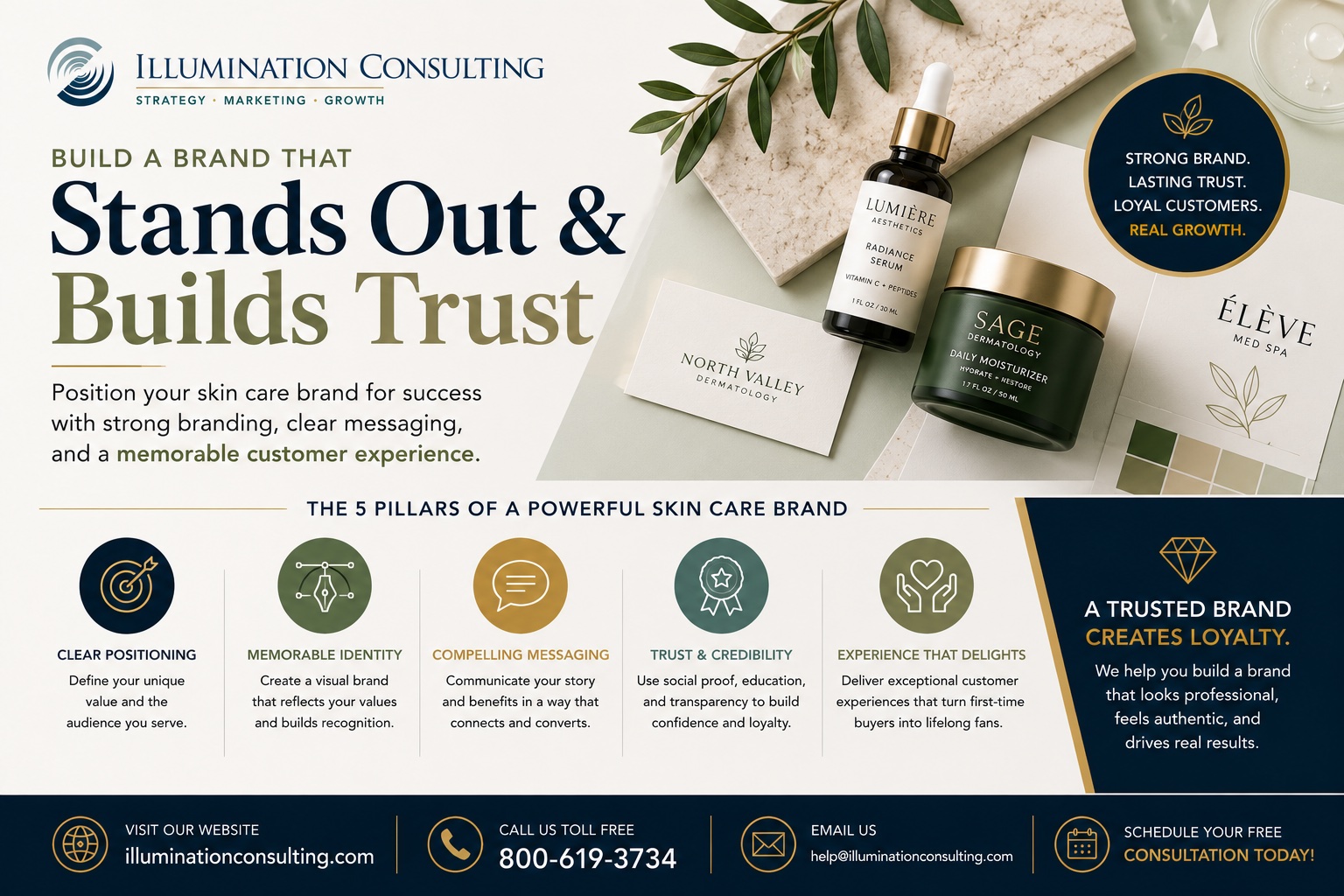
Choosing the Right Private Label Skin Care Manufacturer
Selecting the right private label skin care manufacturer is one of the most important decisions you’ll make when launching your brand. Your manufacturer is more than simply a supplier—they become a strategic business partner responsible for producing products that represent your brand, satisfy customer expectations, maintain quality standards, and support your long-term growth. Even the most beautiful branding and sophisticated marketing cannot overcome poor product quality or unreliable manufacturing. Taking the time to thoroughly evaluate potential manufacturing partners will significantly reduce your risk while laying the foundation for a successful skincare business.
Why Your Manufacturer Matters
Consumers judge your brand based on the products they receive, not the company that manufactured them. Every product shipped represents your reputation, and one poor customer experience can lead to negative reviews, lost referrals, refund requests, and damage to your brand’s credibility.
A quality manufacturer provides consistency across every production run while helping ensure products remain safe, effective, and professionally manufactured.
An experienced manufacturing partner also provides valuable guidance throughout the launch process, helping you navigate packaging decisions, regulatory requirements, production scheduling, and future product expansion.
Characteristics of a Great Manufacturing Partner
The best manufacturers offer much more than production capabilities.
Look for companies that demonstrate:
- Extensive skincare manufacturing experience
- Transparent communication
- Consistent product quality
- Reliable production schedules
- Regulatory knowledge
- Strong customer service
- Flexible growth options
- Modern manufacturing facilities
- Professional documentation
- Long-term partnership mindset
Your goal is to establish a relationship with a manufacturer capable of supporting your business for years rather than simply fulfilling your first order.
Domestic vs. Overseas Manufacturing
One of the earliest decisions entrepreneurs face is whether to manufacture domestically or internationally. Both options offer advantages depending on your business goals, budget, target market, and long-term strategy.
Manufacturing in the United States
Many premium skincare brands choose U.S.-based manufacturers because they provide greater transparency, shorter lead times, and easier communication.
Advantages often include:
- Faster production timelines
- Easier communication
- Shorter shipping distances
- Simpler quality control
- Easier facility visits
- Greater regulatory oversight
- Stronger consumer confidence
- “Made in USA” marketing opportunities
Domestic manufacturing is especially attractive for luxury brands, physician-developed skincare lines, and companies emphasizing premium quality.
The primary disadvantage is higher production costs compared to many international manufacturers.
Overseas Manufacturing
International manufacturing has become increasingly popular as global production capabilities have improved.
Benefits may include:
- Lower manufacturing costs
- Competitive labor rates
- Large production capacity
- Extensive packaging options
- Competitive pricing for high-volume orders
However, overseas production introduces additional challenges.
Potential disadvantages include:
- Longer shipping times
- International freight expenses
- Customs clearance delays
- Time zone differences
- Communication barriers
- More complex quality control
- Supply chain disruptions
For entrepreneurs launching their first skincare brand, domestic manufacturing often provides a smoother experience despite the higher cost. Once the business has established consistent sales and predictable inventory requirements, overseas manufacturing may become a viable strategy for improving margins.
Good Manufacturing Practices (GMP)
When evaluating manufacturers, one of the first questions you should ask is whether the facility follows Good Manufacturing Practices (GMP).
GMP standards are designed to ensure products are consistently manufactured according to documented quality procedures. These practices reduce the likelihood of contamination, formulation inconsistencies, labeling errors, and manufacturing defects.
What GMP Covers
A GMP-compliant facility typically maintains documented procedures for:
- Raw material inspections
- Ingredient storage
- Equipment maintenance
- Employee training
- Batch production records
- Cleaning procedures
- Product testing
- Packaging controls
- Product traceability
- Quality assurance
Although consumers rarely see these behind-the-scenes processes, they play a critical role in ensuring consistent product quality.
Why GMP Matters
Working with a GMP-compliant manufacturer provides greater confidence that every batch of product will meet established quality standards.
This reduces the likelihood of:
- Product contamination
- Formula inconsistencies
- Packaging defects
- Customer complaints
- Product recalls
- Brand reputation damage
A manufacturer unwilling to discuss their quality systems should immediately raise concerns.
FDA Compliance and Cosmetic Regulations
One of the most misunderstood aspects of launching a skincare brand involves FDA regulations.
Many entrepreneurs mistakenly believe that cosmetic products must receive FDA approval before they can be sold. In reality, cosmetic products generally do not require pre-market FDA approval. However, manufacturers and brand owners remain responsible for ensuring products are safe, accurately labeled, and compliant with applicable cosmetic regulations.
Questions to Ask About Regulatory Compliance
Before selecting a manufacturer, ask questions such as:
- How do you ensure regulatory compliance?
- Do you assist with ingredient documentation?
- Do you review product labels?
- What product testing is performed?
- How are production records maintained?
- What quality assurance procedures are followed?
- How are customer complaints handled?
- What systems are in place for product traceability?
Experienced manufacturers should answer these questions confidently and provide documentation when appropriate.
Certifications That Add Credibility
Many manufacturers maintain certifications that demonstrate their commitment to quality, sustainability, and ethical manufacturing practices.
Although not every certification is necessary for every brand, they may strengthen consumer confidence.
Examples include:
- ISO certifications
- GMP certification
- Organic manufacturing
- Vegan formulations
- Cruelty-free manufacturing
- Sustainable manufacturing practices
- Environmentally responsible packaging programs
If your brand intends to compete within the clean beauty or environmentally conscious market, these certifications can become valuable marketing assets.
Evaluating Ingredient Quality
Consumers are becoming increasingly knowledgeable about skincare ingredients.
Today’s buyers routinely read ingredient lists before making purchasing decisions, making ingredient quality one of the strongest differentiators within the industry.
Questions to Ask About Ingredients
Ask manufacturers about:
- Ingredient sourcing
- Active ingredient concentrations
- Botanical extracts
- Stability testing
- Clinical support
- Fragrance options
- Preservative systems
- Allergen considerations
- Clean beauty alternatives
- Vegan ingredient options
Manufacturers should be able to explain not only what ingredients they use but also why they selected them.
High-Quality Ingredients Support Premium Pricing
Consumers are often willing to pay higher prices for products featuring recognizable, science-backed ingredients.
Examples include:
- Vitamin C
- Hyaluronic Acid
- Retinol
- Niacinamide
- Ceramides
- Peptides
- Growth factors
- Bakuchiol
- Azelaic Acid
- Squalane
Selecting formulations containing high-demand ingredients also creates additional opportunities for educational content marketing and search engine optimization.
Always Request Product Samples
Never commit to a manufacturer without thoroughly evaluating product samples.
Product samples allow you to assess quality firsthand before investing in inventory.
Evaluate every sample carefully over several weeks.
Pay attention to:
- Texture
- Fragrance
- Absorption
- Consistency
- Appearance
- Packaging quality
- Pump performance
- Dispensing accuracy
- Overall customer experience
If possible, ask multiple individuals to evaluate the products and provide honest feedback.
Fresh perspectives often identify issues that founders overlook.
Understanding Minimum Order Quantities (MOQs)
Every manufacturer establishes minimum order quantities, commonly referred to as MOQs.
These minimum production requirements vary considerably between manufacturers.
Some companies accommodate startups with relatively small production runs, while others require significantly larger orders.
Lower MOQs Benefit Startups
Smaller minimum orders offer several advantages.
They reduce:
- Startup investment
- Inventory risk
- Warehouse requirements
- Cash flow pressure
- Unsold inventory
They also allow entrepreneurs to test customer demand before committing to larger production runs.
Don’t Chase the Lowest Unit Cost
Although ordering larger quantities often reduces your cost per unit, purchasing excessive inventory too early can create unnecessary financial strain.
Many successful skincare startups prioritize healthy cash flow over maximizing manufacturing discounts during their first year.
Maintaining flexibility often proves more valuable than achieving the absolute lowest production cost.
Questions Every Entrepreneur Should Ask a Manufacturer
Before signing any manufacturing agreement, prepare a detailed list of questions.
Important questions include:
- How many years have you manufactured skincare products?
- Which certifications does your facility maintain?
- What are your minimum order quantities?
- What are your average lead times?
- Can products be customized?
- Do you offer packaging sourcing?
- Can you assist with label compliance?
- What testing is performed before shipment?
- How do you handle quality issues?
- Can production scale as my company grows?
- Do you offer fulfillment services?
- Can you develop custom formulations in the future?
- What support do you provide after production?
The answers to these questions will often reveal far more about a manufacturer than their website or marketing materials.
Choosing the right manufacturing partner is one of the most important investments you’ll make in your skincare business. A reliable manufacturer provides consistent quality, supports your long-term growth, protects your reputation, and allows you to focus on building your brand rather than solving production problems. By conducting thorough due diligence before placing your first order, you’ll significantly improve your chances of launching a successful private label skin care brand built on quality, consistency, and customer trust.
How to Choose the Right Private Label Skin Care Products
Selecting the right products is one of the most important decisions you’ll make when launching your skincare brand. While many entrepreneurs focus heavily on logos, packaging, and websites, the reality is that your product lineup will ultimately determine customer satisfaction, repeat purchases, online reviews, and long-term profitability. A thoughtfully developed collection of products creates a cohesive customer experience, establishes your expertise, and positions your brand for sustainable growth.
Start With Your Target Customer
Every successful skincare brand begins with a deep understanding of its ideal customer. Instead of trying to create products that appeal to everyone, define a specific audience and build your product line around their needs.
Consider questions such as:
- What age group are you targeting?
- What is their average household income?
- What skincare concerns do they have?
- What ingredients are they already searching for?
- Do they prefer luxury products or affordable skincare?
- Are they interested in clean beauty, vegan formulations, or clinical skincare?
- Where do they typically shop for skincare products?
- How knowledgeable are they about skincare ingredients?
The more detailed your customer profile becomes, the easier it is to develop products and marketing messages that resonate with your audience.
Build Customer Personas
Many successful skincare companies create multiple customer personas before developing their products.
Example personas may include:
The Anti-Aging Professional
- Female
- Ages 40–60
- High disposable income
- Concerned about wrinkles and skin firmness
- Prefers premium ingredients
- Shops online
- Values clinical results
The Acne Solution Customer
- Male or Female
- Ages 16–30
- Looking for affordable solutions
- Researches products extensively
- Influenced by online reviews
- Active on TikTok and Instagram
The Clean Beauty Shopper
- Ages 25–45
- Environmentally conscious
- Prefers natural ingredients
- Interested in sustainability
- Willing to pay premium prices
- Reads ingredient labels carefully
These personas help guide product development, branding, pricing, advertising, and content creation.
Choose a Specific Skincare Niche
One of the biggest mistakes new brands make is attempting to compete in every category.
Successful brands become known for solving a specific problem before expanding.
Popular skincare niches include:
Anti-Aging Skincare
Consumers continue spending billions each year on products designed to reduce the appearance of fine lines, wrinkles, uneven texture, and loss of elasticity.
Popular products include:
- Retinol serums
- Peptide creams
- Vitamin C serums
- Eye creams
- Neck creams
Acne Skincare
Acne affects teenagers and adults alike, making it one of the largest skincare categories worldwide.
Typical product collections include:
- Acne cleansers
- Salicylic acid treatments
- Spot treatments
- Oil-free moisturizers
- Exfoliating toners
Sensitive Skin
Consumers with sensitive skin often become extremely loyal customers once they find products that work.
Popular products include:
- Fragrance-free cleansers
- Barrier repair creams
- Ceramide moisturizers
- Gentle serums
- Soothing masks
Brightening and Hyperpigmentation
Consumers increasingly seek products that improve uneven skin tone and discoloration.
Popular ingredients include:
- Vitamin C
- Niacinamide
- Alpha Arbutin
- Kojic Acid
- Tranexamic Acid
Clean Beauty
The clean beauty movement continues to grow as consumers prioritize ingredient transparency and sustainability.
These brands often emphasize:
- Naturally derived ingredients
- Sustainable packaging
- Cruelty-free manufacturing
- Vegan formulations
- Environmentally responsible sourcing
Choosing a clear niche simplifies your marketing and helps your brand establish authority more quickly.
Launch With a Focused Product Collection
Many first-time entrepreneurs assume they need a large catalog to appear credible.
The opposite is often true.
Launching with three to five complementary products allows you to concentrate your resources on building awareness, generating reviews, and creating a memorable customer experience.
Ideal Starter Product Line
A typical launch collection might include:
- Gentle Facial Cleanser
- Vitamin C Serum
- Hyaluronic Acid Serum
- Daily Moisturizer
- Night Cream
Together, these products create a complete skincare routine while keeping inventory management relatively simple.
Medical Spa Product Collection
A med spa or dermatologist may choose products such as:
- Gentle Cleanser
- Brightening Serum
- Retinol Cream
- Growth Factor Serum
- Mineral Sunscreen
This approach aligns closely with professional treatment recommendations and supports higher average order values.
Develop a Hero Product
Nearly every successful skincare company has one product that becomes its signature offering.
Often referred to as a hero product, this product generates the majority of brand awareness and customer referrals.
Characteristics of a Successful Hero Product
An effective hero product should:
- Solve a meaningful customer problem
- Deliver noticeable results
- Generate repeat purchases
- Receive positive reviews
- Differentiate your brand
- Support premium pricing
- Be easy to market through multiple channels
Examples include:
- Vitamin C Serum
- Retinol Night Cream
- Peptide Moisturizer
- Hydrating Facial Serum
- Brightening Cream
Rather than dividing your marketing budget across many products, focus heavily on establishing one flagship product that becomes synonymous with your brand.
Choose Products With High Repeat Purchase Potential
Recurring revenue is one of the greatest strengths of the skincare industry.
Unlike many consumer products, skincare products require continual replenishment.
Products with strong repeat purchase behavior include:
- Cleansers
- Moisturizers
- Serums
- Eye creams
- Sunscreens
- Toners
Building your collection around products customers naturally reorder creates more predictable revenue while increasing customer lifetime value.
Build Complete Skincare Systems
Consumers often struggle to determine which products work well together.
Rather than selling individual products, create complete skincare routines that simplify purchasing decisions.
Hydration Collection
A hydration-focused routine may include:
- Gentle Cleanser
- Hyaluronic Acid Serum
- Moisturizer
- Overnight Hydration Mask
Anti-Aging Collection
An anti-aging routine may include:
- Cleanser
- Vitamin C Serum
- Peptide Moisturizer
- Retinol Night Cream
- Eye Cream
Acne Collection
An acne routine may include:
- Acne Cleanser
- Exfoliating Toner
- Blemish Serum
- Oil-Free Moisturizer
- Spot Treatment
Selling bundled systems increases average order value while improving customer outcomes.
Select Ingredients Consumers Already Trust
Ingredient recognition plays a major role in purchasing decisions.
Many customers actively search online for products containing specific active ingredients before selecting a brand.
High-demand ingredients include:
Vitamin C
Known for:
- Brightening
- Antioxidant protection
- Collagen support
- Uneven skin tone
Hyaluronic Acid
Popular because it provides:
- Deep hydration
- Moisture retention
- Plumper skin
- Improved skin texture
Niacinamide
Frequently used for:
- Enlarged pores
- Redness
- Oil control
- Skin barrier repair
Retinol
Widely recognized for improving:
- Fine lines
- Wrinkles
- Skin texture
- Cell turnover
Ceramides
Ideal for:
- Dry skin
- Sensitive skin
- Barrier repair
- Moisture retention
Peptides
Consumers associate peptides with:
- Firmer skin
- Collagen support
- Anti-aging
- Improved elasticity
Selecting products featuring recognizable ingredients strengthens both your product positioning and your content marketing strategy.
Plan Future Product Expansion
Although your launch should remain focused, develop a long-term roadmap for future expansion.
A strategic growth plan may look like this:
Phase One
- Cleanser
- Serum
- Moisturizer
- Night Cream
Phase Two
- Eye Cream
- Sunscreen
- Facial Mask
- Exfoliant
Phase Three
- Body Care
- Hair Care
- Lip Care
- Professional Products
- Travel Sizes
This structured approach keeps your brand focused while providing opportunities for continued growth and increased customer lifetime value.
Common Product Selection Mistakes to Avoid
Many startups make avoidable mistakes during product development.
Some of the most common include:
- Launching too many products
- Choosing products without market research
- Copying competitors without differentiation
- Ignoring ingredient trends
- Failing to understand the target customer
- Selecting products based solely on low manufacturing costs
- Offering inconsistent branding across product lines
- Neglecting long-term inventory planning
- Building collections without a clear hero product
Avoiding these mistakes allows you to build a more focused, profitable, and scalable skincare brand from the beginning.
A carefully planned product line becomes the foundation of your entire business. Every future marketing campaign, product launch, customer review, subscription program, and retail partnership will depend on the quality and positioning of the products you choose today. By focusing on a clearly defined customer, selecting complementary products, emphasizing proven ingredients, and developing a long-term expansion strategy, you’ll create a skincare collection capable of supporting sustainable growth and lasting brand loyalty.
Creating a Skin Care Brand Customers Remember
Your products may be exceptional, but they won’t build a successful business on their own. In today’s competitive beauty industry, consumers purchase brands as much as they purchase skincare. Your brand identity influences first impressions, builds trust, creates emotional connections, and often determines whether a customer chooses your products over dozens of competing alternatives. Strong branding allows companies selling similar formulations to command dramatically different price points simply because one brand is perceived as more premium, trustworthy, or desirable.
Your brand extends far beyond a logo. It encompasses your company’s mission, visual identity, messaging, packaging, photography, website, customer experience, and reputation. Every interaction a customer has with your company should reinforce the same consistent brand promise.
Define Your Brand Positioning
Before hiring a designer or creating product labels, determine how you want your company to be perceived in the marketplace.
Ask yourself the following questions:
- What makes my skincare brand different?
- Who is my ideal customer?
- What problems do my products solve?
- Why should someone choose my brand instead of an established competitor?
- What emotions do I want customers to associate with my company?
- How do I want customers to describe my brand?
Clear answers to these questions become the foundation of every branding decision moving forward.
Choose a Unique Brand Story
Consumers increasingly support brands with authentic stories and clear missions.
Your brand story should explain:
- Why the company was created
- The inspiration behind the products
- The audience you serve
- Your company’s values
- Your long-term vision
Examples include:
- Dermatologist-developed skincare focused on science-backed ingredients.
- Luxury spa-quality skincare inspired by professional treatments.
- Clean beauty products formulated with naturally derived ingredients.
- Medical-grade skincare designed to bridge the gap between clinical treatments and home care.
- Wellness-inspired skincare focused on prevention and healthy aging.
A compelling story helps customers form emotional connections that extend beyond individual products.
Choosing the Perfect Brand Name
Your company name is one of the most valuable assets you’ll create.
A strong brand name should be:
- Memorable
- Easy to pronounce
- Easy to spell
- Available as a domain name
- Available across social media platforms
- Trademark friendly
- Relevant to your positioning
- Flexible enough to support future product expansion
Avoid names that are overly generic or difficult to remember.
Brand Name Best Practices
Effective skincare brand names often share several characteristics.
They tend to be:
- Short
- Elegant
- Sophisticated
- Timeless
- Distinctive
- Easy to recognize
Luxury brands frequently use clean typography and simple names because simplicity often communicates confidence and premium positioning.
Verify Domain Availability
Before committing to any brand name, verify that:
- The .com domain is available.
- Major social media usernames are available.
- Trademark conflicts do not exist.
- Similar beauty brands are not already using confusingly similar names.
Changing your company name after launch can be expensive and disruptive.
Designing a Professional Logo
Your logo serves as the visual signature of your brand.
While it should be attractive, it doesn’t need to be overly complicated.
The strongest skincare logos are often simple, elegant, and timeless.
Characteristics of Effective Beauty Logos
Professional skincare logos typically emphasize:
- Clean typography
- Minimalist design
- Balanced spacing
- Excellent readability
- Scalability across packaging
- Premium appearance
Avoid trendy design styles that may quickly become outdated.
Design for Multiple Applications
Your logo should work equally well on:
- Product labels
- Shipping boxes
- Ecommerce websites
- Social media profiles
- Email signatures
- Business cards
- Marketing materials
- Retail displays
- Trade show booths
Testing your logo across multiple applications before finalizing the design helps ensure long-term versatility.
Building a Consistent Visual Identity
A successful skincare brand is immediately recognizable.
This consistency comes from establishing clear visual standards across every customer touchpoint.
Select a Brand Color Palette
Color psychology plays an important role in consumer perception.
Common skincare color associations include:
White
- Cleanliness
- Simplicity
- Clinical quality
Gold
- Luxury
- Prestige
- Premium positioning
Green
- Natural ingredients
- Sustainability
- Wellness
Blue
- Trust
- Hydration
- Science
Pink
- Beauty
- Self-care
- Feminine appeal
Black
- Sophistication
- Luxury
- Exclusivity
Select a limited palette of primary and secondary colors and use them consistently across all branding materials.
Choose Professional Typography
Typography significantly influences brand perception.
Limit your brand to two or three complementary fonts.
Typically this includes:
- Primary heading font
- Body text font
- Optional accent font
Consistent typography improves recognition while creating a polished appearance.
Create Premium Packaging
Packaging often determines whether a customer picks up your product or scrolls past it online.
Premium packaging communicates quality before the product is even opened.
Characteristics of High-End Packaging
Luxury skincare packaging often includes:
- Minimalist layouts
- High-quality materials
- Matte finishes
- Soft-touch coatings
- Glass bottles
- Premium pumps
- Foil stamping
- Embossing
- UV spot finishes
Although premium packaging increases production costs, it often justifies higher retail pricing while improving perceived value.
Functional Packaging Matters
Beautiful packaging should also be practical.
Evaluate factors such as:
- Ease of use
- Product dispensing
- Leak resistance
- Shelf stability
- Travel friendliness
- Product protection
A product that functions flawlessly creates a significantly better customer experience.
Create Brand Guidelines
As your business grows, maintaining consistent branding becomes increasingly important.
A brand guideline document establishes standards for every visual and written element.
Include guidance for:
- Logo usage
- Approved colors
- Typography
- Photography style
- Iconography
- Label layouts
- Social media graphics
- Tone of voice
- Marketing language
This document ensures consistency as your team expands or outside agencies become involved.
Develop a Consistent Brand Voice
Visual branding is only one aspect of your identity.
Your written communication should sound consistent across every platform.
Ask yourself:
- Is the tone educational?
- Professional?
- Luxurious?
- Scientific?
- Friendly?
- Inspirational?
Whether customers read a product description, blog article, email newsletter, or Instagram caption, they should immediately recognize your brand’s personality.
Invest in Professional Photography
Photography is often one of the highest-return investments for skincare brands.
Low-quality product images immediately reduce consumer confidence.
Professional photography should include:
- Product-only images
- Lifestyle photography
- Ingredient photography
- Texture photography
- Flat lays
- Clinical imagery
- Before-and-after photography (when compliant)
- Ecommerce white-background images
Consistent photography dramatically improves website conversion rates and advertising performance.
Common Branding Mistakes to Avoid
Many skincare startups weaken their brands by making avoidable mistakes.
Some of the most common include:
- Choosing generic brand names.
- Using inexpensive logo designs.
- Frequently changing visual styles.
- Copying competitors too closely.
- Using inconsistent packaging.
- Selecting too many fonts.
- Using too many brand colors.
- Ignoring customer perception.
- Investing too little in photography.
- Building a brand without clear positioning.
Avoiding these mistakes helps establish a professional image from the very beginning.
Your Brand Is Your Competitive Advantage
Consumers have more skincare choices than ever before. While product quality remains essential, branding often determines which products customers notice, trust, recommend, and purchase repeatedly. A memorable brand creates emotional connections that competitors cannot easily duplicate. It supports premium pricing, increases customer loyalty, strengthens word-of-mouth marketing, and builds long-term business value. Investing time into developing a distinctive, professional, and consistent brand identity is one of the highest-return investments you can make when launching a private label skin care business.
Designing Packaging That Sells
Exceptional skincare products deserve exceptional packaging. Packaging is far more than a protective container—it’s often the first physical interaction a customer has with your brand. Before someone experiences the texture, fragrance, or performance of your products, they judge the quality of your company based on the appearance of the packaging. Well-designed packaging builds trust, communicates value, reinforces your brand identity, and can significantly influence purchasing decisions both online and on retail shelves.
In today’s highly competitive skincare market, consumers are surrounded by choices. Beautiful, professional packaging helps your products stand out while reinforcing your positioning as a premium, trustworthy brand.
Why Packaging Is More Than Design
Many entrepreneurs think of packaging as simply selecting a bottle and applying a label. In reality, packaging serves multiple business functions simultaneously.
Effective packaging should:
- Protect the product
- Preserve ingredient stability
- Reinforce your brand identity
- Communicate product benefits
- Differentiate your products
- Improve perceived value
- Support premium pricing
- Create a memorable customer experience
Every design decision should balance aesthetics, functionality, compliance, and cost.
Selecting the Right Primary Packaging
Primary packaging refers to the container that directly holds the product.
Choosing the correct packaging depends on your formulation, viscosity, target audience, and brand positioning.
Common options include:
- Glass bottles
- Plastic bottles
- Airless pumps
- Dropper bottles
- Cosmetic jars
- Tubes
- Pump dispensers
- Roll-on bottles
- Mist sprayers
Each option offers unique advantages depending on the product being packaged.
Glass Bottles
Glass packaging is widely associated with luxury skincare brands because it offers an elegant appearance and excellent product protection.
Advantages include:
- Premium appearance
- Better chemical stability
- Recyclable material
- Excellent compatibility with active ingredients
- Higher perceived value
Potential disadvantages include:
- Higher cost
- Increased shipping weight
- Greater risk of breakage
Glass is particularly popular for serums, facial oils, and premium treatment products.
Airless Pump Bottles
Airless packaging has become increasingly popular because it protects formulations from excessive exposure to oxygen and contaminants.
Benefits include:
- Better preservation of active ingredients
- Improved product hygiene
- Reduced oxidation
- Less product waste
- Longer shelf life
- Premium customer experience
Airless pumps are excellent choices for products containing antioxidants, peptides, retinol, and other sensitive active ingredients.
Cosmetic Jars
Creams and masks are frequently packaged in jars.
Benefits include:
- Easy product access
- Premium appearance
- Wide variety of sizes
- Attractive shelf presentation
However, jars expose products to air and repeated finger contact after opening, making proper preservative systems especially important.
Choosing Secondary Packaging
Secondary packaging refers to the outer packaging that surrounds the primary container.
Examples include:
- Folding cartons
- Luxury presentation boxes
- Gift sets
- Retail display packaging
- Subscription boxes
Secondary packaging provides additional branding opportunities while protecting products during shipping.
Benefits of Premium Cartons
A professionally designed folding carton can dramatically increase perceived value.
Benefits include:
- Better shelf presentation
- Additional space for branding
- Room for ingredient information
- Protection during shipping
- Enhanced unboxing experience
Many premium skincare brands rely heavily on elegant secondary packaging to reinforce their positioning.
Packaging Design Best Practices
Great packaging combines simplicity with sophistication.
Rather than overcrowding labels with excessive graphics or marketing claims, focus on clean, elegant layouts that communicate confidence and professionalism.
Keep the Design Clean
Luxury skincare packaging often follows a minimalist design philosophy.
Characteristics include:
- Generous white space
- Clear typography
- Limited color palette
- Balanced layouts
- High-quality finishes
- Consistent branding
Minimalist packaging often appears more premium than overly decorative designs.
Establish a Visual Hierarchy
Customers should immediately understand:
- Brand name
- Product name
- Primary benefit
- Product type
- Product size
Information should be organized logically so the eye naturally moves through the label.
Maintain Consistency Across the Product Line
Every product should clearly belong to the same brand family.
Maintain consistency in:
- Logo placement
- Color palette
- Typography
- Label dimensions
- Photography style
- Iconography
- Product naming conventions
Consistent packaging strengthens brand recognition and creates a more professional appearance.
Choosing Packaging Materials
Packaging materials affect not only aesthetics but also sustainability, durability, and shipping costs.
Common materials include:
- Glass
- PET plastic
- HDPE plastic
- Acrylic
- Aluminum
- Bamboo
- Recycled plastics
- Paperboard
Each material offers advantages depending on your target market and pricing strategy.
Sustainable Packaging
Sustainability has become increasingly important to many consumers.
Brands may consider:
- Recyclable packaging
- PCR (Post-Consumer Recycled) plastics
- Refillable containers
- Glass packaging
- FSC-certified paperboard
- Soy-based inks
- Minimal packaging waste
While sustainability should never compromise product protection, environmentally responsible packaging can become a meaningful competitive advantage.
Packaging Finishes That Increase Perceived Value
Small finishing details often separate premium brands from lower-priced competitors.
Popular premium finishes include:
- Matte coatings
- Soft-touch finishes
- Foil stamping
- Spot UV coating
- Embossing
- Debossing
- Metallic accents
- Textured papers
These enhancements improve the tactile experience and contribute to a luxury presentation.
Label Design Best Practices
Your label serves both marketing and informational purposes.
A professionally designed label should communicate confidence without appearing cluttered.
Essential Label Information
Depending on your market and applicable regulations, labels commonly include:
- Brand name
- Product name
- Product purpose
- Net contents
- Ingredient list
- Directions for use
- Warnings
- Manufacturer or distributor information
- Batch or lot number
- Expiration or Period After Opening symbol when applicable
Always verify labeling requirements with your manufacturer and applicable regulations before printing production quantities.
Avoid Overloading the Label
Trying to communicate every product benefit on the front label often creates visual clutter.
Instead, prioritize:
- Product clarity
- Readability
- Simplicity
- Premium appearance
Customers can learn additional details through your website, packaging insert, or product page.
Create a Memorable Unboxing Experience
The customer experience doesn’t end when the purchase is made.
The unboxing process provides an excellent opportunity to reinforce your brand and encourage social sharing.
Consider including:
- Branded tissue paper
- Thank-you cards
- Product usage guides
- Discount codes
- Referral offers
- Product samples
- Personalized notes
A memorable unboxing experience encourages repeat purchases and user-generated content on social media.
Balance Quality With Profitability
Premium packaging should enhance your brand without eliminating your profit margins.
Evaluate packaging decisions based on:
- Manufacturing cost
- Shipping cost
- Product protection
- Customer perception
- Sustainability
- Production lead time
- Minimum order quantities
- Scalability
The goal is to create packaging that supports your pricing strategy while maintaining healthy margins as your business grows.
Common Packaging Mistakes to Avoid
Many new skincare brands make packaging decisions that negatively affect customer perception and profitability.
Avoid these common mistakes:
- Choosing packaging based solely on the lowest price
- Selecting containers that don’t match the product formulation
- Overcomplicating label designs
- Using inconsistent branding across products
- Ignoring shipping durability
- Neglecting sustainability expectations
- Printing large quantities before final approval
- Failing to test packaging compatibility
- Choosing trendy designs that quickly become outdated
- Underestimating the importance of the customer unboxing experience
Thoughtfully designed packaging does far more than protect your products—it communicates quality, builds trust, reinforces your brand identity, and influences purchasing decisions. Combined with outstanding formulations and strategic marketing, premium packaging helps position your private label skincare brand as a professional, credible, and memorable company capable of competing with established brands in both ecommerce and retail environments.
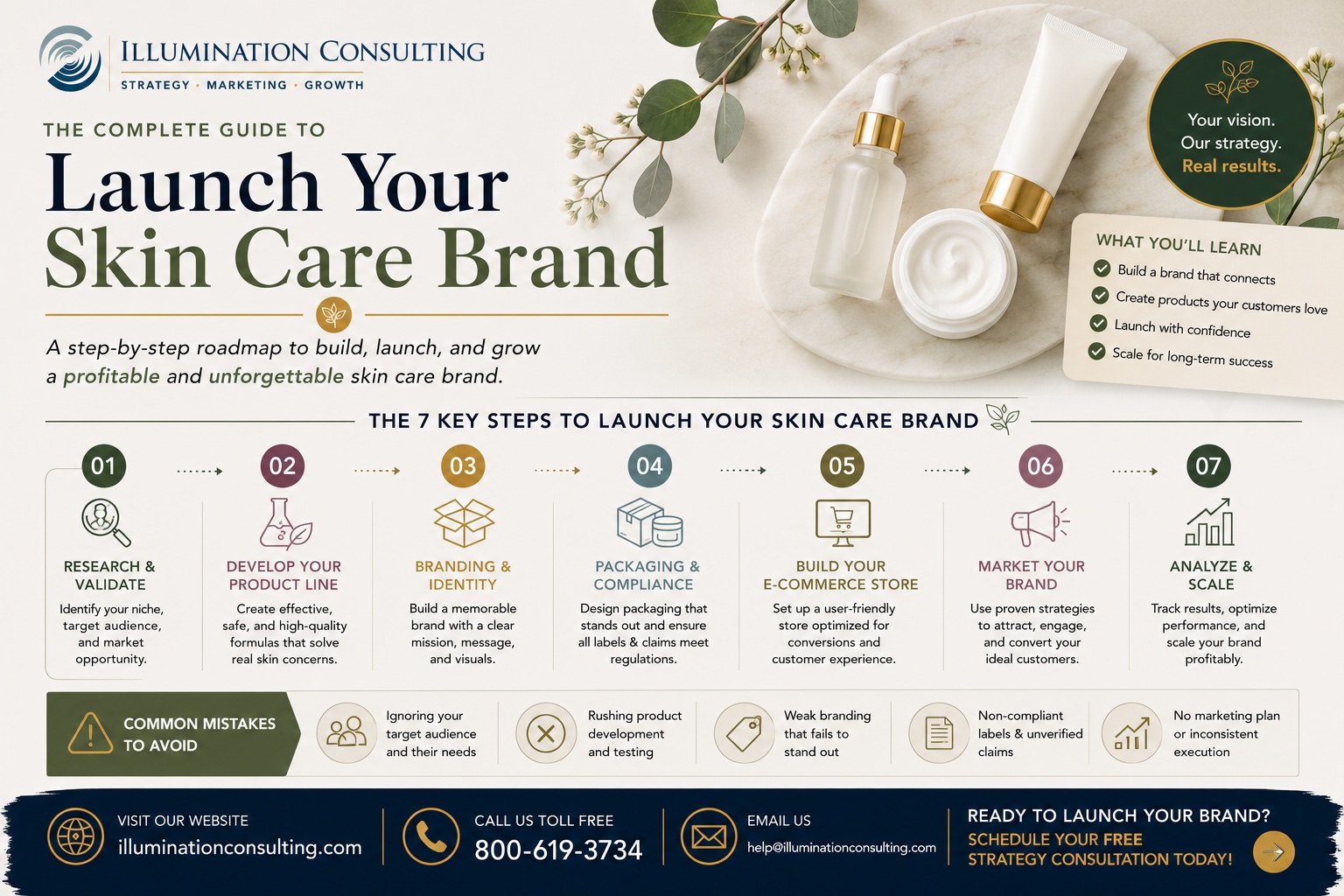
Pricing Your Private Label Skin Care Products for Maximum Profit
Pricing is one of the most strategic decisions you’ll make when launching a private label skin care brand. Price your products too low, and you may struggle to generate enough profit to sustain marketing, operations, and future growth. Price them too high without establishing sufficient brand value, and customers may choose competitors they perceive as offering greater credibility. The goal is to find a pricing strategy that reflects your brand positioning, delivers healthy profit margins, and meets customer expectations.
One of the biggest mistakes new skincare entrepreneurs make is calculating prices based solely on manufacturing costs. While production expenses are certainly important, they represent only one component of your total cost of doing business. A sustainable pricing strategy must account for packaging, shipping, marketing, advertising, transaction fees, software subscriptions, customer support, returns, and future growth investments.
Why Pricing Is About Perceived Value
Consumers rarely purchase skincare products based solely on ingredients or manufacturing costs. They purchase brands they trust, products that solve their problems, and experiences that make them feel confident in their purchase.
Perceived value is influenced by factors such as:
- Brand reputation
- Product quality
- Packaging
- Website design
- Photography
- Customer reviews
- Clinical credibility
- Ingredient transparency
- Marketing
- Customer experience
Two products with nearly identical formulations can sell for dramatically different prices simply because one brand has created greater perceived value.
Understand Your Total Product Costs
Before setting retail prices, calculate your total landed cost for each product.
Manufacturing Costs
Begin with your direct manufacturing expenses.
These may include:
- Product formulation
- Filling
- Primary packaging
- Secondary packaging
- Label printing
- Assembly
Shipping and Freight
Shipping costs are often underestimated by new businesses.
Include expenses such as:
- Freight from manufacturer
- Customs duties (if applicable)
- Warehouse shipping
- Shipping materials
- Protective packaging
Marketing Costs
Every product sold requires customer acquisition.
Your pricing should help cover expenses including:
- Google Ads
- Meta Ads
- SEO
- Content marketing
- Influencer campaigns
- Email marketing
- Affiliate commissions
Brands that fail to account for marketing expenses often discover they generate revenue without producing meaningful profit.
Operational Expenses
Don’t forget ongoing business costs such as:
- Shopify subscription
- Payment processing fees
- Inventory software
- Accounting
- Customer service
- Product photography
- Website maintenance
- Business insurance
These operational costs should be reflected within your pricing strategy.
Research Your Competitors
Competitive research provides valuable pricing context.
Study brands competing within your market segment.
Evaluate factors including:
- Product pricing
- Package sizes
- Ingredient positioning
- Brand reputation
- Customer reviews
- Product collections
- Subscription pricing
- Promotional strategies
Avoid copying competitors directly. Instead, use market research to understand pricing expectations within your niche.
Compare Brands Within Your Positioning
A luxury skincare company should compare itself to premium brands rather than mass-market retailers.
Similarly, a dermatologist-developed clinical brand should evaluate competitors operating within the professional skincare category.
Comparing your products to companies targeting entirely different audiences often results in poor pricing decisions.
Choose Your Pricing Strategy
Different pricing models support different business objectives.
Premium Pricing
Premium pricing positions products as high-quality, luxurious, and results-driven.
Benefits include:
- Higher profit margins
- Stronger brand perception
- Greater pricing flexibility
- Better support for premium marketing
Premium pricing works particularly well when supported by exceptional branding, packaging, photography, and customer experience.
Competitive Pricing
Competitive pricing places products near the average market price.
Advantages include:
- Easier market entry
- Broader customer appeal
- Strong competitive positioning
This strategy works well when launching into established product categories.
Value Pricing
Value pricing focuses on offering exceptional quality at attractive prices.
Benefits include:
- Strong customer acquisition
- Increased purchase volume
- Competitive differentiation
However, lower pricing requires higher sales volume to achieve similar profitability.
Determine Your Profit Margins
Healthy profit margins allow your business to grow while funding future marketing and expansion.
Although exact margins vary by business model, skincare brands generally aim for pricing that supports:
- Sustainable advertising
- Inventory replenishment
- Product development
- Operating expenses
- Business growth
- Wholesale opportunities
Pricing too aggressively can make future scaling extremely difficult.
Don’t Forget Wholesale Pricing
If you plan to sell through retailers, medical spas, dermatology clinics, boutiques, or distributors, your pricing strategy must accommodate wholesale margins.
Before finalizing retail prices, determine:
- Wholesale pricing
- Distributor pricing
- Suggested retail pricing (MSRP)
- Minimum advertised pricing (MAP), if applicable
Many new brands discover too late that their retail pricing leaves insufficient margin for wholesale partnerships.
Planning ahead prevents future pricing challenges.
Bundle Products to Increase Average Order Value
One of the simplest ways to improve profitability is through bundled product collections.
Instead of selling individual products, create complete skincare systems.
Examples include:
- Daily Hydration Collection
- Anti-Aging Essentials
- Brightening Collection
- Acne Control System
- Sensitive Skin Routine
Bundles increase average order value while simplifying purchasing decisions for customers.
Offer Subscription Pricing
Recurring revenue significantly improves business stability.
Consider offering subscription discounts for products customers naturally replenish.
Examples include:
- Monthly cleanser delivery
- Serum subscription
- Moisturizer replenishment
- Complete skincare routine subscription
Even modest subscription discounts can dramatically increase customer lifetime value.
Use Psychological Pricing Carefully
Pricing psychology influences purchasing decisions.
Common strategies include:
- $49 instead of $50
- $79 instead of $80
- $119 instead of $120
Luxury brands, however, sometimes prefer rounded pricing because it reinforces premium positioning.
Choose pricing that aligns with your overall brand identity.
Avoid Competing on Price Alone
One of the fastest ways to weaken a skincare brand is by attempting to become the lowest-priced option.
Price competition creates several long-term problems.
It can:
- Reduce profitability
- Lower perceived quality
- Limit marketing budgets
- Attract price-sensitive customers
- Make premium positioning difficult
Instead of competing on price, compete through:
- Product quality
- Ingredient transparency
- Educational content
- Customer service
- Clinical credibility
- Brand experience
- Packaging
- Website quality
Customers are often willing to pay significantly more when they believe they are receiving superior value.
Increase Perceived Value Without Lowering Prices
Rather than discounting products, consider increasing perceived value.
Examples include:
- Complimentary product samples
- Deluxe travel sizes
- Free shipping thresholds
- Educational skincare guides
- Loyalty rewards
- Subscription savings
- Premium packaging
- Exclusive member benefits
These strategies improve customer satisfaction while preserving your margins.
Common Pricing Mistakes to Avoid
Pricing errors can significantly reduce profitability and limit future growth.
Avoid these common mistakes:
- Pricing based only on manufacturing costs
- Ignoring marketing expenses
- Underestimating shipping costs
- Constant discounting
- Copying competitor pricing without research
- Failing to plan for wholesale distribution
- Setting prices before establishing your brand positioning
- Launching without calculating total landed costs
- Competing primarily on price
- Neglecting long-term profitability
A well-designed pricing strategy supports every aspect of your business, from marketing and customer acquisition to inventory management and retail expansion. The strongest skincare brands understand that pricing is not simply a number on a product page—it’s a reflection of brand value, customer perception, business sustainability, and long-term growth potential. By pricing your products strategically from the beginning, you’ll create a healthier, more profitable business capable of competing successfully in today’s rapidly growing skincare industry.
Building a High-Converting Shopify Website for Your Skin Care Brand
Your website is the foundation of your skincare business. It is your storefront, salesperson, customer service representative, educational platform, and primary sales channel all working together twenty-four hours a day. While marketplaces like Amazon and Etsy can generate additional sales, every successful skincare brand should own a professional ecommerce website that builds trust, strengthens brand recognition, and maximizes profitability. Shopify has become the preferred ecommerce platform for thousands of skincare brands because it combines flexibility, security, scalability, and ease of use while supporting subscription programs, product bundles, loyalty programs, and advanced marketing integrations.
A professionally designed Shopify website does far more than display products. It guides visitors through the buying journey, answers common questions, establishes credibility, and converts traffic into paying customers.
Why Shopify Is the Best Ecommerce Platform for Skin Care Brands
Shopify powers millions of ecommerce stores worldwide and has become one of the most trusted platforms for beauty and wellness brands.
Benefits of Shopify
Shopify offers numerous advantages for skincare startups and growing brands.
Key benefits include:
- Easy product management
- Secure payment processing
- Mobile-responsive themes
- Fast page loading
- Subscription app integrations
- Inventory management
- Discount and promotion tools
- Built-in analytics
- Scalable infrastructure
- Thousands of third-party applications
As your business grows, Shopify can support everything from direct-to-consumer sales to wholesale portals and international expansion.
Designed for Growth
Unlike many website builders, Shopify is specifically designed for ecommerce.
Whether you launch with five products or five hundred, the platform provides the tools needed to support increasing traffic, product catalogs, and sales volume without requiring a complete website rebuild.
Invest in Professional Website Design
Many entrepreneurs attempt to save money by using inexpensive templates without customization.
Unfortunately, poor website design immediately reduces consumer confidence.
Customers often make judgments about product quality based on the appearance of the website before reading a single product description.
Characteristics of a Premium Skin Care Website
Professional skincare websites typically include:
- Clean layouts
- High-quality photography
- Luxury branding
- Simple navigation
- Fast loading pages
- Mobile optimization
- Consistent typography
- Clear calls-to-action
- Easy checkout process
Every design decision should reinforce the premium positioning of your brand.
Mobile Optimization Is Essential
Most skincare shoppers browse products using smartphones.
Your website should provide an excellent mobile experience, including:
- Fast page loading
- Easy navigation
- Large product images
- Mobile-friendly checkout
- Readable typography
- Touch-friendly buttons
Google also considers mobile usability as part of its overall ranking signals, making mobile optimization important for both conversions and SEO.
Essential Pages Every Skin Care Website Needs
Many startup brands focus exclusively on product pages while neglecting other critical website content.
A professional skincare website should include the following pages.
Home Page
Your homepage should quickly communicate:
- Who you are
- What makes your brand unique
- Your featured products
- Customer testimonials
- Current promotions
- Clear shopping paths
Avoid overwhelming visitors with excessive text.
Instead, guide them naturally toward your products.
About Us
Customers increasingly want to know the story behind the brands they support.
Your About page should explain:
- Company mission
- Brand story
- Founder background
- Company values
- Ingredient philosophy
- Product quality standards
Authenticity builds trust.
Product Collection Pages
Organize products into logical categories.
Examples include:
- Cleansers
- Serums
- Moisturizers
- Anti-Aging
- Acne Solutions
- Sensitive Skin
- Best Sellers
- New Arrivals
Well-organized collections improve both user experience and search engine optimization.
Individual Product Pages
Every product deserves its own detailed landing page.
High-converting product pages typically include:
- Professional photography
- Multiple product images
- Ingredient highlights
- Product benefits
- Directions for use
- Frequently asked questions
- Customer reviews
- Related products
- Subscription options
- Clear calls-to-action
These pages often become some of the highest-converting pages on the website.
Contact Page
Make it easy for customers to contact your business.
Include:
- Contact form
- Email address
- Phone number
- Business hours
- Social media links
Accessibility increases customer confidence.
Frequently Asked Questions
A comprehensive FAQ page helps answer common concerns before customers contact support.
Questions may include:
- How long does shipping take?
- Are products cruelty-free?
- Are products vegan?
- Can products be used together?
- Are products safe for sensitive skin?
- What is your return policy?
A well-developed FAQ page also supports SEO by answering common search queries.
Create High-Converting Product Pages
Product pages often determine whether visitors become customers.
Every product page should educate, build trust, and reduce purchasing hesitation.
Write Benefit-Focused Product Descriptions
Avoid simply listing ingredients.
Instead, explain how those ingredients benefit the customer.
For example, instead of writing:
“Contains Hyaluronic Acid.”
Explain:
“Hyaluronic Acid helps attract and retain moisture, leaving skin looking smoother, healthier, and more hydrated.”
Focus on transformation rather than features.
Use High-Quality Photography
Professional product photography significantly improves conversion rates.
Include:
- White background product images
- Lifestyle photography
- Texture photography
- Ingredient photography
- Packaging photography
- Scale comparison images
- Multiple viewing angles
Customers cannot physically examine products online, making photography one of your most important sales tools.
Include Product Videos
Video has become one of the highest-converting forms of ecommerce content.
Consider adding videos demonstrating:
- Product application
- Texture
- Packaging
- Before-and-after results
- Ingredient education
- Founder introductions
Videos increase engagement while helping customers purchase with greater confidence.
Build Trust Throughout the Website
Trust is one of the strongest conversion factors in ecommerce.
Customers need reassurance before purchasing skincare products from brands they may not recognize.
Display Customer Reviews
Authentic reviews help reduce purchase anxiety.
Include reviews that discuss:
- Product performance
- Skin improvements
- Customer experience
- Packaging quality
- Shipping experience
User-generated content often performs better than traditional advertising.
Highlight Certifications
If applicable, display certifications such as:
- Cruelty-Free
- Vegan
- Dermatologist Tested
- Made in USA
- Organic
- Sustainable Packaging
These trust signals help reassure potential buyers.
Showcase Media Mentions
If your brand has appeared in publications, podcasts, or industry websites, display those mentions prominently.
Third-party credibility strengthens consumer confidence.
Improve Your Website’s Conversion Rate
Small improvements can significantly increase revenue without increasing advertising costs.
Simplify Navigation
Visitors should reach any product within just a few clicks.
Avoid overly complicated menus.
Instead, organize products logically and clearly.
Use Clear Calls-to-Action
Every important page should encourage visitors to take action.
Examples include:
- Shop Now
- Add to Cart
- Subscribe & Save
- Learn More
- Build Your Routine
Strong calls-to-action improve conversion rates.
Reduce Checkout Friction
A complicated checkout process increases cart abandonment.
Simplify checkout by offering:
- Guest checkout
- Multiple payment methods
- Shop Pay
- Apple Pay
- Google Pay
- PayPal
- Buy Now, Pay Later options
Reducing friction often results in higher completed purchases.
Install Essential Shopify Apps
The Shopify App Store offers thousands of integrations that improve functionality.
Popular categories include:
- Email marketing
- Subscription management
- Loyalty programs
- Product reviews
- Upsells
- Bundles
- Live chat
- SMS marketing
- Inventory management
- Analytics
Install only the apps your business truly needs to avoid slowing website performance.
Optimize Website Speed
Page speed directly affects both search rankings and conversion rates.
Improve performance by:
- Compressing images
- Using modern image formats
- Limiting unnecessary apps
- Minimizing custom code
- Choosing fast Shopify themes
- Using a content delivery network (CDN)
Even small improvements in loading speed can increase sales.
Common Ecommerce Website Mistakes
Many skincare startups unknowingly reduce conversions by making avoidable mistakes.
Avoid:
- Poor product photography
- Slow-loading pages
- Weak product descriptions
- Complicated navigation
- Cluttered layouts
- No customer reviews
- Hidden shipping costs
- Difficult checkout process
- Poor mobile experience
- Inconsistent branding
Your Shopify website is one of the most valuable business assets you’ll build. It serves as the centerpiece of your digital marketing strategy, supports search engine optimization, captures leads, converts visitors into customers, and builds lasting relationships with your audience. Investing in a professionally designed ecommerce website from the beginning creates a stronger foundation for long-term growth while positioning your skincare brand to compete effectively against established companies in the beauty industry.
Search Engine Optimization (SEO) for Skin Care Brands
Launching a beautiful website is only the beginning. Without a consistent flow of qualified visitors, even the best skincare products will struggle to generate sales. Search Engine Optimization (SEO) remains one of the most effective long-term marketing strategies because it attracts consumers who are actively searching for skincare products, ingredient information, solutions to skin concerns, and trusted brands. Unlike paid advertising, organic search traffic continues generating leads and sales long after your content has been published, making SEO one of the highest-return investments for skincare businesses.
Today’s SEO extends beyond traditional Google rankings. Your content should also be optimized for AI-powered search experiences such as ChatGPT, Google AI Overviews, Perplexity, Claude, Gemini, and other large language models. This emerging discipline, often referred to as Generative Engine Optimization (GEO) or Agentic SEO, focuses on creating authoritative, structured content that AI platforms can confidently reference when answering user questions.
Why SEO Matters for Skin Care Brands
Consumers rarely purchase skincare products without conducting research first. They compare ingredients, read reviews, watch videos, evaluate brands, and search for solutions before making buying decisions.
Common searches include:
- Best Vitamin C serum
- How to reduce wrinkles
- Skin care routine for oily skin
- Best moisturizer for dry skin
- Retinol vs. Bakuchiol
- How to treat hyperpigmentation
- Best skincare products for sensitive skin
- Medical-grade skincare
- Anti-aging skincare routine
Every one of these searches represents an opportunity to introduce your brand to a potential customer.
Benefits of SEO
An effective SEO strategy provides numerous long-term advantages.
These include:
- Consistent organic traffic
- Lower customer acquisition costs
- Increased brand awareness
- Higher-quality leads
- Better conversion rates
- Increased authority
- Improved customer trust
- Sustainable long-term growth
Unlike paid advertising, SEO continues generating traffic without requiring payment for every visitor.
Start With Comprehensive Keyword Research
Successful SEO begins by understanding what your customers are searching for.
Rather than targeting only broad keywords, develop content around every stage of the customer journey.
Primary Commercial Keywords
Commercial keywords indicate strong buying intent.
Examples include:
- Private label skin care
- Vitamin C serum
- Anti-aging moisturizer
- Hyaluronic acid serum
- Retinol cream
- Medical-grade skincare
- Natural skincare products
- Vegan skincare
These keywords should appear naturally throughout your product pages and collection pages.
Informational Keywords
Informational searches often introduce consumers to your brand long before they purchase.
Examples include:
- How to build a skincare routine
- What does niacinamide do?
- Benefits of peptides
- How often should you use retinol?
- What causes dry skin?
- How to reduce fine lines naturally
Publishing educational articles targeting these searches builds topical authority while attracting qualified traffic.
Long-Tail Keywords
Long-tail keywords typically have lower competition and higher conversion rates.
Examples include:
- Best moisturizer for sensitive mature skin
- Vitamin C serum for dark spots
- Anti-aging skincare routine for women over 50
- Clean skincare products for acne-prone skin
- Fragrance-free moisturizer for eczema
Targeting dozens or hundreds of these highly specific searches often produces better results than focusing only on broad keywords.
Build Topic Clusters Instead of Individual Articles
Modern SEO rewards topical authority rather than isolated content.
Instead of publishing unrelated blog posts, organize your website around comprehensive topic clusters.
Example Topic Cluster
Pillar Page
How to Start a Private Label Skin Care Brand
Supporting articles:
- How to Choose a Private Label Manufacturer
- Best Ingredients for Anti-Aging Products
- Skin Care Packaging Guide
- Shopify for Skincare Brands
- How to Market a Skin Care Brand
- Cosmetic Labeling Requirements
- Product Photography Tips
- Skin Care Pricing Strategy
- Subscription Programs for Beauty Brands
- Common Startup Mistakes
This interconnected structure helps search engines understand your expertise while strengthening internal linking.
Create Helpful, Comprehensive Content
Google increasingly rewards content that demonstrates experience, expertise, authority, and trustworthiness (EEAT).
Every article should answer customer questions thoroughly.
Focus on creating content that is:
- Comprehensive
- Accurate
- Well organized
- Easy to understand
- Supported by credible information
- Updated regularly
Avoid publishing short articles written solely to target keywords.
Instead, create resources that become the best answer available on the topic.
Optimize Every Page
Every important page on your website should be optimized individually.
SEO Titles
Write unique title tags that include your primary keyword naturally.
Examples:
- Private Label Vitamin C Serum
- Anti-Aging Skin Care Collection
- Medical-Grade Moisturizers
Meta Descriptions
Meta descriptions should summarize the page while encouraging clicks.
Although they do not directly influence rankings, they significantly impact click-through rates.
Header Structure
Organize content using:
- One H1
- Multiple H2 headings
- Supporting H3 headings
- Additional H4 headings where appropriate
Proper heading hierarchy improves readability while helping search engines understand page structure.
Image Optimization
Every image should include:
- Descriptive file names
- Optimized file sizes
- Alt text
- Appropriate dimensions
- Modern image formats
Image optimization improves accessibility, page speed, and image search visibility.
Build Strong Internal Linking
Internal links help search engines understand relationships between pages while guiding visitors through your website.
Link naturally between:
- Blog articles
- Product pages
- Collection pages
- Ingredient guides
- FAQ pages
- Service pages
- Educational resources
Strong internal linking distributes authority throughout your website and encourages visitors to explore additional content.
Demonstrate EEAT
Google places increasing emphasis on Experience, Expertise, Authoritativeness, and Trustworthiness.
Strengthen EEAT by including:
- Detailed author biographies
- Professional credentials
- Company information
- Contact information
- Privacy policy
- Customer reviews
- Testimonials
- Clinical references where appropriate
- Original photography
- Helpful educational content
Consumers and search engines both reward brands that demonstrate genuine expertise.
Optimize for AI Search (Generative Engine Optimization)
AI-powered search is rapidly changing how consumers discover brands.
Instead of relying exclusively on traditional rankings, optimize your content so AI systems can easily understand and reference it.
Use Clear Structure
AI models favor content that includes:
- Logical heading hierarchy
- Short paragraphs
- Bullet lists
- Comparison tables
- Definitions
- Step-by-step explanations
- Frequently asked questions
Well-structured content is easier for both humans and AI systems to interpret.
Answer Questions Directly
Many AI search experiences summarize answers instead of displaying traditional search results.
Write content that directly answers common questions such as:
- What is private label skincare?
- How much does it cost to launch a skincare brand?
- How long does product development take?
- Which ingredients are best for mature skin?
Direct answers increase the likelihood of being referenced by AI platforms.
Build Topical Authority
Rather than publishing hundreds of unrelated articles, become the definitive resource within your niche.
Cover topics comprehensively, including:
- Ingredients
- Manufacturing
- Branding
- Ecommerce
- Marketing
- Packaging
- Compliance
- Retail distribution
- Customer education
The more complete your topical coverage, the stronger your authority becomes.
Technical SEO Best Practices
Technical SEO ensures search engines can properly crawl, index, and understand your website.
Important considerations include:
- Fast page speed
- Mobile optimization
- SSL security
- XML sitemaps
- Clean URL structure
- Schema markup
- Canonical tags
- Optimized robots.txt
- Broken link monitoring
- Core Web Vitals optimization
Technical issues can limit rankings regardless of content quality.
Common SEO Mistakes to Avoid
Many skincare startups unintentionally limit their organic growth.
Avoid these common mistakes:
- Publishing thin content
- Ignoring keyword research
- Writing for search engines instead of people
- Using duplicate product descriptions
- Neglecting image optimization
- Weak internal linking
- Slow website performance
- Poor mobile usability
- Publishing inconsistent content
- Expecting immediate SEO results
SEO is a long-term investment rather than a one-time project.
Build an Ongoing Content Marketing Strategy
The strongest skincare brands continually publish educational content that answers customer questions throughout the buying journey.
Consider creating content around:
- Ingredient guides
- Skincare routines
- Product comparisons
- Seasonal skincare advice
- Dermatologist insights
- Industry trends
- Customer success stories
- Frequently asked questions
- Product launch announcements
- Clinical education
Publishing consistent, high-quality content establishes authority, strengthens your search visibility, and provides valuable assets that can be repurposed across email marketing, social media, YouTube, and AI-powered search platforms. Over time, a strategic SEO program becomes one of the most valuable marketing assets your skincare business can own, delivering qualified traffic, increasing brand awareness, reducing customer acquisition costs, and supporting sustainable long-term growth.