The skincare industry is one of the most competitive consumer markets in the world. Every year, thousands of new products and brands enter the marketplace, all competing for consumer attention. While product quality remains important, exceptional products alone are rarely enough to guarantee success.
Many skincare companies struggle because they fail to clearly communicate what makes them different. Consumers encounter countless options across retail stores, online marketplaces, social media platforms, and e-commerce websites. As a result, brands that lack a distinct identity often blend into the background.
This is where brand positioning becomes critical. Successful skincare companies understand exactly who they serve, what problems they solve, and why consumers should choose their products over competing alternatives. Furthermore, effective positioning influences every aspect of marketing, sales, customer acquisition, and long-term growth.
Understanding why brand positioning matters in skincare can help startups and established brands create stronger market differentiation, improve customer loyalty, and build more valuable businesses.
Whether you are launching a new skincare line, expanding an existing product portfolio, or repositioning an established brand, a strong positioning strategy provides a foundation for long-term success.
What Is Brand Positioning?
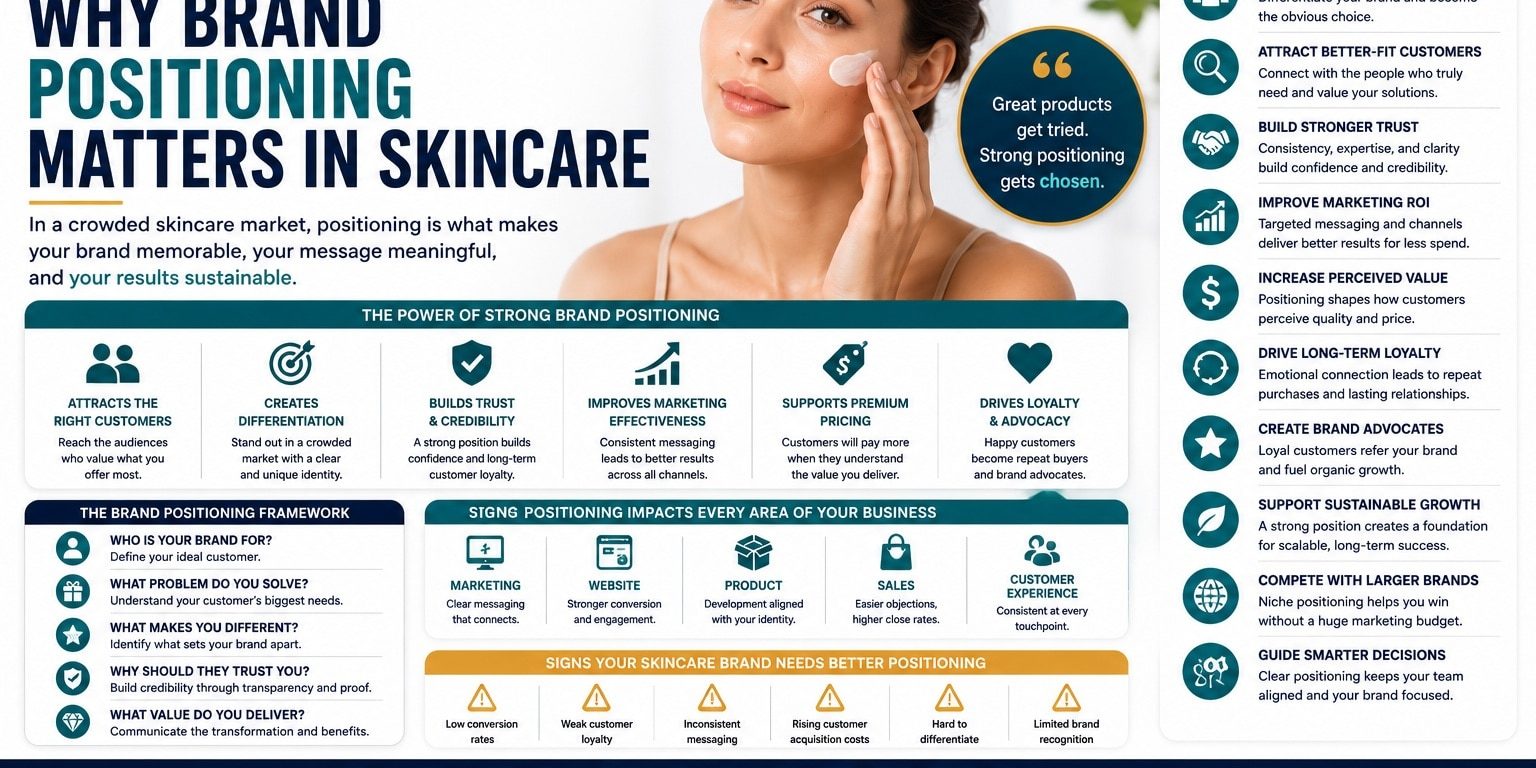
Brand positioning refers to how a company is perceived within the minds of consumers.
It answers several critical questions:
- Who is the brand for?
- What does the brand offer?
- What makes the brand different?
- Why should consumers trust it?
- What value does it provide?
Additionally, positioning influences how customers compare one brand against another.
Strong positioning helps consumers quickly understand where a brand fits within the marketplace.
As a result, purchasing decisions become easier.
Why Many Skincare Brands Struggle
Many skincare companies launch products without developing a clear positioning strategy.
Common mistakes include:
- Trying to appeal to everyone
- Offering generic messaging
- Lacking differentiation
- Focusing only on ingredients
- Ignoring customer emotions
- Following competitors
Furthermore, consumers often encounter similar claims across numerous brands.
Examples include:
- Premium quality
- Natural ingredients
- Clinical results
- Advanced formulations
When every company communicates similar messages, differentiation becomes difficult.
Consequently, customer acquisition becomes more expensive.
Positioning Creates Differentiation
One of the primary reasons why brand positioning matters in skincare is differentiation.
Consumers have countless options available.
Therefore, successful brands communicate a unique value proposition.
Examples of positioning strategies may include:
- Sensitive skin solutions
- Luxury skincare
- Medical-grade products
- Sustainable skincare
- Clean beauty
- Anti-aging expertise
- Acne-focused solutions
Additionally, differentiation helps consumers understand why a product deserves attention.
As a result, brands stand out in crowded markets.
Positioning Attracts the Right Customers
Not every customer is the ideal customer.
Successful skincare brands understand this concept.
Rather than targeting everyone, they focus on specific audiences.
Examples may include:
- Teenagers with acne
- Women concerned about aging
- Men seeking skincare routines
- Consumers with sensitive skin
- Luxury beauty buyers
- Eco-conscious shoppers
Furthermore, focused positioning often improves marketing efficiency.
When messaging resonates with the right audience, conversion rates typically improve.
Consequently, customer acquisition costs often decrease.
Positioning Influences Brand Trust
Trust plays a significant role in skincare purchasing decisions.
Consumers apply products directly to their skin and often use them daily.
Therefore, they want confidence in the brands they choose.
Strong positioning helps build trust through:
- Consistent messaging
- Clear expertise
- Authentic communication
- Relevant content
- Professional branding
Additionally, trust strengthens over time when brands consistently deliver on their promises.
As a result, customer loyalty often improves.
Positioning Improves Marketing Effectiveness
Marketing becomes significantly easier when positioning is clear.
Without positioning, companies often struggle to create effective campaigns.
Strong positioning influences:
- Website messaging
- Advertising
- Social media content
- Email marketing
- Product packaging
- Public relations
Furthermore, positioning provides direction for content creation.
Every marketing asset can reinforce the brand’s core message.
Consequently, communication becomes more consistent and impactful.
Positioning Supports Higher Pricing
Many consumers assume lower prices represent better value.
However, strong positioning often allows brands to command premium pricing.
Examples include:
- Luxury skincare brands
- Medical skincare companies
- Dermatologist-developed products
- Professional-grade formulations
Additionally, customers frequently pay more when they perceive greater value.
Strong positioning helps justify premium prices.
As a result, profitability often improves.
Positioning Drives Customer Loyalty
Loyal customers often connect with more than products.
They connect with brand values, messaging, and identity.
Strong positioning helps create emotional connections through:
- Shared values
- Consistent experiences
- Brand storytelling
- Community building
- Educational content
Furthermore, emotional connections strengthen customer relationships.
Consequently, retention rates often improve.
Positioning Shapes Product Development
Many successful skincare brands use positioning to guide product decisions.
Rather than launching products randomly, they develop offerings that support their core identity.
Positioning can influence:
- Product categories
- Ingredients
- Packaging
- Pricing
- Marketing campaigns
- Distribution channels
Additionally, strategic alignment creates stronger brand consistency.
As a result, consumers develop clearer perceptions of the brand.
Positioning Improves SEO and Content Marketing
Content marketing becomes more effective when positioning is clear.
Brands can focus on topics relevant to their audiences.
Examples include:
- Acne education
- Anti-aging advice
- Sensitive skin care
- Ingredient guides
- Skincare routines
- Dermatology insights
Furthermore, focused content often performs better in search engines.
As a result, SEO efforts become more efficient.
Positioning Helps Brands Compete Against Larger Companies
Large skincare companies often have significant marketing budgets.
However, smaller brands can compete effectively through focused positioning.
Niche positioning allows companies to:
- Serve specific audiences
- Address specialized concerns
- Build stronger communities
- Establish authority
Additionally, focused brands often develop stronger customer relationships.
Consequently, they can compete successfully despite smaller budgets.
Signs Your Skincare Brand Needs Better Positioning
Many businesses unknowingly struggle with positioning problems.
Warning signs include:
- Low conversion rates
- Weak customer loyalty
- Inconsistent messaging
- Difficulty differentiating products
- Rising acquisition costs
- Poor brand recognition
Furthermore, these challenges often indicate that consumers do not clearly understand the brand.
As a result, growth becomes more difficult.
Why Brand Positioning Matters in Skincare More Than Ever
Understanding why brand positioning matters in skincare has become increasingly important as competition continues to grow.
Consumers face more choices than ever before.
Therefore, brands must communicate their value clearly and consistently.
Strong positioning helps companies:
- Attract ideal customers
- Build trust
- Improve loyalty
- Increase visibility
- Strengthen profitability
Furthermore, positioning provides a foundation for every marketing and growth initiative.
As a result, businesses can scale more effectively.
Long-Term Benefits of Strong Brand Positioning
Brands that invest in positioning often experience:
- Higher conversion rates
- Greater customer loyalty
- Stronger differentiation
- Better marketing performance
- Increased profitability
- Sustainable growth
Additionally, strong positioning creates long-term competitive advantages.
As a result, companies become more resilient in changing markets.
Ultimately, understanding why brand positioning matters in skincare helps brands build stronger identities, attract ideal customers, and create sustainable long-term success.
Key Takeaways
Key takeaways include:
- Brand positioning creates differentiation
- Focused messaging attracts ideal customers
- Trust influences purchasing decisions
- Strong positioning improves marketing effectiveness
- Premium pricing often depends on positioning
- Loyalty strengthens through emotional connections
- Product development should align with positioning
- SEO benefits from focused messaging
- Niche brands can compete effectively
- Consistency improves brand recognition
- Positioning supports profitability
- Long-term growth begins with a clear identity
These strategies help skincare brands strengthen their market position, improve customer acquisition, and build lasting competitive advantages.
Q&A
| Question | Answer |
|---|---|
| What is brand positioning in skincare? | Brand positioning defines how consumers perceive a skincare brand and what makes it different from competitors. |
| Why is positioning important for skincare brands? | Positioning helps brands attract ideal customers, differentiate products, and build trust. |
| Can positioning affect pricing? | Yes. Strong positioning often supports premium pricing and higher profitability. |
| How does positioning improve marketing? | It creates consistent messaging that resonates with target audiences. |
| What is the biggest positioning mistake skincare brands make? | Trying to appeal to everyone instead of focusing on a specific audience and value proposition. |
How Illumination Consulting Helps Skincare Brands Grow
Illumination Consulting helps skincare brands develop stronger positioning, improve online visibility, attract ideal customers, increase conversions, and build long-term growth through branding, SEO, content marketing, website optimization, digital marketing, and strategic business consulting.