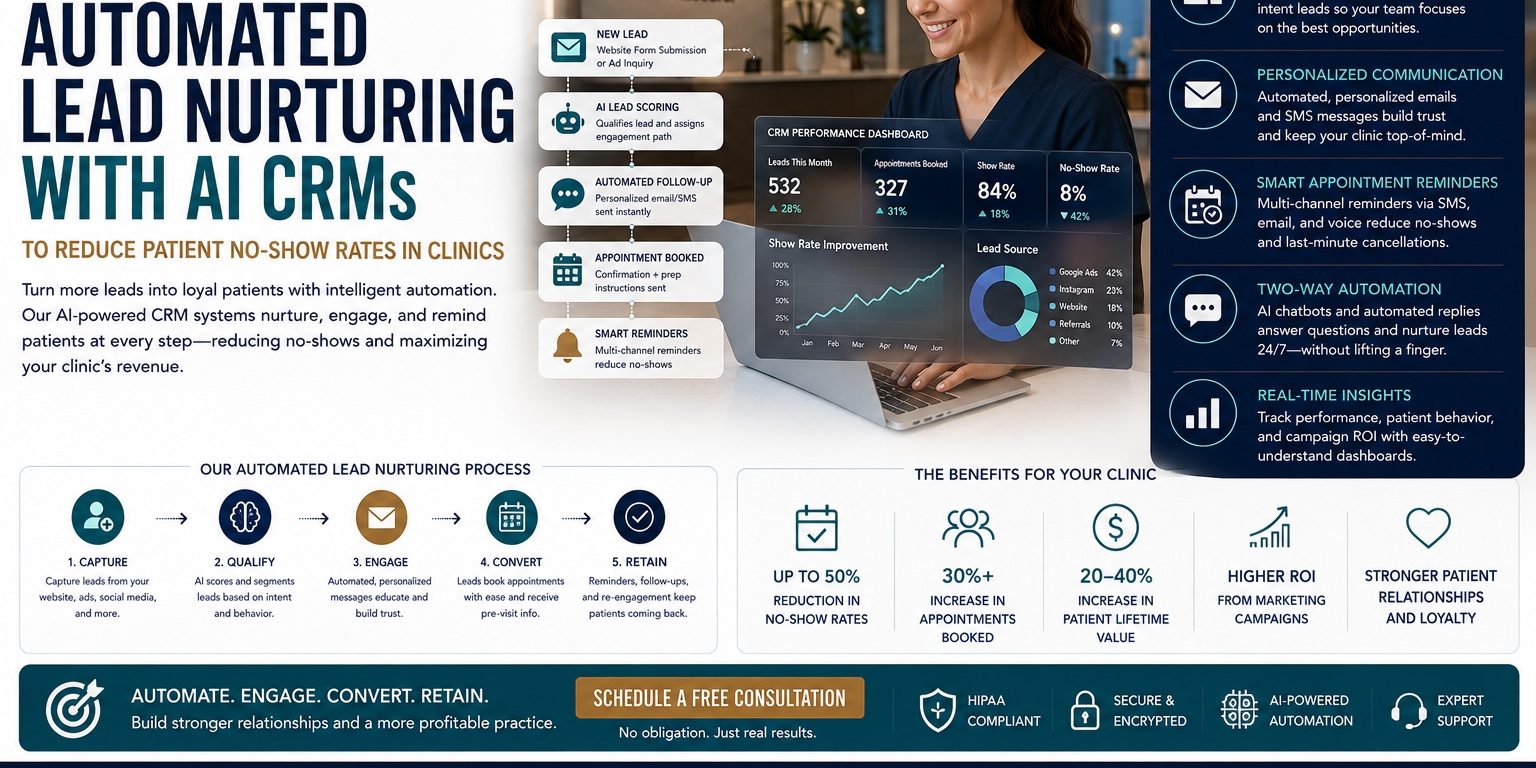
In the rapidly evolving healthcare landscape, patient no-show rates pose a significant challenge for clinics, potentially hindering operational efficiency and revenue. Automated lead nurturing, empowered by AI-driven CRM systems, provides strategic solutions to decrease these rates. By integrating technologies that automate communication and engagement, clinics can create a seamless patient experience that significantly improves attendance. This article will explore the role of automated systems in lead nurturing, focusing on personalized communication, predictive text messaging, and advanced reminder mechanisms, all aimed at enhancing patient retention and clinic performance.
Automated Appointment Reminders
Automated appointment reminders serve as a critical tool in reducing no-show rates by ensuring patients receive timely notifications about their scheduled visits. These reminders can be delivered via various channels, including SMS, email, or phone calls, thereby accommodating patient preferences for communication. By deploying such systems, clinics can minimize the likelihood of missed appointments, as timely reminders keep patients informed and engaged. The consistent use of these reminders has shown to improve attendance significantly.
Recent research highlights how proactive, interactive communication can yield measurable improvements in patient attendance and long-term retention.
Reducing No-Show Rates Through Automated SMS Reminders Between August 2021—June 2023, in a quasi-experimental study, outcomes were compared between two cohorts of new ART clients: 1) those opting into 2wT who received automated, weekly motivation short messaging service (SMS) messages and response-requested appointment reminders; and 2) a matched historical cohort receiving standard of care (SoC). The effect of proactive, interactive, two-way texting on 12-month retention in antiretroviral therapy: Findings from a quasi-experimental study in Lilongwe, Malawi, 2024
Following the implementation of automated appointment reminders, the expertise of Illumination Consulting can assist clinics in creating tailored solutions that maximize the effectiveness of these systems. Clinics benefit from strategic automation solutions that employ AI to enhance patient outreach, ensuring a greater response rate and increased engagement.
Personalized Communication
Personalized communication plays a pivotal role in enhancing patient engagement and reducing no-show rates. By leveraging patient data, clinics can craft tailored messages that resonate with individual needs and expectations. Personalized communication not only fosters a sense of value and recognition among patients but also aligns with their health management journey, motivating them to attend scheduled appointments.
Ultimately, the importance of personalization is evident in its capacity to bolster trust and rapport between patients and healthcare providers, ultimately leading to higher attendance rates.
Predictive Text Messaging
Integrating predictive analytics into text messaging strategies further optimizes patient engagement. By analyzing historical data and behavior patterns, clinics can anticipate the best times to send reminders or follow-ups, ensuring maximum visibility. Predictive text messaging not only streamlines communication but also increases the likelihood of responses, thereby reducing the uncertainty surrounding patient attendance.
Data suggests that utilizing structured reminder schedules can significantly boost attendance rates among both regular and overdue patient populations.
Impact of Automated Text Reminders on Patient Clinic Attendance Among regular patients, visit attendance was significantly higher in the cascade reminder group and the single reminder group compared to the no reminder group (78.2% and 76.6% vs. 74.8%,p< 0.001 and 0.027, respectively). Among overdue patients, the single reminder group had a 5.8% higher visit attendance compared to the no reminder group (26.5% vs. 20.7%,p< 0.001). Text messaging to improve retention in hypertension care in Bangladesh, 2024
This predictive approach allows clinics to tailor their messaging strategies dynamically, adapting to patients’ preferences and behaviors to foster better engagement and attendance.
Feedback Loops
Implementing effective feedback loops is essential for patient management and service improvement. These loops allow clinics to gather real-time patient insights regarding their experiences and satisfaction levels. By systematically collecting feedback, clinics can make informed adjustments to their scheduling and communication processes, further optimizing the patient experience.
Enhanced patient satisfaction contributes to improved retention rates, reinforcing the importance of adaptive feedback mechanisms in the healthcare service model.
Automated Scheduling Systems
Automated scheduling systems simplify the appointment booking process, which can significantly reduce cancellations and no-shows. These systems allow patients to manage their own appointments—rescheduling or canceling as needed, without the hassle of navigating administrative bottlenecks. By providing streamlined scheduling options, clinics can ensure such processes are user-friendly and efficient, ultimately fostering improved patient management.
When clinics adopt these automated solutions, they experience not only reduced operational strain but also increased patient satisfaction through ease of access to services.
Leveraging Patient Feedback Loops for Service Optimization
Patient segmentation is vital in tailoring communications effectively. By categorizing patients based on demographics, medical history, or engagement levels, clinics can develop targeted messaging strategies that cater to specific groups. This data-driven approach enhances the relevance of the communication, thereby improving overall engagement and response rates.
Implementing segmentation strategies allows clinics to optimize their outreach efforts, ensuring messages are tailored and timely to maximize impact.
Loyalty Programs
Loyalty programs also play a significant role in reducing no-show rates and enhancing patient retention. By offering incentives for attending appointments or engaging with healthcare services, clinics can motivate patients to remain committed to their healthcare journeys. These programs can take various forms, from discounts for early arrivals to rewards for consistent attendance.
The introduction of loyalty programs reflects an understanding of patient behavior while also fostering a culture of engagement within clinics.
Case Studies
Several clinics have successfully implemented automated lead nurturing systems to reduce no-show rates and enhance patient retention. For instance, one healthcare provider reported a 25% decrease in missed appointments after introducing an AI-driven CRM for automated reminders and follow-ups. These real-world examples illustrate the tangible benefits of utilizing advanced technologies in patient engagement.
Illumination Consulting has documented numerous successes in collaborating with clinics to tailor automated solutions that meet specific operational needs, leading to statistical improvements in patient attendance.
How Does AI-Powered CRM Technology Transform Patient Lead Nurturing?
AI-powered CRM technology transforms patient lead nurturing through enhanced engagement methods. By integrating real-time communication capabilities, clinics can provide personalized experiences, adjusting their approach based on patient interactions and feedback. Such technology ensures that patient engagement is not only responsive but also proactive, ultimately driving higher attendance rates.
These advancements highlight the potential for AI systems to redefine traditional healthcare communication methods, making them more efficient and effective.
What Are the Key Features of AI CRMs for Clinics?
AI CRMs offer several essential features that can significantly enhance clinic operations:
- Automated Appointment Reminders: Reduces no-shows by notifying patients of their upcoming appointments through preferred communication channels.
- Chatbots for Instant Communication: Facilitates 24/7 interaction with patients, addressing inquiries promptly and improving engagement metrics.
- Predictive Analytics: Analyzes patient data to tailor communications and anticipate needs, optimizing engagement strategies.
- Personalized Follow-Up Campaigns: Customizes follow-ups based on patient history and feedback, ensuring relevance and enhancing engagement.
- Segmentation and Targeting: Allows for tailored messaging based on specific patient demographics and behaviors, improving the effectiveness of communications.
- Feedback Loops: Enables clinics to adapt services based on real-time patient feedback, enhancing satisfaction and retention.
Modern healthcare providers are increasingly adopting cloud-native architectures to integrate these complex AI features into their patient contact centers.
Leveraging Cloud-Native AI for Automated Patient Engagement This article explores our managed cloud services for scalable, resilient, and HIPAA-compliant patient communication platforms for cloud-native contact centers, which include the architecture for a cloud-native contact center that utilizes cloud-based telephony and routing, a cloud-native backend orchestration platform, and conversational AI for automated patient engagement and clinical NLP for structured information extraction. AWS cloud architecture for scalable healthcare contact centers, 2019
These features collectively empower clinics to enhance their operational efficiency while simultaneously improving patient engagement and retention.
Automated Appointment Reminders
Automated appointment reminders serve as a foundational aspect of improving patient attendance. Techniques involve sending messages via SMS or email, highlighting the importance of reminders in reducing no-show rates. Evidence from clinics using these systems shows a significant positive correlation between reminder effectiveness and patient attendance, with many reporting increased compliance due to timely notifications.
Chatbots for Instant Communication
The integration of chatbots enables clinics to engage with patients promptly. These AI-driven tools offer instant responses to common questions, freeing up staff time and providing patients with immediate support. The functionality of chatbots has demonstrated substantial engagement improvements, as patients appreciate faster interactions, leading to higher satisfaction levels.
Predictive Analytics
Predictive analytics in CRM systems allows clinics to leverage data insights to improve patient engagement significantly. This technology helps identify trends and patterns in patient behavior, facilitating targeted communication strategies that resonate with specific patient demographics. Clinics that utilize predictive analytics often report enhanced engagement metrics, confirming the value of data-driven approaches in healthcare communication.
Personalized Follow-Up Campaigns
Personalized follow-up campaigns effectively bridge the communication gap between appointments. By customizing follow-up messages based on prior interactions, clinics can ensure patients feel valued and supported throughout their healthcare experience. This approach has been linked to higher patient retention rates, as individuals appreciate tailored care that reflects their unique health journeys.
Segmentation and Targeting
Segmentation allows clinics to refine their outreach strategies effectively. By identifying distinct patient groups based on their characteristics, clinics can craft targeted messages that enhance patient relevance. Evidence suggests that targeted communication yields higher engagement rates, providing insights into how segmentation can drive better patient management.
Feedback Loops
The implementation of feedback loops is crucial for continuous improvement in patient services. By actively soliciting patient insights, clinics can adjust their strategies and practices based on actionable data. This adaptability not only heightens patient satisfaction but also cultivates an environment of trust and responsiveness within the clinic.
How Does Automation Enhance Patient Engagement and Follow-Up?
Automation enhances patient engagement by streamlining communication processes and ensuring timely follow-ups. By utilizing automated reminders and personalized messages, clinics can maintain a consistent dialog with patients, fostering better relationships and reducing barriers to attendance. This proactive approach significantly impacts overall patient engagement metrics and satisfaction levels.
What Are Proven Strategies to Reduce Patient No-Shows Using AI CRM Systems?
Proven strategies to reduce patient no-shows using AI CRM systems include employing automated reminders, personalized outreach, and utilizing predictive analytics. These approaches work collectively to enhance communication, ensuring patients are informed and engaged throughout their healthcare journeys.
Clinics that adopt such strategies consistently demonstrate improved attendance rates and patient satisfaction, reinforcing the effectiveness of advanced technologies in patient management.
Which Automated Appointment Reminder Systems Improve Clinic Attendance?
Evaluating different automated appointment reminder systems reveals significant disparities in effectiveness. Choosing systems that offer multi-channel communication options tends to improve clinic attendance more effectively, as patients can engage through their preferred means.
By deploying smart automation tools, clinics can fine-tune their reminder strategies, ensuring they align with patient needs for optimal outcomes.
How Does Predictive Analytics Prevent Patient No-Shows?
Predictive analytics plays a vital role in preventing patient no-shows by analyzing historical data to identify potential issues before they occur. By understanding patient behaviors and preferences, clinics can tailor their strategies to meet specific needs proactively. This data-driven approach empowers clinics to enhance their engagement efforts, significantly reducing instances of missed appointments.
How Can Clinics Integrate AI-Driven Lead Nurturing Automation into Existing Workflows?
Integrating AI-driven lead nurturing automation into existing workflows involves assessing current processes and identifying areas for enhancement. Clinics can adopt automation tools gradually, ensuring that staff is adequately trained and that systems are in place for seamless integration.
The transition to automated workflows is typically met with satisfaction, as clinics experience improved efficiency and optimized patient engagement.
What Technical Steps Are Required to Deploy AI CRM Automation?
Deploying AI CRM automation requires meticulous planning and execution. Key technical steps include:
- Selecting a Suitable CRM Platform: Choose a CRM that aligns with clinic needs and offers necessary features.
- Data Integration: Ensure patient data is accurately migrated to the new system for optimal functionality.
- Training Staff: Provide comprehensive training for staff to efficiently utilize the CRM capabilities.
- Implementation Monitoring: Regularly evaluate the system’s performance and make necessary adjustments.
By following these steps, clinics can successfully integrate automated lead nurturing into their operations.
How Does Seamless CRM Integration Impact Clinic Operational Efficiency?
Seamless CRM integration significantly enhances clinic operational efficiency by automating administrative tasks and improving data accessibility. When processes are streamlined, staff can focus on patient care rather than being bogged down by repetitive tasks. This reallocation of resources not only improves efficiency but also enhances the overall patient experience.
What Measurable Outcomes Have Clinics Achieved with AI CRM Lead Nurturing Automation?
Clinics utilizing AI CRM lead nurturing automation have reported a range of measurable outcomes, including:
- Reduced No-Show Rates: Many clinics experience a decrease in missed appointments by up to 30% after adopting automated reminders.
- Increased Patient Retention: Improved engagement strategies lead to heightened patient loyalty and satisfaction.
- Enhanced Operational Efficiency: Administrative workflows become optimized as automation reduces the need for manual intervention.
These outcomes illustrate the profound impact technology can have on clinic performance and patient management.
Which Case Studies Demonstrate Reduced No-Show Rates and Increased Patient Retention?
Several case studies illustrate the effectiveness of AI CRMs in reducing no-shows and retaining patients. For instance, a med spa revealed a 40% drop in missed appointments after implementing a comprehensive automated reminder system.
These success stories underline the importance of leveraging technology to enhance patient management strategies that ultimately foster clinic growth.
How Do AI CRM Systems Optimize ROI in Healthcare Appointment Management?
AI CRM systems optimize ROI in healthcare appointment management by streamlining processes and improving patient engagement rates. By reducing administrative costs and enhancing attendance, clinics can see a direct correlation between their investment in technology and improved financial returns.
Longitudinal data consistently showcase how this technology translates into financial benefits, making it an invaluable resource for clinics seeking sustainable growth.
What Future Trends Will Shape AI-Enabled Patient Retention and Lead Nurturing?
The future of AI-enabled patient retention and lead nurturing is poised to evolve significantly. Trends such as enhanced personalization through AI-driven insights, the integration of telehealth solutions, and a focus on patient-centered care models are set to transform how clinics engage with patients.
These innovations represent the growing importance of technology in healthcare, paving the way for a more responsive and efficient patient service model.
How Will Emerging AI Technologies Further Reduce Patient Non-Compliance?
Emerging AI technologies will likely introduce new capabilities to further reduce patient non-compliance. Innovations such as sophisticated reminder systems that utilize machine learning to predict patient behaviors can fine-tune engagement strategies. Additionally, automated follow-ups can ensure continual interaction, nurturing patient compliance throughout their healthcare experiences.
As these technologies become more prevalent, clinics can anticipate a more collaborative relationship with their patients, anchored by consistency and support
Frequently Asked Questions
How does an AI-powered CRM reduce patient no-show rates?
An AI-powered CRM reduces no-shows by automating timely appointment reminders across SMS, email, and phone, while using predictive analytics to identify the best times to reach each patient. Combined with personalized messaging and self-service scheduling, this keeps patients informed and engaged, making it far less likely they forget or skip a visit.
Which channels work best for automated appointment reminders?
The most effective approach uses multiple channels—SMS, email, and phone—so clinics can reach patients through whichever method they prefer. Multi-channel systems consistently outperform single-channel reminders because they accommodate different patient communication habits and improve the odds of a response.
What role does predictive analytics play in patient retention?
Predictive analytics reviews historical patient data and behavior patterns to anticipate no-show risk and determine optimal reminder timing. This allows clinics to proactively adjust outreach for specific patients or segments before a missed appointment occurs, rather than reacting after the fact.
How quickly can a clinic expect to see results after implementing an AI CRM?
Results vary by clinic, but case studies show meaningful impact soon after rollout—some providers report no-show reductions of 25% to 40% and up to 30% fewer missed appointments after adopting automated reminders and follow-ups, with gains continuing as segmentation and personalization are refined.
What is involved in integrating an AI CRM with an existing clinic workflow?
Integration typically involves selecting a CRM platform suited to the clinic’s needs, migrating patient data accurately, training staff on the new tools, and monitoring performance after launch. A phased rollout with ongoing evaluation helps ensure the system fits smoothly into existing operations without disrupting patient care.