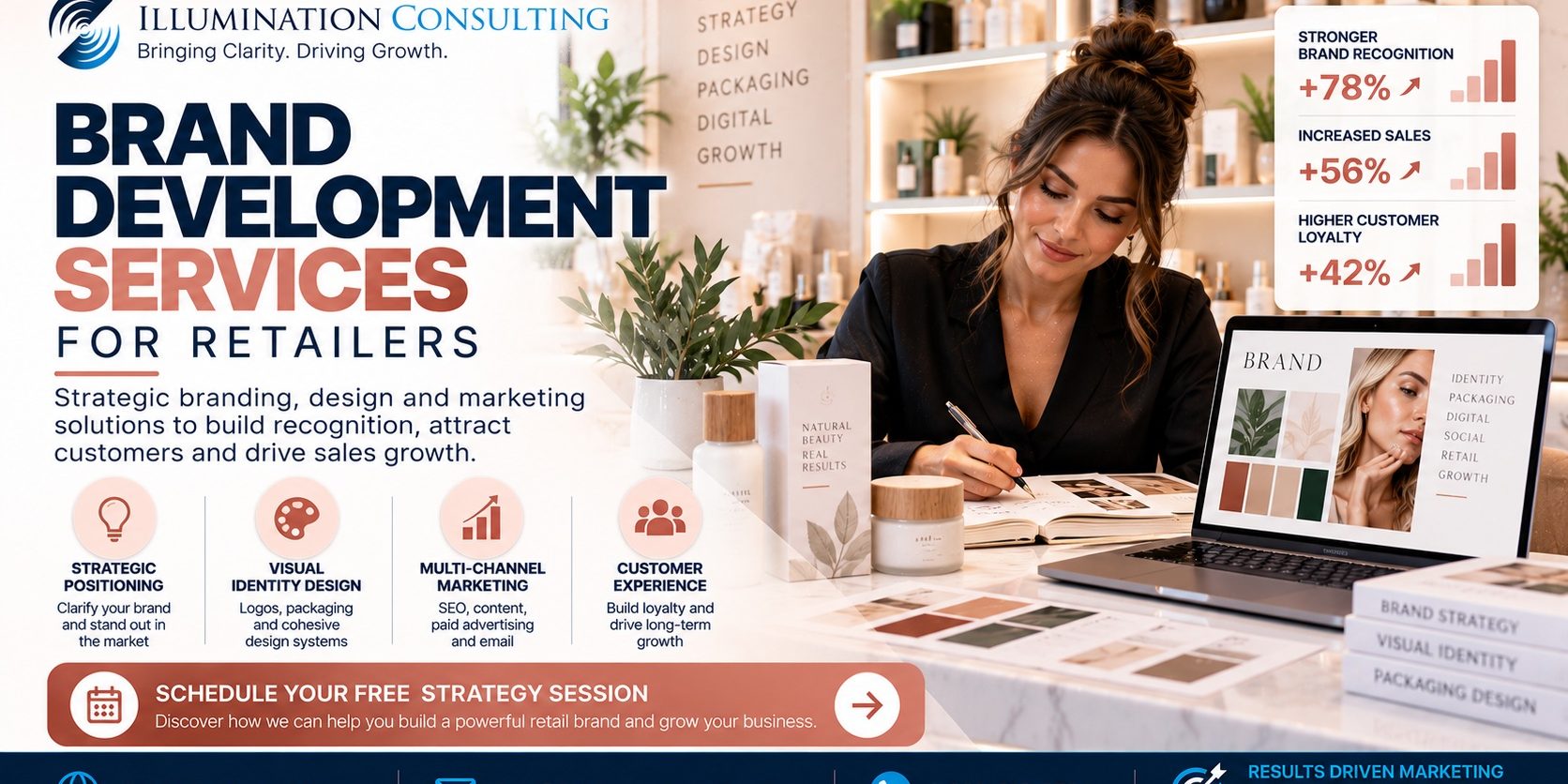
Illumination Consulting, based in Beverly Hills, CA, offers retail brand development services including brand strategy, visual identity, packaging design, and retail positioning. Costs vary by project scope and deliverables, typically structured as custom quotes following an initial consultation to assess brand goals, market scope, and required services.
Retail brand development services combine identity design, architecture-first platform strategy, and connected systems to address real gaps, like the fact that 58% of retail brands operate with below 80% inventory accuracy. Illumination Consulting, based in Beverly Hills, C
Retail brand development services from Illumination Consulting combine brand positioning, search engine optimization, content marketing, paid advertising, conversion optimization, and email marketing into one coordinated growth system. Based in Beverly Hills, CA, the firm structures pricing around custom
Key Takeaways
- Retail brand development integrates software solutions that directly drive revenue growth and inventory accuracy across channels.
- Custom platforms align systems, data, and teams when off-the-shelf tools fail expanding retail operations.
- Modern retail branding creates gravitational pull by mapping nonlinear customer journeys across digital and physical touchpoints.
- Illumination Consulting’s Beverly Hills expertise delivers retail brand strategies that connect customer experience with measurable sales impact.
What Are Retail Brand Development Services?
Brand development services for retailers combine strategic positioning, visual identity, and coordinated marketing into one system designed to turn store browsers into loyal customers. Retail brands compete today in one of the most crowded business environments on record, facing more consumer choices, more sales channels, and higher shopper expectations than in previous decades. Standing out requires more than a logo refresh or a seasonal promotion.
A results-driven approach treats branding as infrastructure, not decoration. Advertising alone rarely moves the needle for a boutique or DTC label. Retailers need a coordinated strategy that ties brand positioning to search engine optimization, content marketing, social strategy, and conversion optimization. Each piece reinforces the others, so a campaign that builds awareness also feeds traffic that the website is built to convert.
This work typically includes:
- Brand positioning and messaging built around a defined target customer
- Visual identity systems, including logo, packaging, and in-store signage consistency
- Content and social strategy that reinforces brand voice across every channel
- Conversion-focused website and landing page design
- Ongoing performance tracking tied to traffic, sales, and retention metrics
Why does retail branding require more than a marketing plan?
Marketing campaigns generate attention, but brand development sets the foundation that marketing runs on. Retail business consulting is a recognized area of specialization precisely because retailers, manufacturers, distributors, wholesalers, and e-commerce companies each face distinct operational and positioning challenges that generic templates cannot solve.
Who typically provides these services?
Firms with dedicated retail consulting practices, such as Illumination Consulting in Beverly Hills, California, structure brand development around measurable business outcomes rather than isolated creative deliverables, pairing identity work with the digital systems that sustain long-term growth.
Which Features Define Strong Retail Branding?
Strong retail branding combines five core elements: strategic positioning, consistent messaging, distinctive visual identity, a conversion-ready digital storefront, and connected technology that supports growth. None of these elements works well in isolation. Retailers that treat branding as a logo refresh alone lose ground to competitors building complete systems.
Brand Development Services for Retailers typically span brand strategy, positioning, messaging, logo design, corporate identity, and full visual identity systems. These pieces create the vocabulary and look a brand uses across every touchpoint, from packaging to paid ads. Without that consistency, customers struggle to recognize a brand across channels, and recognition is what drives repeat purchases.
Digital execution matters just as much as visual strategy. A properly built retail e-commerce site improves search visibility, raises average order value, and supports scalable sales growth rather than acting as a static catalog. Retail software development now plays a direct role in revenue growth, inventory accuracy, and long-term customer value, meaning branding decisions and backend systems can no longer be managed separately.
Does a retail app actually strengthen a brand?
Retail apps serve a branding function, not just a transactional one. Built correctly, they help retailers and brands connect with customers and improve the overall shopping experience, functioning as a digital storefront that reinforces identity between visits.
What happens when branding and technology stay disconnected?
Retailers lose consistency, and customers notice. A striking logo cannot offset a slow checkout or inaccurate inventory. Software weaknesses quietly erode the brand equity built elsewhere. Illumination Consulting positions branding, e-commerce development, and retail technology as one coordinated system, because fragmented execution undermines even the strongest creative work.
How Does Branding Drive Retail Sales Growth?
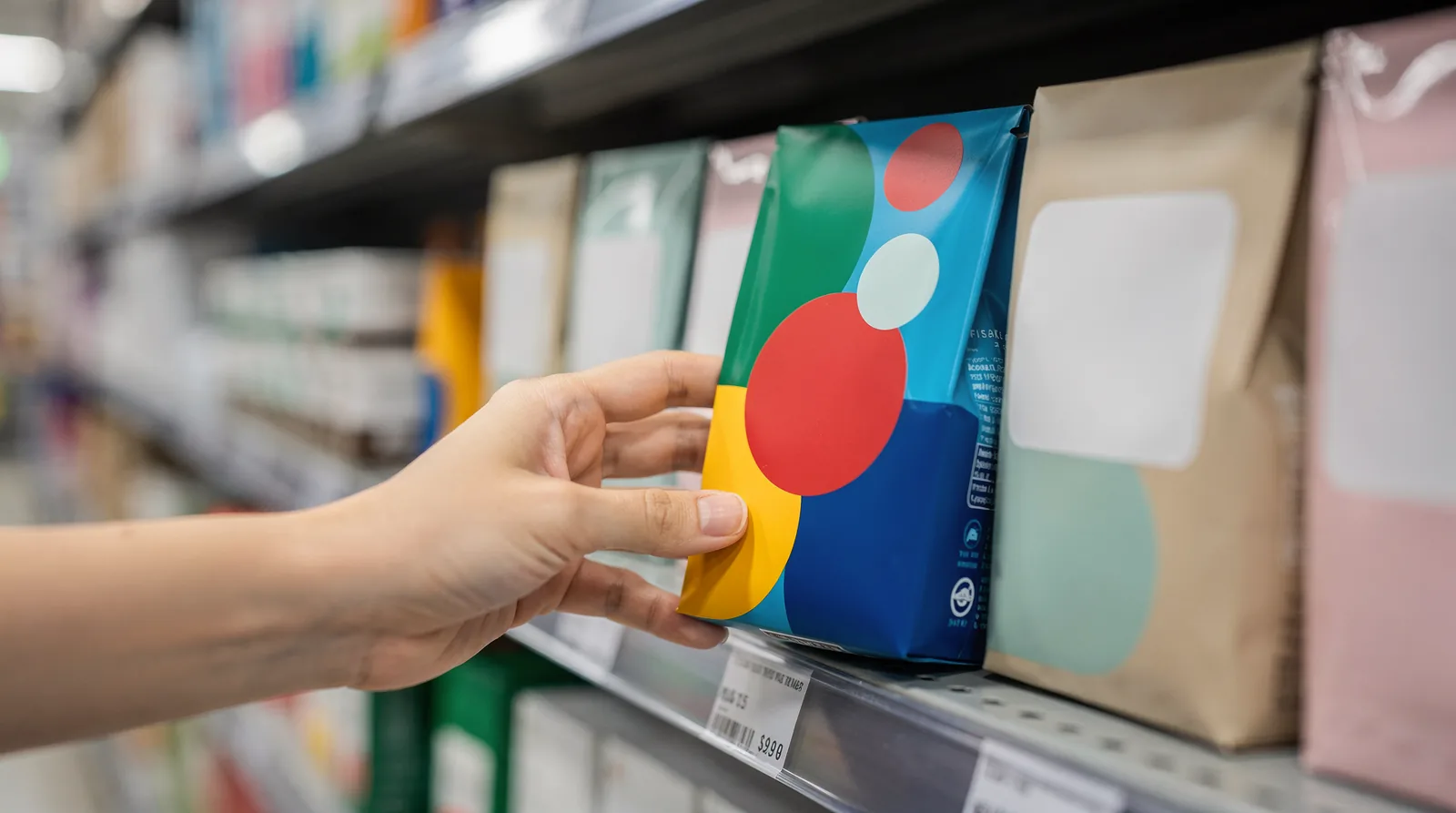
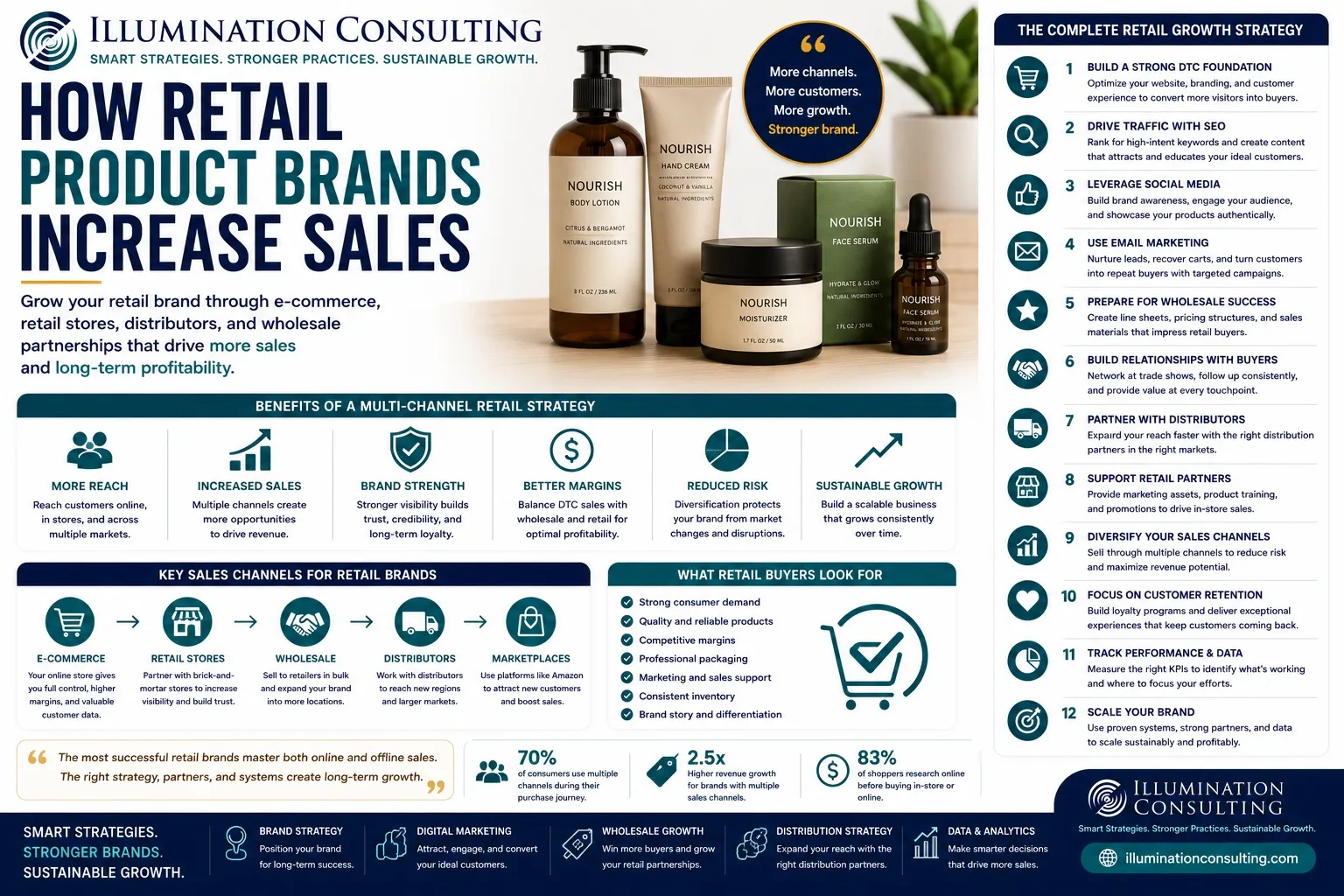
Branding drives retail sales growth by turning casual browsers into repeat buyers. A distinctive identity builds recognition at the shelf, on a screen, and in a customer’s memory long after checkout ends. Retailers that invest in strategic brand development services for retailers typically see three outcomes: stronger customer acquisition, higher conversion rates, and expanded distribution.
Retail marketing programs built around a clear brand position attract qualified customers rather than one-time shoppers. These programs strengthen brand awareness, improve online visibility, and generate measurable revenue growth across every channel a retailer operates. Illumination Consulting structures each engagement around this principle, pairing brand strategy with marketing execution so every campaign reinforces the same identity.
Website performance depends on branding as well. Optimized retail e-commerce websites, built around a consistent visual and messaging identity, increase online sales, strengthen brand authority, and maximize conversion rates. A cluttered or inconsistent storefront erodes shopper trust before checkout ever happens.
Consumer product companies feel this pressure most acutely. Strong brand development helps these companies expand retail distribution. Increase direct-to-consumer sales at the same time, rather than forcing a choice between wholesale growth and online growth.
Why Does Brand Identity Matter More Than Product Alone?
Products alone rarely sustain retail growth once competitors copy features or undercut price. Modern retail branding works best when it builds a compelling, culturally relevant brand world instead of a purely transactional storefront. Shoppers increasingly choose destinations, not just discounts.
Branding elements that compound sales growth:
- Consistent visual identity across stores, apps, and marketplaces
- Messaging that reinforces one value proposition everywhere
- Website experiences that reflect brand authority, not just inventory listings
- Distribution strategy aligned with brand positioning, not separate from it
What Determines Retail Brand Development Costs?
No fixed price list applies to retail brand development, because the final investment depends entirely on scope. Retail executives evaluating proposals should expect variation, not a single standard rate card. Retail engagements succeed when consulting, marketing, technology, and analytics work as one coordinated strategy rather than separate line items, and that integration itself shapes the budget.
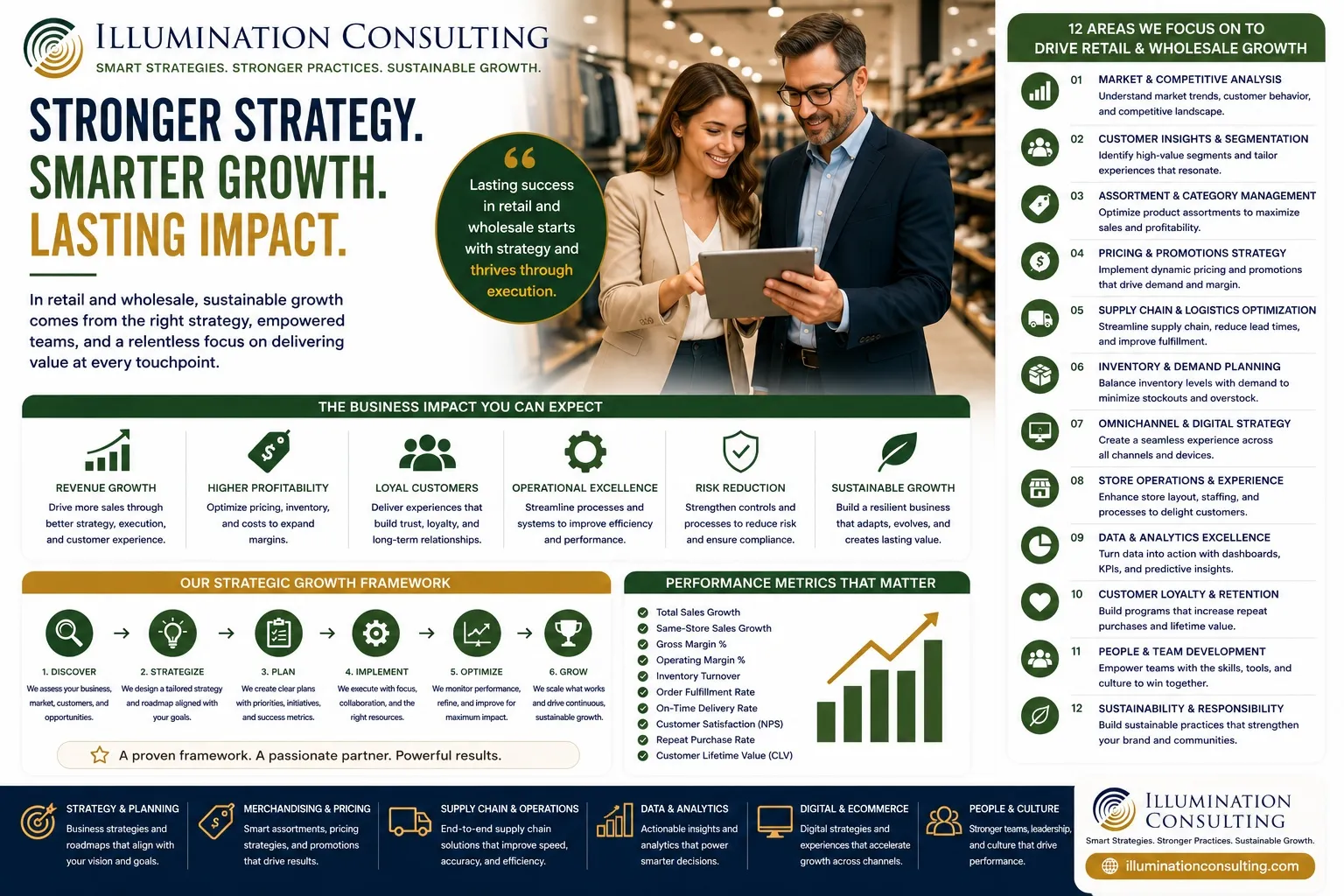
Scope drives the number more than any other factor. Brand development services for retailers can include retail strategy, omnichannel planning, pricing strategy, AI implementation, and e-commerce strategy. Each added component changes the investment level.
What services typically affect the price of a retail branding project?
Several service categories commonly move the budget up or down:
- Retail strategy and expansion planning
- Omnichannel and digital transformation work
- Retail branding and identity development
- Pricing strategy and product launch consulting
- AI implementation and operational improvement initiatives
A boutique owner adding one or two of these builds a leaner engagement. A multi-channel retailer bundling all five builds a larger, more comprehensive one.
Does a phased approach change the overall cost?
Yes. A phased, architecture-first approach controls risk, timelines, and total development cost far better than a single large rollout. Breaking brand and systems work into stages lets DTC founders validate progress before committing further budget, which reduces wasted spend on misaligned priorities.
Executives should also weigh the cost of inaction. Unresolved operational issues, stockouts, abandoned carts, and fraud, translate into measurable revenue losses with real dollar impact behind each one. Viewed against those losses, a structured brand development investment often protects revenue rather than simply spending it.
How Do You Choose a Branding Partner?
Selecting a branding partner starts with verifying strategic fit, not just creative taste. Retail executives and e-commerce founders should ask whether a firm builds systems tied to measurable growth or simply delivers logos and style guides. Brand Development Services for Retailers work best when they combine positioning, customer acquisition strategy, and operational credibility into one package.
Location and operating credentials matter more than many retailers assume. A firm’s physical base signals accountability and long-term presence. Illumination Consulting operates from Beverly Hills, CA, giving retail clients a verifiable, established operating address rather than a virtual storefront. Confirming where a partner is headquartered. How long it has operated there, is a simple due-diligence step too many brands skip.
What Should a Branding Agreement Actually Deliver?
A sound agreement delivers customized marketing systems, not generic templates. Whether the client runs a local boutique, an e-commerce brand, a specialty retailer, or a multi-location chain, the partner should design acquisition strategies around that specific business model rather than a one-size-fits-all package.
Why Does Alignment With Business Strategy Matter So Much?
Strong branding stays locked to business strategy, target audience, and the competitive landscape across every touchpoint, from packaging to paid ads. Disconnected branding confuses shoppers and dilutes pricing power.
Retailers evaluating candidates should look for:
- Documented alignment between brand positioning and target customer
- Evidence of multi-channel strategy, not single-platform execution
- Transparent, verifiable business location and operating history
- A growth system, not isolated creative deliverables
The retail app market reached $3.8 trillion in 2023, according to Retail App Development (2026), underscoring why selecting the right partner carries outsized financial stakes.
FAQ
What do retail brand development services include?
Retail brand development combines brand positioning, SEO, content marketing, paid advertising, conversion optimization, and email marketing into one coordinated growth system, alongside visual identity work and connected technology that supports long-term growth.
Why do retailers need more than a marketing plan?
Marketing campaigns generate attention. Brand development builds the foundation marketing runs on, addressing distinct operational and positioning challenges that generic templates cannot solve for retailers, manufacturers, distributors, and e-commerce companies.
Who provides retail brand development services?
Firms with dedicated retail consulting practices, such as Illumination Consulting in Beverly Hills, California, structure brand development around measurable business outcomes rather than isolated creative deliverables.
Conclusion
In closing, retail brand development represents a strategic investment that strengthens competitive positioning, builds customer loyalty, and supports sustainable revenue growth. By integrating comprehensive branding services with measurable business objectives, organizations establish the visual identity, messaging clarity, and market differentiation necessary to succeed in competitive retail environments. The right brand development strategy transforms how customers perceive your business, ultimately driving long-term profitability and enterprise value.