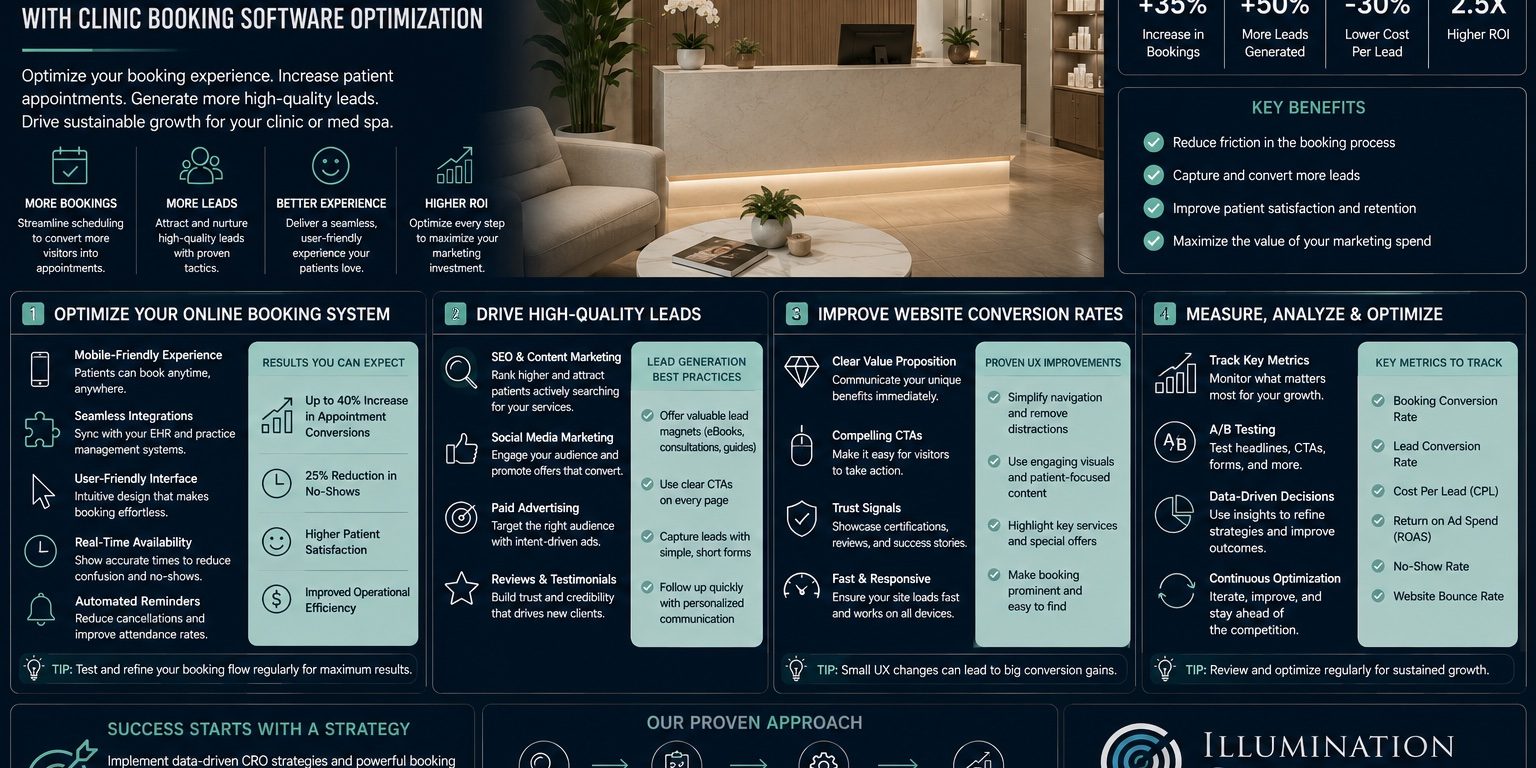
CRO Strategies to Improve Bookings and Leads with Clinic Booking Software Optimization
In the dynamic landscape of healthcare services, Clinics and Med Spas face the crucial task of optimizing their booking systems to enhance patient satisfaction and increase lead conversions. Effective conversion rate optimization (CRO) strategies are anchored in robust online booking systems that not not only simplify scheduling but also create a seamless user experience. This article delves into various strategies that can significantly improve bookings and lead generation, addressing common challenges and offering practical solutions. Readers will gain insights into optimizing online booking systems, employing effective lead generation tactics, and understanding the importance of website conversion rates in healthcare settings. We will also explore key performance indicators that can measure the success of these strategies and best practices for integrating them within healthcare organizations.
How Can Optimizing Online Booking Systems Enhance Patient Appointments?
Optimizing online booking systems is pivotal in increasing patient appointments, as these systems streamline the scheduling process and enhance user experience. User-friendly booking platforms contribute to higher patient satisfaction by making it easier for them to manage appointments, reducing the likelihood of no-shows and cancellations. Moreover, automation features in these systems minimize scheduling errors, allowing clinics to operate more efficiently. Studies show that optimized booking systems can lead to a significant increase in appointment numbers, benefiting both patients and healthcare providers.
Project Clinik: Cross-Platform Clinic Scheduling System
During this stage, the researchers brainstormed about how the problems could be solved, leading them to the idea of a booking or appointment system for a clinic. Project Clinik: A cross-platform scheduling and appointment reservation system, 2023
What Features Should Effective Clinic Booking Software Include?
Effective clinic booking software should provide a range of essential features to enhance user experience and operational efficiency. These features include:
- Mobile Compatibility: Ensuring the booking system is mobile-friendly allows patients to schedule appointments on the go, thus accommodating their busy lifestyles.
- Integration Capabilities: The ability to integrate with existing practice management software can enhance workflow efficiency by syncing appointments and patient records seamlessly.
- User-Friendly Interface: A simple and intuitive interface reduces confusion, helping patients navigate through the booking process effortlessly.
These functionalities are key to fostering a more engaging and hassle-free appointment experience for patients.
How Does User Experience Impact Online Appointment Conversions?

User experience (UX) plays a crucial role in determining online appointment conversions. A well-designed booking interface is essential for driving patient engagement and ensuring higher conversion rates. Factors such as page load speed, clarity of information, and overall aesthetic appeal significantly influence user satisfaction. Successful UX implementations—such as simplified navigation and clear calls-to-action—have demonstrated statistical correlations with improved booking rates. For instance, clinics that employed UX optimization techniques have seen enhancements in their conversion rates.
What Lead Generation Tactics Increase Med Spa Client Acquisitions?
Lead generation is fundamental for Med Spas aiming to grow their client base. Effective strategies encompass a blend of traditional marketing and modern digital tactics tailored to attract potential clients. Understanding these methods can lead to higher acquisition rates and better service following.
- Search Engine Optimization (SEO): Enhancing website visibility through targeted keywords and engaging content can drive organic traffic, leading to increased lead generation.
- Social Media Engagement: Actively maintaining a presence on platforms such as Instagram and Facebook allows Med Spas to share promotions and engage with clients, creating a sense of community and awareness.
- Customer Reviews and Testimonials: Leveraging positive reviews can enhance credibility, influencing potential clients’ decisions to seek services at a Med Spa.
Engaging in these tactics not only attracts leads but also helps in nurturing relationships with potential clients.
Which Digital Marketing Strategies Drive High-Quality Leads for Med Spas?
To attract high-quality leads, Med Spas must implement effective digital marketing strategies. Key approaches include:
- Content Marketing: Developing informative content that addresses potential clients’ needs can establish the Med Spa as an authority in the beauty and wellness space.
- Targeted Advertising: Utilizing platforms such as Google Ads and social media ads allows for precise targeting of demographics that are more likely to convert.
- Email Campaigns: Following up with potential clients through personalized email marketing can rekindle interest and encourage revisits.
Implementing these strategies effectively can lead to a significant increase in lead quality and client acquisition.
How Can Patient Engagement Automation Support Lead Conversion?

Patient engagement automation plays a powerful role in converting leads into loyal patients. By utilizing automated communication tools, clinics can maintain continuous contact with potential clients. Successful strategies include:
- Automated Appointment Reminders: Sending reminders via email or SMS reduces no-show rates and keeps the clinic top-of-mind for patients.
- Follow-Up Surveys: Engaging patients through surveys post-visit can provide valuable insights into their experiences while also fostering a connection.
- Personalized Offers: Utilizing automation to deliver tailored promotions based on patient preferences can enhance engagement and encourage bookings.
The use of automation not only streamlines operations but also helps build long-lasting relationships with patients.
How Does Website Conversion Rate Improvement Affect Healthcare Appointment Scheduling?
Improving website conversion rates directly correlates with enhanced appointment scheduling in healthcare settings. A higher conversion rate signifies an increase in visitors taking action, such as booking appointments. Key elements that contribute to improved conversion rates include:
- Clear Call-to-Action (CTA): Strategically placed CTAs can guide visitors towards the booking process, increasing the likelihood of conversions.
- Trust Signals: Incorporating patient reviews, testimonials, and security badges can enhance credibility, reassuring potential clients about making their appointments online.
- A/B Testing: Regular testing of website elements helps determine which configurations offer the best results in terms of engagement and conversions.
Consistent evaluation of website performance and enhancements can lead to significant improvements in appointment scheduling.
What UX Design Best Practices Improve Clinic Website Usability?
Adopting UX design best practices can substantially enhance clinic website usability, ultimately leading to higher patient engagement. Essential practices include:
- Intuitive Navigation: Simplifying menu structures ensures that users can easily find relevant information without frustration.
- Responsive Design: Ensuring that the website functions seamlessly across devices increases accessibility.
- Engaging Visuals: Using high-quality images and a cohesive color scheme can enhance aesthetic appeal, drawing users in.
When clinics prioritize usability through thoughtful design, they can transform their websites into powerful tools for patient engagement and conversion.
How Can Data Analytics and A/B Testing Optimize Booking Funnels?
Data analytics and A/B testing are invaluable in optimizing booking funnels to increase conversions. By tracking user interactions and preferences, clinics can uncover insights that drive improvements in the booking process. Effective strategies include:
- Data Tracking: Monitoring key metrics—such as page visits, click rates, and bounce rates—provides a clearer understanding of user behavior and potential drop-off points in the booking funnel.
- A/B Testing for Booking Pages: Experimenting with different page layouts and content allows clinics to refine their strategy based on real-world data, leading to more conversions over time.
- User Feedback: Gathering feedback on the booking process can provide direct insights into areas for improvement, further optimizing the funnel.
Utilizing these strategies ensures that booking funnels remain efficient and user-friendly.
Which Key Performance Indicators Measure CRO Success in Clinics and Med Spas?
Measuring the success of CRO efforts in healthcare settings relies on specific key performance indicators (KPIs). These metrics provide valuable insight into the effectiveness of various strategies employed. Key KPIs include:
- Conversion Rate: The percentage of visitors who complete bookings versus total visitors, indicating the effectiveness of the online booking system.
- Lead Volume: The number of leads generated over a certain period, reflecting the success of engagement tactics.
- Patient Retention Rate: Measuring the percentage of patients who return for subsequent appointments can indicate the satisfaction level and effectiveness of follow-up strategies.
By closely monitoring these KPIs, clinics can evaluate the impact of their CRO strategies on overall performance.
How Do Conversion Rates and Lead Volume Correlate to Business Growth?
Understanding the relationship between conversion rates, lead volume, and business growth is essential for clinics to thrive. A higher conversion rate typically leads to more booked appointments, resulting in increased revenue. Similarly, an increase in lead volume often indicates effective marketing strategies that can boost patient inflow. Analyzing trends in these metrics allows clinics to adjust their strategies accordingly to maximize growth potential.
What Tools Monitor and Report Clinic Appointment Conversions Effectively?
Effective monitoring tools are vital for tracking clinic appointment conversions. Essential features to look for in these tools include:
- Real-Time Data Analysis: The ability to receive live updates on appointment bookings and cancellations can help in immediate decision-making.
- Customizable Reporting: Tools that allow customization of reports provide insights tailored to specific goals and objectives, aiding clinics in optimizing their practices.
- Integration Capabilities: Seamless integration with existing practice management systems enhances data accuracy and operational efficiency.
Clinics leveraging such tools can enhance their appointment monitoring processes, ultimately leading to improved conversion rates.
What Are Best Practices for Implementing CRO Strategies in Healthcare Settings?
Implementing effective CRO strategies in healthcare settings is essential for improving patient experience and increasing conversions. Adhering to best practices ensures a smooth transition and effective execution. Key practices include:
- Define Clear Objectives: Establishing specific goals for each CRO strategy provides direction and benchmarks for success.
- Engage Training and Education: Ongoing training for staff on new systems and strategies is crucial for successful implementation and lasting impact.
- Continuous Monitoring and Adjustments: Regularly analyzing results and adjusting strategies based on performance data keeps the process dynamic and responsive to patient needs.
By focusing on these best practices, clinics can set the stage for long-term success in optimizing their conversion efforts.
How Should Clinics Integrate Booking Software with Marketing and Engagement Tools?
Integrating booking software with marketing and engagement tools is pivotal in creating a cohesive patient journey. Effective approaches include:
- Unified Patient Records: Integrating booking software with patient management systems ensures that all patient data is consistent and accurate across platforms.
- Automated Marketing Campaigns: Synchronizing marketing tools with booking systems allows for automated follow-ups and engagement through email or SMS.
- Shared Analytics: Merging data from both systems can provide comprehensive insights that guide marketing strategies and enhance patient engagement.
This integration not only improves operational efficiency but also enhances the overall patient experience.
Optimizing Hybrid Appointment Systems in Multi-stage Clinics
Even though several clinics serve patients in more than one stage (e.g., visit nurse and then visit doctor) and employ multiple providers in each stage, most of the previous work on appointment system design considers a simplified single-stage single-server clinic. Motivated by a real-life clinic setting, this paper aims to determine the schedule configuration of a hybrid appointment system (i.e., the number of pre-booking and same-day time slots reserved for a physician along with their positions in the schedule) for a two-stage multi-server clinic. A stochastic optimization model is developed to obtain a schedule configuration that minimizes the expected total cost – a weighted sum of excessive patient waiting time, resource idle time, resource overtime, and denied appointment requests.
Designing schedule configuration of a hybrid appointment system for a two-stage outpatient clinic with multiple servers, S Srinivas, 2020
What Ongoing Monitoring and Content Updates Ensure Sustained CRO Performance?
To maintain sustained CRO performance in healthcare settings, continuous monitoring and timely content updates are crucial. Best practices for this process involve:
- Regular Performance Reviews: Conducting frequent assessments of conversion metrics helps identify trends and areas needing improvement.
- Content Relevance: Regularly updating content to align with current standards and patient expectations keeps the website engaging and informative.
- Feedback Mechanisms: Implementing channels for patient feedback can direct improvements and update strategies based on real patient experiences.
By committing to ongoing improvement through these practices, clinics can foster a culture of excellence in patient interaction and service delivery.