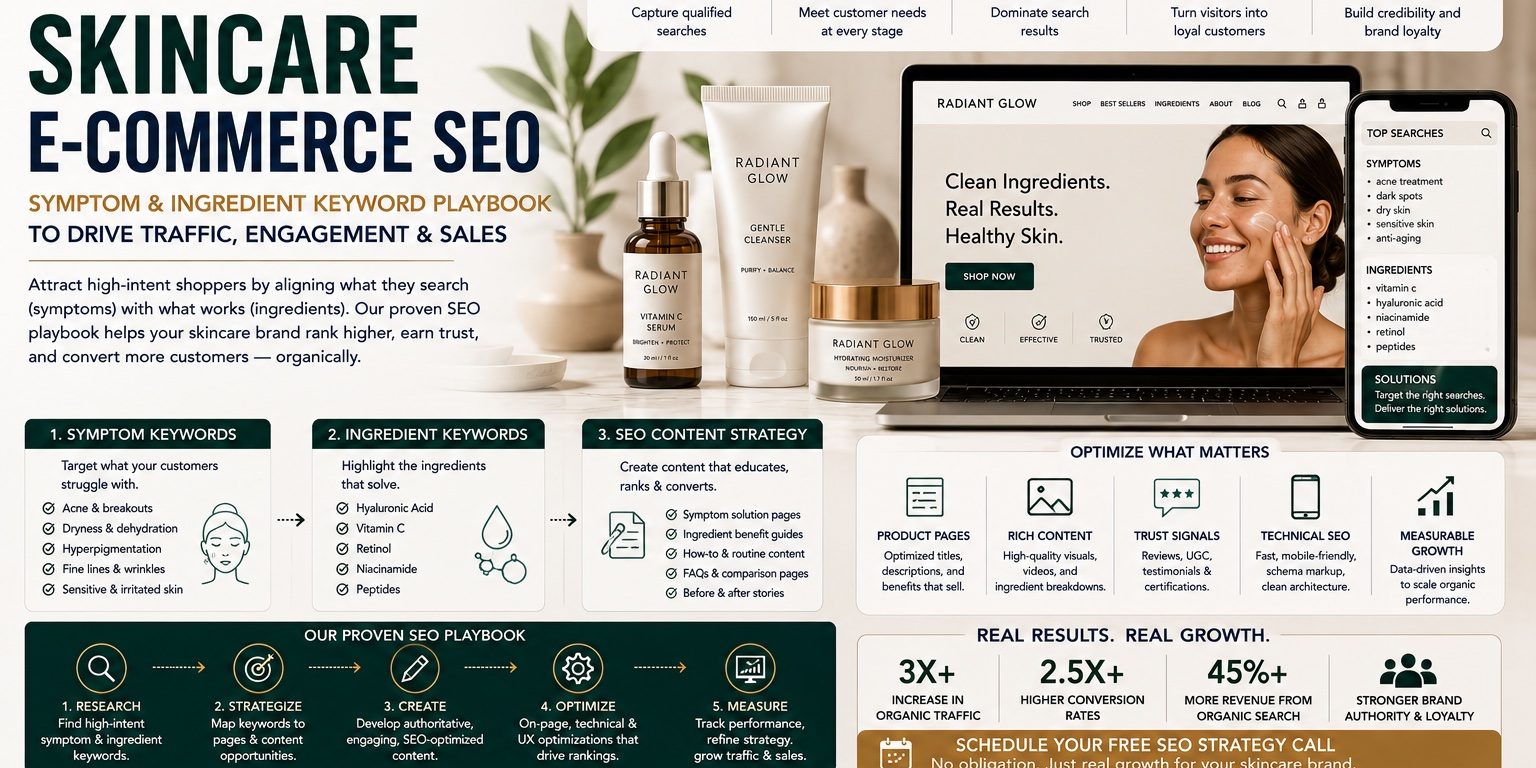
In a crowded skincare e-commerce market, disciplined SEO strategy differentiates brands and improves discoverability. This playbook examines symptom- and ingredient-focused keyword targeting to capture high-intent search traffic and convert visitors into repeat customers. By mapping user search behavior to specific symptoms and the ingredients that address them, brands can build a measurable SEO framework that aligns content with customer needs and improves engagement and conversion metrics. The article explains symptom-based keyword targeting, identifies common symptom queries, and outlines ingredient-led SEO best practices.
Key Takeaways
- Symptom-based keyword targeting improves skincare e-commerce SEO by attracting high-intent, qualified traffic to product pages.
- Common skincare symptoms like acne, dry skin, and hyperpigmentation heavily influence customer search behavior.
- Aligning symptom keywords with ingredient-based SEO strategies creates relevant content that drives traffic and conversions.
- Effective keyword research involves identifying high-traffic symptom and ingredient keywords using tools like Google Keyword Planner.
- Content creation should educate users on symptoms while highlighting ingredients as targeted skincare solutions.
- Optimizing product pages with ingredient benefits and schema markup enhances search visibility and user engagement.
- Popular SEO-driving ingredients include vitamin C, hyaluronic acid, retinol, and peptides for their proven skincare benefits.
- Understanding customer needs ensures keyword strategies align with user intent and improve organic search performance.
How Does Symptom-Based Keyword Targeting Enhance Skincare Ecommerce SEO?
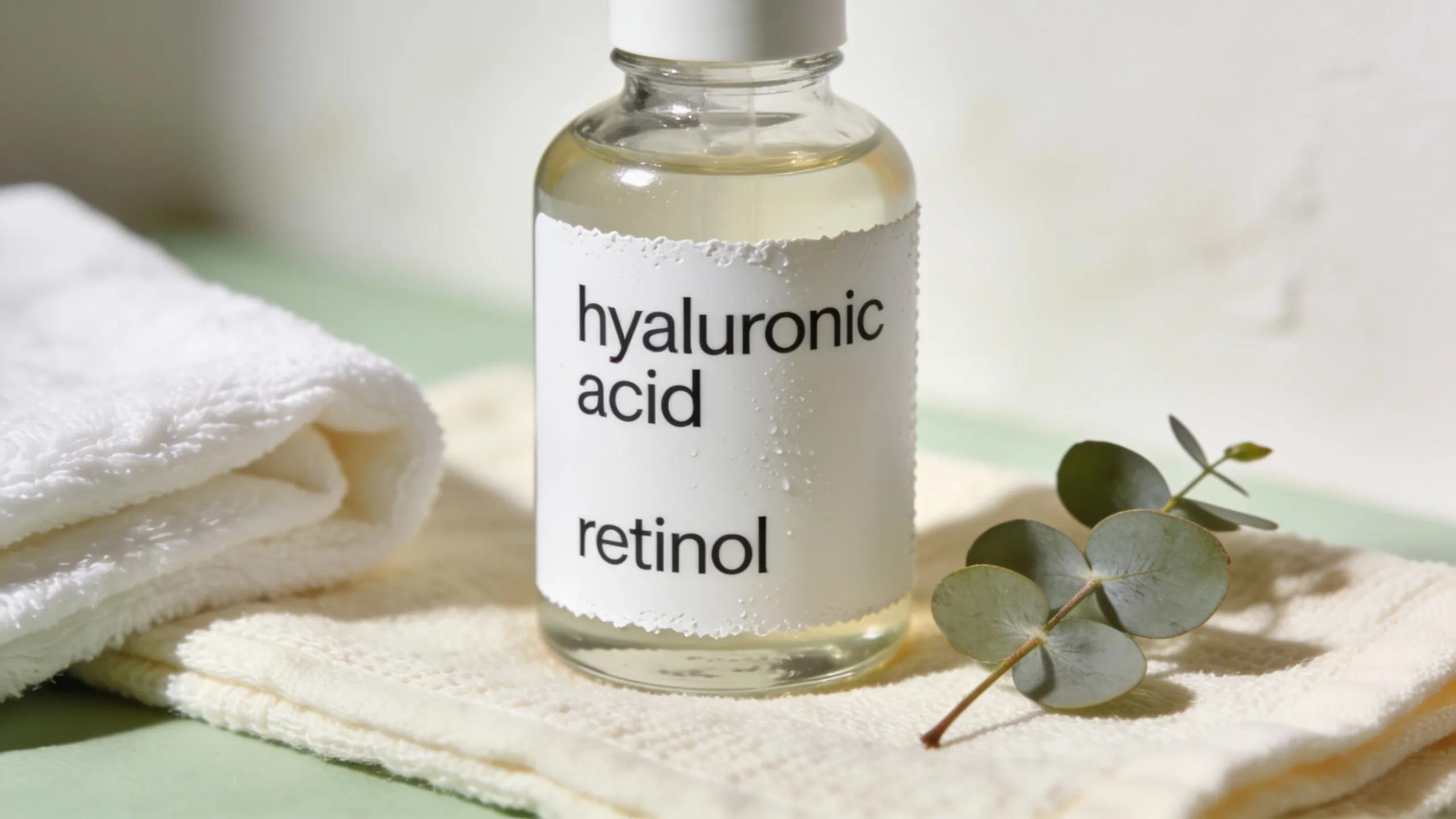
Targeting symptom-specific queries increases visibility for high-intent searches and drives qualified visitors to product pages. This approach focuses content on concrete concerns—such as acne or dry skin—and positions products as targeted solutions. Educational content that explains symptom causes and ingredient actions improves relevance and supports purchase decisions. The result is stronger engagement, improved search rankings, and higher conversion rates as visitors perceive the brand as aligned with their needs.
Monitoring global search trends is necessary to identify which symptom and ingredient keywords resonate with your audience over time.
Leveraging Search Trends for Skincare Market Analysis A qualitative research methodology was employed, using Google Trends to monitor search interest over a five-year period. Keywords related to halal cosmetics, skincare, and beauty products were analyzed to identify fluctuations in consumer engagement across geographic regions, including both Muslim-majority and non-Muslim-majority countries. Global trends in the halal beauty and skincare industry: A search engine-based market analysis, A Koswara, 2025
What Are Common Skincare Symptoms Influencing Customer Search Behavior?
Identifying the most common skincare symptoms is fundamental to an effective SEO plan. The symptoms below consistently influence consumer search queries and purchase intent:
- Acne: A prevalent issue among consumers of all ages, leading to searches focused on treatment solutions.
- Dry Skin: Individuals seeking hydrating remedies often search for ingredients like hyaluronic acid.
- Fine Lines and Wrinkles: Aging concerns prompt searches for anti-aging products containing retinol or peptides.
- Hyperpigmentation: Customers looking for brightening solutions often turn to vitamin C or other lightening agents.
- Sensitive Skin: Many users actively seek gentle, hypoallergenic formulations to soothe their skin.
Integrating these symptom terms into your content strategy aligns pages with user intent and increases organic visibility for relevant searches.
How Do Symptom Keywords Connect to Ingredient-Based SEO Strategies?
Symptom keywords act as the bridge between user intent and ingredient-focused content. When pages target symptom queries, they provide a platform to detail the ingredients that solve those concerns and explain measurable benefits. This creates coherent keyword pairings that guide users from problem awareness to product consideration, improving both traffic quality and conversion likelihood.
Actionable Steps for Effective Implementation:
- Keyword Research Techniques: Utilize tools such as Google Keyword Planner to identify high-traffic symptom and ingredient keywords relevant to your products.
- Content Creation Strategies: Develop educational articles, blogs, or FAQs that address common symptoms while introducing relevant ingredients as solutions.
- Product Page Optimization Tips: Ensure product pages highlight ingredient benefits targeted at specific symptoms, using schema markup to enhance search visibility.
What Are Best Practices for Skincare Ingredient Keyword Research and Strategy?
Effective ingredient keyword research begins with a clear understanding of customer needs and a rigorous keyword analysis process. Align keyword selection with documented search intent and product formulation to ensure relevance.
- Understand Ideal Customer Needs: Recognizing the primary concerns of your target audience ensures that your keywords align with user search intent.
- Comprehensive Keyword Research: Leverage SEO tools to create a list of relevant keywords focused on popular ingredients in skincare.
- Optimize Product Pages: Incorporate targeted ingredient keywords within product descriptions, metadata, and alt texts to improve search visibility and educate potential customers.
Applying these best practices consistently will strengthen organic performance and attract qualified traffic with clear purchase intent.
Which Ingredients Drive High-Value SEO Keywords in Beauty Ecommerce?
Certain ingredients reliably generate high-value search interest and should be prioritized in content and product metadata. These compounds are associated with specific benefits that match common search queries.
- Vitamin C: Known for its antioxidant properties and ability to brighten the skin, vitamin C is a sought-after ingredient in many skincare products.
- Hyaluronic Acid: This powerful humectant attracts moisture to the skin, making it incredibly popular among consumers with dry skin.
- Retinol: A well-known anti-aging ingredient, retinol is associated with effective wrinkle reduction and improved skin texture.
- Peptides: These are effective in promoting skin elasticity and reducing the appearance of fine lines, attracting significant consumer interest.
These ingredients should be incorporated into content and SEO tactics to maximize search performance and attract higher-quality traffic.
Frequently Asked Questions
What role do long-tail keywords play in skincare e-commerce SEO?
Long-tail keywords capture specific user intent, are typically less competitive, and attract visitors closer to a purchase decision. Phrases such as “best moisturizer for sensitive skin” reduce ambiguity and improve conversion probability when integrated into product pages and supporting content.
How can customer reviews impact skincare SEO?
Customer reviews produce user-generated content that enhances organic visibility and credibility. Search engines prioritize authentic signals; positive reviews and symptom-focused language within reviews can increase relevance for target queries. Implementing structured data for reviews also improves the likelihood of rich search results and higher click-through rates.
Why is mobile optimization important for skincare e-commerce websites?
Mobile optimization is critical because a large share of shoppers browse and purchase via mobile devices. Sites that are not optimized suffer from slow loads, poor navigation, and reduced readability, which increase bounce rates. A responsive, mobile-first design improves user engagement and supports stronger SEO outcomes.
What is schema markup and how does it benefit skincare SEO?
Schema markup provides structured data that helps search engines interpret page content and display enhanced results. For skincare e-commerce, schema can surface pricing, availability, and ratings directly in search listings, increasing click-through rates and helping search engines index pages more accurately.
How should brands address emerging skincare trends in their SEO strategy?
Brands should conduct ongoing market research and monitor shifts in consumer interest. Integrate trending topics into blogs, product copy, and category pages, and use tools such as Google Trends to adjust keyword priorities. A proactive, data-driven approach ensures keyword strategies remain aligned with demand.
What is the impact of social media on skincare e-commerce SEO?
Social media amplifies brand visibility and drives traffic that can influence search behavior. Campaigns and educational content shared on platforms like Instagram and TikTok increase brand searches and site visits. Coordinating social and SEO efforts creates a feedback loop that supports higher organic performance.
Conclusion
Implementing symptom- and ingredient-focused keyword strategies strengthens skincare e-commerce SEO and improves competitive positioning. When content aligns with user intent and communicates ingredient efficacy, brands build trust, increase relevant traffic, and improve conversion outcomes. Consult targeted resources to refine your approach and deploy best practices tailored to your product portfolio. Elevate search performance by delivering focused, solution-oriented content to your audience.