Customer acquisition often receives the majority of attention in the skincare industry. Brands invest heavily in advertising, influencer campaigns, social media marketing, SEO, and content creation to attract new customers. While acquiring customers is essential, long-term success depends on something even more valuable: customer loyalty.
Many skincare brands focus on generating first-time purchases but fail to create systems that encourage repeat business. As a result, they continually spend money replacing customers instead of maximizing the value of existing relationships. In contrast, successful skincare companies understand that loyal customers often become their greatest business asset.
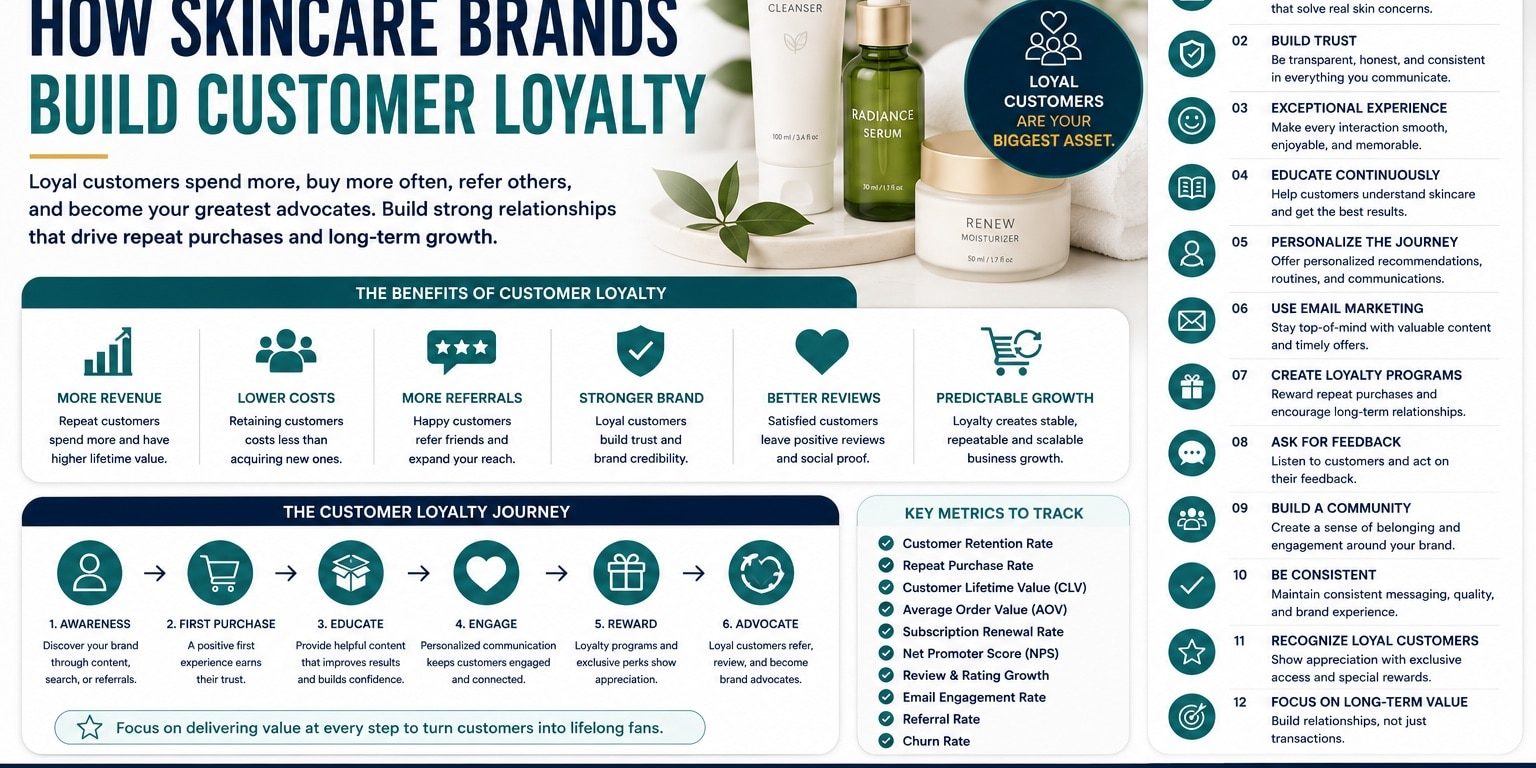
Customer loyalty affects far more than repeat purchases. Loyal customers frequently spend more, purchase more often, refer friends and family, leave positive reviews, engage with content, and become brand advocates. Consequently, brands that prioritize retention often achieve stronger profitability and more sustainable growth.
Understanding how skincare brands build customer loyalty can help companies improve customer lifetime value, reduce acquisition costs, and strengthen long-term competitive advantages.
Whether you operate a skincare startup, an established beauty brand, a medical skincare company, or a direct-to-consumer product line, customer loyalty should remain a core business objective.
Loyalty Begins With Product Performance
No loyalty strategy can overcome poor product performance.
Customers expect products to deliver on their promises.
Therefore, successful skincare brands focus heavily on:
- Product quality
- Consistent results
- Ingredient transparency
- Product safety
- Reliable formulations
- Customer satisfaction
Furthermore, skincare products often become part of daily routines.
When customers experience positive outcomes consistently, they are more likely to continue purchasing.
As a result, product effectiveness remains the foundation of customer loyalty.
Trust Drives Repeat Purchases
Trust plays a critical role in skincare purchasing decisions.
Consumers apply products directly to their skin and often use them for extended periods.
Therefore, they want confidence in the brand.
Trust is influenced by:
- Transparent messaging
- Honest marketing
- Scientific credibility
- Customer reviews
- Educational content
- Brand consistency
Additionally, trust takes time to develop but can be lost quickly.
Consequently, successful skincare brands prioritize long-term credibility over short-term sales tactics.
Create Exceptional Customer Experiences
The customer experience extends far beyond the product itself.
Every interaction influences how consumers perceive the brand.
Important touchpoints include:
- Website experience
- Product packaging
- Shipping speed
- Customer support
- Follow-up communication
- Educational resources
Furthermore, positive experiences create emotional connections.
When customers feel valued, they are more likely to remain loyal.
As a result, customer experience becomes a significant competitive advantage.
Educate Customers Continuously
Many successful skincare brands function as educators as much as product providers.
Consumers often have questions about:
- Ingredients
- Application methods
- Skin concerns
- Product combinations
- Treatment expectations
- Skincare routines
Educational content may include:
- Blog articles
- Videos
- Email campaigns
- Guides
- FAQs
- Social media content
Additionally, education helps customers achieve better results.
Consequently, satisfaction and loyalty often increase simultaneously.
Develop Personalized Experiences
Consumers increasingly expect personalized interactions.
Skincare brands can improve loyalty through:
- Product recommendations
- Skin assessments
- Customized routines
- Personalized emails
- Tailored offers
- Customer segmentation
Furthermore, personalization demonstrates that the brand understands individual needs.
When customers feel understood, they often develop stronger emotional connections.
As a result, retention rates improve.
Build Effective Email Marketing Programs
Email remains one of the most effective customer retention tools available.
Successful skincare brands use email to:
- Welcome new customers
- Provide product education
- Share skincare advice
- Announce new products
- Encourage replenishment purchases
- Offer loyalty rewards
Additionally, email allows brands to maintain direct communication without relying on social media algorithms.
Consequently, email often becomes a major contributor to customer loyalty.
Create Loyalty Programs That Add Value
Well-designed loyalty programs encourage repeat purchases while rewarding customers.
Effective loyalty programs may include:
- Points systems
- VIP memberships
- Exclusive offers
- Early access opportunities
- Birthday rewards
- Referral incentives
However, loyalty programs should provide genuine value.
Customers quickly recognize programs that offer little benefit.
Therefore, successful brands focus on meaningful rewards that strengthen relationships.
Encourage Customer Feedback
Customer feedback helps brands improve products, services, and experiences.
Important feedback opportunities include:
- Product reviews
- Surveys
- Testimonials
- Social engagement
- Customer support interactions
Additionally, requesting feedback demonstrates that the brand values customer opinions.
When customers feel heard, loyalty often increases.
Consequently, feedback becomes both a growth and retention tool.
Leverage Community Building
Many successful skincare brands create communities rather than simply selling products.
Community-building strategies include:
- Social media groups
- Online forums
- Educational webinars
- Brand ambassador programs
- Customer spotlight campaigns
Furthermore, communities create emotional connections between customers and the brand.
As a result, customers often develop stronger loyalty over time.
Maintain Consistent Brand Messaging
Consistency reinforces trust and recognition.
Successful skincare brands maintain consistency across:
- Websites
- Packaging
- Social media
- Advertising
- Customer communications
- Educational content
Additionally, consistency helps customers know what to expect.
When experiences remain predictable and positive, confidence grows.
Consequently, loyalty strengthens.
Reward Long-Term Customers
Many companies focus heavily on acquiring new customers while neglecting existing ones.
However, long-term customers often generate the greatest value.
Effective recognition strategies include:
- Exclusive access
- Special promotions
- Personalized communication
- Loyalty rewards
- VIP experiences
Furthermore, recognition helps customers feel appreciated.
As a result, long-term relationships become stronger.
Build Customer Loyalty Through Results
Ultimately, customer loyalty develops when brands consistently deliver value.
This includes:
- Effective products
- Educational support
- Positive experiences
- Reliable service
- Honest communication
Additionally, loyalty is earned through repeated positive interactions.
Successful skincare brands understand that every customer experience contributes to long-term retention.
Consequently, they invest in systems that support customer satisfaction at every stage of the journey.
Why Customer Loyalty Matters More Than Ever
Understanding how skincare brands build customer loyalty is increasingly important as competition intensifies.
Advertising costs continue to rise, making customer acquisition more expensive.
Meanwhile, loyal customers provide:
- Repeat purchases
- Referrals
- Positive reviews
- Social proof
- Long-term revenue
Therefore, loyalty often becomes one of the most profitable growth strategies available.
Long-Term Benefits of Customer Loyalty
Brands that prioritize loyalty frequently experience:
- Higher customer lifetime value
- Lower acquisition costs
- Greater profitability
- Stronger brand advocacy
- Increased referrals
- More predictable revenue
Furthermore, loyal customers often become ambassadors who help attract new customers naturally.
As a result, growth becomes more sustainable.
Ultimately, understanding how skincare brands build customer loyalty helps businesses strengthen relationships, improve profitability, and create long-term competitive advantages.
Key Takeaways
Key takeaways include:
- Product performance drives loyalty
- Trust influences repeat purchases
- Customer experience matters
- Education supports retention
- Personalization strengthens relationships
- Email marketing improves engagement
- Loyalty programs encourage repeat business
- Feedback creates stronger connections
- Communities build emotional attachment
- Consistency reinforces trust
- Recognition strengthens retention
- Long-term relationships improve profitability
These strategies help skincare brands improve customer retention, increase lifetime value, and support sustainable growth.
Q&A
| Question | Answer |
|---|---|
| Why is customer loyalty important for skincare brands? | Loyal customers generate repeat purchases, referrals, reviews, and long-term revenue. |
| What is the foundation of customer loyalty? | Consistent product performance and positive customer experiences form the foundation of loyalty. |
| Do loyalty programs improve retention? | Yes. Well-designed loyalty programs can encourage repeat purchases and strengthen relationships. |
| How does email marketing support loyalty? | Email helps brands educate customers, maintain communication, and encourage repeat purchases. |
| Why is customer retention important for profitability? | Retaining customers is often less expensive and more profitable than continually acquiring new ones. |
How Illumination Consulting Helps Skincare Brands Grow
Illumination Consulting helps skincare brands improve customer acquisition, strengthen retention, increase online visibility, optimize e-commerce performance, and build long-term growth systems through SEO, content marketing, website optimization, automation, branding, and strategic business consulting.