The aesthetic industry has become increasingly competitive as more clinics enter the market and consumers gain access to countless treatment options. While aesthetic clinics often focus on marketing, technology, and service offerings, many overlook a critical question: what are prospective patients actually looking for before they choose a provider?
Today’s patients are more informed than ever before. They conduct research, compare clinics, read reviews, evaluate websites, and spend considerable time gathering information before scheduling consultations. In many cases, patients make decisions long before they ever contact a clinic.
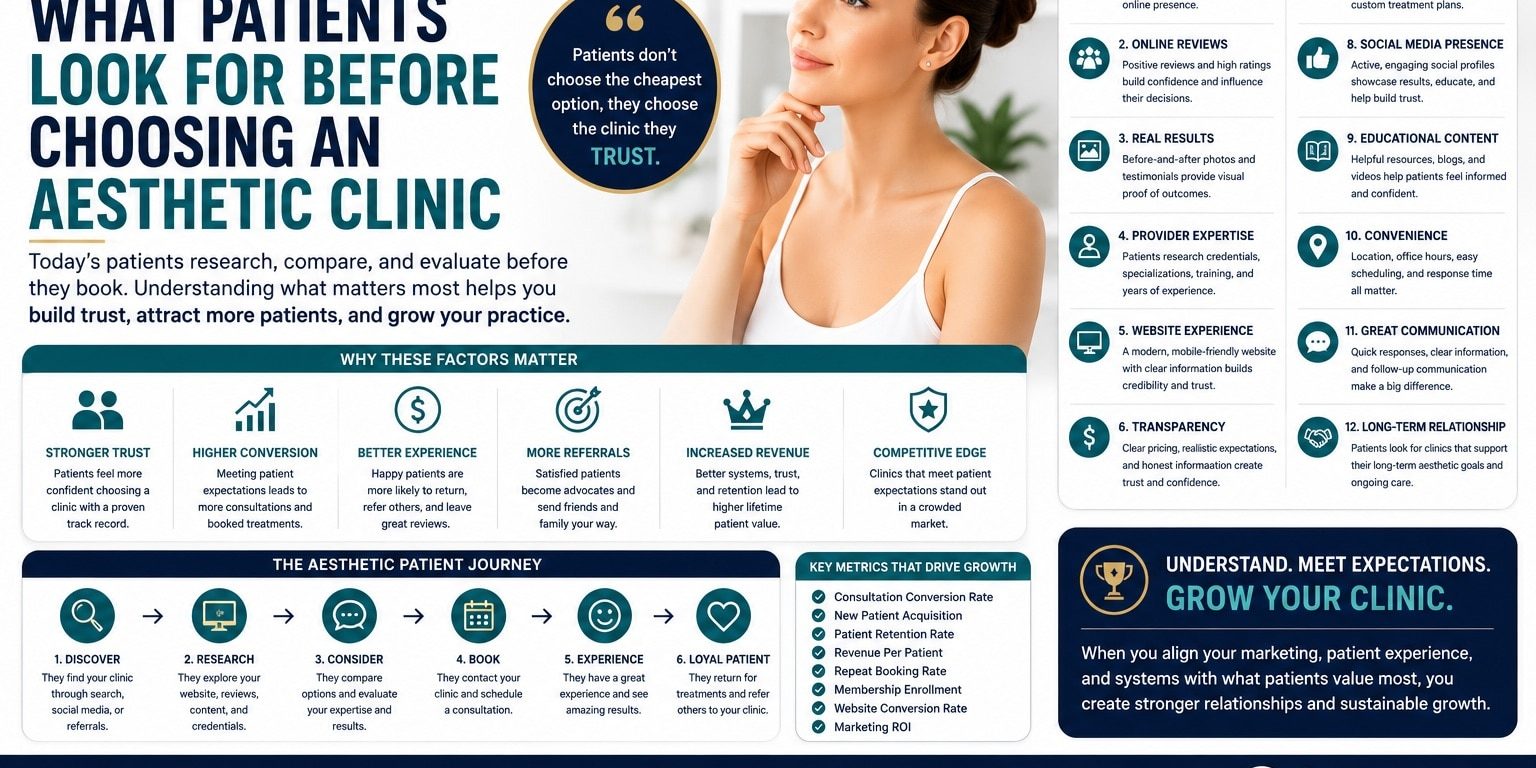
Understanding what patients look for before choosing an aesthetic clinic allows practice owners to align their marketing, branding, and patient experience strategies with actual consumer behavior. Furthermore, clinics that successfully address these expectations often generate more consultations, improve conversion rates, and increase patient retention.
Many providers assume patients make decisions primarily based on pricing. While cost certainly influences some decisions, it is rarely the only factor. Instead, patients typically evaluate a combination of trust, expertise, reputation, convenience, and overall confidence in the clinic.
Whether you operate a med spa, cosmetic clinic, wellness center, dermatology practice, or aesthetic medicine business, understanding patient decision-making can help strengthen your competitive position.
Patients Look for Trust First
Trust remains the most important factor in aesthetic healthcare.
Unlike many consumer purchases, aesthetic treatments involve personal appearance, health, and confidence. Therefore, patients want reassurance that they are making the right choice.
Trust is often influenced by:
- Professional credentials
- Experience
- Online reviews
- Testimonials
- Website quality
- Before-and-after results
- Personal recommendations
Additionally, patients frequently form first impressions online.
Consequently, clinics that establish trust early often outperform competitors.
Patients Evaluate Online Reviews
Reviews have become one of the most influential decision-making factors in healthcare and aesthetics.
Many prospective patients read multiple reviews before contacting a clinic.
Patients often look for feedback regarding:
- Treatment outcomes
- Staff professionalism
- Communication
- Patient experience
- Scheduling processes
- Facility cleanliness
Furthermore, review quantity matters almost as much as review quality.
Clinics with a large number of positive reviews typically generate greater confidence.
As a result, strong reputation management directly supports patient acquisition.
Patients Want to See Real Results
Aesthetic treatments are highly visual.
Therefore, before-and-after content plays a major role in patient decision-making.
Prospective patients often evaluate:
- Treatment galleries
- Patient transformations
- Case studies
- Success stories
- Procedure-specific outcomes
Additionally, patients prefer authentic and realistic examples.
When clinics showcase strong results consistently, confidence increases.
Consequently, consultation requests often improve.
Patients Research Provider Expertise
Patients want confidence in the person performing their treatments.
Therefore, provider expertise remains a significant consideration.
Patients frequently review:
- Professional credentials
- Certifications
- Experience
- Specializations
- Training
- Professional affiliations
Furthermore, educational content often reinforces expertise.
When providers demonstrate authority through articles, videos, and patient education, prospective patients feel more comfortable moving forward.
Patients Compare Clinic Websites
Many clinics underestimate the influence of their websites.
However, websites often serve as the first interaction between prospective patients and the practice.
Patients typically evaluate:
- Professional appearance
- Ease of navigation
- Treatment information
- Mobile experience
- Scheduling options
- Patient resources
Additionally, visitors often judge credibility based on website quality.
A poorly designed website can create doubts even when clinical services are exceptional.
As a result, website performance significantly impacts patient acquisition.
Patients Value Transparency
Patients appreciate honesty and transparency throughout the decision-making process.
Common areas where transparency matters include:
- Treatment expectations
- Pricing information
- Recovery timelines
- Potential risks
- Treatment candidacy
Furthermore, transparency helps reduce uncertainty.
When patients understand what to expect, they feel more confident.
Consequently, consultation conversion rates often improve.
Patients Look for Personalized Care
Many consumers want more than treatments.
They want personalized experiences.
Patients often prefer clinics that:
- Listen carefully
- Understand their goals
- Provide customized recommendations
- Offer ongoing support
- Create individualized treatment plans
Additionally, personalization helps differentiate clinics in competitive markets.
As a result, patient satisfaction frequently improves.
Patients Pay Attention to Social Media
Social media has become an important research tool for aesthetic patients.
Many consumers evaluate:
- Clinic activity
- Treatment results
- Educational content
- Provider personalities
- Patient testimonials
- Office culture
Furthermore, social media helps patients become familiar with the clinic before making contact.
When clinics maintain active and professional social profiles, trust often increases.
Consequently, social media supports broader patient acquisition efforts.
Patients Want Educational Content
Patients frequently search for answers before scheduling consultations.
Common topics include:
- Treatment benefits
- Recovery expectations
- Risks and side effects
- Procedure comparisons
- Skincare recommendations
- Long-term outcomes
Educational content helps address these questions.
Additionally, educational resources position clinics as trusted experts.
As a result, patients often feel more confident moving forward.
Patients Consider Convenience
Convenience plays an increasingly important role in healthcare decisions.
Patients evaluate:
- Location
- Parking availability
- Office hours
- Appointment scheduling
- Communication methods
- Response times
Furthermore, convenience influences both acquisition and retention.
When clinics make interactions easy, patient satisfaction often increases.
Patients Notice Follow-Up Communication
Many patients judge clinics based on communication quality.
Important communication touchpoints include:
- Inquiry responses
- Consultation follow-up
- Appointment reminders
- Treatment instructions
- Post-treatment care
Additionally, consistent communication demonstrates professionalism and attentiveness.
As a result, patients feel valued and supported.
Patients Look for Long-Term Relationships
Many aesthetic patients seek ongoing care rather than one-time treatments.
Therefore, they often evaluate whether a clinic can support their long-term goals.
Patients appreciate providers who offer:
- Comprehensive treatment planning
- Preventive care guidance
- Maintenance programs
- Skincare recommendations
- Long-term support
Furthermore, long-term relationships increase patient loyalty.
Consequently, retention rates often improve significantly.
Why Understanding Patient Behavior Matters
Understanding what patients look for before choosing an aesthetic clinic helps owners make better business decisions.
Rather than focusing solely on marketing tactics, successful clinics align their operations with patient expectations.
This includes:
- Building trust
- Demonstrating expertise
- Improving visibility
- Strengthening reputation
- Enhancing patient experiences
When clinics consistently meet these expectations, growth becomes more sustainable.
Long-Term Benefits of Meeting Patient Expectations
Clinics that understand patient decision-making often experience stronger results across multiple areas.
Benefits may include:
- More consultation requests
- Higher conversion rates
- Improved retention
- Better reviews
- Increased referrals
- Stronger profitability
Furthermore, satisfied patients frequently become long-term advocates.
As a result, patient acquisition becomes more efficient and cost-effective over time.
Ultimately, understanding what patients look for before choosing an aesthetic clinic helps providers create stronger relationships, deliver better experiences, and build more successful businesses.
Key Takeaways
Key takeaways include:
- Trust drives patient decisions
- Reviews influence clinic selection
- Before-and-after content builds confidence
- Provider expertise matters
- Websites affect credibility
- Transparency improves trust
- Personalized care strengthens relationships
- Social media supports visibility
- Educational content establishes authority
- Convenience influences patient behavior
- Communication impacts satisfaction
- Long-term relationships improve retention
These factors help aesthetic clinics attract more patients, improve conversion rates, and strengthen long-term growth.
Q&A
| Question | Answer |
|---|---|
| What is the most important factor patients consider when choosing an aesthetic clinic? | Trust is typically the most influential factor in the decision-making process. |
| Do online reviews affect patient acquisition? | Yes. Reviews strongly influence credibility and patient confidence. |
| Why are before-and-after photos important? | They provide visual proof of treatment outcomes and build trust. |
| Does website quality impact patient decisions? | Absolutely. Patients often judge professionalism and credibility based on website quality. |
| How can aesthetic clinics improve patient trust? | Through strong reviews, educational content, transparency, professional branding, and excellent communication. |
How Illumination Consulting Helps Aesthetic Clinics Grow
Illumination Consulting helps aesthetic clinics improve patient acquisition, strengthen online visibility, build trust, optimize websites, enhance reputation management, and implement growth systems designed to attract qualified patients and support long-term business success.