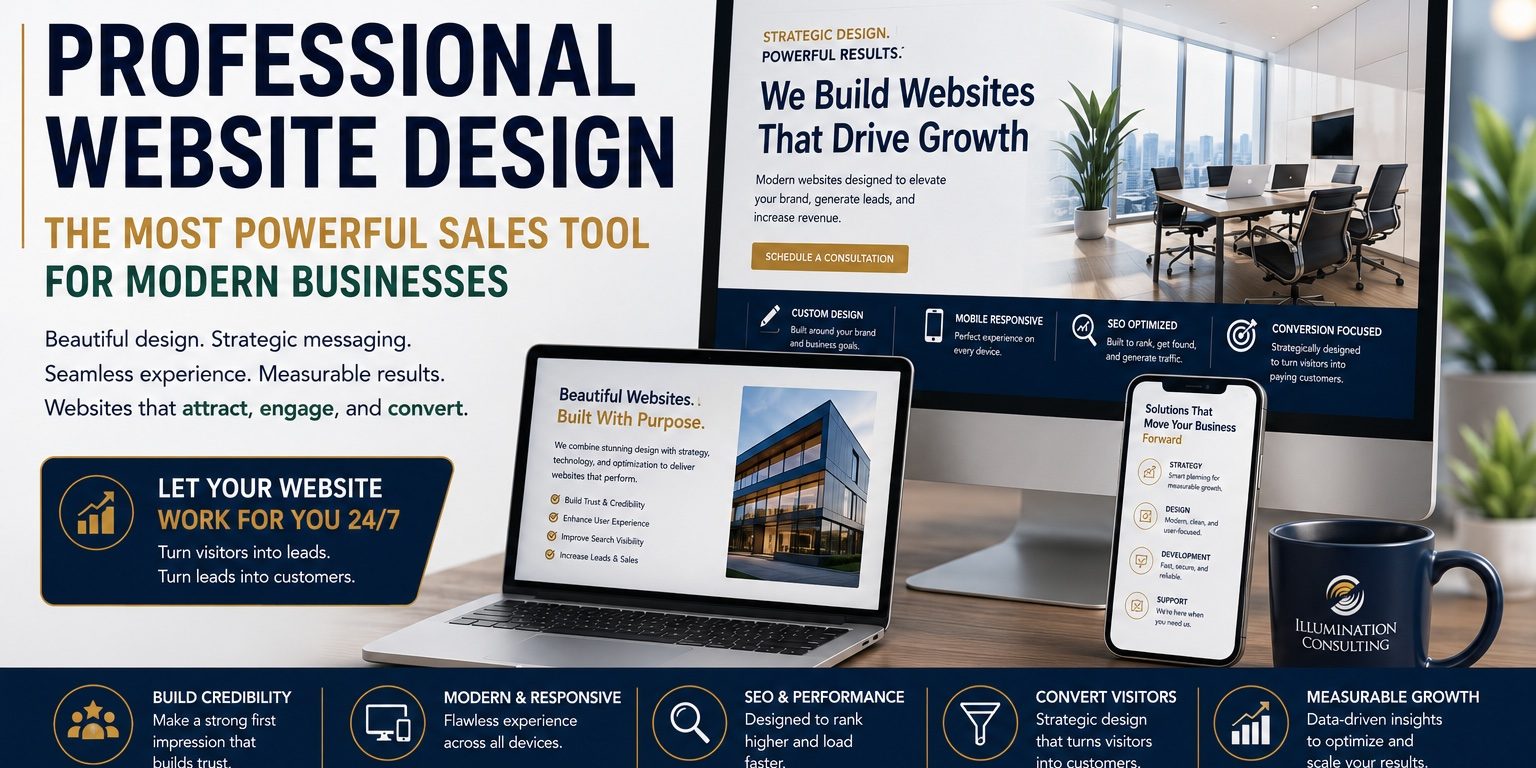
Your website is often the first impression a prospective customer has of your business. Before someone calls your office, schedules a consultation, purchases a product, or requests a proposal, they almost always visit your website first. Within seconds, visitors begin forming opinions about your professionalism, credibility, expertise, and the quality of your products or services.
Those first impressions matter.
An outdated, confusing, or poorly designed website can reduce trust before your team has the opportunity to begin a conversation. On the other hand, a modern, professionally designed website builds confidence, communicates expertise, and guides visitors toward becoming customers.
Many businesses view a website as simply an online brochure. In reality, it is one of the most valuable business assets a company owns. A well-designed website operates around the clock, educating prospects, generating qualified leads, answering questions, supporting marketing campaigns, and helping convert visitors into paying customers.
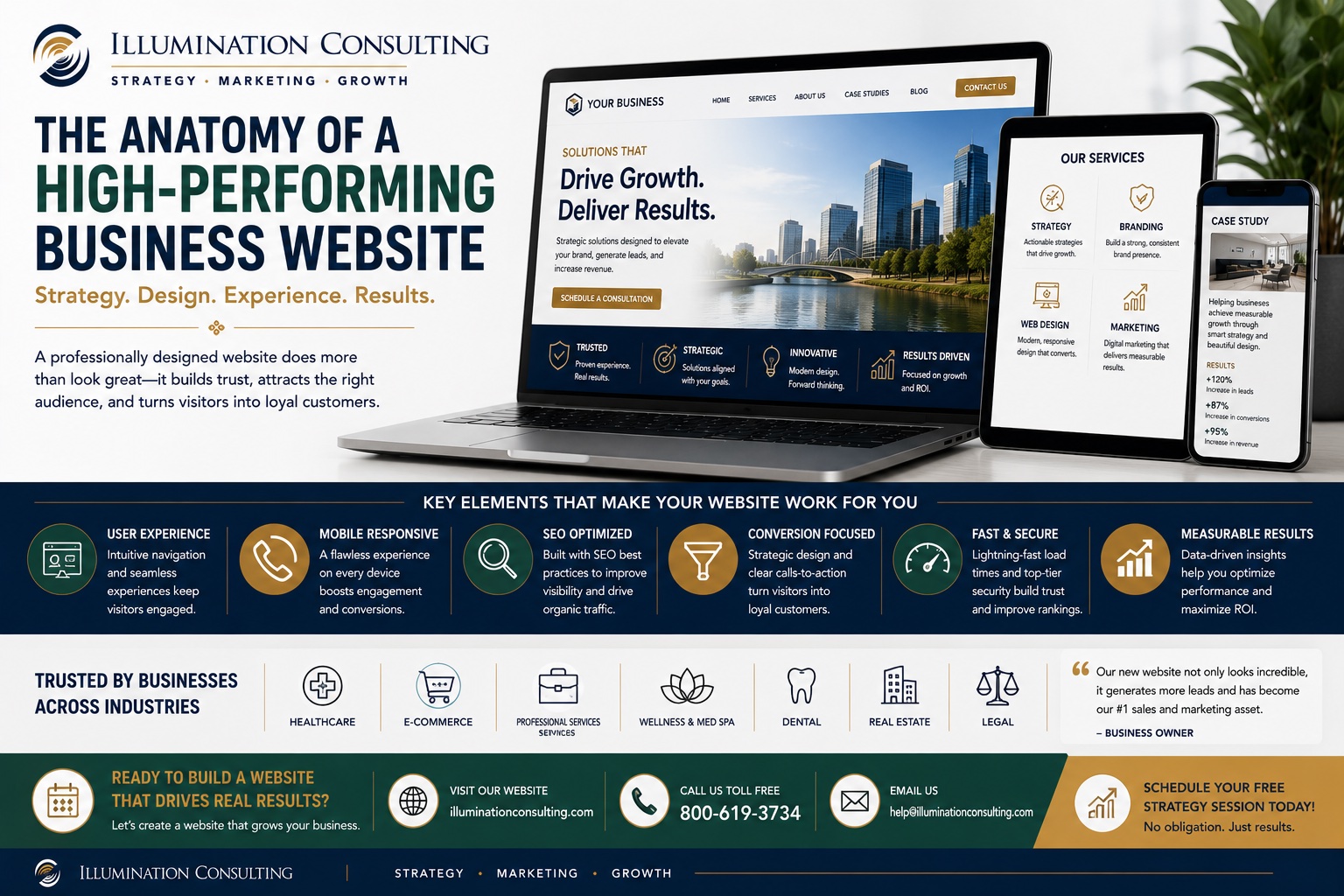
Professional website design goes far beyond visual appearance. It combines branding, user experience, search engine optimization, conversion strategy, performance, accessibility, content organization, and technical excellence into a unified digital experience.
Businesses that invest in professional website design position themselves to compete more effectively in today’s increasingly digital marketplace.
Your Website Is Your Digital Storefront
In the physical world, customers judge businesses by their offices, storefronts, cleanliness, organization, and professionalism.
Online, your website serves exactly the same purpose.
Visitors immediately evaluate:
- Professionalism
- Trustworthiness
- Credibility
- Quality
- Stability
- Attention to detail
Whether fair or not, people often assume the quality of a company’s website reflects the quality of its products or services.
An attractive, organized, and easy-to-use website helps reinforce confidence from the very beginning.
First Impressions Happen Within Seconds
Research consistently shows that website visitors form opinions almost immediately.
Within just a few seconds they decide whether they want to continue exploring or leave.
Important first-impression factors include:
- Visual design
- Branding
- Typography
- Color consistency
- Photography
- Navigation
- Website speed
- Mobile responsiveness
- Content clarity
A clean layout with strong messaging helps visitors understand exactly who you are, what you offer, and why they should choose your business.
Website Design Is About More Than Appearance
Many people associate website design only with aesthetics.
Modern websites combine multiple disciplines including:
- User Experience (UX)
- User Interface (UI)
- Conversion Rate Optimization
- Search Engine Optimization
- Content Strategy
- Branding
- Accessibility
- Performance Optimization
- Mobile Development
- Security
Every element should work together toward one objective:
Helping visitors accomplish their goals while moving them closer to becoming customers.
Build Trust Through Professional Design
Trust is one of the strongest conversion factors online.
Professional website design reinforces trust through consistency and transparency.
Important trust-building elements include:
- Professional photography
- Customer testimonials
- Case studies
- Certifications
- Awards
- Security badges
- Clear contact information
- Team pages
- Company history
- Frequently asked questions
The easier it is for visitors to trust your business, the easier it becomes for them to take the next step.
Responsive Design Is No Longer Optional
Today’s visitors browse websites using:
- Smartphones
- Tablets
- Desktop computers
- Laptops
- Large displays
Every visitor should receive an excellent experience regardless of screen size.
Responsive website design automatically adjusts layouts, images, navigation, and content to fit each device while maintaining usability and visual consistency.
Poor mobile experiences frequently lead to higher bounce rates and lower conversion rates.
Website Speed Directly Affects Revenue
Modern consumers expect websites to load almost instantly.
Every additional second of loading time increases the likelihood that visitors will leave before exploring your business.
Website speed also influences:
- User satisfaction
- Search rankings
- Conversion rates
- Engagement
- Bounce rate
- Lead generation
Professional developers optimize websites through efficient coding, image optimization, caching, modern hosting, and performance testing.
Great Navigation Improves User Experience
Visitors should never have to guess where information is located.
Navigation should be simple, intuitive, and organized around the customer’s needs rather than the company’s internal structure.
Effective navigation typically includes:
- Clear service categories
- Logical page hierarchy
- Search functionality
- Internal linking
- Prominent calls to action
- Sticky navigation where appropriate
- Easy access to contact information
When visitors quickly find answers, they remain engaged longer and are more likely to convert.
Design Every Page Around a Business Goal
One of the biggest mistakes businesses make is designing pages without a clear objective.
Every page on your website should encourage visitors to take a meaningful next step.
Depending on the page, that goal may be:
- Schedule a consultation
- Request a proposal
- Purchase a product
- Contact your office
- Download a guide
- Subscribe to a newsletter
- Book a demo
- Call your business
When every page has a clear purpose, visitors naturally move through the buying journey with less confusion and greater confidence.
High-Quality Content Supports Better Website Performance
Design attracts attention.
Content builds trust.
Even the most visually impressive website cannot compensate for weak messaging.
Every page should clearly answer the questions prospective customers are asking.
Effective content includes:
- Service descriptions
- Frequently asked questions
- Customer success stories
- Case studies
- Educational articles
- Industry insights
- Team biographies
- Process explanations
- Pricing guidance where appropriate
- Strong calls to action
Rather than writing for search engines alone, businesses should focus on creating genuinely helpful information that educates visitors while demonstrating expertise.
Professional Photography Makes a Difference
Authentic imagery helps visitors connect with your business.
Professional photography often outperforms generic stock images because it reflects your actual company, employees, products, and services.
Consider including:
- Office photography
- Team portraits
- Leadership profiles
- Product photography
- Service delivery
- Company culture
- Behind-the-scenes images
- Client interactions where appropriate
Authenticity builds credibility and helps distinguish your business from competitors using generic visuals.
Search Engine Optimization Begins with Website Design
Many business owners think SEO starts after a website launches.
In reality, effective SEO begins during the design process.
A professionally developed website incorporates SEO best practices from the beginning.
These include:
- Logical site architecture
- Search-friendly URLs
- Optimized heading structure
- Fast page speed
- Internal linking
- Mobile responsiveness
- Image optimization
- Structured data
- XML sitemaps
- Technical accessibility
Building SEO into the foundation of a website reduces future development costs while improving long-term visibility.
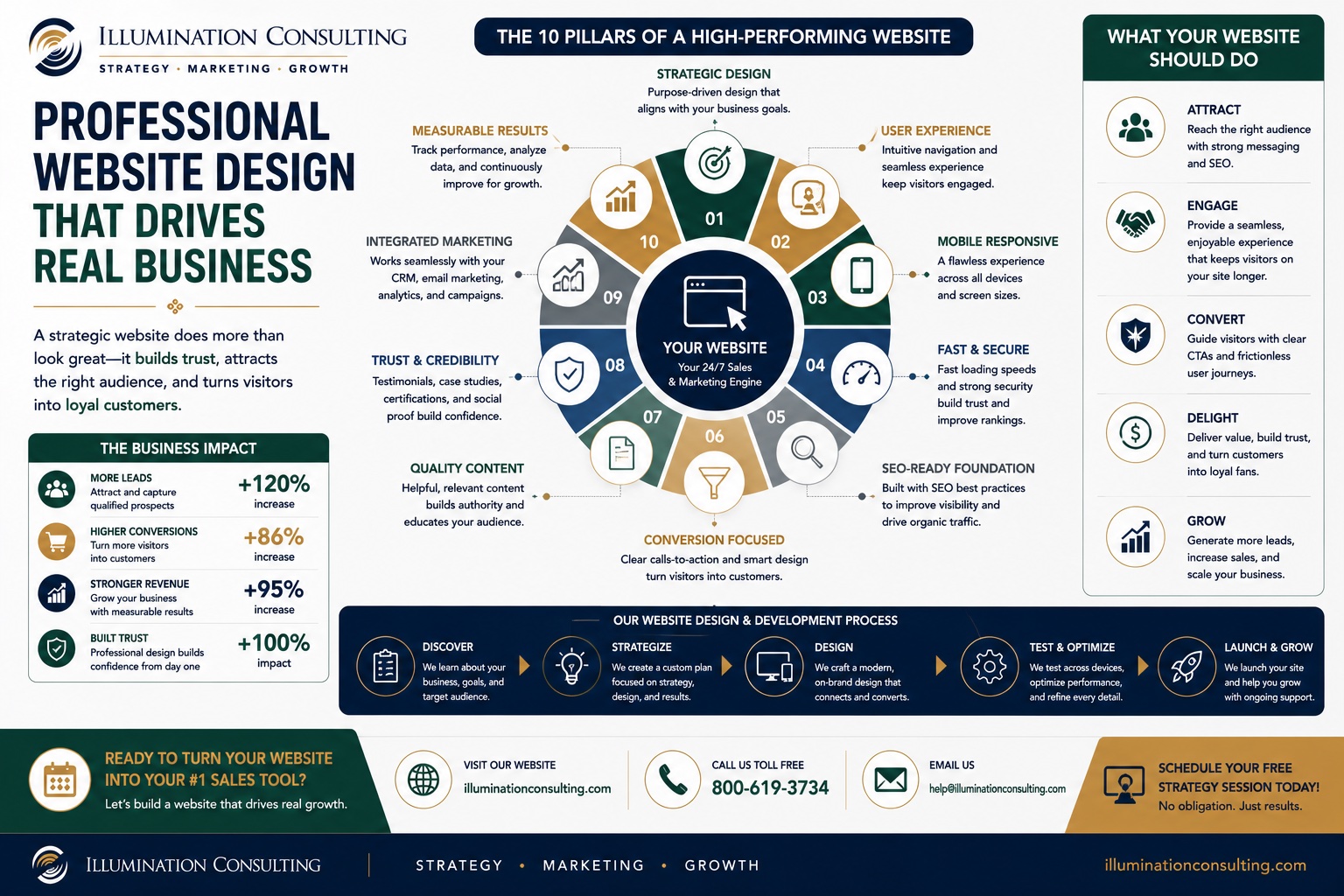
Conversion-Focused Design Generates More Leads
A beautiful website should also function as a sales tool.
Conversion-focused design helps guide visitors toward becoming customers.
Important conversion elements include:
- Clear calls to action
- Contact forms
- Click-to-call buttons
- Consultation scheduling
- Live chat
- Trust indicators
- Testimonials
- Frequently asked questions
- Benefit-focused messaging
- Simple navigation
Every design decision should support user confidence while reducing friction throughout the customer journey.
Accessibility Benefits Every Visitor
Accessible websites create better experiences for everyone.
Professional web design considers visitors with different devices, abilities, and browsing preferences.
Accessibility improvements include:
- Proper color contrast
- Readable typography
- Keyboard navigation
- Alternative text for images
- Logical heading structure
- Clearly labeled forms
- Descriptive buttons
- Responsive layouts
Accessibility also contributes to better usability, stronger SEO, and broader audience reach.
Security Builds Customer Confidence
Website visitors expect businesses to protect their information.
Professional website development includes security best practices that help safeguard both the business and its customers.
Important security features include:
- HTTPS encryption
- Secure hosting
- Regular software updates
- Malware protection
- Strong authentication
- Routine backups
- Firewall protection
- Spam prevention
A secure website helps protect sensitive information while reinforcing customer trust.
Integrate Your Website with Your Marketing Strategy
Your website should serve as the central hub for all digital marketing efforts.
Whether visitors arrive from Google, social media, email campaigns, paid advertising, YouTube, or AI-powered search platforms, the website should provide a seamless experience that supports conversions.
Effective integrations include:
- CRM systems
- Email marketing platforms
- Analytics
- Appointment scheduling
- Ecommerce platforms
- Live chat
- Marketing automation
- Review platforms
- Customer support tools
A connected digital ecosystem improves efficiency while providing valuable marketing insights.
Optimize for AI Search and the Future of Discovery
Search behavior continues evolving beyond traditional search engines.
Consumers increasingly rely on AI-powered platforms to research businesses, compare services, and receive recommendations.
Professional websites should be structured so AI systems can easily understand their content.
Best practices include:
- Clear page hierarchy
- Comprehensive educational content
- Structured data
- Strong internal linking
- Consistent branding
- Demonstrated expertise
- Authoritative resources
- Accurate business information
Businesses investing in AI-ready website architecture today will be better positioned as AI-assisted search continues growing.
Measure Website Success
A professional website should continuously improve through measurement and refinement.
Rather than judging success by appearance alone, businesses should monitor meaningful performance indicators.
Important metrics include:
- Website traffic
- Conversion rate
- Lead generation
- Bounce rate
- Average engagement time
- Organic search traffic
- Mobile performance
- Form submissions
- Phone calls
- Revenue generated
Analytics help identify opportunities for ongoing optimization and stronger marketing performance.
Frequently Asked Questions
Why is professional website design important?
Professional website design helps establish credibility, improve user experience, strengthen search visibility, increase conversions, and support long-term business growth. Your website is often the first interaction prospective customers have with your brand.
How often should a business redesign its website?
There is no fixed timeline, but many businesses evaluate their websites every three to five years. A redesign may also be necessary if the website performs poorly on mobile devices, loads slowly, no longer reflects the brand, or fails to support current marketing goals.
Does website design affect SEO?
Yes. Website design influences page speed, mobile usability, navigation, technical structure, internal linking, accessibility, and user experience—all of which contribute to search engine optimization.
Can a better website increase sales?
Absolutely. A professionally designed website can improve trust, reduce friction, guide visitors through the buying process, and increase conversion rates, leading to more qualified leads and higher revenue.
What features should every business website include?
Most professional websites should include clear navigation, service pages, an About page, contact information, testimonials, calls to action, mobile responsiveness, fast performance, security, educational content, and analytics.
Invest in a Website That Works as Hard as You Do
Your website should do far more than showcase your business. It should build trust, communicate your expertise, attract qualified visitors, support search visibility, and consistently generate leads and sales.
Professional website design combines strategy, branding, user experience, technical performance, SEO, accessibility, and conversion optimization into one unified digital asset that supports every aspect of your marketing.
At Illumination Consulting, we design high-performance websites that help businesses establish credibility, improve online visibility, increase conversions, and achieve measurable growth. Whether you need a corporate website, healthcare website, ecommerce platform, or custom digital solution, our team develops websites built for today’s customers and tomorrow’s search technologies.
If you’re ready to transform your website into one of your most valuable business assets, contact Illumination Consulting to learn how our professional website design services can help your business grow.